H type Valve
CN → US| HS Code | Tariff Rate | Origin | Destination | Doc |
|---|---|---|---|---|
| 8481200010 | 37.0% | CN | US | Official Doc |
| 8481200020 | 37.0% | CN | US | Official Doc |
Product Images
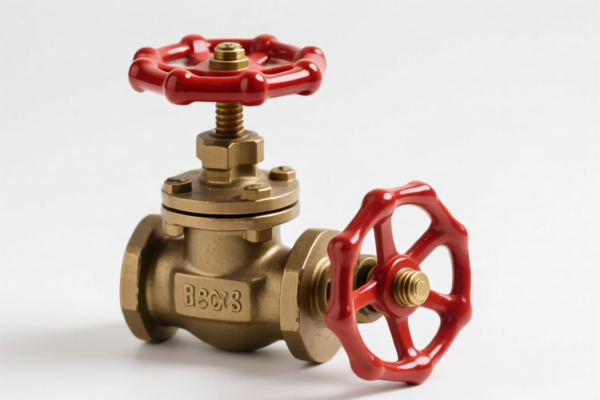
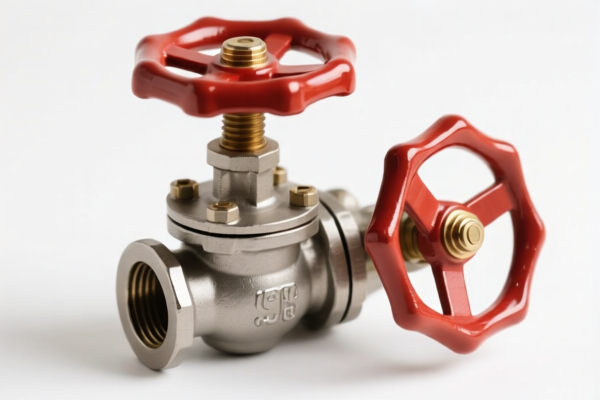
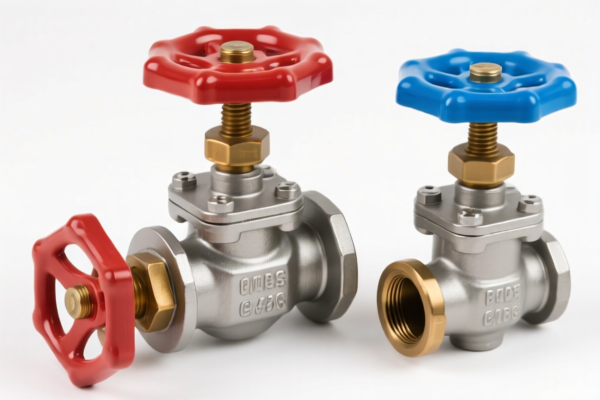
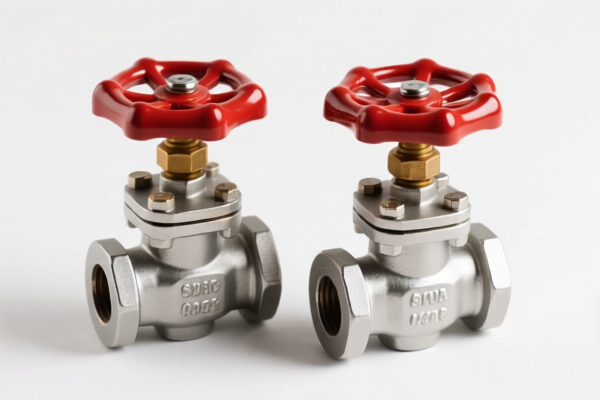
AI Analysis
🔩 H-Type Valves & Hydraulic Control Appliances (Oleohydraulic/Pneumatic Transmissions)
🌐 HS Code Reference & Customs Clearance Guide | 2026 Latest Tariff Analysis | Professional Compliance Strategy
📌 I. Product Definition: What is an "H-Type" Valve?
In industrial and mechanical contexts, an "H-Type Valve" typically refers to a specific port configuration (often in hydraulic manifolds or solenoid valves) where the ports are arranged in an "H" shape on the valve body or manifold. However, in international trade classification (HS Code), the term "H-Type" is not a standalone HS category. It must be classified based on its function, operating principle, and application.
⚠️ Critical Clarification:
- "H-Type" describes the physical port layout (e.g., H-center position in directional control valves).
- The HS Code is determined by:
1. Function: Is it for oleohydraulic (oil) or pneumatic (air) transmission?
2. Type: Is it Directional Control?
3. Operation: Is it Manual or Solenoid (Electrically operated)?
Based on the provided <DATA>, we classify H-Type Valves into two primary categories under HS Code 8481.20 (Valves for oleohydraulic or pneumatic transmissions).
📦 II. HS Code Classification Breakdown (Based on Provided Data)
| HS Code | Product Description | Key Characteristics | Operation Type |
|---|---|---|---|
| 8481.20.00.10 | Directional Control Valves, Manual Type | H-Type port configuration for hydraulic/pneumatic systems | 🖐️ Manual (Lever, Knob, etc.) |
| 8481.20.00.20 | Directional Control Valves, Solenoid Type | H-Type port configuration for hydraulic/pneumatic systems | ⚡ Solenoid (Electrically Actuated) |
🔍 Important Note:
- Both codes fall under "Taps, cocks, valves... for pipes, boiler shells, tanks...; parts thereof" → "Valves for oleohydraulic or pneumatic transmissions" → "Directional control".
- The distinction lies solely in the actuation method: Manual vs. Solenoid.
💰 III. 2026 Tariff Rate Breakdown (Detailed Tax Analysis)
✅ Context: Based on the provided
<DATA>, we analyze the tax implications for these two HS Codes.
(Note: The provided data does not specify the importing country. However, the tax structure "27.0% total" with "25% additional tariff" strongly suggests China's import tariffs from the US or a similar trade context with additional levies. We will analyze based on the provided numbers.)
🎯 1. 8481.20.00.10 —— Directional Control Valves, Manual Type
| Item | Detail |
|---|---|
| Product | Hydraulic/Pneumatic Directional Control Valves (Manual/H-Type) |
| Base Tariff | 2.0% |
| Additional Tariff | 25.0% |
| Total Tariff Rate | 27.0% |
| Tax Calculation | Duty = CIF Value × 27.0% |
| Legal Basis | HS 8481.20.00.10 + Additional Tariff Schedule |
📌 Explanation:
- This tariff applies to manual directional control valves used in oleohydraulic or pneumatic systems.
- The 25% additional tariff is likely a retaliatory or specific trade measure (e.g., against US-origin goods in China, or vice versa).
- No other major surcharges (like 301 tariffs in the US) are indicated in the provided data for this code.
🎯 2. 8481.20.00.20 —— Directional Control Valves, Solenoid Type
| Item | Detail |
|---|---|
| Product | Hydraulic/Pneumatic Directional Control Valves (Solenoid/H-Type) |
| Base Tariff | 0.0% |
| Additional Tariff | 0.0% |
| Total Tariff Rate | 0.0% |
| Tax Calculation | No Import Duty |
| Legal Basis | HS 8481.20.00.20 + Exemption Schedule |
📌 Explanation:
- Solenoid-type valves benefit from zero tariff under the provided data.
- This is a significant cost advantage for electrically operated hydraulic components.
- This may reflect a policy to encourage the import of advanced electromechanical components or a specific trade agreement exemption.
🛠️ IV. Customs Clearance Practical Advice
✅ 1. Documentation Checklist (Required for Both Codes)
| Document | Purpose | Notes |
|---|---|---|
| Product Specification Sheet | Confirm HS Code | Must clearly state: - "Directional Control Valve" - "Oleohydraulic/Pneumatic Transmission" - Actuation Type: Manual OR Solenoid |
| Port Configuration Diagram | Verify "H-Type" | Show port arrangement (e.g., H-center, L-center) to support "Directional Control" classification |
| Commercial Invoice | Value Declaration | Clearly describe item as: - "Hydraulic Directional Control Valve, Solenoid Type" - NOT just "Valve" or "H-Block" |
| Packing List | Quantity & Weight | Match invoice exactly |
| Origin Certificate | Tariff Eligibility | If claiming 0% tariff, ensure origin is from a country with favorable terms (if applicable) |
| Technical Drawing | Proof of Solenoid/Manual | For solenoid valves, show coil/connector; for manual, show lever/knob |
✅ 2. Classification Strategy & Pitfalls
| Scenario | Correct HS Code | Risk of Misclassification |
|---|---|---|
| Valve has a solenoid coil, but declared as "Manual" | 8481.20.00.20 | High Risk: Customs may reclassify and assess 27% instead of 0%. |
| Valve is manually operated, but declared as "Solenoid" | 8481.20.00.10 | Low Risk: Overpayment of 27% when 0% was available. |
| Valve is for steam/air/gas only (no oil) | Not 8481.20 | Critical Error: Must check if it’s for "pneumatic transmissions" only. If not oleohydraulic/pneumatic, different HS may apply. |
| Valve is for water/gas pipelines | Not 8481.20 | Critical Error: May fall under 8481.80 (other taps/valves) or 8481.10/20/30 depending on type. |
🔥 Key Tip:
- "H-Type" is not a classification criterion. Always specify:
- Function: Directional Control
- Medium: Oleohydraulic (Oil) or Pneumatic (Air)
- Actuation: Manual or Solenoid
✅ 3. Special Considerations for "H-Type" Valves
- Manifolds: If the "H-Type" refers to a manifold block with multiple valves, it may still fall under 8481.20 if the valves are integral. If it’s a standalone manifold without integrated valves, it might be classified as a part under 8481.90.
- Hydraulic vs. Pneumatic: Both codes accept oleohydraulic OR pneumatic. Ensure your documentation reflects the intended medium.
- Parts: If you are importing replacement parts (e.g., spools, seats) for these valves, they may fall under 8481.90 (parts of valves). Ensure your invoice distinguishes between "complete valves" and "parts."
🌍 V. Global Market Comparison (2026)
| Country | HS Code | Base Tariff | Additional Tariff | Total | Notes |
|---|---|---|---|---|---|
| 🇨🇳 China (Import from US) | 8481.20.00.10 | 2.0% | 25.0% | 27.0% | High tariff for manual valves |
| 🇨🇳 China (Import from US) | 8481.20.00.20 | 0.0% | 0.0% | 0.0% | Zero tariff for solenoid valves |
| 🇺🇸 US (Import from China) | 8481.20 | Varies | 301 Tariff Likely | ~25%+ | US typically applies 301 tariffs to Chinese steel/aluminum valves |
| 🇪🇺 EU | 8481.20 | ~0-2.5% | None | Low | FTA may apply if originating from EU partner |
📌 Conclusion:
- The provided data shows a stark contrast between Manual (27%) and Solenoid (0%) valves, likely under a specific trade regime (e.g., China-US).
- Solenoid valves are significantly more cost-effective in this specific tariff context.
📌 VI. Common Errors & Avoidance Guide
❌ Error 1: Declaring "H-Block Manifold" as "H-Type Valve"
👉 Fix: Specify if it’s a valve assembly or a manifold block. If it’s a manifold with integrated directional control valves, use 8481.20.
❌ Error 2: Ignoring Actuation Type
👉 Fix: Always state "Manual" or "Solenoid" on the invoice. Ambiguity leads to misclassification and potential penalties.
❌ Error 3: Assuming "H-Type" is a valid HS description
👉 Fix: Use "Directional Control Valve" as the primary description. "H-Type" is a technical detail, not a tariff term.
✅ Correct Declaration Example:
"Hydraulic Directional Control Valve, Solenoid Type, H-Port Configuration, Model XYZ, for Oleohydraulic Systems"
🎯 VII. Conclusion: Optimize Costs with Precise Classification
🎯 Key Takeaways:
🔹 Solenoid Valves (8481.20.00.20) enjoy 0% tariff in the provided context, while Manual Valves (8481.20.00.10) face 27%.
🔹 Always specify actuation type clearly on commercial invoices.
🔹 "H-Type" is a physical description, not a tariff code. Classify by function and operation.
📣 Action Item:
✅ For Solenoid Valves: Leverage the 0% tariff by ensuring correct classification.
✅ For Manual Valves: Consider if switching to solenoid actuation is feasible for cost savings.
✅ Consult Customs Broker: Verify if any trade agreements or exemptions apply to your specific origin.
✨ Precision in Classification = Precision in Savings!
💼 Every percentage point matters in global trade.
Customer Reviews
About HS Code Classification
The Harmonized System (HS) is an internationally standardized nomenclature developed by the World Customs Organization (WCO) to classify traded products. Over 200 countries use the HS system as the basis for customs tariffs, trade statistics, and import/export regulations.
Each HS code follows a hierarchical structure:
- Chapter (2 digits) — Broad category of goods (e.g., Chapter 84: Machinery and Mechanical Appliances)
- Heading (4 digits) — More specific grouping within the chapter
- Subheading (6 digits) — Internationally standardized breakdown, used by all WCO member countries
- National subdivisions (8-10 digits) — Country-specific extensions for further classification, such as US HTSUS 10-digit codes
Correct HS code classification is essential for smooth customs clearance, accurate duty payment, and compliance with trade regulations. Misclassification can lead to customs delays, overpayment of duties, or penalties.
When importing from CN to US, the applicable tariff rates may include:
- Most-Favored-Nation (MFN) rate — The standard duty rate applied to WTO members
- General rate — Applied to countries without trade agreements
- Trade remedy duties — Additional tariffs such as Section 301 (anti-dumping), Section 232 (national security), or countervailing duties
The information provided on this page is for reference purposes only. For official classification, please consult with your local customs authority or a licensed customs broker.