HCFC Refrigerant Cleaner
CN → US| HS Code | Tariff Rate | Origin | Destination | Doc |
|---|---|---|---|---|
| 3402905030 | 38.7% | CN | US | Official Doc |
| 3814002000 | 41.5% | CN | US | Official Doc |
| 3814001000 | 41.5% | CN | US | Official Doc |
| 3402901000 | 38.8% | CN | US | Official Doc |
| 8421290005 | 35.0% | CN | US | Official Doc |
Product Images
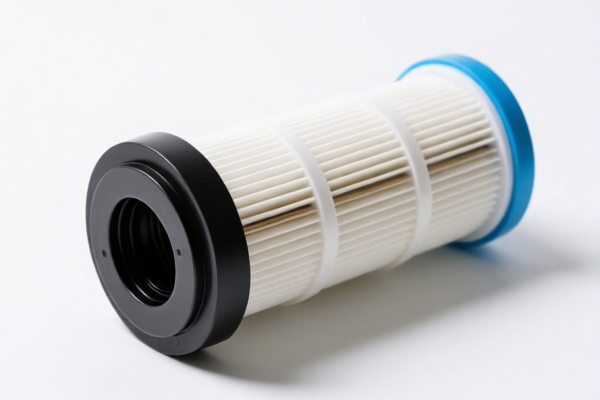
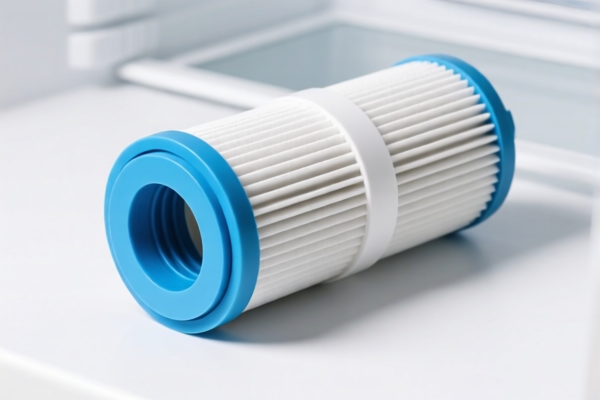
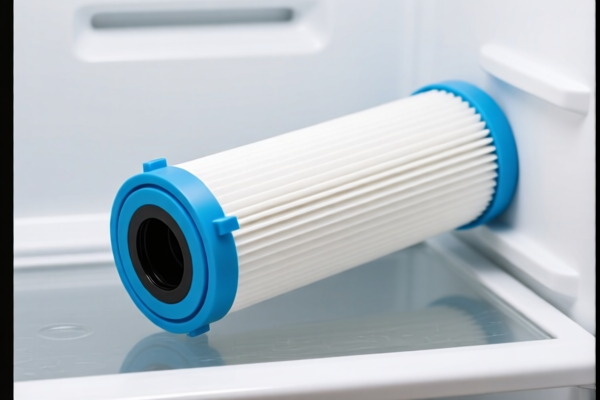
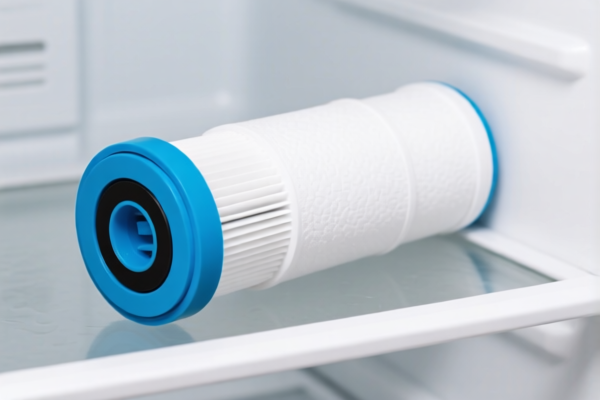
AI Analysis
🧪 HCFC Refrigerant Cleaner: HS Code Classification & U.S. Customs Clearance Guide | 2026 Tax Regime Analysis
🌐 HS Code Reference & Clearance Guide | 2026 Latest Tariff Rates | Professional Compliance Strategy
Product: HCFC Refrigerant Cleaner (制冷剂清洗剂 / HCFC制冷剂清洗剂)
This product is a specialized chemical cleaning agent used to remove contaminants, oils, and residues from HVAC/R systems utilizing Hydrochlorofluorocarbons (HCFCs). Due to its chemical composition and specific industrial application, it falls into a complex classification landscape involving cleaning preparations or organic solvents.
Below is the detailed breakdown of the five most relevant HS Codes based on U.S. Harmonized Tariff Schedule (HTSUS) interpretations, along with a precise tax calculation and clearance advice.
📦 Section I: HS Code Classification Details (Based on Provided Data)
The product can be classified under two main categories: Surface-Active Agents/Cleaning Preparations (Chapter 34) or Organic Solvents/Composite Solvents (Chapter 38). The specific HS Code depends on the primary ingredient and functional mechanism.
Category A: Cleaning Preparations (Surfactant-Based)
Suitable if the cleaner relies on surfactants to emulsify oils and remove dirt.
| HS Code | Product Description | Classification Logic | Total Tax Rate |
|---|---|---|---|
| 3402.90.50.30 | Refrigerant Cleaner, Matched for Cleaning Agent Use | Function: Cleaning preparation. Logic: Matches "Cleaning Preparations" category. The primary action is cleaning via surfactants. |
38.7% |
| 3402.90.10.00 | Refrigerant Cleaner, Synthetic Detergent Category | Function: Surface-active agent / Synthetic cleaner. Logic: Fits "Synthetic Detergents" usage attribute. Often used for industrial cleaning where surfactants are the key active ingredients. |
38.8% |
💡 Distinction:
-3402.90.50.30is often used for general-purpose cleaning preparations.
-3402.90.10.00is more specific to "Synthetic Cleaners" with strong surface-active properties.
Category B: Organic Solvents & Diluents
Suitable if the cleaner relies on organic solvents (e.g., hydrocarbons, alcohols, chlorinated solvents) to dissolve oils and grease.
| HS Code | Product Description | Classification Logic | Total Tax Rate |
|---|---|---|---|
| 3814.00.20.00 | Refrigerant Cleaner, Inferred Organic Solvent Composition | Composition: Organic solvent-based. Logic: Fits "Organic Composite Solvents and Diluents." The primary cleaning mechanism is dissolution. |
41.5% |
| 3814.00.10.00 | Refrigerant Cleaner, Organic Solvent, Paint Remover Equivalent | Composition: Organic solvent. Function: Matches "Paint Remover" functionality (dissolving tough residues). |
41.5% |
💡 Distinction:
-3814.00.20.00is the broader category for composite organic solvents.
-3814.00.10.00is often applied when the solvent has degreasing properties similar to paint strippers or heavy-duty industrial degreasers.
Category C: Auxiliary Equipment (Filter Component)
If the "cleaner" refers to a physical filter used in the refrigerant recovery/cleaning process.
| HS Code | Product Description | Classification Logic | Total Tax Rate |
|---|---|---|---|
| 8421.29.00.05 | HCFC Refrigerant Filter | Function: Filtration of refrigerant. Logic: Matches refrigerant recovery and circulation devices. Specifically designed for filtering refrigerant media. |
35.0% |
⚠️ Note: This HS Code applies only if the product is a physical filter cartridge or element, not a chemical liquid cleaner. If the user input implies a chemical liquid, this code is incorrect.
💰 Section II: 2026 U.S. Tariff Rate Breakdown (Detailed)
✅ Applicable Country: United States (US)
✅ Country of Origin: China (CN)
✅ Effective Date: 2025/2026 (Subject to ongoing Section 301 and IEEPA updates)
All chemical cleaner HS Codes (34xx and 38xx) and the filter HS Code (8421) are subject to Section 301 Tariffs and IEEPA Additional Duties due to their origin from China.
1. For Chemical Cleaners (HS 3402 & 3814 Series)
| Component | Rate | Legal Basis | Description |
|---|---|---|---|
| Base Duty | 3.7% - 6.5% | HTSUS General Rate | Depends on specific subheading (3402 vs 3814). |
| Section 301 Tariff | +25% | USTR Footnote | Standard "China-specific" additional duty for most chemical goods. |
| 122 Clause Tariff (IEEPA) | +10% | IEEPA Proclamation | Additional duty targeting specific Chinese imports under International Emergency Economic Powers Act. |
| Total Effective Rate | 38.7% - 41.5% | Sum of Above | High Risk Zone |
📌 Explanation:
- Base Duty: Varies between 3.7% (for 3402.90.50.30) and 6.5% (for 3814 series).
- Section 301 (+25%): Applies to almost all chemical products from China.
- IEEPA (+10%): A recent addition for certain Chinese goods, pushing the total cost significantly higher.
- De Minimis Exemption: ❌ NOT APPLICABLE. These goods cannot utilize the $800 de minimis exemption (Section 321) if classified under these specific HTSUs with Section 301/IEEPA duties, or are explicitly excluded by recent CBP rulings.
2. For Refrigerant Filter (HS 8421.29.00.05)
| Component | Rate | Legal Basis | Description |
|---|---|---|---|
| Base Duty | 0.0% | HTSUS Free Rate | Mechanical filters often have 0% base duty. |
| Section 301 Tariff | +25% | USTR Footnote | Applies to mechanical parts from China. |
| 122 Clause Tariff (IEEPA) | +10% | IEEPA Proclamation | Applies to mechanical components from China. |
| Total Effective Rate | 35.0% | Sum of Above | Moderate-High Risk |
🛠️ Section III: Customs Clearance Practical Advice (Pitfall Avoidance Guide)
✅ 1. Critical Declaration Strategy
| Scenario | Recommended HS Code | Declaration Name | Risk Level |
|---|---|---|---|
| Chemical Liquid Cleaner | 3402.90.50.30 or 3814.00.20.00 |
"Refrigerant System Cleaning Agent" | 🟡 High (Subject to strict ingredient declaration) |
| Chemical Liquid Cleaner | 3402.90.10.00 |
"Synthetic Surface-Active Cleaner" | 🟡 High |
| Physical Filter Cartridge | 8421.29.00.05 |
"Refrigerant Filter Element" | 🟢 Moderate (Easier to clear, but verify material) |
🔥 Golden Rule:
"Chemical Liquid = Chapter 34/38; Physical Filter = Chapter 84. Never mix!"
✅ 2. Required Documentation for Clearance
| Document | Mandatory? | Purpose |
|---|---|---|
| ✅ SDS (Safety Data Sheet) | YES | Critical for chemical products. Must list all ingredients, especially if containing restricted solvents. |
| ✅ Product Specification Sheet | YES | Detail the chemical composition, concentration, and primary function (cleaning vs. solvent). |
| ✅ Certificate of Origin (CO) | YES | To verify Chinese origin and apply correct Section 301/IEEPA rates. |
| ✅ Commercial Invoice | YES | Must clearly state "HCFC Refrigerant Cleaner" and HS Code. |
| ✅ FCC/UL Report (Optional) | NO | Not required for chemicals, but may be asked if the product is sold in a kit with electrical components. |
✅ 3. Common Customs Pitfalls & Solutions
| Pitfall | Consequence | Solution |
|---|---|---|
| Misclassifying Liquid as Filter | Severe Penalty, Demurrage | Clearly separate "Cleaner Fluid" from "Filter Hardware" in packing list and invoice. |
| Vague Description ("Cleaning Fluid") | Customs Hold, Examination | Use precise terms: "Organic Solvent-Based Refrigerant Cleaner" or "Surfactant-Based Cleaning Agent." |
| Ignoring IEEPA 10% Tariff | Underpayment, Back Taxes | Always check for 122 Clause applicability. Recent rulings indicate many chemical/mechanical goods from China are subject to this. |
| Claiming De Minimis Exemption | Rejection, Seizure | Do not use BCP 321 for these HS Codes if total value exceeds limits or if flagged for Section 301. Use formal entry (Type 06 or Type 01). |
✅ 4. Pro-Tip for Cost Optimization
📌 Strategy:
- If the product is a solvent-based cleaner, consider if it can be reformulated or marketed as a "Surface-Active Agent" (HS 3402) to potentially lower the base duty from 6.5% to 3.7%. However, the Section 301 + IEEPA duties remain, so the saving is marginal (~2.8%).
- If the product is a physical filter, ensure it is clearly described as a "Filter Element" and not part of a "Cleaning Kit" to avoid being grouped with the higher-tax chemical components.
🌍 Section IV: Global Market Comparison (2026)
| Market | Recommended HS Code | Estimated Total Duty | Key Requirement |
|---|---|---|---|
| 🇺🇸 USA | 3814.00.20.00 or 3402.90.50.30 |
38.7% - 41.5% | SDS, Detailed Ingredient List, IEEPA Compliance |
| 🇨🇳 China | 3814.00.20.00 or 3402.90.50.30 |
Varies (0%-13%) | MSDS, Chinese Labeling |
| 🇪🇺 EU | 3814.00.90 or 3402.90 |
~6.5% - 10% | REACH Registration, CLP Labeling |
| 🇦🇺 Australia | 3814.00.00 |
~5% | ACMA Compliance, GHS Labeling |
📌 Conclusion:
- USA is the most challenging market due to the combination of high base duties and multiple layers of additional tariffs (Section 301 + IEEPA).
- Compliance with Chemical Regulations (SDS, Ingredient Disclosure) is as critical as tariff classification.
📌 Section V: Final Checklist for Importers
- Verify Composition: Is it a solvent (Chapter 38) or a surfactant cleaner (Chapter 34)? This determines the base rate.
- Check for IEEPA 10%: Confirm if your specific HTSUS is subject to the 122 Clause tariff.
- Prepare SDS: Have a comprehensive Safety Data Sheet ready for CBP and DOT.
- Avoid De Minimis: Use formal customs entry for shipments over $800 or if flagged.
- Labeling: Ensure labels comply with US OSHA/HazCom standards.
🎯 Conclusion: Precision Classification Saves Money
🎯 Key Takeaway:
🔹 "HCFC Cleaner" is not a single HS Code. It depends on chemistry (Solvent vs. Surfactant).
🔹 Total Duty is High (35%-41.5%) due to China origin and multiple tariff layers.
🔹 Documentation is King: SDS and detailed ingredient lists are mandatory.
🔹 Filter vs. Fluid: Do not confuse physical filters (HS 8421) with chemical cleaners.
📣 Immediate Action:
📞 Consult a Customs Broker: Provide the SDS and product formula to determine the exact HS Code between 3402 and 3814.
📝 Apply for Advance Ruling: If importing large volumes, consider requesting a CBP Advance Ruling to lock in the classification and avoid post-clearance audits.
✨ Professional Clearance, Start with Accurate Classification!
💼 Every percentage point of duty savings matters in the HVAC chemical market!
Customer Reviews
About HS Code Classification
The Harmonized System (HS) is an internationally standardized nomenclature developed by the World Customs Organization (WCO) to classify traded products. Over 200 countries use the HS system as the basis for customs tariffs, trade statistics, and import/export regulations.
Each HS code follows a hierarchical structure:
- Chapter (2 digits) — Broad category of goods (e.g., Chapter 84: Machinery and Mechanical Appliances)
- Heading (4 digits) — More specific grouping within the chapter
- Subheading (6 digits) — Internationally standardized breakdown, used by all WCO member countries
- National subdivisions (8-10 digits) — Country-specific extensions for further classification, such as US HTSUS 10-digit codes
Correct HS code classification is essential for smooth customs clearance, accurate duty payment, and compliance with trade regulations. Misclassification can lead to customs delays, overpayment of duties, or penalties.
When importing from CN to US, the applicable tariff rates may include:
- Most-Favored-Nation (MFN) rate — The standard duty rate applied to WTO members
- General rate — Applied to countries without trade agreements
- Trade remedy duties — Additional tariffs such as Section 301 (anti-dumping), Section 232 (national security), or countervailing duties
The information provided on this page is for reference purposes only. For official classification, please consult with your local customs authority or a licensed customs broker.