HD Dash Cam
CN → US| HS Code | Tariff Rate | Origin | Destination | Doc |
|---|---|---|---|---|
| 8525895030 | 35.0% | CN | US | Official Doc |
| 8525895050 | 35.0% | CN | US | Official Doc |
| 8521106000 | 17.5% | CN | US | Official Doc |
| 8521900000 | 17.5% | CN | US | Official Doc |
Product Images
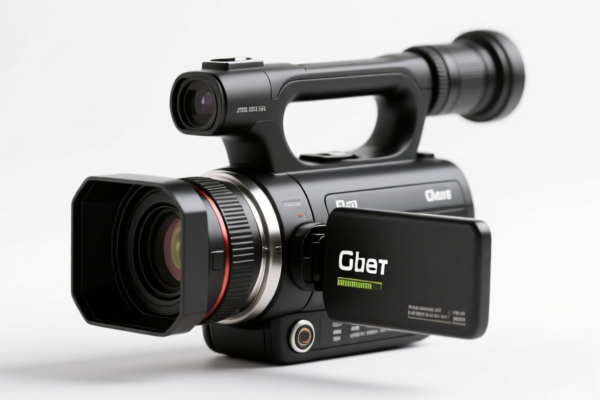
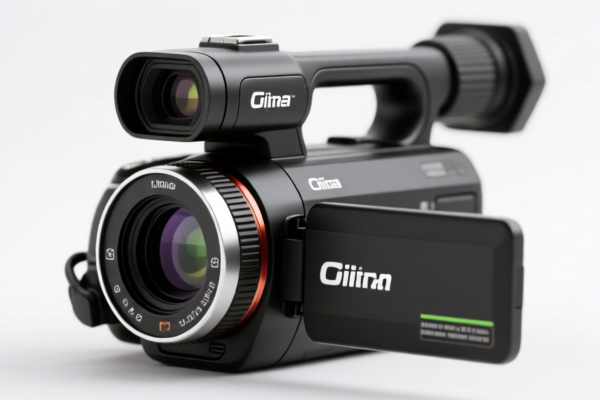
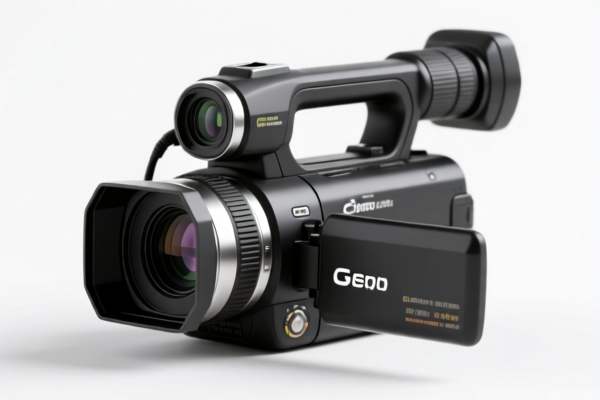
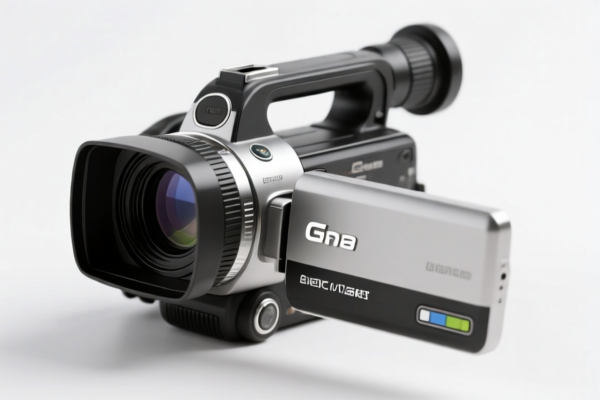
AI Analysis
🚗 HD Dash Cam (High-Definition Dash Cam)
🌐 HS Code Reference & Customs Clearance Guide | 2026 Latest Tariff Analysis | Professional通关 Strategies 📌 I. Product Definition & Classification: Do You Really Understand "Dash Cams"?
An HD Dash Cam is a critical video recording device for vehicles, primarily used for evidence collection, insurance claims, and driving safety monitoring. In international trade, its classification hinges on whether it is viewed strictly as a camera (video recording device) or broadly as a video recording apparatus.
Two Main Classification Paths: 1. Video Camera Category (8525/8529): Focuses on the function of capturing images. This path often attracts higher additional tariffs due to "Section 301" and "IEEPA" penalties. 2. Video Recording/Reproduction Equipment Category (8521): Focuses on the capability to record video to a medium. This path is often more favorable for tax purposes but requires strict adherence to the definition of "video recording devices."
⚠️ Key Distinction Point: - If the device is marketed primarily as a "Camera" with specific lens/optical features → Likely 8525/8529 (Higher Tax). - If the device is marketed primarily as a "Video Recorder" for vehicles → Likely 8521 (Lower Tax). - Note: Customs authorities may disagree with the importer's classification, leading to audits.
📦 II. HS Code Classification Details (2026 Latest Tariff Authority Comparison)
Based on the provided data, here are the four potential HS Codes for HD Dash Cams, along with their specific tax implications:
| HS Code | Product Description Summary | Applicable Scenario | Total Tax Rate |
|---|---|---|---|
8525.89.50.30 |
Camera Category: Matches the functional definition of cameras. | Dash cams explicitly defined as video capture devices. | 35.0% |
8525.89.50.50 |
Video Recording/Transmission Device: Matches video camera-related equipment without material conflict. | Devices transmitting or recording video signals. | 35.0% |
8521.10.60.00 |
Video Recording Device: Matches "Video recording or reproducing apparatus." | Dash cams classified under general video recording equipment. | 17.5% |
8521.90.00.00 |
Other Video Recording/Reproducing Equipment: "Other" category fallback for video devices. | Dash cams fitting the broader "other" definition for video equipment. | 17.5% |
🔍 Key Reminder: - 8525 vs. 8521: The difference in total tax rate is 17.5% (35% vs 17.5%). - Classification Risk: If you declare as
8525(Camera), you pay 35%. If Customs reclassifies to8521(Recorder), you might get a refund, but if you declare as8521and they classify as8525, you face penalties and back taxes. - No Material Conflict: For8525.89.50.50, there is no material conflict, making it a viable option if functionally justified as a camera.
💰 III. 2026 Latest Tariff Rate Breakdown (Including Surtaxes & Policy Add-ons)
✅ Applicable Country: United States (US) ✅ Origin: China (CN) ✅ Effective Time: Includes subsequent imports under current trade policies (Section 301 & IEEPA)
🎯 1. 8525.89.50.30 & 8525.89.50.50 —— Camera & Video Transmission Devices
| Item | Content |
|---|---|
| Base Tariff | 0.0% (ad valorem) |
| Section 301 Surtax | +25.0% (From USITC Footnotes related to Section 301) |
| IEEPA Surtax | +10.0% (Section 122 Tariff, applied to Chinese-origin products) |
| Total Tax Rate | 35.0% |
| Tax Calculation | CIF Value × 35% |
| De Minimis Eligibility | ❌ No (Denied under current trade restrictions) |
| Legal Basis Path | USITC:8525.89.50.30/50 → Section 301: 25% → IEEPA: 10% |
📌 Explanation: - The 25% is the standard Section 301 tariff for many Chinese electronics. - The 10% is the additional IEEPA (Section 122) tariff. - Total 35% is a high barrier. Must be factored into pricing strategy.
🎯 2. 8521.10.60.00 & 8521.90.00.00 —— Video Recording/Reproducing Devices
| Item | Content |
|---|---|
| Base Tariff | 0.0% (ad valorem) |
| Section 301 Surtax | +7.5% (From USITC Footnotes related to Section 301 for this subheading) |
| IEEPA Surtax | +10.0% (Section 122 Tariff, applied to Chinese-origin products) |
| Total Tax Rate | 17.5% |
| Tax Calculation | CIF Value × 17.5% |
| De Minimis Eligibility | ❌ No (Denied under current trade restrictions) |
| Legal Basis Path | USITC:8521.10.60.00/90.00.00 → Section 301: 7.5% → IEEPA: 10% |
📌 Note: - This is the preferred classification for cost optimization. - The 7.5% Section 301 rate is significantly lower than the 25% for cameras. - Total 17.5% makes this class highly competitive for US importers. - Both
8521.10.60.00and8521.90.00.00share the same tax structure.
🛠️ IV. Customs Clearance Practical Advice (Combat Pitavoidance Guide)
✅ 1. Preparation Checklist (All Required)
| Document | Required | Notes |
|---|---|---|
| ✅ Product Specification Sheet | ✔️ | Must detail resolution, storage type (SD/Cloud), lens angle, and power supply. |
| ✅ Function Description | ✔️ | Clearly state: "Dash Cam" vs. "Vehicle Security Camera." Emphasize recording capability. |
| ✅ Product Photos (Front/Rear/Label) | ✔️ | Must show model number, brand, and input/output ports. |
| ✅ Third-Party Test Reports | ✔️ | FCC (mandatory for US), CE, RoHS (if applicable). |
| ✅ Commercial Invoice | ✔️ | Describe as "Video Recording Device for Automotive Use." |
| ✅ Packing List | ✔️ | Include all accessories (cables, mounts) to avoid "missing parts" flags. |
✅ 2. Declaration Strategy (Key Mnemonics)
🔥 “Claim Recorder, Not Camera; Lower Tax, Higher Safety!”
| Situation | Correct Declaration | Risk of Error |
|---|---|---|
| Standard Dash Cam | 8521.10.60.00 or 8521.90.00.00 |
Declaring as 8525 → 17.5% Overpayment |
| Integrated Camera/Recorder | 8521.90.00.00 ("Other") |
Declaring as 8525.89.50.30 → 35% Tax |
| Vehicle Security System | 8525.89.50.30 |
If marketed as "Security Camera," must pay 35%. |
📌 Critical Tip: - Use the term "Video Recording Apparatus" in descriptions. - Avoid terms like "Security Camera" or "Surveillance Camera" unless you intend to pay 35%. - Provide a detailed function statement: "This device records video footage to SD card for driving evidence."
✅ 3. Special Cases Handling
| Scenario | Recommendation |
|---|---|
| Multi-function Devices | If the dash cam also has Wi-Fi/App control, it still fits 8521 as long as the primary function is recording. |
| OEM Customization | Ensure the label matches the declared HS Code. Do not put "Camera" on the box if declaring as "Recorder." |
| Kit with Mounts | Declare as a single unit. Do not split into "Camera + Mount" (Mounts may have different duties). |
| Pre-Clearance | Apply for an Advance Ruling from US Customs if unsure. This protects you from retrospective audits. |
🌍 V. Global Market Comparison (2026 Latest)
| Country/Region | Recommended HS Code | Tariff (CN Origin) | Certification | Remarks |
|---|---|---|---|---|
| 🇺🇸 USA | 8521.10.60.00 |
17.5% | FCC | Best for cost. Avoid 8525 if possible. |
| 🇨🇳 China | 8521.10.60.00 |
10%~12% | CCC | Domestic duties vary; check latest tariff book. |
| 🇪🇺 EU | 8525.89.00 |
0% | CE + UKCA | No additional surtaxes. Broad camera category. |
| 🇦🇺 Australia | 8525.89.00 |
5% | RCM | Moderate duty. |
| 🇯🇵 Japan | 8525.89.00 |
0% | PSE | Low duty. |
📌 Conclusion: - The US is the most tariff-sensitive market due to Section 301 and IEEPA. - Correct classification saves 17.5% of the CIF value. - For other markets, the distinction between "Camera" and "Recorder" has less impact on total duty, but US compliance is critical.
📌 VI. Common Mistakes & Pitfall Guide (Lessons Learned)
❌ Mistake 1: Declaring as "Camera" (8525) when it's a "Recorder" (8521).
👉 Consequence: You pay 35% instead of 17.5%. No refund for future shipments unless ruled otherwise.
❌ Mistake 2: Not disclosing "Chinese Origin" or misdeclaring origin. 👉 Consequence: Loss of any potential preferential treatment, plus penalties for fraud.
❌ Mistake 3: Using vague terms like "Video Device" without details. 👉 Consequence: Customs flags the shipment for inspection, causing delays and storage fees.
❌ Mistake 4: Ignoring IEEPA 10% surtax. 👉 Consequence: Unexpected cost at border, disrupting cash flow.
✅ Correct Practice:
"HD Dash Cam, Video Recording Device for Automotive Use, 1080P Resolution, SD Card Storage, FCC Certified, Model XYZ"
🎯 VII. Conclusion: Professional Declaration, Save Money, Ensure Smooth Customs!
🎯 Remember the Mnemonics:
🔹 "Recorder is King, 17.5% Win; Camera is Pain, 35% Rain!" 🔹 "HS Code Defines Your Profit, Declaration Defines Your Speed!"
📌 Pro Tip:
If your Dash Cam is originally from Vietnam, Mexico, or Thailand, you may be eligible for IEEPA Exemptions, reducing the tariff to 0%~5%. Action: Verify country of origin and apply for Advance Ruling if shipment value is high.
📣 Immediate Action:
📞 Contact a licensed customs broker + Provide Product Specs + Apply for HS Code Advance Ruling 🚀 Let your Dash Cams clear customs smoothly, maximize profits, and dominate the road!
✨ Professional Customs Clearance Starts with Precise Classification! 💼 Every Penny of Cost Deserves Exact Calculation!
Customer Reviews
About HS Code Classification
The Harmonized System (HS) is an internationally standardized nomenclature developed by the World Customs Organization (WCO) to classify traded products. Over 200 countries use the HS system as the basis for customs tariffs, trade statistics, and import/export regulations.
Each HS code follows a hierarchical structure:
- Chapter (2 digits) — Broad category of goods (e.g., Chapter 84: Machinery and Mechanical Appliances)
- Heading (4 digits) — More specific grouping within the chapter
- Subheading (6 digits) — Internationally standardized breakdown, used by all WCO member countries
- National subdivisions (8-10 digits) — Country-specific extensions for further classification, such as US HTSUS 10-digit codes
Correct HS code classification is essential for smooth customs clearance, accurate duty payment, and compliance with trade regulations. Misclassification can lead to customs delays, overpayment of duties, or penalties.
When importing from CN to US, the applicable tariff rates may include:
- Most-Favored-Nation (MFN) rate — The standard duty rate applied to WTO members
- General rate — Applied to countries without trade agreements
- Trade remedy duties — Additional tariffs such as Section 301 (anti-dumping), Section 232 (national security), or countervailing duties
The information provided on this page is for reference purposes only. For official classification, please consult with your local customs authority or a licensed customs broker.