HDMI Cable
CN → US| HS Code | Tariff Rate | Origin | Destination | Doc |
|---|---|---|---|---|
| 8544422000 | 85.0% | CN | US | Official Doc |
| 8517690000 | 35.0% | CN | US | Official Doc |
| 8544429090 | 87.6% | CN | US | Official Doc |
| 8517620090 | 35.0% | CN | US | Official Doc |
| 8536698000 | 37.7% | CN | US | Official Doc |
Product Images
AI Analysis
🔌 HDMI Cable: The Ultimate Cross-Border Compliance Guide (2026 Edition)
🌐 HS Code Decoded & Duty Strategy | The Real Cost of Cables | Professional Clearance Tactics
📌 Part 1: What is an "HDMI Cable"? The Definition Trap
HDMI (High-Definition Multimedia Interface) cables are the backbone of modern digital entertainment and data transfer. However, in international trade, a simple "cable" can land in wildly different tax buckets depending on how it's described and how it's categorized (as a wire vs. a transmission device).
The critical distinction lies in whether you classify it as: 1. "Electric Conductors" (8544): Pure wiring with insulation and connectors. 2. "Data Transmission Devices" (8517): Equipment designed to transmit data/signal. 3. "Electrical Connection Apparatus" (8536): Connectors used in circuits.
⚠️ The Risk:
A mistake in classification can turn a 35% duty into an 87.6% duty. That is a 150% cost increase overnight!
📦 Part 2: HS Code Classification Matrix (2026 Duty Breakdown)
Based on the latest 2026 tariff data for China-origin goods imported into the US:
| HS Code | Product Logic | Total Duty Rate | Composition of Taxes |
|---|---|---|---|
8517.69.00.00 |
Transmission Device Used for image/data transfer. Classified as "Other data transmission equipment." |
35.0% | Base: 0% + Section 301: 25% + IEEPA: 10% |
8517.62.00.90 |
Data Device/Component Transmission medium for audio/video. Classified under "Other devices." |
35.0% | Base: 0% + Section 301: 25% + IEEPA: 10% |
8536.69.80.00 |
Electrical Connection Apparatus Used to connect electrical circuits. "Other" category. |
37.7% | Base: 2.7% + Section 301: 25% + IEEPA: 10% |
8544.42.20.00 |
Electric Conductor (Telecom) Conform to "conductors for telecommunication." |
85.0% | Base: 0% + Section 301: 25% + Section 232 (Alloy): 50% |
8544.42.90.90 |
Insulated Conductor (General) Voltage ≤1000V, with connectors. "Other" wires. |
87.6% | Base: 2.6% + Section 301: 25% + Section 232 (Alloy): 50% |
🔍 Key Insight:
The jump from 35% (Codes 8517/8536) to 85%+ (Code 8544) is caused by the Section 232 Tariff (Steel/Aluminum/Copper). - If classified as a "Cable/Wire" (8544), the copper conductors trigger a 50% additional tariff. - If classified as "Transmission Equipment" (8517), the copper is considered part of a "device," avoiding the 50% copper tariff.
💰 Part 3: Deep Dive into Tax Structure & Legal Basis
🎯 Scenario A: The "Smart" Classification (Codes 8517.69 / 8517.62)
Total Duty: 35.0%
| Component | Rate | Legal Source | Explanation |
|---|---|---|---|
| Base Duty | 0.0% | HTSUS General | No standard tariff for these specific subheadings. |
| Section 301 (China) | +25.0% | USITC Footnote 9903.88.01 | "Additional duty" on all Chinese goods. |
| Section 232 (Steel/Alum) | N/A | N/A | Avoided. The cable is not declared as a raw wire product. |
| IEEPA (China Specific) | +10.0% | IEEPA 9903.01.24 | Additional tariff for specific Chinese origin goods. |
| ✅ TOTAL | 35.0% | Most Common & Optimal |
🎯 Scenario B: The "Wire" Trap (Codes 8544.42)
Total Duty: 85.0% – 87.6%
| Component | Rate | Legal Source | Explanation |
|---|---|---|---|
| Base Duty | 0.0% or 2.6% | HTSUS | Varies by specific subcategory. |
| Section 301 (China) | +25.0% | USITC Footnote 9903.88.01 | Standard China tariff. |
| Section 232 (Steel/Alum/Cu) | +50.0% | IEEPA 9903.01.25 (Item 10) | The Killer: This category explicitly taxes "copper products" under the Steel/Aluminum/Copper safeguard. |
| IEEPA (China Specific) | +10.0% | IEEPA 9903.01.24 | Additional China tariff. |
| ❌ TOTAL | 85.0% - 87.6% | High Risk. Only applies if the product is legally deemed a "wire" rather than a "transmission device." |
📌 Why the 50% Jump?
The US government imposes a 50% penalty on copper products imported under Section 232 if they fall under specific wire codes (8544). By arguing the HDMI cable is a "Transmission Device" (8517), you bypass the "wire" definition entirely.
🛠️ Part 4: Clearance实操 Strategy (Clearance Tactics)
✅ 1. Preparation Checklist (The "Must-Haves")
| Document | Status | Why it Matters |
|---|---|---|
| ✅ Technical Data Sheet | Critical | Must explicitly state: "HDMI Cable, Transmission Device for Digital Video/Audio." Avoid just saying "Copper Wire." |
| ✅ Circuit Diagram/Block Diagram | Critical | Prove the signal conversion logic exists (even simple passive buffering) to support "8517" classification. |
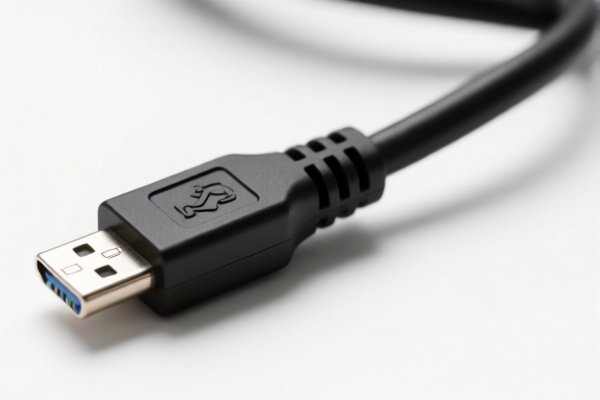
| ✅ Product Photos (Connector Close-up) | Required | Show the HDMI connector housing, not just the copper core. |
| ✅ Commercial Invoice Description | Required | DO NOT write "HDMI Wire." DO write "HDMI Transmission Cable" or "Digital Video/Data Transmission Cable." |
| ✅ Origin Declaration | Required | Must clearly state "Made in China" to trigger the correct IEEPA/301 rates, or prove non-China origin for exemptions. |
✅ 2. Declaration Strategy: "The Narrative"
🔥 Golden Rule: "We are importing a Data Transmission Device, not a raw electrical conductor."
| Wrong Declaration | Right Declaration | Consequence |
|---|---|---|
| "HDMI Copper Wire" | "HDMI Digital Video/Data Transmission Cable" | Avoids 50% Copper Tax |
| "Electrical Conductor, 8544" | "Transmission Equipment, 8517" | Drops duty from 85% to 35% |
| "Wire for Audio" | "Audio/Video Transmission Unit" | Changes classification logic |
✅ 3. Special Scenarios
| Scenario | Recommendation |
|---|---|
| OEM Custom Cables | Provide the client's design specs. If they design it as a "data device," classify as 8517. |
| Long-Range HDMI (Active) | Must use 8517. Active cables have amplifiers; they are definitely devices. |
| Passive HDMI (Short) | Still try for 8517. Use the "data transmission" argument. If CBP rejects, 8544 is the fallback (expensive). |
| Cable + Adapter Bundle | Declare the whole kit as a "Transmission System" (8517) if possible, rather than splitting them. |
🌍 Part 5: Market Comparison (2026 Outlook)
| Destination | Recommended HS Code | Effective Duty | Notes |
|---|---|---|---|
| 🇺🇸 USA | 8517.69.00.00 or 8517.62.00.90 | 35% | Avoid 8544 to save 50% copper tax. |
| 🇪🇺 EU | 8544.42.90.90 | ~0% - 2% | EU generally does not have Section 301/232 on wires. |
| 🇯🇵 Japan | 8544.42.20.00 | ~5% | Lower base rates, less sensitive to copper classification. |
📌 Conclusion: The USA is the only market where the 8544 vs. 8517 distinction costs you $50,000 on every $100,000 shipment.
🚨 Part 6: Common Pitfalls & "Blood & Tears" Warnings
❌ Pitfall 1: The "Wire" Label
Mistake: Writing "HDMI Wire" on the commercial invoice.
Result: CBP automatically classifies under 8544, triggering the 50% Section 232 tax.
Fix: Change invoice to "HDMI Transmission Cable."
❌ Pitfall 2: Ignoring the Connector
Mistake: Focusing only on the copper core.
Result: CBP argues it's a "conductor."
Fix: Highlight the HDMI connector housing and the digital signal path in the description.
❌ Pitfall 3: Overlooking "Active" vs. "Passive"
Mistake: Classifying active cables as wires.
Result: Missed opportunity for lower duty. Active cables have chips; they are devices.
Fix: Use 8517 for active cables.
🎯 Part 7: Final Verdict & Action Plan
The Bottom Line:
For US imports, NEVER classify HDMI cables as simple "Electric Conductors" (8544) unless you have no other choice. The 50% Section 232 copper tariff is a financial disaster.
Your Action Plan:
1. Update Invoice: Ensure the product name is "HDMI Transmission Cable" or "Data Transmission Device."
2. Submit Technical Docs: Provide a diagram showing the signal path (Video/Audio).
3. Target HS Code: Aim for 8517.69.00.00 or 8517.62.00.90 (Total Duty: 35%).
4. Verify Origin: Ensure no "Section 232" loopholes are accidentally triggered by mislabeling.
🚀 Pro Tip: If you are unsure, file for a Binding Ruling with US Customs (CBP) to get a guaranteed 35% rate before shipping!
✨ Smart Classification = 50% Savings.
💼 Don't let a simple "Wire" label cost you your profit margin!
Customer Reviews
About HS Code Classification
The Harmonized System (HS) is an internationally standardized nomenclature developed by the World Customs Organization (WCO) to classify traded products. Over 200 countries use the HS system as the basis for customs tariffs, trade statistics, and import/export regulations.
Each HS code follows a hierarchical structure:
- Chapter (2 digits) — Broad category of goods (e.g., Chapter 84: Machinery and Mechanical Appliances)
- Heading (4 digits) — More specific grouping within the chapter
- Subheading (6 digits) — Internationally standardized breakdown, used by all WCO member countries
- National subdivisions (8-10 digits) — Country-specific extensions for further classification, such as US HTSUS 10-digit codes
Correct HS code classification is essential for smooth customs clearance, accurate duty payment, and compliance with trade regulations. Misclassification can lead to customs delays, overpayment of duties, or penalties.
When importing from CN to US, the applicable tariff rates may include:
- Most-Favored-Nation (MFN) rate — The standard duty rate applied to WTO members
- General rate — Applied to countries without trade agreements
- Trade remedy duties — Additional tariffs such as Section 301 (anti-dumping), Section 232 (national security), or countervailing duties
The information provided on this page is for reference purposes only. For official classification, please consult with your local customs authority or a licensed customs broker.