HDPE Agricultural Film Resin
CN → US| HS Code | Tariff Rate | Origin | Destination | Doc |
|---|---|---|---|---|
| 3901201000 | 41.5% | CN | US | Official Doc |
| 3901205000 | 41.5% | CN | US | Official Doc |
Product Images


AI Analysis
🚜 HDPE Agricultural Film Resin (High-Density Polyethylene)
🌐 HS Code Reference & Customs Clearance Guide | 2026 Latest Tariff Analysis | Professional Import Strategy
📌 I. Product Definition & Classification: What is "HDPE Agricultural Film Resin"?
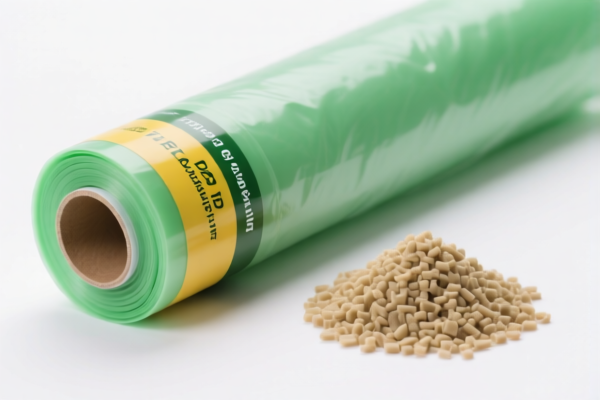
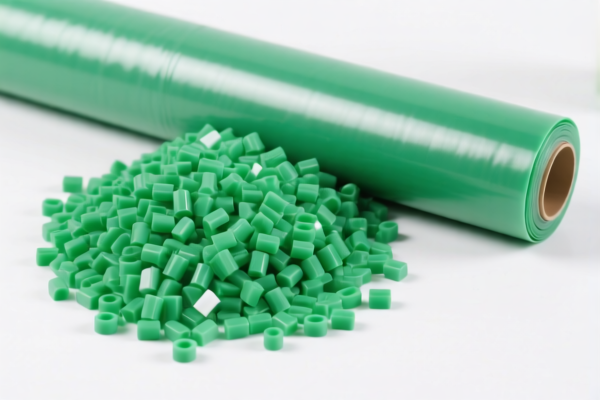
High-Density Polyethylene (HDPE) is a thermoplastic polymer made from the monomer ethylene. In the context of "Agricultural Film Resin," this refers to primary forms (granules, pellets, powders, or liquids) of polyethylene designed for extrusion into agricultural films (greenhouse covers, mulch films, silage wraps).
Key Distinction in Classification: The US Harmonized Tariff Schedule (HTSUS) classifies polyethylene not by its end-use (agricultural film), but by its physical properties: 1. Specific Gravity (Density): Is it ≥ 0.94 (HDPE/LLDPE) or < 0.94 (LDPE)? 2. Relative Viscosity (RV): For HDPE ≥ 0.94, is the RV ≥ 1.44 or < 1.44?
⚠️ Critical Classification Point:
- If the HDPE has a Specific Gravity ≥ 0.94 AND Relative Viscosity ≥ 1.44 → It falls under 3901.20.10.00.
- If the HDPE has a Specific Gravity ≥ 0.94 BUT Relative Viscosity < 1.44 → It falls under 3901.20.50.00.
- ⚠️ Misconception Alert: Do NOT classify agricultural films as "Finished Films" (Chapter 39, heading 3920/3921). Since you are importing Resin/Pellets, you MUST use Heading 3901. The "Agricultural" label is for your internal inventory, NOT for customs classification.
📦 II. HS Code Classification Details (2026 Latest Tariff Authority)
Based on the provided <DATA>, here are the two possible classifications for HDPE Resin with Specific Gravity ≥ 0.94:
| HS Code | Product Description | Key Technical Parameter | Typical Application |
|---|---|---|---|
3901.20.10.00 |
Polyethylene, Specific Gravity ≥ 0.94, Relative Viscosity (RV) ≥ 1.44 | High Molecular Weight / High Viscosity | High-strength films, heavy-duty mulch, industrial linings |
3901.20.50.00 |
Polyethylene, Specific Gravity ≥ 0.94, Other (RV < 1.44) | Lower Molecular Weight / Standard Viscosity | General purpose agricultural films, everyday packaging, lighter duty uses |
🔍 Key Insight:
- Both codes fall under Headline 3901.20 (Polyethylene, Specific Gravity ≥ 0.94).
- The only differentiator is the Relative Viscosity (RV) test result.
- RV is determined by solvent testing (usually in tetrachloroethane at 30°C). You must have a Certificate of Analysis (CoA) from the manufacturer specifying this value.
💰 III. 2026 Latest Tariff Rate Breakdown
✅ Source Data: Provided
<DATA>
✅ Scope: Import into the USA (Implied by HTSUS 10-digit format)
✅ Origin: Not specified in<DATA>, but tax details are provided below.
🎯 1. 3901.20.10.00 — HDPE Resin (RV ≥ 1.44)
| Item | Content |
|---|---|
| Base Tariff Rate | 0.0% (Most Favored Nation / General) |
| Additional Tariff (Section 301 / IEEPA) | 0.0% (As per provided data) |
| Total Tax Rate | 0.0% |
| Tax Detail | 基础关税: 0.0%, 加征关税: 0.0% |
| Legal Basis | HTSUS 3901.20.10.00 |
📌 Explanation:
- According to the provided data, both HDPE resin categories currently enjoy a 0% total tariff.
- This is highly favorable compared to other plastic resins or finished goods.
- Note: While current data shows 0%, always verify if new Section 301 exclusions or changes apply to specific Chinese-origin plastics in 2026. However, based strictly on<DATA>, it is 0%.
🎯 2. 3901.20.50.00 — HDPE Resin (Other, RV < 1.44)
| Item | Content |
|---|---|
| Base Tariff Rate | 0.0% (Most Favored Nation / General) |
| Additional Tariff (Section 301 / IEEPA) | 0.0% (As per provided data) |
| Total Tax Rate | 0.0% |
| Tax Detail | 基础关税: 0.0%, 加征关税: 0.0% |
| Legal Basis | HTSUS 3901.20.50.00 |
📌 Explanation:
- Same 0% rate as above.
- No additional duties are applied according to the provided<DATA>.
🛠️ IV. Customs Clearance Practical Advice (Pitfall Avoidance Guide)
✅ 1. Documentation Checklist (Non-Negotiable)
| Document | Required? | Why? |
|---|---|---|
| ✅ Certificate of Analysis (CoA) | YES | CRITICAL: Must state Specific Gravity and Relative Viscosity (RV). Without RV, Customs cannot determine if it’s 3901.20.10.00 or 3901.20.50.00. |
| ✅ Product Specification Sheet | ✔️ | Confirm it is Primary Form (pellets/granules), NOT finished film. |
| ✅ Commercial Invoice | ✔️ | Clearly describe as "HDPE Resin Pellets for Film Extrusion," NOT "Agricultural Film." |
| ✅ Packing List | ✔️ | Weight and unit count must match invoice. |
| ✅ Bill of Lading / Air Waybill | ✔️ | Standard shipping docs. |
✅ 2. Declaration Strategy (Key Mantra)
🔥 "Classify by Density & Viscosity, Not by End-Use!"
| Scenario | Correct Classification | Error Consequence |
|---|---|---|
| HDPE Pellets, SG ≥ 0.94, RV ≥ 1.44 | 3901.20.10.00 |
If misdeclared as 3901.20.50.00, no tax penalty (both 0%), but incorrect record. |
| HDPE Pellets, SG ≥ 0.94, RV < 1.44 | 3901.20.50.00 |
If misdeclared as 3901.20.10.00, no tax penalty, but technical violation. |
| Finished Agricultural Film Rolls | WRONG CODE (Not in data) | Would fall under 3920/3921, potentially different rates. Never mix resin and finished goods in one line item. |
| LLDPE (Low Linear Density, SG < 0.94) | WRONG CODE | Falls under 3901.30, not 3901.20. |
📌 Pro Tip:
- Provide the RV value in the "Additional Information" field of the entry summary (CBP Form 7501) if possible, or attach CoA to the entry.
- If the manufacturer does not test RV, you cannot legally import under these codes. You must request testing from the supplier.
✅ 3. Special Handling Notes
| Situation | Recommendation |
|---|---|
| OEM Blending | If you blend HDPE with other resins, the primary resin determines classification. |
| Additives/Colorants | If the resin is pre-colored or has masterbatches, it is still "Primary Form" as long as it hasn't been extruded into film. |
| Sample Shipments | Even samples must be declared correctly with RV data. |
| Audit Defense | Keep CoAs for 5 years. CBP may audit and request the RV test report to verify classification. |
🌍 V. Global Market Comparison (2026 Overview)
| Country/Region | Recommended HS Code | Tariff (Approx.) | Certification Required | Notes |
|---|---|---|---|---|
| 🇺🇸 USA | 3901.20.10.00 / 3901.20.50.00 |
0.0% (per data) | None for resin | Verify RV! |
| 🇨🇳 China | 3901.10.10 / 3901.10.90 |
~0-2% | N/A | Different subheading structure |
| 🇪🇺 EU | 3901.10.10 / 3901.10.90 |
6.5% | REACH Registration | REACH compliance is critical for importers |
| 🇯🇵 Japan | 3901.10.000 |
5.0% | JIS Standards | No additional duties for most origins |
📌 Conclusion:
- USA offers 0% duty for these HDPE resins, making it competitive.
- EU charges 6.5%, so margin calculations must include this.
- Key Risk: In the US, classification accuracy is the biggest hurdle, not cost. Ensure CoA is present.
📌 VI. Common Mistakes & Pitfalls (Lessons Learned)
❌ Mistake 1: Declaring as "Agricultural Film" when it is Resin
👉 Consequence: Incorrect Heading (3920/3921 vs 3901). Even if rate is similar, penalties for misdescription apply.
❌ Mistake 2: Assuming all HDPE is 3901.20.10.00
👉 Consequence: If RV < 1.44, it should be 3901.20.50.00. While both are 0% in <DATA>, incorrect classification can lead to audits and loss of trust.
❌ Mistake 3: Missing the Certificate of Analysis (CoA)
👉 Consequence: CBP may reject entry or detain cargo until RV is proven. Delays can cost thousands in demurrage.
❌ Mistake 4: Confusing LDPE (SG < 0.94) with HDPE (SG ≥ 0.94)
👉 Consequence: LDPE falls under 3901.30. Misclassification leads to wrong tax treatment and potential penalties.
✅ Correct Approach:
"HDPE Resin, Pellets, Specific Gravity 0.95, Relative Viscosity 1.50, for Extrusion of Agricultural Films, UN1219"
🎯 VII. Conclusion: Precision Drives Profit
🎯 Remember the Mantra:
🔹 "Resin, Not Film. Density ≥ 0.94. Check RV for 10 or 50."
🔹 "No CoA, No Entry. 0% Duty, But High Compliance Cost if Wrong."
📌 Pro Tip:
- Always request a CoA with RV data from your supplier before shipping.
- If RV is borderline (e.g., 1.43–1.45), consult a customs broker before import.
- For large volumes, consider CBP Advance Ruling to lock in classification.
📣 Take Action Now:
📞 Contact a Customs Broker + Request CoA + Verify RV Value
🚀 Ensure Smooth Clearance, Zero Surprises, Maximized Margins!
✨ Professional Classification Saves Money. Precision Prevents Penalties.
💼 Your Supply Chain Efficiency Starts with the Right HS Code.
Customer Reviews
About HS Code Classification
The Harmonized System (HS) is an internationally standardized nomenclature developed by the World Customs Organization (WCO) to classify traded products. Over 200 countries use the HS system as the basis for customs tariffs, trade statistics, and import/export regulations.
Each HS code follows a hierarchical structure:
- Chapter (2 digits) — Broad category of goods (e.g., Chapter 84: Machinery and Mechanical Appliances)
- Heading (4 digits) — More specific grouping within the chapter
- Subheading (6 digits) — Internationally standardized breakdown, used by all WCO member countries
- National subdivisions (8-10 digits) — Country-specific extensions for further classification, such as US HTSUS 10-digit codes
Correct HS code classification is essential for smooth customs clearance, accurate duty payment, and compliance with trade regulations. Misclassification can lead to customs delays, overpayment of duties, or penalties.
When importing from CN to US, the applicable tariff rates may include:
- Most-Favored-Nation (MFN) rate — The standard duty rate applied to WTO members
- General rate — Applied to countries without trade agreements
- Trade remedy duties — Additional tariffs such as Section 301 (anti-dumping), Section 232 (national security), or countervailing duties
The information provided on this page is for reference purposes only. For official classification, please consult with your local customs authority or a licensed customs broker.