HDPE Food Grade Resin
CN → US| HS Code | Tariff Rate | Origin | Destination | Doc |
|---|---|---|---|---|
| 3901201000 | 41.5% | CN | US | Official Doc |
| 3901205000 | 41.5% | CN | US | Official Doc |
| 3902900050 | 41.5% | CN | US | Official Doc |
| 3926909989 | 22.8% | CN | US | Official Doc |
| 3913902090 | 40.8% | CN | US | Official Doc |
Product Images
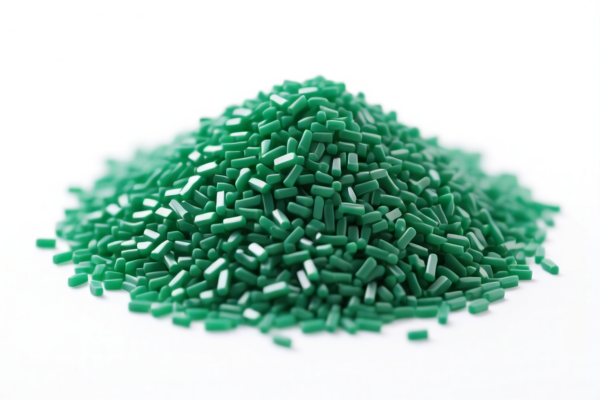
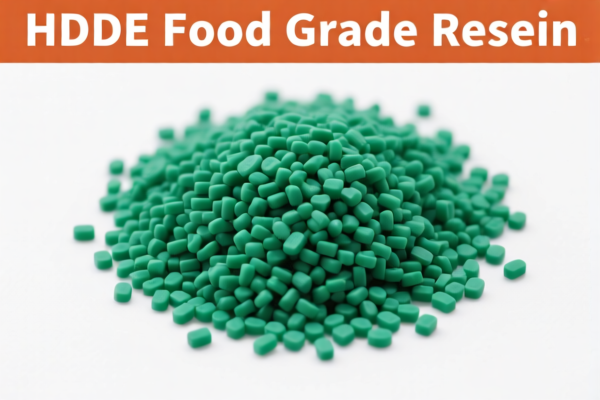
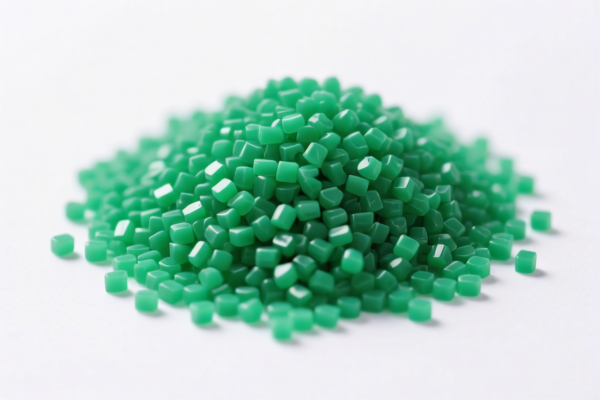
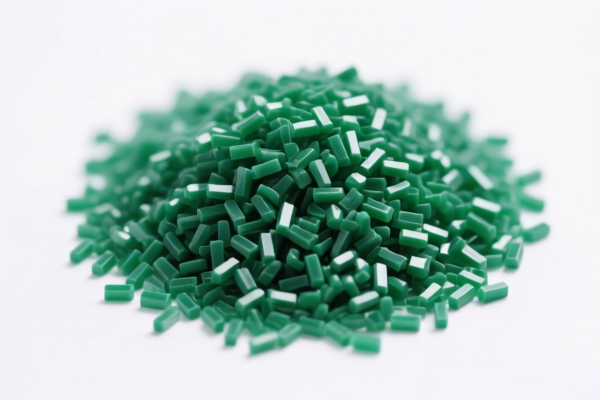
AI Analysis
🧪 HDPE Food Grade Resin (High-Density Polyethylene)
🌐 HS Code Reference & Customs Clearance Guide | 2026 Latest Tariff Analysis | Professional Clearance Strategy
📌 Part I: Product Definition & Classification: Do You Really Understand "HDPE Resin"?
HDPE (High-Density Polyethylene) Resin is the primary raw material for producing high-strength, chemical-resistant plastic products. In international trade, the classification hinges on the specific chemical structure, density, and intended end-use (e.g., food-grade packaging vs. general industrial use).
Key Distinction Logic: * Raw Polymer Form (Chips/Granules): Must be classified under Chapter 39 (Plastics and Articles Thereof), specifically based on the type of olefin polymer. * Density Threshold: A critical factor for HDPE is whether the specific gravity is ≥ 0.94. * End-Use Specificity: While "Food Grade" is a quality standard, customs classification often relies on the physical/chemical properties unless a specific subheading for "Food Grade Articles" exists (which is rare for raw resin; it usually falls under the general polymer heading).
⚠️ Critical Classification Point:
- If it is HDPE with density ≥ 0.94 → Typically 3901.20.
- If it is PBB (Polybutene) or other olefin polymers marketed as "Food Grade" → Potentially 3902.90 or 3913.90, depending on the chemical nature.
- Note: The term "Food Grade" in the input suggests multiple possible HS codes were queried because different suppliers or specific chemical variants (HDPE vs. Polybutene) fall under different headings.
📦 Part II: HS Code Classification Details (2026 Latest Tariff Authority Comparison)
Based on the provided data, here are the specific HS Codes and their corresponding tax structures. Note that "Food Grade" itself does not grant a separate HS code but influences the specific subheading based on the resin type.
| HS Code | Product Description | Applicable Scenario | Tax Rate (Total) |
|---|---|---|---|
3901.20.10.00 |
HDPE Resin, vinyl polymers in primary forms | General HDPE chips/granules, not specified by density ≥0.94 | 41.5% |
3901.20.50.00 |
HDPE Resin, density ≥ 0.94, polymer primary forms | High-density HDPE, commonly used for bottles, containers | 41.5% |
3902.90.00.50 |
Polybutene (PBB) Resin, Food Grade, olefin polymers in primary forms | Specific olefin polymer (not HDPE), used in food packaging adhesives/seals | 41.5% |
3926.90.99.89 |
Polybutene Resin, Food Grade, classified as "Plastics and articles thereof" | Finished/Intermediate articles or specific non-primary forms of polybutene | 22.8% |
3913.90.20.90 |
Polybutene Resin, Food Grade, natural polymers & modified natural polymers | Specific chemical classification for modified polymers | 40.8% |
🔍 Key Insight:
- HDPE (3901.20) and Polybutene (3902.90) are chemically distinct. Even if both are "Food Grade," they have different HS codes.
- The duty rate for HDPE and Polybutene resin (primary form) is identical (41.5%) due to the same tax composition.
- Exception: If the Polybutene is classified under 3926.90 (as an article/semi-finished good rather than primary resin), the rate drops significantly to 22.8%.
💰 Part III: 2026 Latest Tariff Rate Breakdown (Including Additional Taxes & Policies)
✅ Applicable Country: United States (US)
✅ Country of Origin: China (CN)
✅ Effective Date: November 10, 2025 (and subsequent imports)
🎯 1. HDPE Resin (3901.20.10.00 & 3901.20.50.00) & Polybutene Resin (3902.90.00.50)
| Item | Details |
|---|---|
| Base Duty Rate | 6.5% (Ad valorem) |
| Section 301 Additional Duty | +25.0% (Retaliatory tariff on Chinese goods) |
| Section 122 Duty | +10.0% (Specific tariff on certain plastics/chemicals) |
| Total Effective Tax Rate | 41.5% |
| Calculation Basis | CIF Value (Cost + Insurance + Freight) × 41.5% |
| De Minimis Exemption | ❌ Not Eligible (Section 301 and Section 122 duties apply even to low-value shipments; no de minimis for these specific tariffs) |
| Legal Authority Path | USITC:3901.20 → SECTION301:Footnote9903.03.01 → SECTION122:122Rule |
📌 Explanation:
- The 6.5% is the standard Most Favored Nation (MFN) rate for plastic resins.
- The 25% is the widely known Section 301 tariff on Chinese-manufactured plastics and chemical intermediates.
- The 10% is a specific "122 Clause" tariff, often applied to specific plastic resin categories to protect domestic production.
- Combined Impact: A 41.5% total duty significantly increases the landed cost. For every $10,000 CIF value, you pay $4,150 in duties alone.
🎯 2. Polybutene Resin (Article/Form 3926.90.99.89)
| Item | Details |
|---|---|
| Base Duty Rate | 5.3% (Ad valorem) |
| Additional Duty | +7.5% |
| Section 122 Duty | +10.0% |
| Total Effective Tax Rate | 22.8% |
| Calculation Basis | CIF Value × 22.8% |
| De Minimis Exemption | ❌ Not Eligible (Same as above) |
| Legal Authority Path | USITC:3926.90 → SECTION122:122Rule |
📌 Why the difference?
- This code likely represents a different form (e.g., pre-formed parts or a specific chemical category not classified as "primary polymer resin").
- The additional duty is lower (7.5% vs. 25%), resulting in a much lower total rate. Verification of product form is critical here.
🎯 3. Polybutene Resin (Modified Polymer 3913.90.20.90)
| Item | Details |
|---|---|
| Base Duty Rate | 5.8% |
| Additional Duty | +25.0% (Section 301) |
| Section 122 Duty | +10.0% |
| Total Effective Tax Rate | 40.8% |
| Calculation Basis | CIF Value × 40.8% |
| Legal Authority Path | USITC:3913.90 → SECTION301 → SECTION122 |
🛠️ Part IV: Customs Clearance Operational Advice (Practical Pitfall Avoidance Guide)
✅ 1. Documentation Checklist (Mandatory)
| Document | Required | Purpose |
|---|---|---|
| ✅ Certificate of Analysis (COA) | ✔️ Critical | Must specify Density, Melt Flow Index (MFI), and Food Compliance (FDA 21 CFR 177.1520). Proves it is "Food Grade" and matches the HS code description. |
| ✅ Product Specification Sheet | ✔️ | Clearly state: "Primary Form" (Chips/Granules) vs. "Finished Article." This determines if you use 3901/3902 (Resin) or 3926 (Articles). |
| ✅ FDA Compliance Statement | ✔️ | Since it is "Food Grade," customs may request proof of FDA compliance for food contact materials. |
| ✅ Commercial Invoice | ✔️ | Must explicitly state: "High-Density Polyethylene (HDPE) Resin, Primary Form" or "Polybutene Resin, Primary Form." Avoid vague terms like "Plastic Pellets." |
| ✅ Packing List | ✔️ | Detail net weight/gross weight. Ensure units are consistent (e.g., Kilograms). |
✅ 2. Classification Strategy (Crucial Tips)
🔥 “Identify the Polymer Type First, Then Check Density!”
| Scenario | Correct HS Code | Incorrect Action | Consequence |
|---|---|---|---|
| Standard HDPE Chips (Density unknown or <0.94) | 3901.20.10.00 |
Assume it’s 3901.20.50 | Potential misclassification, but tax rate is same (41.5%). |
| HDPE Chips (Density ≥ 0.94) | 3901.20.50.00 |
Declare as 3901.20.10 | No tax difference, but wrong description on entry. |
| Polybutene Resin (Primary Form) | 3902.90.00.50 |
Declare as HDPE (3901.20) |
Severe Penalty: Chemical mismatch. |
| Polybutene Parts (Not primary resin) | 3926.90.99.89 |
Declare as Resin (3902.90) |
Overpay Tax: 41.5% vs 22.8%. Opportunity to Save $18,700 per $1M CIF! |
✅ 3. Special Handling & Risk Mitigation
| Situation | Recommendation |
|---|---|
| "Food Grade" Claim | Ensure the supplier provides FDA 21 CFR 177.1520 compliance. If it’s for direct food contact, customs may inspect for contamination. |
| Mixed Shipments | If a container contains both HDPE and Polybutene, separate entries are required. Do not average them. |
| Section 122 Targeting | Be aware that plastic resins are high-priority targets for Section 122. Ensure accurate chemical naming (IUPAC name if possible). |
| Origin Labeling | Clearly mark "Made in China" on bags/pallets. Mislabeling origin leads to seizure. |
🌍 Part V: Global Market Comparison (2026 Context)
| Market | Recommended HS Code | Estimated Duty (China Origin) | Key Requirement |
|---|---|---|---|
| 🇺🇸 USA | 3901.20.10.00 / 3901.20.50.00 |
41.5% | FDA Compliance, Section 301 & 122 Duties |
| 🇨🇳 China | 3901.20.10.00 / 3901.20.50.00 |
~6-7% | CIQ Inspection, Food Safety Standard (GB 4806) |
| 🇪🇺 EU | 3901.10.00 / 3901.20.00 |
0-2% | REACH Registration, EU Food Contact Regulation (EC) No 1935/2004 |
| 🇯🇵 Japan | 3901.10.00 / 3901.20.00 |
~0-5% | Food Sanitation Law (Shokuhin Eisei Hō) |
📌 Conclusion for US Importers:
- The 41.5% duty is a major cost driver.
- Optimization Opportunity: If the product is actually a Polybutene article (not primary resin), reclassify to3926.90.99.89to reduce duty to 22.8%. Consult your supplier for the exact chemical structure and form.
📌 Part VI: Common Mistakes & Pitfalls (Lessons from Experience)
❌ Mistake 1: Labeling all plastic pellets as "HDPE" regardless of actual chemical composition.
👉 Consequence: Customs seizure for misdeclaration. Polybutene (3902) is chemically different from HDPE (3901).
❌ Mistake 2: Ignoring the "Primary Form" requirement.
👉 Consequence: If the product is pre-molded, it may fall under Chapter 39 Part II (Articles), leading to incorrect tax application (22.8% vs 41.5%).
❌ Mistake 3: Assuming "Food Grade" implies a lower duty rate.
👉 Consequence: False expectation. "Food Grade" is a quality standard, not a tariff preference. Duties remain high (41.5%).
❌ Mistake 4: Omitting Section 122 duties in cost calculations.
👉 Consequence: Profit margin erosion. The 10% Section 122 duty is often forgotten by novices.
✅ Correct Approach:
“High-Density Polyethylene (HDPE) Resin, Primary Form, Specific Gravity 0.95, FDA Compliant, Model XYZ”
🎯 Part VII: Conclusion: Precision in Classification Saves Money
🎯 Remember the Mantra:
🔹 "HDPE vs. Polybutene? Check the Chemistry!"
🔹 "Resin vs. Article? Check the Form!"
🔹 "41.5% is the Default; 22.8% is the Goal if Eligible!"
🔹 "Food Grade Means Compliance, Not Lower Taxes!"
📌 Pro Tip:
If your product is Polybutene and not yet in primary resin form (e.g., it’s a semi-finished adhesive strip), explore classification under 3926.90. This could save you ~18.7% in duties.
Always request a Manufacturer’s Certificate of Composition to confirm whether it is truly HDPE or a different olefin polymer.
📣 Immediate Action:
📞 Contact your customs broker with the Supplier’s COA and Technical Data Sheet.
🚀 Verify if your product can be classified under the 22.8% rate (3926.90.99.89) instead of the 41.5% rate.
💼 Every percentage point saved is pure profit.
✨ Professional Clearance Starts with Accurate Classification!
💼 Don’t let 41.5% duties eat your margins.
Customer Reviews
About HS Code Classification
The Harmonized System (HS) is an internationally standardized nomenclature developed by the World Customs Organization (WCO) to classify traded products. Over 200 countries use the HS system as the basis for customs tariffs, trade statistics, and import/export regulations.
Each HS code follows a hierarchical structure:
- Chapter (2 digits) — Broad category of goods (e.g., Chapter 84: Machinery and Mechanical Appliances)
- Heading (4 digits) — More specific grouping within the chapter
- Subheading (6 digits) — Internationally standardized breakdown, used by all WCO member countries
- National subdivisions (8-10 digits) — Country-specific extensions for further classification, such as US HTSUS 10-digit codes
Correct HS code classification is essential for smooth customs clearance, accurate duty payment, and compliance with trade regulations. Misclassification can lead to customs delays, overpayment of duties, or penalties.
When importing from CN to US, the applicable tariff rates may include:
- Most-Favored-Nation (MFN) rate — The standard duty rate applied to WTO members
- General rate — Applied to countries without trade agreements
- Trade remedy duties — Additional tariffs such as Section 301 (anti-dumping), Section 232 (national security), or countervailing duties
The information provided on this page is for reference purposes only. For official classification, please consult with your local customs authority or a licensed customs broker.