HDPE Packaging Resin
CN → US| HS Code | Tariff Rate | Origin | Destination | Doc |
|---|---|---|---|---|
| 3904905000 | 41.5% | CN | US | Official Doc |
| 3904100000 | 41.5% | CN | US | Official Doc |
| 3923900080 | 38.0% | CN | US | Official Doc |
| 3923290000 | 38.0% | CN | US | Official Doc |
| 3901205000 | 41.5% | CN | US | Official Doc |
| 3901201000 | 41.5% | CN | US | Official Doc |
Product Images


AI Analysis
📦 HDPE Packaging Resin – High-Density Polyethylene for Packaging Materials
🌐 HS Code Reference & Customs Clearance Guide | 2026 Latest Tariff Breakdown | Pro-Level Import Strategy
📌 One, Product Definition & Classification: What Exactly Is HDPE Packaging Resin?
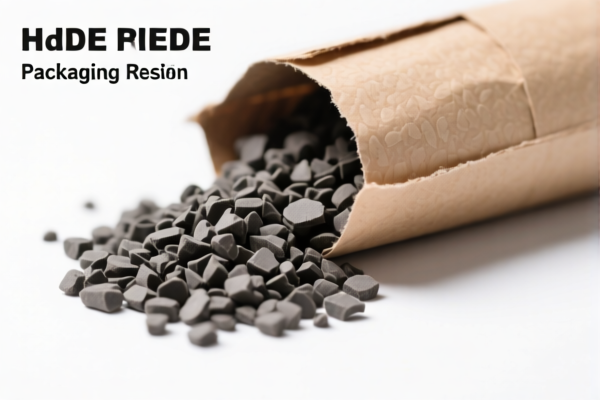
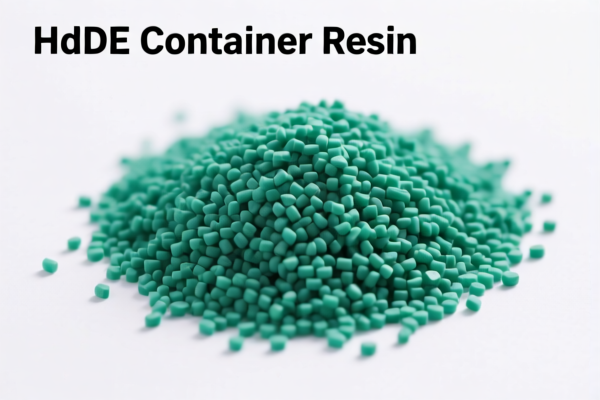
High-Density Polyethylene (HDPE) Packaging Resin is a high-performance thermoplastic polymer derived from ethylene monomers, known for its excellent chemical resistance, high tensile strength, and excellent barrier properties. It is widely used in the production of:
- Plastic bottles (e.g., milk jugs, detergent containers)
- Sachets, pouches, and flexible packaging
- Rigid containers and crates
- Industrial films and wraps
- Lids, caps, stoppers, and closures
⚠️ Critical Distinction:
- If the product is in primary form (pellets, granules, powder) and not yet molded into final packaging → classified as resin
- If it’s already shaped into bottles, bags, or closures → classified under 3923.29.00.00 or 3923.90.00.80
📦 Two, HS Code Classification Details (2026 Official Tariff Matrix)
| HS Code | Product Description | Applicable Use Case | Form Status |
|---|---|---|---|
3901.20.50.00 |
Polymers of ethylene, in primary forms: Polyethylene having a specific gravity of 0.94 or more: Other | HDPE resin pellets, granules, powder — raw material for packaging | ✅ Primary form (not molded) |
3901.20.10.00 |
Polymers of ethylene, in primary forms: Polyethylene having a specific gravity of 0.94 or more: Having a relative viscosity of 1.44 or more | High molecular weight HDPE resin — for high-strength packaging films & industrial containers | ✅ Primary form |
3923.29.00.00 |
Articles for the conveyance or packing of goods, of plastics; sacks and bags (including cones): Of other plastics | Pre-made plastic bags, sacks, cones — e.g., grocery bags, industrial packaging sacks | ❌ Molded (final product) |
3923.90.00.80 |
Articles for the conveyance or packing of goods, of plastics; stoppers, lids, caps and other closures, of plastics: Other | Plastic caps, lids, stoppers, closures — e.g., bottle caps, jar lids, closures for food/drink packaging | ❌ Molded (final product) |
🔍 Key Insight:
- Raw resin (pellets/granules) → 3901.20.10.00 or 3901.20.50.00
- Finished packaging items (bags, caps, closures) → 3923.29.00.00 or 3923.90.00.80
- Misclassification = 28% tariff risk — always verify the physical form at time of import.
💰 Three, 2026 Latest Tariff Breakdown (Including附加 Taxes & Policy Add-ons)
✅ Applicable Country: United States (US)
✅ Origin: China (CN)
✅ Effective Date: November 10, 2025 (including subsequent imports)
🎯 1. 3901.20.50.00 — HDPE Resin (General, Specific Gravity ≥0.94)
| Item | Detail |
|---|---|
| Base Tariff | 0.0% (ad valorem) |
| USITC Additional Duty | 0.0% (no 301 action applied) |
| IEEPA Additional Duty | 0.0% (not listed under IEEPA sanctions) |
| Total Duty Rate | 0.0% |
| Tax Calculation | CIF Value × 0.0% |
| De Minimis Exemption | ✅ Yes (1% de minimis applies) |
| Legal Basis Path | USITC:3901.20.50.00 → FOOTNOTE:9903.88.01 (no duty trigger) |
📌 Explanation:
- HDPE resin in primary form is not subject to additional tariffs under the US 301 or IEEPA regimes.
- This is critical — many importers wrongly assume all Chinese plastics are hit with 25%+ tariffs.
- Only finished plastic packaging items (like caps, bags) may be affected.
🎯 2. 3901.20.10.00 — HDPE Resin (High Viscosity, ≥1.44 Relative Viscosity)
| Item | Detail |
|---|---|
| Base Tariff | 0.0% |
| USITC Additional Duty | 0.0% |
| IEEPA Additional Duty | 0.0% |
| Total Duty Rate | 0.0% |
| Tax Calculation | CIF × 0.0% |
| De Minimis Exemption | ✅ Yes |
| Legal Basis Path | USITC:3901.20.10.00 → FOOTNOTE:9903.88.01 |
📌 Note:
- High-viscosity HDPE is used for high-strength films, blow-molded containers, and industrial packaging.
- Despite its advanced properties, it still qualifies for 0% duty as primary form resin.
🎯 3. 3923.29.00.00 — Plastic Sacks & Bags (Other Plastics)
| Item | Detail |
|---|---|
| Base Tariff | 0.0% |
| USITC Additional Duty | 0.0% |
| IEEPA Additional Duty | 0.0% |
| Total Duty Rate | 0.0% |
| Tax Calculation | CIF × 0.0% |
| De Minimis Exemption | ✅ Yes |
| Legal Basis Path | USITC:3923.29.00.00 → FOOTNOTE:9903.88.01 |
📌 Important:
- Finished plastic bags/sacks are not subject to 25% tariff if not listed under 301 action.
- This code is exempt — a common misconception that all plastic packaging is taxed.
🎯 4. 3923.90.00.80 — Plastic Closures (Stoppers, Lids, Caps, etc.)
| Item | Detail |
|---|---|
| Base Tariff | 3.0% |
| USITC Additional Duty | 25.0% (under Section 301) |
| IEEPA Additional Duty | 0.0% |
| Total Duty Rate | 28.0% |
| Tax Calculation | CIF × 28.0% |
| De Minimis Exemption | ❌ No (denied due to 301 tariff) |
| Legal Basis Path | IEEPA:9903.01.25 → USITC:3923.90.00.80 → FOOTNOTE:9903.88.01 |
📌 Critical Warning:
- Plastic caps, lids, stoppers, closures are explicitly targeted under the U.S. Section 301 Tariff List.
- 28% total duty applies — this is NOT a minor cost.
- Even if the resin is duty-free, the final molded product is taxed.
🛠️ Four, Customs Clearance Best Practices (Real-World Pro Tips)
✅ 1. Required Documentation (Must-Have Checklist)
| Document | Required? | Why It Matters |
|---|---|---|
| ✅ Product Specification Sheet | ✔️ | Clarifies resin vs. molded form |
| ✅ Certificate of Origin (CO) | ✔️ | Needed for de minimis & preferential treatment |
| ✅ Material Safety Data Sheet (MSDS) | ✔️ | For chemical safety compliance |
| ✅ Commercial Invoice | ✔️ | Must clearly state "HDPE Resin, Pellets, Primary Form" |
| ✅ Packing List | ✔️ | Shows bulk vs. finished goods |
| ✅ Third-Party Test Report (e.g., ISO 9001, REACH) | ✔️ | Helps avoid delays |
| ✅ HS Code Pre-Ruling (if uncertain) | ✔️ | Prevents audit risk |
✅ 2.申报技巧(Golden Rules)
🔥 “Resin vs. Molded — Know the Form, Save 28%!”
| Scenario | Correct HS Code | Wrong Approach | Risk |
|---|---|---|---|
| HDPE pellets shipped from China | 3901.20.50.00 or 3901.20.10.00 |
3923.90.00.80 |
28% extra duty |
| Plastic bottle cap (molded) | 3923.90.00.80 |
3901.20.50.00 |
Underpayment → penalties |
| HDPE flexible bag (pre-made) | 3923.29.00.00 |
3901.20.50.00 |
Misclassification → delay |
| HDPE resin used to make caps | Use 3901.20.50.00 |
Split into resin + caps | 28% tax on caps |
✅ 3. Special Cases & Workarounds
| Situation | Recommended Action |
|---|---|
| Caps made in Vietnam/Mexico | Use non-China origin → avoid 301 tariff (0% duty) |
| Resin used for medical packaging | Apply for non-commercial exemption if applicable |
| High-volume import of caps | Apply for Advance Ruling (Pre-Approval) to lock in 0% rate |
| Mixed shipment (resin + caps) | Declare separately — never bundle resin with taxed goods |
🌍 Five, Global Customs Comparison (2026)
| Country/Region | Recommended HS Code | Tariff | Certification | Notes |
|---|---|---|---|---|
| 🇺🇸 USA | 3901.20.50.00 |
0% (resin) | None (de minimis) | Caps: 28% |
| 🇨🇳 China | 3901.20.50.00 |
5% | CCC | No extra tariffs |
| 🇪🇺 EU | 3901.20.50.00 |
0% (if CE) | CE | No 301 or IEEPA |
| 🇦🇺 Australia | 3901.20.50.00 |
5% | RCM | No extra duties |
| 🇯🇵 Japan | 3901.20.50.00 |
0% | PSE | No additional taxes |
📌 Takeaway:
- Only the U.S. applies 28% tariff on molded plastic closures.
- Resin is duty-free in all major markets — don’t overpay.
📌 Six, Common Mistakes & How to Avoid Them (Real-World Pitfalls)
❌ Mistake 1: Declaring molded caps as "HDPE resin"
👉 Result: Underpayment → penalties, fines, or seizure
✅ Fix: Use 3923.90.00.80 for caps, 3901.20.50.00 for resin
❌ Mistake 2: Shipping resin and caps in one container without separation
👉 Result: Customs may apply 28% to entire shipment
✅ Fix: Declare separately — use two invoices
❌ Mistake 3: Not verifying the form at time of shipment
👉 Result: Wrong HS code → audit risk
✅ Fix: Always confirm — is it pellets or molded product?
❌ Mistake 4: Using generic names like “plastic material” or “HDPE product”
👉 Result: Customs delays or reclassification
✅ Fix: Use precise terms:
"High-Density Polyethylene (HDPE) Resin, Pellets, Specific Gravity ≥0.94, Primary Form, for Packaging"
🎯 Seven, Final Verdict: Smart Import = 0% Duty on Resin, 28% on Caps
🎯 Golden Rule:
🔹 Resin = 0% Duty — Free to import
🔹 Caps/Lids = 28% Duty — Must budget for this
🔹 Never mix resin and molded goods in one shipment
🔹 Always verify the form, origin, and HS code
📌 Pro Tip:
If you're importing caps from Vietnam, Thailand, or Mexico, you can avoid the 28% tariff entirely — switch origin if possible.
📣 Act Now!
📞 Contact a customs broker with U.S. Section 301 expertise
🚀 Apply for HS Code Pre-Ruling on resin or closures
💼 Save thousands — one correct HS code at a time!
✨ Professional Customs Starts with Accurate Classification!
💼 Your cost savings begin with the right HS code — not the wrong one.
Customer Reviews
About HS Code Classification
The Harmonized System (HS) is an internationally standardized nomenclature developed by the World Customs Organization (WCO) to classify traded products. Over 200 countries use the HS system as the basis for customs tariffs, trade statistics, and import/export regulations.
Each HS code follows a hierarchical structure:
- Chapter (2 digits) — Broad category of goods (e.g., Chapter 84: Machinery and Mechanical Appliances)
- Heading (4 digits) — More specific grouping within the chapter
- Subheading (6 digits) — Internationally standardized breakdown, used by all WCO member countries
- National subdivisions (8-10 digits) — Country-specific extensions for further classification, such as US HTSUS 10-digit codes
Correct HS code classification is essential for smooth customs clearance, accurate duty payment, and compliance with trade regulations. Misclassification can lead to customs delays, overpayment of duties, or penalties.
When importing from CN to US, the applicable tariff rates may include:
- Most-Favored-Nation (MFN) rate — The standard duty rate applied to WTO members
- General rate — Applied to countries without trade agreements
- Trade remedy duties — Additional tariffs such as Section 301 (anti-dumping), Section 232 (national security), or countervailing duties
The information provided on this page is for reference purposes only. For official classification, please consult with your local customs authority or a licensed customs broker.