HDPE Pipe Fittings
CN → US| HS Code | Tariff Rate | Origin | Destination | Doc |
|---|---|---|---|---|
| 3917400095 | 40.3% | CN | US | Official Doc |
| 3917400080 | 40.3% | CN | US | Official Doc |
| 3926305000 | 22.8% | CN | US | Official Doc |
| 3926909989 | 22.8% | CN | US | Official Doc |
| 3901201000 | 41.5% | CN | US | Official Doc |
Product Images
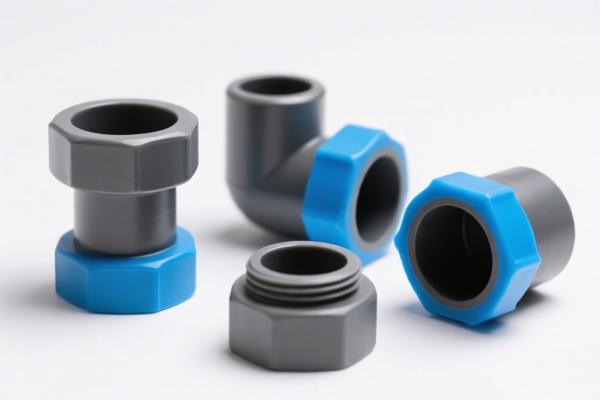

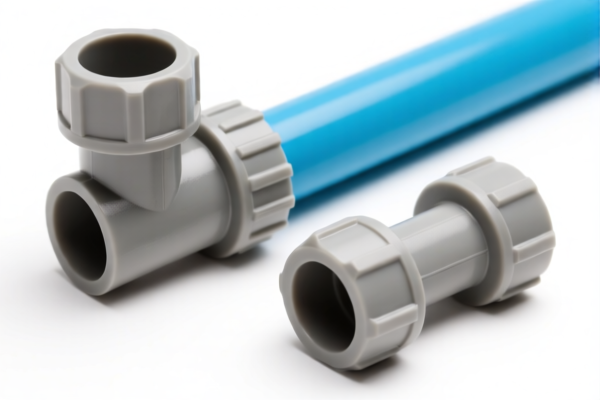
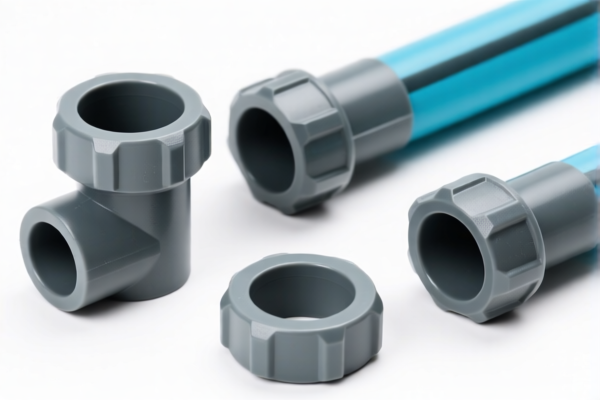
AI Analysis
🔧 HDPE Pipe Fittings (High-Density Polyethylene Pipe Fittings)
🌐 HS Code Reference & Clearance Guide | 2026 Latest Tariff Analysis | Professional Clearance Strategy
📌 I. Product Definition & Classification: Do You Truly Understand "HDPE Fittings"?
High-Density Polyethylene (HDPE) pipe fittings are essential components in fluid transport systems (water, gas, sewage, industrial chemicals). In international trade, they are often misunderstood as simple "plastic parts" or confused with other polyolefins like Polypropylene (PP).
The core distinction lies in the material composition and functional definition: * HDPE Resin (Raw Material): Classified under Chapter 39, specifically as polymers of ethylene. * HDPE Fittings (Finished Goods): Classified based on whether they are considered "articles of plastics" generally (Ch 39.26) or specifically as "parts of pipes/tubes" (Ch 39.17).
⚠️ Key Distinction Point:
- If the item is raw HDPE resin/granules → It is a raw polymer.
- If the item is a finished fitting (elbow, tee, coupling, flange) → It is a manufactured plastic article. The specific HS Code depends on whether customs authorities view it primarily as a "pipe accessory" (Ch 39.17) or a "general plastic article" (Ch 39.26).
📦 II. HS Code Classification Details (2026 Latest Tariff Authority Mapping)
Based on the provided data, here are the 5 possible classifications for HDPE/Polymer piping components, ranging from high-risk "pipe accessories" to general "plastic articles."
| HS Code | Product Description | Applicable Scenario | Classification Logic |
|---|---|---|---|
3901.20.10.00 |
High-Density Polyethylene Resin | Raw material; unformed pellets/granules | ✅ Raw Polymer (Ch 39.01: Primary Forms of Polymers of Ethylene) |
3917.40.00.95 |
HDPE Pipe Fittings | Specifically defined as fittings for pipes/tubes | ✅ Pipe Accessory (Ch 39.17: Tissues, Tubes, Pipes) |
3917.40.00.80 |
HDPE Pipe Fittings | Fits the category of "Pipe Accessories" | ✅ Pipe Accessory (Ch 39.17: Specific Subheading for Fittings) |
3926.30.50.00 |
Plastic Fittings (General) | Identified as connection components under Chapter 39 | ✅ General Plastic Article (Ch 39.26: Other Articles of Plastics) |
3926.90.99.89 |
Other Plastic Articles | Fittings falling into the "catch-all" category | ✅ General Plastic Article (Ch 39.26: Other manufactured plastic items) |
🔍 Critical Reminder:
- Raw Material vs. Finished Good: Do not confuse3901.20.10.00(Resin) with any of the Fitting codes. If you ship pellets, use3901. If you ship elbows/tees, do not use3901. - High Tax Risk for "Pipe Accessories": Codes starting with3917(Pipe/Tube fittings) attract Higher Additional Tariffs compared to3926(General Plastic Articles). This is the most common mistake in clearance.
💰 III. 2026 Latest Tariff Rate Breakdown (Including Surtaxes & Policy Add-ons)
✅ Applicable Country: United States (US)
✅ Origin: China (CN)
✅ Effective Time: Current Trade Policy (Section 301 & IEEPA)
🎯 1. 3901.20.10.00 —— High-Density Polyethylene Resin (Raw Material)
| Item | Content |
|---|---|
| Base Rate | 6.5% (Ad valorem) |
| Additional Tariff (Section 301) | +25.0% |
| IEEPA Additional Tariff | +10% (Targeting Chinese Products) |
| Total Tax Rate | 41.5% |
| Tax Calculation | CIF Value × 41.5% |
| De Minimis Eligibility | ❌ No (deny_de_minimis) |
| Legal Basis Path | Base Rate → 301 Footnote → IEEPA 9903 |
📌 Explanation:
- HDPE Resin is considered a raw industrial material. - Even as a raw material, it bears a heavy burden due to the combination of standard MFN rates and US trade remedies. - Note: This code is ONLY for unformed resin/granules. Using this for fittings is fraud.
🎯 2. 3917.40.00.95 & 3917.40.00.80 —— HDPE Pipe Fittings (Pipe Accessories)
| Item | Content |
|---|---|
| Base Rate | 5.3% |
| Additional Tariff (Section 301) | +25.0% |
| IEEPA Additional Tariff | +10% |
| Total Tax Rate | 40.3% |
| Tax Calculation | CIF Value × 40.3% |
| De Minimis Eligibility | ❌ No |
| Legal Basis Path | Chapter 39.17 Specifics → 301 Section → IEEPA |
📌 Warning:
- These codes classify the item specifically as a "Part of a Pipe or Tube." - Customs often scrutinizes these heavily because they are explicitly listed in high-tariff sections for plastic pipes. - Risk: If your fitting is technically a "valve" or "pump part," it might move to Ch 84, but if it's a simple connector, it stays here.
🎯 3. 3926.30.50.00 & 3926.90.99.89 —— HDPE Pipe Fittings (General Plastic Articles)
| Item | Content |
|---|---|
| Base Rate | 5.3% |
| Additional Tariff (Section 301) | +7.5% (Lower than 3917!) |
| IEEPA Additional Tariff | +10% |
| Total Tax Rate | 22.8% |
| Tax Calculation | CIF Value × 22.8% |
| De Minimis Eligibility | ❌ No |
| Legal Basis Path | Chapter 39.26 General → 301 Section → IEEPA |
📌 Strategic Insight:
- This is the TARGET CODE for savings. - If the fitting can be argued as a "plastic connection component" or "other plastic article" rather than a strict "pipe accessory" under 39.17, the Section 301 surtax drops from 25% to 7.5%. - Total Savings: ~17.5% reduction in total tax liability. - Condition: Must be able to justify that the item is not exclusively defined as a "pipe fitting" in the HTSUS notes, or use the broader "catch-all" category (3926.90) if it doesn't fit 3926.30 perfectly.
🛠️ IV. Clearance Practical Advice (Combat Pitfalls Guide)
✅ 1. Required Documentation Checklist (Non-negotiable)
| Document | Must Provide | Description |
|---|---|---|
| ✅ Product Spec Sheet | ✔️ | Material: HDPE (ASTM D3350), Density, Melt Flow Index, Fitting Type (Socket Butt, Electrofusion, Mechanical). |
| ✅ Material Safety Data Sheet (MSDS) | ✔️ | Proves it is Polyethylene (HDPE), not PVC or PP. |
| ✅ Product Photos | ✔️ | Clear view of the fitting, any markings (e.g., "HDPE," "PE100"), and scale. |
| ✅ Commercial Invoice | ✔️ | Description must be precise. Avoid vague terms like "Plastic Part." Use "HDPE Pipe Fitting - Elbow 90°." |
| ✅ Origin Certificate | ✔️ | Critical for IEEPA determination. |
| ✅ Packaging List | ✔️ | Detail weight/volume. |
✅ 2. Declaration Tactics (Key Mantras)
🔥 "Material First, Function Second, Chapter Choice Matters!"
| Scenario | Correct Declaration Strategy | Incorrect Action |
|---|---|---|
| Raw HDPE Granules | Use 3901.20.10.00 (Resin) |
❌ Declare as Fittings → Huge Misclassification Risk |
| Standard Elbows/Tees | Attempt 3926.xxxxxx if defensible for lower tax (22.8%) |
❌ Default to 3917 (40.3%) without review → Overpay |
| Complex Assemblies | If it includes metal inserts, check Ch 84/73 | ❌ Declare as pure plastic → Customs may split duties |
| Brand New Fitting Types | Request Advance Ruling | ❌ Guessing → Delays & Penalties |
✅ 3. Special Case Handling
| Situation | Handling Advice |
|---|---|
| HDPE Fittings with Metal Threads | If metal constitutes >50% by weight or essential character, it may fall under Ch 73/79. If plastic is dominant, stick to Ch 39. |
| Electrofusion Fittings (with coils) | Still generally Ch 39, but declare carefully. The coil is auxiliary. |
| Small Diameter vs. Large Diameter | Ch 39.17 often distinguishes by diameter. Ensure the "80" vs "95" subheading matches the size range specified in the HTSUS. |
| "Generic" Plastic Fittings | If unsure, 3926.90.99.89 (Other plastic articles) is the safest "catch-all" to avoid the 25% Section 301 of Ch 39.17, provided it truly doesn't fit 39.17 perfectly. |
🌍 V. Global Market Clearance Comparison (2026 Latest)
| Country/Region | Recommended HS Code | Estimated Duty (China Origin) | Certification Requirements | Notes |
|---|---|---|---|---|
| 🇺🇸 USA | 3926.90.99.89 (Preferred) |
22.8% | None specific for plastic | Avoid 3917 (40.3%) unless explicitly required. |
| 🇺🇸 USA | 3917.40.00.95 (High Risk) |
40.3% | None | High tax due to Section 301. |
| 🇪🇺 EU | 3917.29.90 |
~6.5% | REACH, RoHS | Lower additional taxes compared to US. |
| 🇨🇳 China | 3917.29.00 |
~5-6% | CCC (if pressure rated) | No additional punitive tariffs. |
| 🇬🇧 UK | 3917.29.90 |
~6.5% | UKCA | Post-Brexit rules apply. |
📌 Conclusion:
- USA is the most critical market for tariff optimization.
- The 17.5% difference between Ch 39.17 (40.3%) and Ch 39.26 (22.8%) is significant.
- Strategy: Engage a customs broker to argue for classification under 3926 (General Plastic Articles) if the fitting is not exclusively a "pipe part" under the legal notes, to secure the lower 22.8% rate.
📌 VI. Common Errors & Pitfall Guide (Lessons Learned)
❌ Error 1: Shipping HDPE Resin but declaring it as Fittings.
👉 Consequence: Customs will seize the goods for misdeclaration. Raw materials have different regulatory requirements (e.g., EPA reporting).
❌ Error 2: Automatically declaring all plastic pipe parts under 3917.
👉 Consequence: Paying 40.3% tax instead of 22.8%.
👉 Fix: Review the "Notes to Chapter 39." If the item is a "general plastic connection component" not solely defined as a pipe fitting, 3926 may be valid.
❌ Error 3: Ignoring the IEEPA 10% surtax.
👉 Consequence: Unexpected bill at border.
👉 Fix: Always add 10% to any calculation for China-origin plastic goods entering the US, regardless of HS Code.
❌ Error 4: Vague Description: "Plastic Parts."
👉 Consequence: Customs exam delay, potential re-classification to a higher tax code.
👉 Fix: Use "HDPE Pipe Fitting, Type, Size, Material Standard (e.g., ASTM D3350)."
✅ Correct Practice:
"HDPE Pipe Fitting, 90° Elbow, 4-inch, Material: High Density Polyethylene (PE100), ASTM D3350, for Water Transport System"
🎯 VII. Conclusion: Precision in Classification Saves Millions!
🎯 Remember the Mantra:
🔹 "Resin is Raw, Fittings are Goods."
🔹 "3917 is Expensive (40.3%), 3926 is Smarter (22.8%)."
🔹 "Always Add IEEPA 10% for China Origin!"
🔹 "If in Doubt, Argue for 'Other Plastic Article' (3926) to Save 17.5%!"
📌 Pro Tip:
If your HDPE fittings are manufactured in Vietnam, Malaysia, or Thailand, you may qualify for lower or zero Section 301 tariffs due to trade war exclusions or different country-of-origin rules. Always verify the Country of Origin label on the fitting itself!
📣 Immediate Action:
📞 Contact a specialized plastic-industry customs broker.
📄 Request an Advance Ruling from US Customs (CBP) for your specific fitting type.
🚀 Optimize your supply chain costs by choosing the correct HS Code!
✨ Professional clearance starts with accurate classification!
💼 Every percentage point of duty difference impacts your bottom line!
Customer Reviews
About HS Code Classification
The Harmonized System (HS) is an internationally standardized nomenclature developed by the World Customs Organization (WCO) to classify traded products. Over 200 countries use the HS system as the basis for customs tariffs, trade statistics, and import/export regulations.
Each HS code follows a hierarchical structure:
- Chapter (2 digits) — Broad category of goods (e.g., Chapter 84: Machinery and Mechanical Appliances)
- Heading (4 digits) — More specific grouping within the chapter
- Subheading (6 digits) — Internationally standardized breakdown, used by all WCO member countries
- National subdivisions (8-10 digits) — Country-specific extensions for further classification, such as US HTSUS 10-digit codes
Correct HS code classification is essential for smooth customs clearance, accurate duty payment, and compliance with trade regulations. Misclassification can lead to customs delays, overpayment of duties, or penalties.
When importing from CN to US, the applicable tariff rates may include:
- Most-Favored-Nation (MFN) rate — The standard duty rate applied to WTO members
- General rate — Applied to countries without trade agreements
- Trade remedy duties — Additional tariffs such as Section 301 (anti-dumping), Section 232 (national security), or countervailing duties
The information provided on this page is for reference purposes only. For official classification, please consult with your local customs authority or a licensed customs broker.