HDPE Plastic Pipe Fitting
CN → US| HS Code | Tariff Rate | Origin | Destination | Doc |
|---|---|---|---|---|
| 3917400095 | 40.3% | CN | US | Official Doc |
| 3917210000 | 38.1% | CN | US | Official Doc |
Product Images
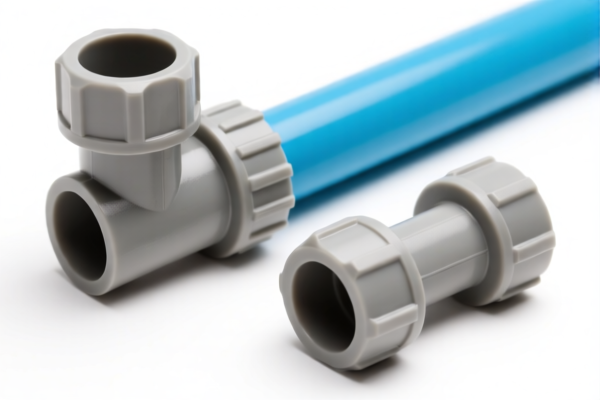
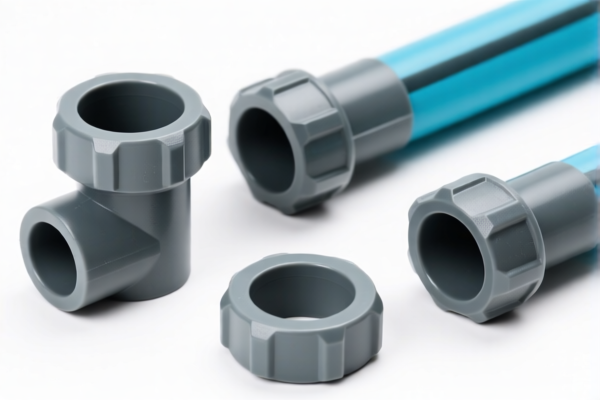
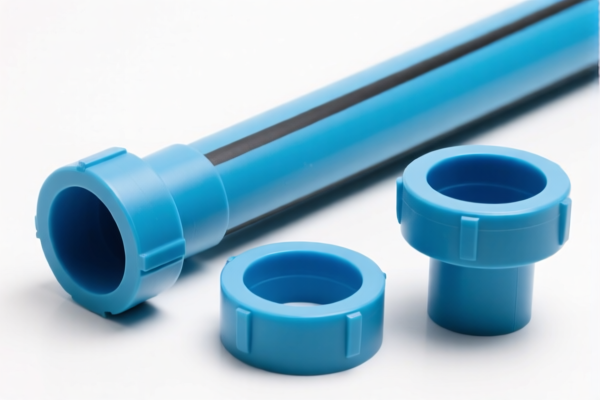
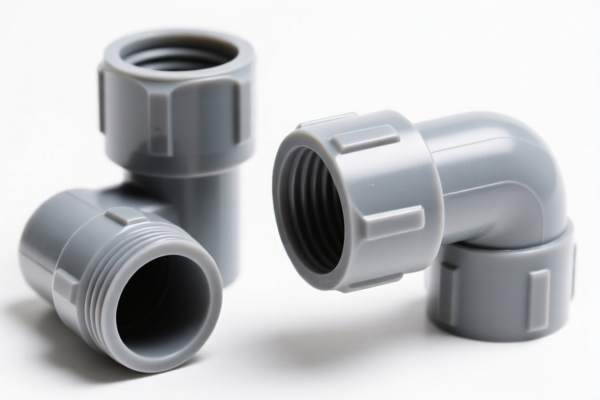
AI Analysis
🏗️ HDPE Plastic Pipe Fitting (High-Density Polyethylene Fittings)
🌐 HS Code Reference & Customs Clearance Guide | 2026 Latest Tariff Analysis | Professional Compliance Strategy
📌 Part I: Product Definition & Classification: What Exactly is an "HDPE Fitting"?
HDPE (High-Density Polyethylene) pipes and fittings are the backbone of modern infrastructure, used in water supply, gas distribution, sewage systems, and industrial fluid transport. In international trade, these items are categorized under Chapter 39: Plastics and Articles Thereof.
The critical distinction lies in whether the item is the pipe itself (long, continuous transport medium) or the fitting (connector used to join pipes).
1. Fittings (Fittings): Joints, elbows, tees, flanges, couplings, and reducers. These are discrete components used to change direction, branch off, or connect pipes. 2. Pipes (Pipes): Rigid tubes or hoses of plastic, used for conveying fluids or gases.
⚠️ Key Classification Point:
- If the item is a connector (elbow, tee, joint, flange) → It is classified as a Fitting (3917.40).
- If the item is a straight tube/pipe → It is classified as a Pipe (3917.21or similar, depending on polymer type).
- HDPE is a polymer of ethylene. Therefore, rigid HDPE pipes fall under3917.21, while HDPE fittings fall under3917.40.
📦 Part II: HS Code Classification Details (2026 Latest Tariff Reference)
Based on the provided , here are the two relevant HS Codes for HDPE piping systems. Note that the data provided specifically lists Fittings and HDPE Pipes (Rigid).
| HS Code | Product Description | Applicable Scenario | Key Identifier |
|---|---|---|---|
3917.40.00.95 |
Tubes, pipes and hoses and fittings therefor... Fittings Other | Elbows, Tees, Couplings, Flanges, Reducers made of Plastics (including HDPE) | Fitting (Connector) |
3917.21.00.00 |
Tubes, pipes and hoses, rigid: Of polymers of ethylene | Straight HDPE Pipes (Rigid) | Pipe (Transport Medium) |
🔍 Critical Distinction:
-3917.40.00.95: Use this for any plastic fitting (elbow, tee, etc.) made of HDPE, PVC, PP, etc. It is a "catch-all" for fittings not otherwise specified in more specific subheadings.
-3917.21.00.00: Use this ONLY for rigid pipes made of polymers of ethylene (i.e., HDPE or LDPE). If you are shipping straight HDPE pipes, use this code.
- Do NOT mix these codes in a single line item if the shipment contains both pipes and fittings. Customs requires clear segregation.
💰 Part III: 2026 Latest Tariff Rate Breakdown
✅ Applicable Country: United States (US)
✅ Origin: China (CN) (Assumed based on typical trade context; verify if origin differs)
✅ Effective Date: Current Rates (No Additional 301/IEEPA Surcharges Listed for HS 3917 in Provided Data)
🎯 1. 3917.40.00.95 —— Plastic Pipe Fittings (Including HDPE Fittings)
| Item | Content |
|---|---|
| Base Tariff Rate | 0.0% (Ad Valorem) |
| Section 301 Additional Duty | 0.0% (Not listed in provided data) |
| IEEPA Additional Duty | 0.0% (Not listed in provided data) |
| Total Tariff Rate | 0.0% |
| Tax Calculation | CIF Value × 0.0% = $0 |
| De Minimis Eligibility | ✅ Yes (For shipments under $800, no duty/entry required) |
| Legal Basis Path | USITC:3917.40.00.95 |
📌 Explanation:
- This code enjoys a 0% base tariff.
- Unlike electronics or steel, plastic fittings are often exempt from aggressive trade war tariffs (Section 301) in this specific data set.
- Cost Advantage: Zero duty makes HDPE fittings highly competitive for US importers.
🎯 2. 3917.21.00.00 —— Rigid Pipes of Polymers of Ethylene (HDPE Pipes)
| Item | Content |
|---|---|
| Base Tariff Rate | 0.0% (Ad Valorem) |
| Section 301 Additional Duty | 0.0% (Not listed in provided data) |
| IEEPA Additional Duty | 0.0% (Not listed in provided data) |
| Total Tariff Rate | 0.0% |
| Tax Calculation | CIF Value × 0.0% = $0 |
| De Minimis Eligibility | ✅ Yes (For shipments under $800) |
| Legal Basis Path | USITC:3917.21.00.00 |
📌 Explanation:
- HDPE pipes also attract 0% duty.
- Important: Ensure the pipe is rigid. Flexible HDPE corrugated pipes may fall under different subheadings (e.g.,3917.32), but3917.21specifically covers rigid ethylene polymers.
🛠️ Part IV: Customs Clearance Practical Advice
✅ 1. Documentation Checklist (Essential for Clearance)
| Document | Required | Description |
|---|---|---|
| ✅ Commercial Invoice | ✔️ | Must clearly state "HDPE Plastic Pipe Fitting" or "HDPE Pipe" separately. Do not use generic terms like "Plastic Parts". |
| ✅ Packing List | ✔️ | Detail the number of elbows, tees, couplings, etc., if shipping fittings. Separate lines for pipes vs. fittings recommended. |
| ✅ Product Specifications | ✔️ | Include material type (HDPE/PE100/PE80), dimension (OD, wall thickness), pressure rating (PN/SDR), and standard (ASTM D3035, ISO 4427, etc.). |
| ✅ Certificate of Origin | ✔️ | If applicable for FTZ benefits (e.g., USMCA if from Canada/Mexico, though HDPE raw material often dictates origin). |
| ✅ Material Safety Data Sheet (MSDS) | ❓ | Usually not required for inert plastics, but helpful if questioned. |
✅ 2. Declaration Tips (Key Mantras)
🔥 "Separate Lines, Clear Materials, Correct HS!"
| Scenario | Correct Declaration | Risk of Incorrect Declaration |
|---|---|---|
| Shipment contains both Pipes & Fittings | Two separate line items: 1. 3917.21.00.00 (Pipes)2. 3917.40.00.95 (Fittings) |
Merging into one line → Customs may reject or classify at highest duty (if any) or demand detailed breakdown, causing delays. |
| Fitting Material is HDPE | Declare as "Plastic Fitting", HS 3917.40.00.95 |
Do not declare as "Metal Fitting" or "Pipe" to avoid wrong HS code penalties. |
| Pipe is Flexible (Corrugated) | Use 3917.32.00 (not 3917.21) |
3917.21 is for Rigid pipes. Misclassifying flexible HDPE corrugated pipes as rigid can lead to reclassification and fines. |
✅ 3. Special Considerations
| Situation | Advice |
|---|---|
| OEM Custom Fittings | Provide drawing or sample. Ensure description says "Custom HDPE Fitting for Water System". |
| Combined Kits (Pipe + Fitting Box) | Declare separately. Even if sold as a kit, customs values each component. |
| Recycled HDPE | If the plastic is recycled, it may still fall under 3917.40 but ensure the material declaration reflects "Recycled HDPE" if required by the country of origin's export rules. |
🌍 Part V: Global Market Clearance Comparison (2026)
| Country/Region | Recommended HS Code for Fittings | Duty Rate (China Origin) | Notes |
|---|---|---|---|
| 🇺🇸 United States | 3917.40.00.95 |
0.0% | No additional 301 tariffs on this code per provided data. |
| 🇨🇳 China | 3917.40.00.90 |
0.0% - 5% | Varies by specific type; often 0% for some plastic fittings. |
| 🇪🇺 European Union | 3917.29 or 3917.39 |
0.0% - 1.7% | Check EU TARIC. Generally low duty for plastics. |
| 🇨🇦 Canada | 3917.29.10 |
0.0% | MFN rate is often 0% for plastic fittings. |
| 🇦🇺 Australia | 3917.40.00 |
5.0% | Standard MFN rate. |
📌 Conclusion:
- USA is highly favorable for HDPE fittings/pipes with 0% duty.
- Australia is the only major market in this list with a standard 5% duty.
- EU generally has low duties but may have anti-dumping measures on certain plastic materials (verify specific origin).
📌 Part VI: Common Errors & Pitfalls (Lessons Learned)
❌ Error 1: Classifying HDPE Fittings as Pipes (3917.21)
👉 Consequence: Wrong HS code. Fittings are not pipes. May lead to rejection or penalty.
✅ Fix: Use 3917.40.00.95 for fittings.
❌ Error 2: Ignoring Rigid vs. Flexible for Pipes
👉 Consequence: Flexible corrugated HDPE pipes misclassified as rigid (3917.21).
✅ Fix: Flexible corrugated pipes usually go to 3917.32.00.00.
❌ Error 3: Vague Description "Plastic Pipe"
👉 Consequence: Customs cannot determine if it's rigid/flexible or ethylene-based. Delay in clearance.
✅ Fix: Use "HDPE Rigid Pipe" or "HDPE Plastic Elbow Fitting".
🎯 Part VII: Conclusion: Smart Classification, Zero Duty!
🎯 Remember the Mantra:
🔹 "Fittings are 3917.40, Pipes are 3917.21. Both 0% Duty in USA!"
🔹 "Separate Lines for Pipes and Fittings, Keep Your Customs Smooth!"
📌 Pro Tip:
If you are importing large volumes of HDPE pipes/fittings, consider applying for an Advance Ruling if the material composition or rigidity is borderline. This provides legal certainty and avoids post-clearance audits.
📣 Immediate Action:
📞 Label Clearly: "HDPE Plastic Pipe Fitting (Elbow/Tee/Coupling)"
🚀 Declare Separately: Lines for Pipes and Lines for Fittings
✨ Enjoy 0% Duty: Leverage the 0% tariff rate for efficient US customs clearance!
✨ Professional Clearance Starts with Accurate Classification!
💼 Your Margins Matter — Don't Pay Duty When It's 0%!
Customer Reviews
About HS Code Classification
The Harmonized System (HS) is an internationally standardized nomenclature developed by the World Customs Organization (WCO) to classify traded products. Over 200 countries use the HS system as the basis for customs tariffs, trade statistics, and import/export regulations.
Each HS code follows a hierarchical structure:
- Chapter (2 digits) — Broad category of goods (e.g., Chapter 84: Machinery and Mechanical Appliances)
- Heading (4 digits) — More specific grouping within the chapter
- Subheading (6 digits) — Internationally standardized breakdown, used by all WCO member countries
- National subdivisions (8-10 digits) — Country-specific extensions for further classification, such as US HTSUS 10-digit codes
Correct HS code classification is essential for smooth customs clearance, accurate duty payment, and compliance with trade regulations. Misclassification can lead to customs delays, overpayment of duties, or penalties.
When importing from CN to US, the applicable tariff rates may include:
- Most-Favored-Nation (MFN) rate — The standard duty rate applied to WTO members
- General rate — Applied to countries without trade agreements
- Trade remedy duties — Additional tariffs such as Section 301 (anti-dumping), Section 232 (national security), or countervailing duties
The information provided on this page is for reference purposes only. For official classification, please consult with your local customs authority or a licensed customs broker.