HDPE Plastic Pipe Fittings
CN → US| HS Code | Tariff Rate | Origin | Destination | Doc |
|---|---|---|---|---|
| 3917400095 | 40.3% | CN | US | Official Doc |
| 3917400080 | 40.3% | CN | US | Official Doc |
Product Images
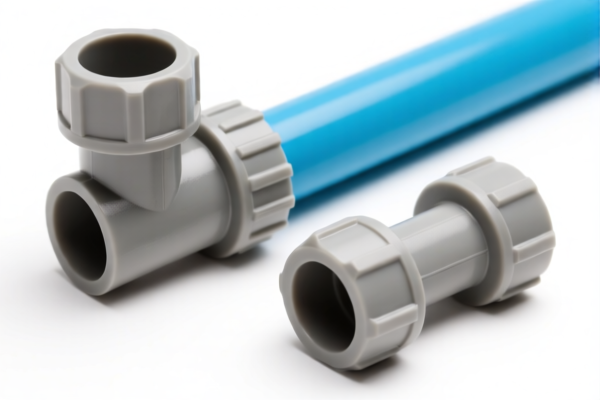
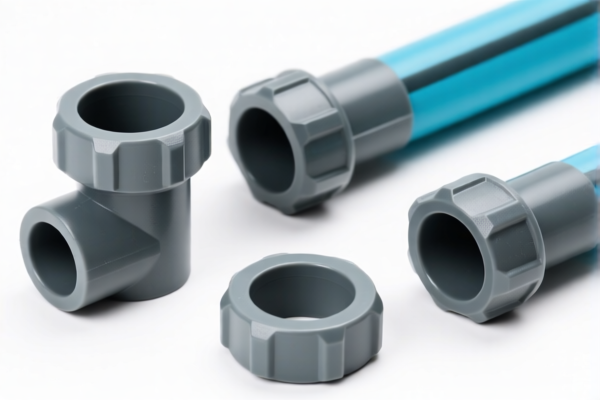
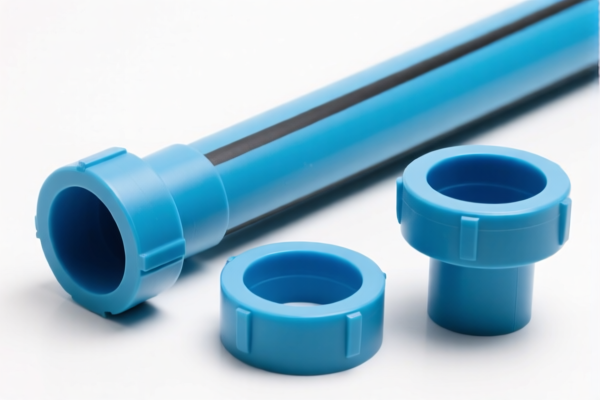
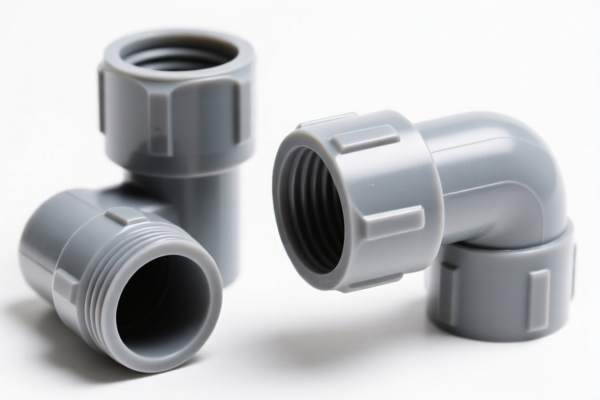
AI Analysis
🔧 HDPE Plastic Pipe Fittings
🌐 HS Code Reference & Customs Clearance Guide | 2026 Latest Tariff Analysis | Professional-Level Clearance Strategy
📌 I. Product Definition & Classification: What Exactly Are "HDPE Plastic Pipe Fittings"?
High-Density Polyethylene (HDPE) pipe fittings are critical components in fluid transport systems, used to connect, redirect, or terminate pipes. In international trade, they are classified under Chapter 39 (Plastics and Articles Thereof), specifically under Heading 3917.
Key Distinction for Classification:
The classification depends heavily on the specific type of fitting and its intended use:
1. General/Other Fittings: Fittings not specifically designated for plumbing (water supply/drainage) or other specific industrial applications. These often fall under "Other".
2. Plumbing Fittings: Fittings specifically designed for plumbing installations (e.g., household water supply, drainage). These have more specific subheadings.
⚠️ Key Classification Point:
- If the fitting is a generic connector (elbow, tee, coupling) not explicitly for "plumbing" systems as defined by customs, it may fall under "Other" (3917.40.00.95).
- If the fitting is specifically identified as a "plumbing fitting" (e.g., for household water or waste), it falls under "Other plumbing fittings" (3917.40.00.80).
- Note: The distinction often lies in the product description, marketing, and technical specifications provided during customs declaration.
📦 II. HS Code Classification Details (2026 Latest Tariff Authority Reference)
| HS Code | Product Description | Applicable Scenario | Key Identifier |
|---|---|---|---|
3917.40.00.95 |
Tubes, pipes and hoses and fittings therefor, of plastics: Fittings Other | General industrial HDPE fittings, generic connectors, non-plumbing specific joints | "Other" fittings; not specifically for plumbing |
3917.40.00.80 |
Tubes, pipes and hoses and fittings therefor, of plastics: Fittings Other plumbing fittings: Other | HDPE fittings specifically used in plumbing systems (water supply, drainage, sewage) | Specifically identified as "plumbing fittings" |
🔍 Critical Reminder:
- Both codes fall under Heading 3917.40 (Plastic fittings).
- The difference between.95and.80is sub-classification.
-.95is the residual category for fittings not covered by other specific subheadings (like plumbing).
-.80is for fittings explicitly described as "plumbing fittings".
- Misclassification Risk: Declaring a plumbing fitting as "Other" (.95) when it is clearly for plumbing can lead to scrutiny. Conversely, declaring a general industrial fitting as "plumbing" (.80) may not be accurate if it’s used for chemical transport, etc.
- Tax Implication: In the provided data, both codes have the same tax rate (0.0%), so the primary concern is accuracy of description and compliance with customs definitions, not tariff cost (for this specific scenario).
💰 III. 2026 Latest Tariff Rate Breakdown (Including Additional Taxes)
✅ Applicable Country: United States (US)
✅ Origin: China (CN)
✅ Effective Date: 2025+ (Current Data)
✅ Data Source: Provided in<DATA>
🎯 1. HS Code 3917.40.00.95 — Fittings Other (Non-Plumbing Specific)
| Item | Content |
|---|---|
| Basic Tariff | 0.0% |
| Section 301 Additional Tariff | 0.0% |
| IEEPA Additional Tariff | 0.0% |
| Total Tax Rate | 0.0% |
| Tax Calculation | CIF Value × 0.0% = $0 |
| De Minimis Eligibility | ✅ Yes (If value < $800) |
| Legal Basis | USITC Tariff Schedule 3917.40.00.95 |
📌 Explanation:
- This code benefits from a 0% total tariff for Chinese-origin goods in the provided dataset.
- This is unusual for many plastic products, which often face 25% Section 301 tariffs.
- Double-Check: Ensure this is current, as some plastic fittings may have been added to trade war lists. The provided data explicitly states 0.0% for this code.
🎯 2. HS Code 3917.40.00.80 — Other Plumbing Fittings
| Item | Content |
|---|---|
| Basic Tariff | 0.0% |
| Section 301 Additional Tariff | 0.0% |
| IEEPA Additional Tariff | 0.0% |
| Total Tax Rate | 0.0% |
| Tax Calculation | CIF Value × 0.0% = $0 |
| De Minimis Eligibility | ✅ Yes (If value < $800) |
| Legal Basis | USITC Tariff Schedule 3917.40.00.80 |
📌 Explanation:
- Similar to.95, this code also shows a 0.0% total tariff in the provided data.
- This suggests that HDPE plumbing fittings may be exempt from current additional tariffs for Chinese goods, or this specific subheading has not been targeted.
- Caution: Always verify with a customs broker, as tariff classifications can change based on product-specific exclusions or updates.
🛠️ IV. Customs Clearance Practical Advice (Battle-Tested Pitfall Avoidance Guide)
✅ 1. Required Documentation Checklist
| Document | Must Provide | Explanation |
|---|---|---|
| ✅ Product Specification Sheet | ✔️ | Material (HDPE), density, pressure rating, size, fitting type |
| ✅ Commercial Invoice | ✔️ | Clear description: "HDPE Plastic Pipe Fittings for Plumbing" or "HDPE Fittings, Other" |
| ✅ Packing List | ✔️ | Quantity, weight, dimensions |
| ✅ Certificate of Origin (CO) | ✔️ | If claiming preferential treatment (though rate is 0% here) |
| ✅ Test Reports | ✔️ | ASTM D3350, ISO 4427, or other relevant HDPE standards |
| ✅ Photos | ✔️ | Clear images of fittings, labeling, and packaging |
✅ 2. Declaration Tips (Key Mantra)
🔥 "Describe Precisely, Specify Use, Match the Code, Avoid Disputes!"
| Scenario | Correct Declaration | Incorrect Practice |
|---|---|---|
| Fittings for Water Supply | 3917.40.00.80 - "HDPE Plumbing Fittings" |
Calling it "Other Fittings" → May trigger inspection |
| Generic Industrial Connectors | 3917.40.00.95 - "HDPE Pipe Fittings, Other" |
Calling it "Plumbing" when not used for water → Misclassification |
| Mixed Shipments | Split declaration by end-use | Mixed code → Delays & Penalties |
✅ 3. Special Considerations
| Situation | Handling Advice |
|---|---|
| OEM Private Label | Provide customer PO + design specs to confirm "plumbing" vs "general" use |
| Chemical Transport Fittings | Must declare as 3917.40.00.95 ("Other"), not plumbing |
| Small Shipments (<$800) | Eligible for De Minimis entry under $800 rule, but still requires correct HS code |
| Pre-Ruling Request | Highly recommended if end-use is ambiguous. Submit to CBP for advance classification |
🌍 V. Global Market Customs Comparison (2026 Latest)
| Country/Region | Recommended HS Code | Tariff Rate | Certification Requirements | Notes |
|---|---|---|---|---|
| 🇺🇸 USA | 3917.40.00.95 / 3917.40.00.80 |
0.0% | None (for this dataset) | Verify current 301 status; data shows 0% |
| 🇨🇳 China | 3917.40.00.95 |
~5-6% | CCC (if applicable) | Import tariff may apply |
| 🇪🇺 EU | 3917.21.00 / 3917.23.00 |
0-2.7% | CE (if applicable) | Different subheading structure |
| 🇬🇧 UK | 3917.21.00.00 |
0% | UKCA | Post-Brexit changes |
| 🇦🇺 Australia | 3917.21.00.00 |
5% | C-Tick | Standard MFN rate |
📌 Conclusion:
- The USA currently shows a 0% tariff for these specific HDPE fittings in the provided data, which is highly favorable.
- However, accuracy of description is paramount. Misdeclaring "plumbing" vs "other" can lead to audits, even if the rate is the same.
- Always confirm with a licensed customs broker before shipment.
📌 VI. Common Mistakes & Pitfall Guide (Lessons from Experience)
❌ Mistake 1: Calling all HDPE fittings "Plumbing Fittings"
👉 Consequence: If fittings are for gas or chemical transport, they are not plumbing. Misclassification → Penalties or Seizure.
❌ Mistake 2: Not specifying material (HDPE vs PVC vs PP)
👉 Consequence: Different materials have different HS codes and tariff treatments. Ambiguity → Delays.
❌ Mistake 3: Ignoring the "Plumbing" distinction
👉 Consequence: Even if rates are the same in this dataset, customs may request proof of use (e.g., invoice showing buyer is a plumbing contractor). Lack of proof → Inspection.
❌ Mistake 4: Assuming 0% tariff is permanent
👉 Consequence: Trade policies change. A tariff exemption today may be removed tomorrow. → Financial Risk.
✅ Correct Practice:
"High-Density Polyethylene (HDPE) Pipe Fittings, for Plumbing Use, 2-inch, Elbow, ASTM D3350 Compliant, Model XYZ"
🎯 VII. Conclusion: Precision in Classification, Peace of Mind in Clearance
🎯 Remember the Mantra:
🔹 "HDPE Fittings: Plumbing or Other? Declare Clearly, Avoid Trouble!"
🔹 "0% Tariff is Great, But Accuracy is Key!"
🔹 "HS Code is Not Just a Number, It’s a Legal Commitment!"
📌 Pro Tip:
If your shipment is under $800, it may qualify for De Minimis entry (Section 321), meaning no duties and no formal entry required. However, you still need the correct HS code for internal records and potential audits.
📣 Immediate Action:
📞 Consult a Customs Broker: Confirm if your specific fitting is "plumbing" or "other".
📄 Provide Detailed Specs: Include material standard, pressure rating, and intended use.
🚀 Clearance is Smooth: When description matches reality!
✨ Professional Customs Clearance Starts with Precise Classification!
💼 Your Cost Savings Depend on Accurate Declarations!
Customer Reviews
About HS Code Classification
The Harmonized System (HS) is an internationally standardized nomenclature developed by the World Customs Organization (WCO) to classify traded products. Over 200 countries use the HS system as the basis for customs tariffs, trade statistics, and import/export regulations.
Each HS code follows a hierarchical structure:
- Chapter (2 digits) — Broad category of goods (e.g., Chapter 84: Machinery and Mechanical Appliances)
- Heading (4 digits) — More specific grouping within the chapter
- Subheading (6 digits) — Internationally standardized breakdown, used by all WCO member countries
- National subdivisions (8-10 digits) — Country-specific extensions for further classification, such as US HTSUS 10-digit codes
Correct HS code classification is essential for smooth customs clearance, accurate duty payment, and compliance with trade regulations. Misclassification can lead to customs delays, overpayment of duties, or penalties.
When importing from CN to US, the applicable tariff rates may include:
- Most-Favored-Nation (MFN) rate — The standard duty rate applied to WTO members
- General rate — Applied to countries without trade agreements
- Trade remedy duties — Additional tariffs such as Section 301 (anti-dumping), Section 232 (national security), or countervailing duties
The information provided on this page is for reference purposes only. For official classification, please consult with your local customs authority or a licensed customs broker.