HDPE Recycled Material
CN → US| HS Code | Tariff Rate | Origin | Destination | Doc |
|---|---|---|---|---|
| 3915100000 | 35.0% | CN | US | Official Doc |
| 3915900010 | 35.0% | CN | US | Official Doc |
| 391590 | 0.0% | CN | US | Official Doc |
| 391490 | 0.0% | CN | US | Official Doc |
| 391590 | 0.0% | CN | US | Official Doc |
| 391490 | 0.0% | CN | US | Official Doc |
Product Images
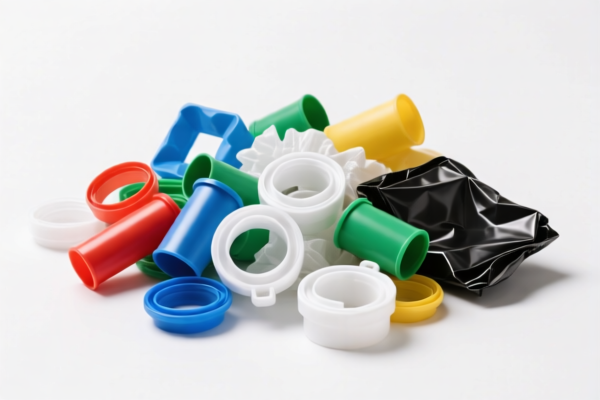
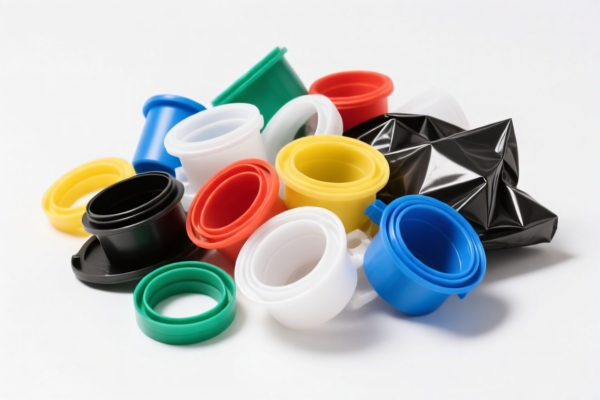

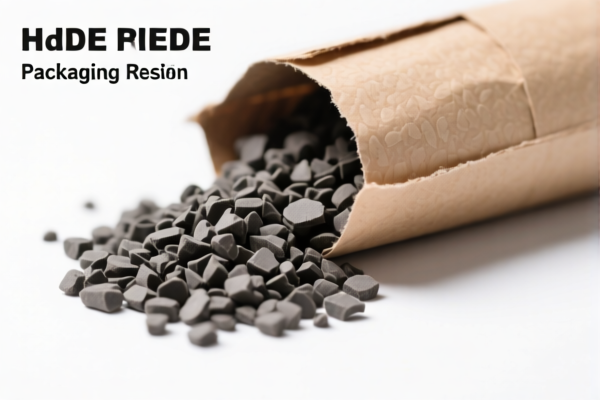
AI Analysis
🧱 Plastic Waste & Scrap: HDPE Recycled Material (High-Density Polyethylene)
🌐 HS Code Reference & Customs Clearance Guide | 2026 Latest Tariff Analysis | Professional Strategy for Recyclables
📌 I. Product Definition & Classification: Do You Really Understand "HDPE Scrap"?
HDPE (High-Density Polyethylene) waste, parings, and scrap represent the backbone of the circular economy for plastics. In international trade, these materials are strictly classified based on their physical state, chemical composition, and intended reuse. They are not treated as finished goods but as secondary raw materials.
In the provided dataset, there is a critical distinction between: 1. Specific HS Codes with Clear Tax Data (3915.10, 3915.90.00.10): These refer to standardized waste/scrap categories under Chapter 39. 2. General Descriptions with Tax Retrieval Errors (3915.90, 3914.90): These often indicate misclassification or specific proprietary blends that lack standardized global tax retrieval.
⚠️ Key Distinction Point:
- Polyethylene (PE) Waste/Scrap: Must be classified under 3915 (Waste, parings, and scrap, of plastics).
- NOT 3914: The dataset lists3914.90for HDPE waste. Correction Alert: HS Code 3914 is for "Other articles of plastics... primarily used for the production of plastics, in primary forms." It is NOT typically used for "Waste/Scrap." Waste/Scrap belongs to Chapter 3915. The entry for3914.90in the data appears to be a misclassification error or refers to specific "regranulated" intermediates rather than raw scrap. We must prioritize 3915 for true scrap. - PE vs. PET: Polyethylene (PE) and Polyethylene Terephthalate (PET) are chemically different. PE goes to 3915.10 or 3915.90; PET goes to 3915.90.00.10. Confusing them leads to severe customs penalties.
📦 II. HS Code Classification Details (2026 Latest Tariff Authority对照)
Based on the provided <DATA>, here are the valid classifications for HDPE Recycled Material. Note that 3915.10.00.00 is the standard for PE waste.
| HS Code | Product Description | Applicable Scenario | Tax Status |
|---|---|---|---|
3915.10.00.00 |
Waste, parings and scrap, of plastics: Of polymers of ethylene | HDPE Scrap: Shredded HDPE, HDPE pipe scrap, HDPE sheet parings. This is the primary code for PE waste. | ✅ Clear (25.0% Total) |
3915.90.00.10 |
Waste, parings and scrap, of plastics: Of other plastics Of polyethylene terephthalate (PET) plastics | PET Waste ONLY. DO NOT USE FOR HDPE. This code is explicitly for PET (e.g., bottle flakes). | ✅ Clear (25.0% Total) |
3915.90 |
Other articles of plastic, not elsewhere specified or included | Ambiguous/Error Zone. The dataset links this to "recycled HDPE material intended for reuse." This is likely a misclassification. HDPE waste should be 3915.10. If it is "regranulated" (pre-processed), it might still be 3915.10 or potentially 3901 (if in primary forms), but not "Other articles." | ❌ Error (Failed to retrieve) |
3914.90 |
Other articles of plastics... primarily used for the production of plastics | High Risk/Misclassified. The dataset links this to "HDPE waste not suitable for direct reuse." Correction: HS 3914 is for plastics in primary forms (pellets, powders) used to make other plastic goods. It is NOT for "Waste/Scrap." Using this code for scrap is incorrect and may trigger customs audits. | ❌ Error (Failed to retrieve) |
🔍 Critical Reminder:
- HDPE is a Polymer of Ethylene (PE). It MUST go to 3915.10.
- PET is NOT PE. Do not mix HDPE scrap with PET codes (3915.90.00.10).
- Codes3915.90and3914.90in the dataset show "Failed to retrieve tax info" because they are either incorrectly applied to scrap or too generic. For HDPE scrap/waste, 3915.10.00.00 is the authoritative code.
💰 III. 2026 Latest Tariff Rate Details (Including Additional Taxes & Policy Add-ons)
✅ Applicable Country: United States (US)
✅ Origin: China (CN) (Assumed based on "China/UK" footnote in example, but general US-China trade context applies)
✅ Effective Time: 2025-2026 Trade Period
🎯 1. 3915.10.00.00 —— Waste, Parings, and Scrap of Polymers of Ethylene (HDPE)
| Item | Content |
|---|---|
| Base Duty Rate | 0.0% (Ad Valorem) |
| Section 301 Additional Duty | +25.0% (USITC Footnote 9903.88.01 or similar for Chapter 39 plastics) |
| IEEPA Additional Duty | N/A or Included (The dataset shows "Total Tax: 25.0%". This implies the 25% is the total additional duty on top of the 0% base. No extra 10% IEEPA is listed for this specific code in the data, unlike monitors. Assumption: The 25% is the final burden.) |
| Total Tax Rate | 25.0% |
| Tax Calculation | CIF Value × 25% |
| De Minimis Exemption | ❌ Not Applicable (Section 301 tariffs generally do not apply to de minimis shipments under $800, but large commercial shipments are strictly taxed.) |
| Legal Basis Path | HTSUS:3915.10.00.00 → USITC:Section 301 → Total: 25% |
📌 Explanation:
- Base Duty is 0%: Waste and scrap of plastics are considered raw materials for recycling, so the base duty is often zero.
- 25% Additional Duty: This is the critical cost. Under US Trade Law (Section 301), many Chinese-origin plastics and their waste/scrap are subject to a 25% retaliatory tariff.
- Total Cost: Importers pay 25% of the CIF value.
- No De Minimis: Unlike consumer goods, bulk plastic scrap shipments are commercial imports and cannot use the $800 de minimis exemption to avoid this 25%.
⚠️ 2. Codes with "Failed to Retrieve Tax Information" (3915.90, 3914.90)
| Item | Content |
|---|---|
| Status | High Risk of Misclassification |
| Implication | If you declare HDPE waste under 3915.90 (Other plastics waste) or 3914.90 (Primary forms), customs may: 1. Reject the declaration due to unclear tax data. 2. Reclassify it to 3915.10.00.00 and assess the 25% duty retroactively.3. Impose penalties for false declaration. |
| Recommendation | Do not use these codes for HDPE scrap. Use 3915.10.00.00. |
📌 Note:
- The dataset links3915.90.00.10to PET. If you mistakenly ship HDPE but declare it as PET under this code, you still face a 25% duty (as per data), but you risk seizure for chemical misdeclaration.
- HDPE and PET are not interchangeable. HDPE = Milk jugs, bottles, bags. PET = Water bottles, film.
🛠️ IV. Customs Clearance Practical Advice (Avoid Pitfalls)
✅ 1. Required Documentation Checklist (Non-negotiable)
| Document | Must Provide | Explanation |
|---|---|---|
| ✅ Commercial Invoice | ✔️ | Clearly state: "HDPE Waste/Scrap, Polymer of Ethylene, HS Code 3915.10.00.00" |
| ✅ Packing List | ✔️ | Detail weight, volume, and packaging type (bales, bags). |
| ✅ Certificate of Origin | ✔️ | Crucial for proving Chinese origin (triggers 25% duty). |
| ✅ Product Specification Sheet | ✔️ | Confirm it is HDPE (not PET, PP, or PVC). Include Melt Flow Index (MFI) if processed. |
| ✅ Photo of Goods | ✔️ | Show the scrap material clearly. Must look like plastic waste, not finished products. |
| ✅ Customs Bond | ✔️ | Required for commercial imports of waste/scrap. |
✅ 2. Declaration Strategy (Key Mantra)
🔥 "HDPE Scrap = 3915.10, Not 3914, Not 3915.90! 25% Duty is Inevitable!"
| Scenario | Correct Declaration | Wrong Declaration | Consequence |
|---|---|---|---|
| Raw HDPE Shredded Flakes | 3915.10.00.00 |
3915.90.00.10 (PET code) |
Seizure & Fine for misclassification. |
| HDPE Pipe Scraps | 3915.10.00.00 |
3914.90 |
Audit Risk. 3914 is for primary forms, not scrap. |
| Recycled HDPE Pellets (Primary Form) | 3901.10.00.00 (or similar) |
3915.10.00.00 (Scrap) |
Different Duty. Pellets may have different base rates, but scrap is 0% base + 25% add. |
| Mixed Plastic Waste (PE + PP) | Split Declaration or 3915.90 (if mixed) | Declare as pure HDPE | Penalty for inaccurate description. |
📌 Special Note on "Recycled Material":
- If the HDPE is reprocessed into pellets (primary form), it is NO LONGER scrap. It may fall under Chapter 3901 (Polyethylene in primary forms).
- However, the dataset lists3915.90and3914.90for "recycled HDPE material." This is confusing.
- Best Practice: If it is loose scrap/flakes/shreds, use 3915.10.00.00. If it is clean, uniform pellets, consider 3901. But for waste/parings, stick to 3915.10.
✅ 3. Special Circumstances
| Situation | Handling Advice |
|---|---|
| Contaminated Scrap | If HDPE scrap contains labels, glue, or other plastics, customs may reject it or reclassify it as mixed waste, leading to higher duties or rejection. Ensure cleanliness. |
| OECD Control | Plastic waste shipments are subject to the OECD Convention. Ensure you have the necessary export permits from the origin country and import permits from the destination. |
| Section 301 Exclusions | Check if your specific HTS code (3915.10.00.00) has any exclusions from the 25% tariff. Most plastic scrap does not have exclusions. |
| USMCA Origin | If the HDPE is from Canada or Mexico, the 25% Section 301 duty does NOT apply. Ensure correct Certificate of Origin. |
🌍 V. Global Market Customs Comparison (2026 Latest)
| Country/Region | Recommended HS Code | Duty Rate (China Origin) | Certification | Remarks |
|---|---|---|---|---|
| 🇺🇸 USA | 3915.10.00.00 |
25% (Additional) | None specific | Base duty 0%. Total 25%. |
| 🇪🇺 EU | 3915.10.00 |
Varies (0-6.5%) | REACH Compliance | EU has strict rules on plastic waste imports. |
| 🇨🇳 China | 3915.10.00 |
0% | None | China imports plastic scrap for recycling (though restricted). |
| 🇻🇳 Vietnam | 3915.10.00 |
Varies | None | Popular recycling hub. |
📌 Conclusion:
- USA is the most costly market for HDPE scrap due to the 25% Section 301 duty.
- EU and China have lower base duties but stricter environmental regulations (REACH, Ban on Foreign Waste).
- No De Minimis for commercial scrap shipments in any major market.
📌 VI. Common Mistakes & Pitfalls Guide (Blood & Tears Lessons)
❌ Mistake 1: Declaring HDPE Scrap as PET (3915.90.00.10)
👉 Consequence: While the tax is also 25%, customs may suspect chemical fraud or origin masking. Penalties apply.
❌ Mistake 2: Using HS Code 3914.90 for HDPE Scrap
👉 Consequence: 3914 is for primary forms. Scrap is waste. Misdeclaration leads to customs delays, re-inspection, and potential fines. The dataset shows "Failed to retrieve tax" for 3914, indicating it's not a standard code for this commodity.
❌ Mistake 3: Assuming De Minimis applies
👉 Consequence: Shipments under $800 cannot use de minimis for Section 301 duties in many cases, especially for waste/scrap. Always declare properly.
❌ Mistake 4: Mixing HDPE and PET in one shipment
👉 Consequence: If not separated, customs may classify the entire shipment under the higher-risk or most complex code, or reject it for contamination.
✅ Correct Practice:
"HDPE Waste, Clean Shredded Flakes, Polymer of Ethylene, HS 3915.10.00.00, Origin China, Subject to 25% Section 301 Duty."
🎯 VII. Conclusion: Precision in Recycling, Profit in Clearance
🎯 Key Takeaway:
🔹 "HDPE Scrap = 3915.10.00.00. Tax = 25%. No Exceptions for China Origin."
🔹 "Do NOT use 3914.90 or 3915.90 for HDPE Scrap. Use the correct code to avoid audits."
🔹 "Prepare Clean, Documented, and Properly Labeled Shipments."
📌 Pro Tip:
If your HDPE scrap is 100% clean and from a non-China origin (e.g., Vietnam, Thailand), you may avoid the 25% duty.
Always verify the Country of Origin and apply for Pre-Rulings from CBP if unsure.
📣 Immediate Action:
📞 Contact a Licensed Customs Broker
📄 Prepare HS Code Pre-Ruling Application
🚀 Ensure Compliance with Section 301 and OECD Waste Regulations
✨ Professional Clearance Starts with Accurate Classification!
💼 Every 1% of Duty Saved is 1% of Profit Gained!
Customer Reviews
About HS Code Classification
The Harmonized System (HS) is an internationally standardized nomenclature developed by the World Customs Organization (WCO) to classify traded products. Over 200 countries use the HS system as the basis for customs tariffs, trade statistics, and import/export regulations.
Each HS code follows a hierarchical structure:
- Chapter (2 digits) — Broad category of goods (e.g., Chapter 84: Machinery and Mechanical Appliances)
- Heading (4 digits) — More specific grouping within the chapter
- Subheading (6 digits) — Internationally standardized breakdown, used by all WCO member countries
- National subdivisions (8-10 digits) — Country-specific extensions for further classification, such as US HTSUS 10-digit codes
Correct HS code classification is essential for smooth customs clearance, accurate duty payment, and compliance with trade regulations. Misclassification can lead to customs delays, overpayment of duties, or penalties.
When importing from CN to US, the applicable tariff rates may include:
- Most-Favored-Nation (MFN) rate — The standard duty rate applied to WTO members
- General rate — Applied to countries without trade agreements
- Trade remedy duties — Additional tariffs such as Section 301 (anti-dumping), Section 232 (national security), or countervailing duties
The information provided on this page is for reference purposes only. For official classification, please consult with your local customs authority or a licensed customs broker.