HOODED SWEATSHIRT
CN → US| HS Code | Tariff Rate | Origin | Destination | Doc |
|---|---|---|---|---|
| 6110202046 | 34.0% | CN | US | Official Doc |
| 6110202041 | 34.0% | CN | US | Official Doc |
| 6114200010 | 28.3% | CN | US | Official Doc |
| 6114200005 | 28.3% | CN | US | Official Doc |
| 6110202046 | 34.0% | CN | US | Official Doc |
Product Images

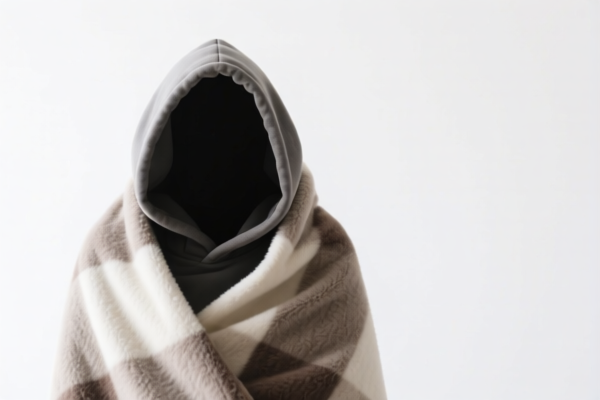


AI Analysis
👕 Hooded Sweatshirt (Hoodies & Zip-Up Hoodies)
🌐 HS Code Reference & Customs Clearance Guide | 2026 Latest Tariff Breakdown | Professional Entry Strategy
📌 I. Product Definition & Classification: Do You Know Your "Hoodie"?
Hooded sweatshirts are essential casual wear, primarily categorized under Knitted or Crocheted Clothing. In international trade, the specific HS Code depends heavily on the closure type (pullover vs. zip-up) and the material composition (typically Cotton or Cotton-blend for these entries).
Key Distinctions: * Pullover Hoodies (Sweatshirts): Usually classified under 6110.20 (Knitted/crocheted pullovers, cardigans, etc.). * Zip-Up Hoodies (Windbreakers/Jackets style): Often classified under 6114.20 (Knitted/crocheted garments, other), depending on the specific construction and whether it is treated as a "hoodie" or a general "sweatshirt."
⚠️ Critical Classification Point:
- If it is a Pullover (no front zipper), it likely falls under 6110.20.xx.
- If it is a Zip-Up (full front zipper), it may fall under 6114.20.xx, which often carries a lower base duty.
- Material Assumption: All codes below assume Cotton or Cotton-blend fabric, as indicated in the source data.
📦 II. HS Code Classification Details (2026 Latest Tariff Authority)
Based on the provided data, here are the four specific HS Codes applicable to Hooded Sweatshirts, distinguished by closure type and precise material nuances.
| HS Code | Product Description | Key Feature | Material Assumption | Base Duty |
|---|---|---|---|---|
6110.20.20.46 |
Pullover Hoodie (Sweatshirt) | Pullover style | Knitted Cotton | 16.5% |
6110.20.20.41 |
Pullover Hoodie (Sweatshirt) | Pullover style | Knitted Cotton | 16.5% |
6114.20.00.10 |
Zip-Up Hoodie (Sweatshirt) | Zipper closure | Cotton or Blend | 10.8% |
6114.20.00.05 |
Zip-Up Hoodie (Sweatshirt) | Zipper closure | Knitted Cotton | 10.8% |
🔍 Important Note:
- 6110.20 codes generally apply to Pullover styles (hoodies without a full front zip).
- 6114.20 codes generally apply to Zip-Up styles or other knitted garments.
- Material Conflict Check: The data confirms no material conflicts for Cotton/Knitted Cotton, ensuring these codes are valid for standard cotton hoodies.
💰 III. 2026 Latest Tariff Rate Breakdown (Including Additional Duties)
✅ Applicable Country: United States (US)
✅ Origin: China (CN)
✅ Effective Time: Current (includes Section 301 and Section 122 tariffs)
🎯 1. Pullover Hoodies (6110.20.20.46 & 6110.20.20.41)
These codes apply to standard pullover hoodies. They carry a higher base duty but are subject to the same additional tariffs.
| Item | Detail |
|---|---|
| Base Tariff (MFN) | 16.5% |
| Section 301 Tariff (Add-on) | +7.5% |
| Section 122 Tariff (Add-on) | +10.0% |
| Total Effective Duty | 34.0% |
| Tax Calculation | CIF Value × 34.0% |
| De Minimis Eligibility | ❌ No (Denied due to high total duty rate and origin) |
| Legal Reference Path | Base: 16.5% + Section 301: 7.5% + Section 122: 10% |
📌 Explanation:
- The 16.5% base rate is standard for knitted cotton sweatshirts.
- The 7.5% is the Section 301 additional duty on Chinese textiles.
- The 10% is the Section 122 duty (often applied to certain apparel imports).
- Total Cost Impact: For every $100 of goods, you pay $34 in duties alone.
🎯 2. Zip-Up Hoodies (6114.20.00.10 & 6114.20.00.05)
These codes apply to zip-up hoodies or other knitted garments. They benefit from a lower base duty, resulting in a lower total tax burden.
| Item | Detail |
|---|---|
| Base Tariff (MFN) | 10.8% |
| Section 301 Tariff (Add-on) | +7.5% |
| Section 122 Tariff (Add-on) | +10.0% |
| Total Effective Duty | 28.3% |
| Tax Calculation | CIF Value × 28.3% |
| De Minimis Eligibility | ❌ No (Denied due to high total duty rate and origin) |
| Legal Reference Path | Base: 10.8% + Section 301: 7.5% + Section 122: 10% |
📌 Explanation:
- The 10.8% base rate is lower than pullovers, making zip-ups more tax-efficient.
- Additional tariffs (301 + 122) remain the same.
- Total Cost Impact: For every $100 of goods, you pay $28.30 in duties.
- Savings: Choosing the correct zip-up HS code can save 5.7% per item compared to a pullover.
🛠️ IV. Customs Clearance Practical Advice (Real-World Pitfall Guide)
✅ 1. Preparation Checklist (Non-negotiable)
| Document | Mandatory? | Notes |
|---|---|---|
| ✅ Product Specification Sheet | ✔️ | Must state: "Knitted Cotton Hoodie," Zip/Pullover type, Fabric composition (e.g., 80% Cotton/20% Polyester). |
| ✅ Product Photos | ✔️ | Clear images showing the front closure (Zip vs. Pullover) and label. Crucial for distinguishing 6110 vs. 6114. |
| ✅ Commercial Invoice | ✔️ | Must accurately describe the item as "Knitted Cotton Hooded Sweatshirt." Avoid vague terms like "Clothing." |
| ✅ Packing List | ✔️ | Ensure quantities match the invoice. |
| ✅ Origin Certificate (if applicable) | ✔️ | Proves China origin, triggering the additional tariffs. |
✅ 2. Declaration Tips (Key Mantras)
🔥 “Zip vs. Pullover Determines Code, Cotton Defines Chapter 61!”
| Scenario | Correct Declaration | Wrong Practice |
|---|---|---|
| Pullover Hoodie | 6110.20.20.46/41 |
Misdeclaring as zip-up → Risk of audit/fine. |
| Zip-Up Hoodie | 6114.20.00.10/05 |
Misdeclaring as pullover → Overpaying duty (34% vs 28.3%). |
| Mixed Cotton/Poly | Verify % | If >50% cotton, stays in 6110/6114. If synthetic, code changes entirely. |
| Sample vs. Bulk | Declare as Sample | If value is very low, check de minimis rules (usually not available for China apparel under current tariffs). |
✅ 3. Special Cases & Optimization
| Situation | Recommendation |
|---|---|
| Optimizing Duty Cost | If possible, design as Zip-Up hoodies to utilize the 10.8% base rate instead of 16.5%. |
| Material Change | If using Polyester instead of Cotton, the HS Code changes completely (likely to 6109/6114 synthetic codes). Do not use the codes above for synthetics. |
| Section 122 Impact | Note that the 10% Section 122 tariff is a significant add-on. This is non-negotiable for China-origin apparel in the US. |
| Pre-Ruling | If unsure if your hoodie is "Pullover" (6110) or "Other" (6114), apply for an Advance Ruling from CBP to avoid misclassification penalties. |
🌍 V. Global Market Comparison (2026 Snapshot)
| Market | Typical HS Code | Base Duty | Additional Duties (China) | Total Effective Rate |
|---|---|---|---|---|
| 🇺🇸 USA | 6110.20 / 6114.20 |
10.8% - 16.5% | +17.5% (301+122) | 28.3% - 34.0% |
| 🇪🇺 EU | 6110.20 / 6114.20 |
12% - 12% | 0% (No Section 301) | ~12% |
| 🇨🇳 China | 6110.20 / 6114.20 |
12% - 15% | 0% | ~12-15% |
| 🇨🇦 Canada | 6110.20 / 6114.20 |
12% - 12% | 0% | ~12% |
📌 Conclusion:
- The US market has the highest duty burden due to Section 301 and Section 122 tariffs.
- EU, Canada, and China do not apply these punitive additional tariffs, resulting in significantly lower landed costs.
- Strategy: If targeting the US, consider supply chain diversification (e.g., manufacturing in Vietnam or Bangladesh) to avoid the 17.5% additional tariff block.
📌 VI. Common Errors & Pitfalls (Lessons Learned)
❌ Error 1: Using 6114 codes for Pullover hoodies.
👉 Consequence: Classification error, potential audits, and delayed clearance.
❌ Error 2: Using 6110 codes for Zip-Up hoodies.
👉 Consequence: Overpayment of duty (34% instead of 28.3%). You are literally throwing away money.
❌ Error 3: Ignoring the Section 122 Tariff.
👉 Consequence: Budgeting for only 301 duties (7.5%) leads to unexpected costs. The total is 17.5% in add-ons, not just 7.5%.
❌ Error 4: Misdeclaring Material.
👉 Consequence: If the hoodie is 100% Polyester, it does not belong in 6110.20 (Cotton). It would fall under a different code with potentially different rates.
✅ Correct Approach:
"Knitted Cotton Hooded Sweatshirt, Zip-Up, 80% Cotton/20% Polyester, Origin: China."
HS Code:6114.20.00.10
Duty: 28.3%
🎯 VII. Conclusion: Smart Classification, Lower Costs!
🎯 Remember the Mantra:
🔹 “Pullover = 6110 (16.5% Base), Zip-Up = 6114 (10.8% Base)”
🔹 “Add 17.5% for China (301+122). Total is 34% or 28.3%.”
🔹 “Zip-Up saves you 5.7% on every dollar!”
📌 Pro Tip:
If your volume is high, consider HS Code Pre-Confirmation with a customs broker. Even a 5.7% difference on large volumes results in significant savings. Also, explore Free Trade Agreements (FTAs) if sourcing from non-China countries (e.g., USMCA for Mexico/Canada).
📣 Take Action Now:
📞 Consult a Customs Broker to verify your specific hoodie design.
🚀 Choose Zip-Up Codes where possible to minimize duty exposure.
💼 Accurate Description = Smooth Clearance + Lower Costs!
✨ Professional Customs Clearance Starts with Precise Classification!
💼 Every Percent Saved is Pure Profit!
Customer Reviews
About HS Code Classification
The Harmonized System (HS) is an internationally standardized nomenclature developed by the World Customs Organization (WCO) to classify traded products. Over 200 countries use the HS system as the basis for customs tariffs, trade statistics, and import/export regulations.
Each HS code follows a hierarchical structure:
- Chapter (2 digits) — Broad category of goods (e.g., Chapter 84: Machinery and Mechanical Appliances)
- Heading (4 digits) — More specific grouping within the chapter
- Subheading (6 digits) — Internationally standardized breakdown, used by all WCO member countries
- National subdivisions (8-10 digits) — Country-specific extensions for further classification, such as US HTSUS 10-digit codes
Correct HS code classification is essential for smooth customs clearance, accurate duty payment, and compliance with trade regulations. Misclassification can lead to customs delays, overpayment of duties, or penalties.
When importing from CN to US, the applicable tariff rates may include:
- Most-Favored-Nation (MFN) rate — The standard duty rate applied to WTO members
- General rate — Applied to countries without trade agreements
- Trade remedy duties — Additional tariffs such as Section 301 (anti-dumping), Section 232 (national security), or countervailing duties
The information provided on this page is for reference purposes only. For official classification, please consult with your local customs authority or a licensed customs broker.