Hair Dryer Brush
CN → US| HS Code | Tariff Rate | Origin | Destination | Doc |
|---|---|---|---|---|
| 8516320020 | 13.9% | CN | US | Official Doc |
| 8516320040 | 13.9% | CN | US | Official Doc |
| 8543709860 | 37.6% | CN | US | Official Doc |
| 9615196000 | 21.0% | CN | US | Official Doc |
| 3926909989 | 22.8% | CN | US | Official Doc |
Product Images


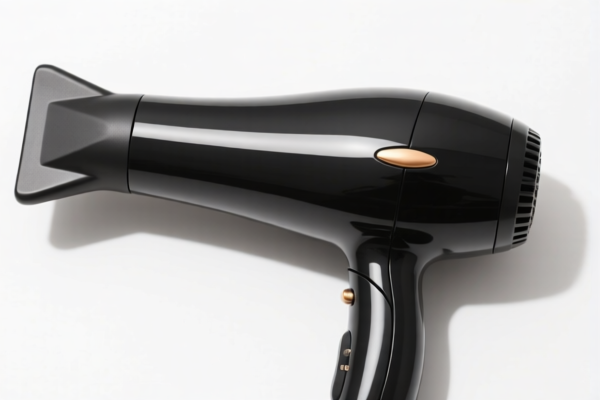
AI Analysis
🖌️ Hair Dryer Brush (Hot Air Styling Comb)
🌐 HS Code Reference & Clearance Guide | 2026 Latest Tariff Analysis | Professional Customs Strategy
📌 I. Product Definition & Classification: Do You Really Understand the "Hair Dryer Brush"?
The Hair Dryer Brush is a versatile styling tool that combines the functions of a hair dryer and a round brush. It uses heated airflow to dry and style hair simultaneously.
In international trade, its classification is highly contentious and depends on the product's primary function, construction, and material composition. It can fall under four distinct categories:
1. Electric Hairdressing Appliances (The "Function-First" Argument)
Core Logic: The device is primarily an electrical heating device designed for styling (drying + curling).
* Target HS Codes: 8516.32.00.20 / 8516.32.00.40
* Fit: Best for devices emphasizing heating elements, motors, and electronic controls*.
2. Independent Electrical Machinery (The "General Machinery" Argument)
Core Logic: If the device has unique, complex independent functions not covered by specific "hairdressing" subheadings, it might be classified as a "general machine."
* Target HS Code: 8543.70.98.60
* Fit: High risk of higher tariffs* if customs decides it doesn't fit the specific "hairdressing" definition.
3. Hair Accessories/Combs (The "Form-First" Argument)
Core Logic: If the product is viewed primarily as a plastic comb with a heating element, it might be classified under "Combs and Hair Clips."
* Target HS Code: 9615.19.60.00
* Fit:* Common for simple plastic brushes with low-tech heating elements.
4. Plastic Products (The "Material-First" Argument)
Core Logic: If the electrical components are considered secondary to the plastic body, it may be classified as a "miscellaneous plastic article."
* Target HS Code: 3926.90.99.89
* Fit:* Rare for high-end electronic brushes; usually applied to very basic, non-electric plastic combs (if the electric part is ignored).
⚠️ Critical Distinction:
- Electrical vs. Mechanical: Is the heat source the primary driver? If yes, 8516 is the strongest argument.
- Plastic Content: If the device is almost entirely plastic with a simple coil, customs might push for 3926 or 9615, but this often triggers audits.
- US Specifics: The 122 Clause (Section 301) tariffs significantly impact the final cost, varying by HS Code.
📦 II. Detailed HS Code Breakdown (2026 Tariff Authority)
| HS Code | Product Description | Logical Basis | Total Tax Rate (China Origin) | Tax Composition Breakdown |
|---|---|---|---|---|
8516.32.00.20 |
Hot Air Styling Appliances (Curlers/Dryers) | Function: Classified as "Other Hair Driers." Logic: Matches heating styling logic. | 13.9% | Base: 3.9% + Section 301 (Add): 0% + 122 Clause: 10% |
8516.32.00.40 |
Other Electric Hairdressing Appliances | Function: Broad category for "Other Hairdressing Equipment." Logic: Fits the "styling device" scope. | 13.9% | Base: 3.9% + Section 301 (Add): 0% + 122 Clause: 10% |
8543.70.98.60 |
Independent Function Machines | Function: "Other Machines and Mechanical Appliances." Logic: Unique independent function not covered elsewhere. | 37.6% | Base: 2.6% + Section 301 (Add): 25% + 122 Clause: 10% |
9615.19.60.00 |
Combs, Hair Clips & Similar Items | Form: Physical structure matches "combs." Logic: Treated as a comb with a heating element. | 21.0% | Base: 11.0% + Section 301 (Add): 0% + 122 Clause: 10% |
3926.90.99.89 |
Miscellaneous Plastic Articles | Material: Primarily plastic construction. Logic: "Other plastics" where electricals are secondary. | 22.8% | Base: 5.3% + Section 301 (Add): 7.5% + 122 Clause: 10% |
🔍 Key Insight:
- Most Favorable:8516.32.00series (13.9%) is the standard, lowest-risk classification for functional electric hair dryers/brushes.
- High Risk:8543.70.98.60(37.6%) incurs a 25% punitive Section 301 tariff, making it the most expensive option.
- Material Trap:3926.90.99.89(22.8%) is risky because customs often reject "plastic" classification for complex electrical devices.
💰 III. 2026 Latest Tariff Rate Details (Including Add-ons)
✅ Applicable Market: USA (US)
✅ Origin: China (CN)
✅ Effective Date: 2025 onwards (Section 301 & 122 Clause)
🎯 1. 8516.32.00.20 & 8516.32.00.40 — The Recommended Path (13.9%)
| Item | Content |
|---|---|
| Base Duty | 3.9% (General MFN Rate) |
| Section 301 (Add-on) | 0.0% (Specific to this subhead under current list) |
| 122 Clause (Add-on) | 10.0% (Section 301 List 4A/4B equivalent for China) |
| Total Tariff | 13.9% |
| Calculation | CIF Value × 13.9% |
| De Minimis Exemption? | ❌ NO (Deny for commercial imports) |
| Legal Path | HTSUS:8516.32 → 301 List → 122 Clause |
📌 Explanation:
- This is the official classification for electric hair driers and hot styling tools.
- The 10% surcharge is mandatory for Chinese-origin goods under the "122 Clause" (often linked to Section 301 extensions).
- Savings: Avoiding the 25% "Machine" tariff saves you ~23.7% of the product value!
🎯 2. 8543.70.98.60 — The "Trap" (37.6%)
| Item | Content |
|---|---|
| Base Duty | 2.6% |
| Section 301 (Add-on) | +25.0% (Heavy punitive tariff for "Machines") |
| 122 Clause (Add-on) | +10.0% |
| Total Tariff | 37.6% |
| Risk | Extremely High. Customs may reclassify from 8516 to 8543 if the "machine" aspect is overemphasized. |
📌 Warning:
- If your product description highlights "independent function" or "complex machinery" without mentioning "hairdressing," you risk this 37.6% rate.
- This is a 5x increase compared to the standard hairdressing rate.
🎯 3. 9615.19.60.00 — The "Comb" Strategy (21.0%)
| Item | Content |
|---|---|
| Base Duty | 11.0% (High base rate for accessories) |
| Section 301 (Add-on) | 0.0% |
| 122 Clause (Add-on) | +10.0% |
| Total Tariff | 21.0% |
📌 Analysis:
- Higher base rate (11%) makes this less favorable than8516(3.9%).
- Only use if the product is non-electric or purely a comb with a very minor heating element that doesn't qualify as a "machine."
🎯 4. 3926.90.99.89 — The "Plastic" Strategy (22.8%)
| Item | Content |
|---|---|
| Base Duty | 5.3% |
| Section 301 (Add-on) | +7.5% |
| 122 Clause (Add-on) | +10.0% |
| Total Tariff | 22.8% |
📌 Analysis:
- Moderate cost.
- Risky: Customs often rejects "Plastic" classification for electrical devices (Chapter 39 excludes electrical machines).
🛠️ IV. Practical Clearance Advice (Avoid Pitfalls)
✅ 1. Documentation Checklist (Must-Haves)
| Document | Requirement | Why It Matters |
|---|---|---|
| Product Datasheet | ✔️ | Must explicitly state "Hair Styling Appliance" and Heating Elements. |
| Circuit Diagram | ✔️ | Proves the device is an electrical heater, not a plastic toy. Critical for 8516 classification. |
| User Manual | ✔️ | Must describe usage as "drying and styling hair," not "general heating." |
| Photographs | ✔️ | Show the heating grille, vents, and power cord. |
| Declaration of Origin | ✔️ | Explicitly state "Made in China" to confirm 122 Clause applicability. |
| Brand Logo | ✔️ | Must be on the product (prevents "no-name" plastic classification). |
✅ 2. Declaration Strategy (The "Golden Rules")
🔥 Golden Rule: "Call it a Hair Dryer, Not a Machine!"
| Scenario | Correct Declaration | Dangerous Declaration |
|---|---|---|
| Product Name | "Electric Hot Air Brush for Hair Styling" | "Hot Air Styling Machine" or "General Heating Device" |
| HS Code | 8516.32.00.20 (13.9%) |
8543.70.98.60 (37.6%) |
| Description | "Plastic hair dryer brush with ceramic heating element" | "Plastic heating machine" |
| Function | "Dries and styles hair" | "Generates hot air for general use" |
📌 Pro Tip:
- Do NOT emphasize "independent function" or "machinery."
- DO emphasize "Hair Drier" and "Styling Appliance."
- If Customs asks, explain it is a sub-type of a hair dryer, not a generic machine.
✅ 3. Special Scenarios
| Scenario | Handling Advice |
|---|---|
| OEM / Private Label | Ensure the manual is in English and clearly states the intended use (hair). |
| Multi-function (Massage + Heat) | Still classify as 8516.32 if heat is the primary function. |
| Non-Heated Brush | If it's just a plastic brush (no electricity), it MUST go to 9615 or 3926. Do not declare electricity if it doesn't exist. |
| Battery Operated | Still 8516 if it uses a heating element. Battery type doesn't change the chapter. |
🌍 V. Market Comparison (2026)
| Market | Recommended HS Code | Estimated Tax | Key Requirement |
|---|---|---|---|
| 🇺🇸 USA | 8516.32.00.20 |
13.9% | Section 301 + 122 Clause (10% surcharge) |
| 🇨🇳 China | 8516.32.00 |
~6-8% | No Section 301; standard MFN |
| 🇪🇺 EU | 8516.32.00 |
0% - 4% | CE Certification required |
| 🇯🇵 Japan | 8516.32.00 |
3% - 8% | PSE Certification required |
📌 Conclusion:
The USA is the most expensive market due to the 122 Clause (10%) and potential Section 301 (25%) if misclassified.
Misclassification to8543results in a 37.6% tax, which is almost 3x the correct rate.
📌 VI. Common Mistakes & Pitfalls (Lessons Learned)
❌ Mistake 1: Declaring as "Hair Styling Machine"
👉 Consequence: Customs reclassifies to 8543 → 37.6% tax + Penalties.
✅ Fix: Use "Hair Dryer Brush" or "Hot Air Styler."
❌ Mistake 2: Declaring as "Plastic Comb" (3926) without mentioning electricity
👉 Consequence: Customs suspects fraud → Audit + Delay + Rejection.
✅ Fix: Always disclose the electrical nature (motor + heater).
❌ Mistake 3: Splitting "Brush" and "Heater" into two shipments
👉 Consequence: Higher duty on parts + logistics cost + complexity.
✅ Fix: Ship as one complete unit (8516).
🎯 VII. Final Verdict: Smart Classification, High Savings
🎯 The Verdict:
✅ Best HS Code:
8516.32.00.20or8516.32.00.40
💰 Savings: Avoids 23.7% extra tax compared to8543.
🛡️ Risk: Low if documentation clearly states "Hair Styling Appliance."📣 Action Plan:
1. Label your product and manual as "Hair Dryer Brush" or "Hot Air Styling Tool."
2. Submit Circuit Diagrams to prove it is a Heating Appliance.
3. Declare under8516.32.00.20(13.9%) to avoid the 37.6% "Machine" trap.
4. Verify Origin to ensure 122 Clause applicability (China = 10% surcharge).
✨ Professional Customs: From Confusion to Clarity!
💼 Your Profit Margin Depends on the Right HS Code!
🚀 Ship Smarter, Pay Less, Clear Faster!
Customer Reviews
About HS Code Classification
The Harmonized System (HS) is an internationally standardized nomenclature developed by the World Customs Organization (WCO) to classify traded products. Over 200 countries use the HS system as the basis for customs tariffs, trade statistics, and import/export regulations.
Each HS code follows a hierarchical structure:
- Chapter (2 digits) — Broad category of goods (e.g., Chapter 84: Machinery and Mechanical Appliances)
- Heading (4 digits) — More specific grouping within the chapter
- Subheading (6 digits) — Internationally standardized breakdown, used by all WCO member countries
- National subdivisions (8-10 digits) — Country-specific extensions for further classification, such as US HTSUS 10-digit codes
Correct HS code classification is essential for smooth customs clearance, accurate duty payment, and compliance with trade regulations. Misclassification can lead to customs delays, overpayment of duties, or penalties.
When importing from CN to US, the applicable tariff rates may include:
- Most-Favored-Nation (MFN) rate — The standard duty rate applied to WTO members
- General rate — Applied to countries without trade agreements
- Trade remedy duties — Additional tariffs such as Section 301 (anti-dumping), Section 232 (national security), or countervailing duties
The information provided on this page is for reference purposes only. For official classification, please consult with your local customs authority or a licensed customs broker.