Hair Dryer Stand
CN → US| HS Code | Tariff Rate | Origin | Destination | Doc |
|---|---|---|---|---|
| 7326908630 | 87.9% | CN | US | Official Doc |
| 7326908688 | 87.9% | CN | US | Official Doc |
| 3924905650 | 20.9% | CN | US | Official Doc |
| 3924104000 | 13.4% | CN | US | Official Doc |
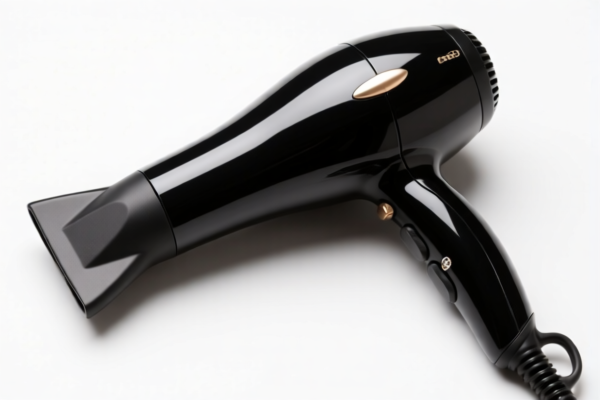
Product Images


AI Analysis
🖌️ Hair Dryer Stand: HS Code Classification & U.S. Customs Clearance Guide 2026
🌐 HS Code Reference & Clearance Strategy | 2026 Latest Tariff Analysis | Professional Customs Strategy
📌 Part I: Product Definition & Classification: Do You Really Understand the "Hair Dryer Stand"?
A hair dryer stand is a household accessory designed to hold, organize, or dry hair dryers and accessories. In international trade, the classification depends entirely on the material of the product. It is generally divided into two main categories:
1. Iron/Steel Products (Metallic): Made of metal frames, hooks, or brackets. These fall under Chapter 73. 2. Plastic Products (Polymeric): Made of molded plastic, silicone, or resin. These fall under Chapter 39.
⚠️ Key Distinction Point:
- If the product is made of Iron or Steel → It is classified as "Other articles of iron or steel" (Chapter 73).
- If the product is made of Plastic → It is classified as "Household articles of plastic" (Chapter 39).
- Misclassification Risk: Declaring a plastic stand as metal (or vice versa) leads to severe duty discrepancies and potential customs penalties.
📦 Part II: HS Code Classification Details (2026 Latest Tariff Authority Comparison)
Based on the provided data, here is the precise breakdown for Hair Dryer Stands:
| HS Code | Product Description | Material | Sub-category Logic |
|---|---|---|---|
7326.90.86.30 |
Hair Dryer Stand (Support) | Iron/Steel | Specific classification for "similar supports" made of iron/steel. |
7326.90.86.88 |
Hair Dryer Stand (General) | Iron/Steel | Catch-all classification for "other articles of iron or steel" not specified elsewhere. |
3924.90.56.50 |
Hair Dryer Stand (Storage/Organizer) | Plastic | Catch-all for "household articles of plastic" used for storage/organization. |
3924.10.40.00 |
Hair Dryer Stand (General Household) | Plastic | Other household articles of plastic (general catch-all for plastic home goods). |
🔍 Key Reminder:
- Metal Stands: Whether it's a specific bracket (...30) or a general holder (...88), if it's iron/steel, it falls under HS 7326.
- Plastic Stands: Whether it's a storage box type (...50) or a simple holder (...00), if it's plastic, it falls under HS 3924.
💰 Part III: 2026 Latest Tariff Rate Breakdown (Including Additional Taxes & Policy Surcharges)
✅ Applicable Country: United States (US)
✅ Country of Origin: China (CN)
✅ Effective Date: 2025/2026 (Current Trade War Context)
🎯 1. Metallic Stands (HS Codes: 7326.90.86.30 & 7326.90.86.88)
⚠️ WARNING: These codes carry the highest possible tariff burden due to Section 301 and Section 232/122 clauses.
| Item | Content |
|---|---|
| Base Tariff | 2.9% (Ad Valorem) |
| Section 301 Surcharge (Add-on) | +25.0% |
| Section 122 / Steel & Aluminum Surcharge | +50.0% (Specific to Steel/Aluminum products under certain trade clauses) |
| Total Effective Rate | 87.9% |
| Tax Calculation | CIF Value × 87.9% |
| De Minimis Eligibility | ❌ NOT Eligible (Values exceeding $800 are subject to full duty; even under de minimis, high-duty items are often scrutinized or blocked). |
| Legal Basis Path | USITC:7326.90.86.30 → FOOTNOTE:Section301 (25%) → IEEPA:SteelAluminum (50%) |
📌 Explanation:
- Base Duty: Standard MFN rate is 2.9%.
- Section 301: The standard 25% trade war tariff on Chinese steel/iron goods.
- Section 122/Steel Surcharge: An additional 50% is applied specifically to steel and aluminum products under recent trade enforcement mechanisms.
- Total: 87.9% is an extremely high barrier. This makes importing metal hair dryer stands from China to the US prohibitively expensive unless absorbed by the seller or passed to the consumer.
🎯 2. Plastic Storage/Organization Stands (HS Code: 3924.90.56.50)
| Item | Content |
|---|---|
| Base Tariff | 3.4% |
| Section 301 Surcharge | +7.5% |
| Total Effective Rate | 20.9% |
| Tax Calculation | CIF Value × 20.9% |
| De Minimis Eligibility | ❌ Generally Not Eligible for high-value or structured household goods, though lower than metal. |
| Legal Basis Path | USITC:3924.90.56.50 → FOOTNOTE:Section301 (7.5%) |
📌 Explanation:
- Plastic household goods are subject to lower Section 301 rates (often 7.5% or 25% depending on specific subheadings, here listed as 7.5%).
- Total: 20.9% is manageable for most importers.
🎯 3. General Plastic Household Stands (HS Code: 3924.10.40.00)
| Item | Content |
|---|---|
| Base Tariff | 3.4% |
| Section 301 Surcharge | 0.0% (Exempt or Not Applicable) |
| Total Effective Rate | 13.4% |
| Tax Calculation | CIF Value × 13.4% |
| De Minimis Eligibility | ⚠️ Check Specifics: While base + add-on is low, plastic goods are still subject to scrutiny. |
| Legal Basis Path | USITC:3924.10.40.00 → FOOTNOTE:None for high surcharge |
📌 Explanation:
- This is the most favorable classification for plastic stands.
- It attracts only the base rate (3.4%) and potentially a small or zero additional duty, totaling 13.4%.
- Strategic Advantage: If your stand can be legitimately classified as a general household plastic item (3924.10.40.00) rather than a specialized storage unit (3924.90.56.50), you save significant duty costs.
🛠️ Part IV: Customs Clearance Practical Advice (Real-World Pitfall Avoidance)
✅ 1. Required Documentation Checklist (Non-Negotiable)
| Document | Must Provide | Explanation |
|---|---|---|
| ✅ Product Specifications | ✔️ | Must clearly state Material (e.g., "100% ABS Plastic" or "Stainless Steel Frame"). |
| ✅ Product Photos | ✔️ | Clear images showing the entire item, including any metal/plastic components. |
| ✅ Commercial Invoice | ✔️ | Description must match HS Code logic (e.g., "Plastic Hair Dryer Organizer" vs. "Metal Hair Dryer Rack"). |
| ✅ Bill of Lading/Airway Bill | ✔️ | Ensure weight and dimensions match the invoice. |
| ✅ Country of Origin Certificate | ✔️ | If claimed as non-China to avoid surcharges, must be valid. |
✅ 2. Declaration Tips (Key Mnemonics)
🔥 "Material is King, Name is Queen!"
| Scenario | Correct Declaration | Wrong Action | Consequence |
|---|---|---|---|
| Plastic Stand | Declare as Plastic Household Article (3924...) |
Declare as Metal | Duty jumps from 13.4% → 87.9% + Penalties |
| Metal Stand | Declare as Iron/Steel Support (7326...) |
Declare as Plastic | Customs inspection will find metal, impose 87.9% + Back Duties |
| Mixed Material | Primary Function/Material dominates | Ambiguous description | Likely classified under the higher-duty material or rejected |
✅ 3. Special Situations
| Situation | Handling Advice |
|---|---|
| OEM Custom Stand | Provide design files to prove material composition. If it's a "plastic look-alike" but contains metal, declare as Metal. |
| Packaging Included | Declare the stand only. Packaging (cardboard/plastic bags) is usually not separately taxed if included in the main unit. |
| Set with Hair Dryer | If sold as a set, the principal character (the hair dryer, usually HS 8516) determines the HS Code, not the stand. |
🌍 Part V: Global Market Comparison (2026 Update)
| Country/Region | Recommended HS Code (Plastic) | Duty Rate | Notes |
|---|---|---|---|
| 🇺🇸 USA | 3924.10.40.00 |
13.4% | Best option for plastic. Metal (7326) is 87.9%! |
| 🇪🇺 EU | 3924.10.00 |
~3-5% | Lower duties than US. CE Marking required. |
| 🇬🇧 UK | 3924.10.00 |
~3-5% | Similar to EU post-Brexit. |
| 🇨🇦 Canada | 3924.10.00 |
~5-10% | CUSMA advantages may apply for eligible goods. |
📌 Conclusion:
- The US is the most expensive market for METAL hair dryer stands from China (87.9%).
- Plastic stands are significantly cheaper to import to the US (13.4% - 20.9%).
- Strategy: If you are exporting to the US, strongly consider switching to plastic materials for your hair dryer stands to reduce duty costs from 87.9% to under 21%.
📌 Part VI: Common Errors & Pitfall Guide (Lessons Learned)
❌ Mistake 1: Declaring a metal stand as plastic to save duty.
👉 Result: Customs X-ray will detect metal. Re-classification to 7326 triggers 87.9% duty + penalties.
❌ Mistake 2: Declaring a plastic stand as a "part of a hair dryer" (HS 8516).
👉 Result: If it's a standalone accessory, it may be rejected for incorrect classification. Standalone accessories are household goods (HS 3924 or 7326).
❌ Mistake 3: Ignoring the Section 122/Steel Surcharge.
👉 Result: Assuming only 25% (Section 301) applies. The total is 87.9% for steel/iron. This is a fatal budgeting error.
✅ Correct Approach:
"Plastic? Go with 3924.10.40.00 for 13.4%.
Metal? Expect 87.9% or find a non-China origin.
Never guess the material!"
🎯 Part VII: Conclusion: Smart Classification Saves Money!
🎯 Remember the Golden Rule:
🔹 "Plastic is Profitable (13.4%), Metal is Expensive (87.9%)."
🔹 "Check the material first, declare the HS code second, pay the duty last."
📌 Pro Tip:
If you must import metal stands, consider:
1. Sourcing from Vietnam/Mexico (avoiding China-specific surcharges).
2. Applying for an Exclusion (if available under Section 301).
3. Switching to Plastic for the US market.
📣 Immediate Action:
📞 Consult your customs broker with clear material specifications.
🚀 Audit your BOM (Bill of Materials) to ensure HS codes match the physical product.
💡 Optimize your product design towards plastic materials for the US market to cut costs by ~75%.
✨ Professional Clearance Starts with Accurate Classification!
💼 Your bottom line depends on the first 4 digits of your HS Code!
Customer Reviews
About HS Code Classification
The Harmonized System (HS) is an internationally standardized nomenclature developed by the World Customs Organization (WCO) to classify traded products. Over 200 countries use the HS system as the basis for customs tariffs, trade statistics, and import/export regulations.
Each HS code follows a hierarchical structure:
- Chapter (2 digits) — Broad category of goods (e.g., Chapter 84: Machinery and Mechanical Appliances)
- Heading (4 digits) — More specific grouping within the chapter
- Subheading (6 digits) — Internationally standardized breakdown, used by all WCO member countries
- National subdivisions (8-10 digits) — Country-specific extensions for further classification, such as US HTSUS 10-digit codes
Correct HS code classification is essential for smooth customs clearance, accurate duty payment, and compliance with trade regulations. Misclassification can lead to customs delays, overpayment of duties, or penalties.
When importing from CN to US, the applicable tariff rates may include:
- Most-Favored-Nation (MFN) rate — The standard duty rate applied to WTO members
- General rate — Applied to countries without trade agreements
- Trade remedy duties — Additional tariffs such as Section 301 (anti-dumping), Section 232 (national security), or countervailing duties
The information provided on this page is for reference purposes only. For official classification, please consult with your local customs authority or a licensed customs broker.