Hair Dye Cap
CN → US| HS Code | Tariff Rate | Origin | Destination | Doc |
|---|---|---|---|---|
| 6506996000 | 43.5% | CN | US | Official Doc |
| 6307909875 | 17.0% | CN | US | Official Doc |
| 6506910060 | 35.0% | CN | US | Official Doc |
| 6307909891 | 24.5% | CN | US | Official Doc |
| 6506910060 | 35.0% | CN | US | Official Doc |
Product Images
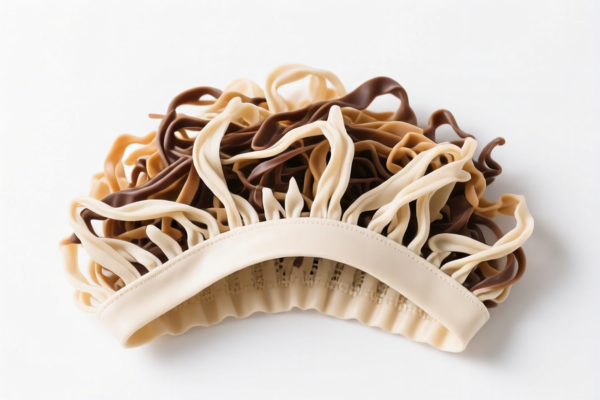


AI Analysis
🧴 Hair Dye Cap (Colored/Chromed Cap)
🌐 HS Code Reference & Clearance Guide | 2026 Latest Tariff Rules | Professional Customs Strategy
📌 I. Product Definition & Classification: Do You Really Understand "Hair Dye Caps"?
A Hair Dye Cap is a disposable or reusable head covering used in professional salons or home beauty treatments to protect hair and scalp during chemical processing. In international trade, its classification depends heavily on material composition and intended use, leading to multiple possible HS codes with vastly different tax rates.
There are four primary classification pathways for hair dye caps:
1. As Hat Accessories (Other Hats) → 6506.99.60.00
2. As Fabric Face Masks/Other Textile Products → 6307.90.98.75
3. As Rubber/Plastic Headgear → 6506.91.00.60
4. As Other Textile Made-up Articles → 6307.90.98.91
⚠️ Critical Distinction:
- If made of plastic/rubber (e.g., PE, PVC, latex) →归类 to 6506.91.00.60 (High Tariff!)
- If made of woven/non-woven fabric (e.g., spunbond, non-woven polypropylene) →归类 to 6307.90.98.xx (Lower Tariff)
- If sold as accessories to hats →归类 to 6506.99.60.00 (Highest Tariff!)
- If marketed as face masks or general textile articles →归类 to 6307.90.98.75 or 6307.90.98.91
📦 II. HS Code Classification Details (2026 Latest Tariff Alignment)
| HS Code | Product Description | Application Scenario | Material Basis |
|---|---|---|---|
6506.99.60.00 |
Dye Cap classified as Hat Accessory, under "Other Hats" | Salon dye caps sold as hat parts | Fabric/Plastic (accessory) |
6307.90.98.75 |
Dye Cap classified as Textile Face Mask/Other Mask | Disposable fabric dye caps | Non-woven fabric |
6506.91.00.60 |
Dye Cap classified as Rubber/Plastic Headgear | Plastic/rubber dye caps for dyeing | Plastic (PE/PVC), Rubber |
6307.90.98.91 |
Dye Cap classified as Other Made-up Textile Article | General textile dye caps | Woven/non-woven textile |
6506.91.00.60 |
Head Scarf classified as Rubber/Plastic Headgear | Rubber/Plastic head scarves | Plastic/Rubber |
🔍 Key Reminder:
- Plastic/rubber dye caps (6506.91.00.60) face 35% total tariff – the highest among all options!
- Textile-based caps (6307.90.98.75or.91) offer lower rates (17% or 24.5%).
- Hat accessory classification (6506.99.60.00) is most expensive at 43.5%.
- Misclassification risk is high – especially between textile vs. plastic.
💰 III. 2026 Latest Tariff Rate Breakdown (Including Surcharges & Policy Add-ons)
✅ Applicable Market: United States (US)
✅ Origin: China (CN)
✅ Effective Date: From November 10, 2025 (including subsequent imports)
🎯 1. 6506.99.60.00 – Dye Cap as Hat Accessory (Other Hats)
| Item | Content |
|---|---|
| Base Tariff | 8.5% (ad valorem) |
| USITC Surcharge | +25.0% (301 Tariff) |
| Section 122 Surcharge | +10.0% (China-specific) |
| Total Tariff | 43.5% |
| Tax Calculation | CIF Value × 43.5% |
| De Minimis Exemption | ❌ Not Allowed |
| Legal Path | Section 122:10% → 301:25% → Base:8.5% |
📌 Explanation:
- This is the most expensive classification.
- Applies when the cap is sold as an accessory to hats (e.g., part of a hat kit).
- Total 43.5% = Base 8.5% + 301 Tariff 25% + Section 122 10%.
- Avoid this if possible!
🎯 2. 6307.90.98.75 – Dye Cap as Textile Face Mask/Other Mask
| Item | Content |
|---|---|
| Base Tariff | 7.0% |
| USITC Surcharge | 0.0% |
| Section 122 Surcharge | +10.0% |
| Total Tariff | 17.0% |
| Tax Calculation | CIF Value × 17.0% |
| De Minimis Exemption | ❌ Not Allowed |
| Legal Path | Section 122:10% → Base:7.0% |
📌 Note:
- Best option for non-woven fabric dye caps.
- No 301 surcharge, only base + Section 122.
- Total 17% – lowest tariff among all options.
🎯 3. 6506.91.00.60 – Dye Cap as Rubber/Plastic Headgear
| Item | Content |
|---|---|
| Base Tariff | 0.0% |
| USITC Surcharge | +25.0% |
| Section 122 Surcharge | +10.0% |
| Total Tariff | 35.0% |
| Tax Calculation | CIF Value × 35.0% |
| De Minimis Exemption | ❌ Not Allowed |
| Legal Path | Section 122:10% → 301:25% |
📌 Critical Warning:
- Even with 0% base tariff, the 301 surcharge (25%) pushes total to 35%.
- Applies to plastic/rubber caps (e.g., PE, PVC, latex).
- High risk of misclassification if material is not clearly stated.
🎯 4. 6307.90.98.91 – Dye Cap as Other Made-up Textile Article
| Item | Content |
|---|---|
| Base Tariff | 7.0% |
| USITC Surcharge | +7.5% |
| Section 122 Surcharge | +10.0% |
| Total Tariff | 24.5% |
| Tax Calculation | CIF Value × 24.5% |
| De Minimis Exemption | ❌ Not Allowed |
| Legal Path | Section 122:10% → 301:7.5% → Base:7.0% |
📌 Note:
- Applies to woven/non-woven textile caps not classified as masks.
- Moderate tariff (24.5%) – better than plastic but worse than textile masks.
🛠️ IV. Customs Clearance Practical Advice (Real-World Pitfall Avoidance)
✅ 1. Documentation Checklist (Must-Have)
| Document | Required? | Explanation |
|---|---|---|
| ✅ Product Specification Sheet | ✔️ | Must specify material (plastic/rubber vs. textile), dimensions, usage |
| ✅ Material Certificate | ✔️ | Proof of composition (e.g., "Non-woven polypropylene" or "PE Plastic") |
| ✅ Product Photos (Clear) | ✔️ | Show cap shape, texture, labeling |
| ✅ Commercial Invoice | ✔️ | Clearly state "Hair Dye Cap" + HS Code + Material |
| ✅ Packing List | ✔️ | Show quantity, weight, packaging type |
| ✅ Third-Party Test Report | ✔️ | If applicable (e.g., CE, RoHS for plastic) |
✅ 2. Declaration Strategy (Golden Rules)
🔥 "Material First, Use Second, Name Precise!"
| Scenario | Correct Declaration | Wrong Practice |
|---|---|---|
| Plastic/rubber dye cap | 6506.91.00.60 |
Misreport as textile → 17% vs 35% → Underpayment Penalty! |
| Non-woven fabric cap | 6307.90.98.75 (Mask) |
Report as 6307.90.98.91 → 24.5% vs 17% → Unnecessary Cost |
| Hat accessory cap | 6506.99.60.00 |
Avoid if possible → 43.5% Tax! |
| Woven textile cap | 6307.90.98.91 |
Misreport as mask → 24.5% vs 17% → Overpayment |
✅ 3. Special Cases Handling
| Scenario | Recommendation |
|---|---|
| OEM Custom Dye Cap | Provide client order + design specs to confirm material & use |
| Cap with Elastic Band | Still classified by main material (plastic vs. textile) |
| Packaged with Dye Kit | Declare separately if possible; otherwise, declare as kit (different HS) |
| Reusable vs. Disposable | Material matters more than reuse status |
🌍 V. Global Market Clearance Comparison (2026 Latest)
| Country/Region | Recommended HS Code | Tariff | Certification Required | Notes |
|---|---|---|---|---|
| 🇺🇸 USA | 6307.90.98.75 (Textile) |
17% | None (for textile) | Plastic = 35%, Hat Accessory = 43.5% |
| 🇨🇳 China | 6307.90.98.75 |
7% | CCC (if applicable) | No surcharge |
| 🇪🇺 EU | 6307.90.98.75 |
0–4% | CE, REACH | Varies by member state |
| 🇯🇵 Japan | 6307.90.98.75 |
5% | PSE | No surcharge |
| 🇦🇺 Australia | 6307.90.98.75 |
5% | RCM | No surcharge |
📌 Conclusion:
- USA is the only market with heavy surcharges (Section 122 + 301);
- Textile-based caps (6307.90.98.75) are the most cost-effective;
- Plastic/rubber caps (6506.91.00.60) face 35% – avoid if possible;
- Hat accessory (6506.99.60.00) is worst – 43.5% – avoid at all costs!
📌 VI. Common Mistakes & Pitfall Avoidance (Blood Lessons)
❌ Mistake 1: Declaring plastic caps as textile to avoid 35% tariff
👉 Consequence: Underpayment + penalty + delay; Correct: Declare as 6506.91.00.60 with material proof.
❌ Mistake 2: Declaring fabric caps as hat accessories (6506.99.60.00)
👉 Consequence: 43.5% tariff – 2x higher than necessary; Correct: Use 6307.90.98.75.
❌ Mistake 3: No material certificate provided
👉 Consequence: Customs reclassifies to highest tariff; Correct: Provide third-party material test.
❌ Mistake 4: Using vague name like "Beauty Cap"
👉 Consequence: Ambiguity leads to misclassification; Correct: Use "Hair Dye Cap, Non-Woven Polypropylene, Disposable".
✅ Best Practice:
“Non-Woven Hair Dye Cap, Disposable, for Salon Use, Material: 100% Spunbond PP”
🎯 VII. Conclusion: Smart Classification = Lower Cost, Faster Clearance!
🎯 Remember the Golden Rules:
🔹 "Material First: Plastic = 35%, Textile Mask = 17%, Hat Accessory = 43.5%!"
🔹 "Name Matters: Say 'Non-Woven Dye Cap', Not Just 'Cap'!"
🔹 "Avoid Hat Accessory if Possible – 43.5% is a Nightmare!"
📌 Pro Tip:
If your dye caps are originating from Vietnam, Mexico, Thailand, or Malaysia, you may qualify for IEEPA exemptions – Tariff: 0–5%!
Recommendation: Apply for Advance Ruling before shipment to avoid surprises.
📣 Take Action Now:
📞 Contact professional customs broker + Provide product specs + Request HS Code Advance Ruling
🚀 Get your hair dye caps cleared smoothly, cost-effectively, and profitably!
✨ Professional Classification Starts with Precision!
💼 Every penny of your cost deserves exact calculation!
Customer Reviews
About HS Code Classification
The Harmonized System (HS) is an internationally standardized nomenclature developed by the World Customs Organization (WCO) to classify traded products. Over 200 countries use the HS system as the basis for customs tariffs, trade statistics, and import/export regulations.
Each HS code follows a hierarchical structure:
- Chapter (2 digits) — Broad category of goods (e.g., Chapter 84: Machinery and Mechanical Appliances)
- Heading (4 digits) — More specific grouping within the chapter
- Subheading (6 digits) — Internationally standardized breakdown, used by all WCO member countries
- National subdivisions (8-10 digits) — Country-specific extensions for further classification, such as US HTSUS 10-digit codes
Correct HS code classification is essential for smooth customs clearance, accurate duty payment, and compliance with trade regulations. Misclassification can lead to customs delays, overpayment of duties, or penalties.
When importing from CN to US, the applicable tariff rates may include:
- Most-Favored-Nation (MFN) rate — The standard duty rate applied to WTO members
- General rate — Applied to countries without trade agreements
- Trade remedy duties — Additional tariffs such as Section 301 (anti-dumping), Section 232 (national security), or countervailing duties
The information provided on this page is for reference purposes only. For official classification, please consult with your local customs authority or a licensed customs broker.