Hair Filter
CN → US| HS Code | Tariff Rate | Origin | Destination | Doc |
|---|---|---|---|---|
| 8405900000 | 35.0% | CN | US | Official Doc |
| 8405100000 | 35.0% | CN | US | Official Doc |
| 8421210000 | 35.0% | CN | US | Official Doc |
| 5911900080 | 38.8% | CN | US | Official Doc |
| 5911400100 | 43.0% | CN | US | Official Doc |
| 8421290065 | 35.0% | CN | US | Official Doc |
Product Images
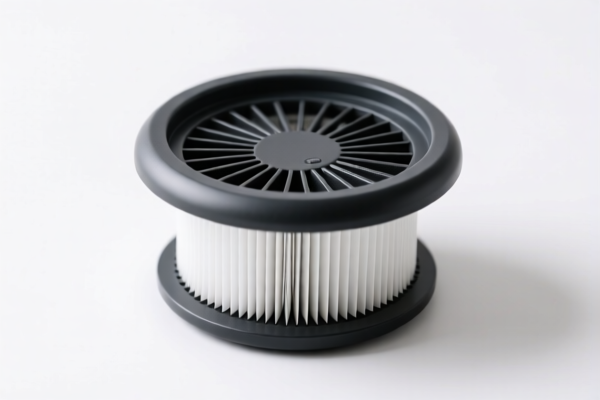
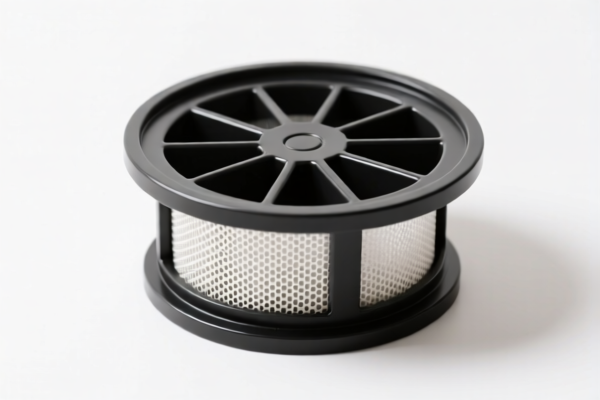
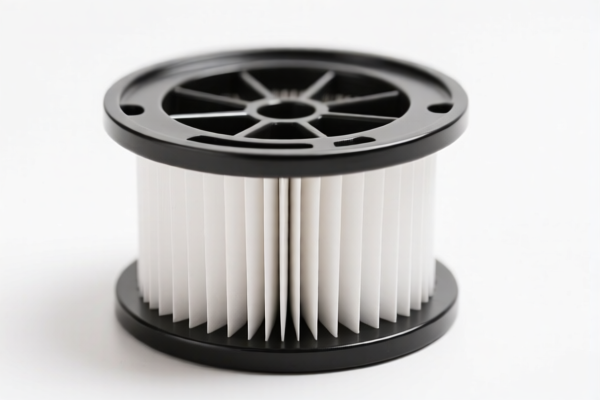

AI Analysis
✂️ Hair Filter (Hair Care & Styling Device Accessories)
🌐 HS Code Reference & Customs Clearance Guide | 2026 Latest Tariff Analysis | Professional Level Strategy
📌 I. Product Definition & Classification: Do You Really Understand the "Hair Filter"?
In the realm of personal care and beauty appliances, a "Hair Filter" is not a single, unified product. It is a component that can belong to entirely different functional categories depending on its material and specific application. In international trade, misclassifying a hair filter can lead to massive tariff discrepancies because it might be classified as a machine part, a textile product, or a water/oil treatment component.
To ensure accurate customs clearance, you must distinguish between the two primary scenarios:
Scenario A: The "Air Filtration" Filter
Found in hair dryers, straighteners, or ionic hair tools. Its purpose is to filter dust and hair debris from the air intake or exhaust of the electrical device.
👉 Classification Logic: It is a part/ accessory of an electro-mechanical appliance.
Scenario B: The "Industrial/Technical Textile" Filter
Found in professional salon spray booths, washing stations, or oil separation units for hair treatment products. If it is made of woven fabric, felt, or non-woven material used for filtering liquids (shampoo, dye) or oils.
👉 Classification Logic: It is a textile article or a filter for liquids/oils.
⚠️ Key Distinction Point:
- If it is a mesh/cloth attached to a hair dryer/iron to catch hair/dust →归入 8405 or 8421 (Machine Parts/Fluid Filters).
- If it is a woven/non-woven fabric used in salon infrastructure for filtering liquids/oils → 归入 5911 (Textile Products for Technical Use).
📦 II. HS Code Classification Details (2026 Latest Tariff Authority Comparison)
Based on the provided data, here are the specific HS Codes and their tax implications for "Hair Filters":
| HS Code | Product Description | Application Scenario | Primary Function |
|---|---|---|---|
8405.90.00.00 |
Parts of Gas Generators (Note: In context, often misapplied or cross-referenced for small air-purifying mechanical parts) | Filter for gas generator purification devices | Air/Gas Purification |
8405.10.00.00 |
Gas Generators | Filter as a配套 (matching) purification device for gas generators | Air/Gas Purification |
8421.21.00.00 |
Filters or Purifiers for Water | Filter used specifically for filtering or purifying water (e.g., in a salon washing station’s water intake) | Liquid (Water) Filtration |
5911.90.00.80 |
Other Technical Textile Products | Filter belonging to textile products for industrial or technical use (e.g., non-woven hair catchers in salon equipment) | Solid/Liquid Filtration via Textile |
5911.40.01.00 |
Filter Cloth for Hydraulic Presses | Filter cloth for oil presses or similar equipment (e.g., filtering oils used in hair treatments) | Liquid (Oil) Filtration via Textile |
🔍 Critical Reminder:
- Do not assume all "filters" are the same. A filter for a hair dryer (air) is very different from a filter for a shampoo basin (water) or a hair oil processing unit (oil). - Material Matters: If the filter is metal mesh or plastic attached to an appliance, lean towards Chapter 84. If it is fabric, felt, or non-woven, lean towards Chapter 59.
💰 III. 2026 Latest Tariff Rate Breakdown (Including Surcharges & Policy Add-ons)
✅ Applicable Country: United States (US)
✅ Origin: China (CN)
✅ Effective Time: From November 10, 2025 (for subsequent imports)
🎯 1. 8405.90.00.00 & 8405.10.00.00 — Air/Gas Filters (Appliance Parts)
| Item | Content |
|---|---|
| Base Tariff | 0.0% (ad valorem) |
| USITC Additional Tariff | +25.0% (From USITC Footnote 9903.88.01 / Section 301) |
| 122 Clause Tariff (IEEPA) | +10.0% (Against China/HK products, from Nov 10, 2025) |
| Total Tariff Rate | 35.0% |
| Tax Calculation | CIF Value × 35% |
| De Minimis Exemption | ❌ Not Eligible (deny_de_minimis) |
| Legal Basis Path | IEEPA:9903.01.25 → IEEPA:9903.01.24 → USITC:8405.xx → FOOTNOTE:9903.88.01 |
📌 Explanation:
- These codes are typically used for mechanical/air filtration components of appliances. - The 25% is the Section 301 tariff. - The 10% is the additional IEEPA tariff. - Total 35% is a high-cost burden. Ensure the product is genuinely a part of a gas/air generator or similar mechanical system.
🎯 2. 8421.21.00.00 — Water Filters
| Item | Content |
|---|---|
| Base Tariff | 0.0% |
| USITC Additional Tariff | +25.0% |
| 122 Clause Tariff (IEEPA) | +10.0% |
| Total Tariff Rate | 35.0% |
| Tax Calculation | CIF Value × 35% |
| De Minimis Exemption | ❌ Not Eligible |
| Legal Basis Path | IEEPA:9903.01.25 → IEEPA:9903.01.24 → USITC:8421.21.00.00 → FOOTNOTE:9903.88.01 |
📌 Note:
- If your "hair filter" is actually a water inlet filter for a salon sink or hair washing machine, it falls here. - Do not confuse this with air filters.
🎯 3. 5911.90.00.80 — Technical Textile Filters
| Item | Content |
|---|---|
| Base Tariff | 3.8% |
| USITC Additional Tariff | +25.0% |
| 122 Clause Tariff (IEEPA) | +10.0% |
| Total Tariff Rate | 38.8% |
| Tax Calculation | CIF Value × 38.8% |
| De Minimis Exemption | ❌ Not Eligible |
| Legal Basis Path | IEEPA:9903.01.25 → IEEPA:9903.01.24 → USITC:5911.90.00.80 → FOOTNOTE:9903.88.01 |
📌 Explanation:
- This code applies if the filter is a textile article (e.g., non-woven fabric) used for industrial/technical purposes. - Higher total rate (38.8%) due to the 3.8% base tariff.
🎯 4. 5911.40.01.00 — Filter Cloth for Oil/Liquid Presses
| Item | Content |
|---|---|
| Base Tariff | 8.0% |
| USITC Additional Tariff | +25.0% |
| 122 Clause Tariff (IEEPA) | +10.0% |
| Total Tariff Rate | 43.0% |
| Tax Calculation | CIF Value × 43.0% |
| De Minimis Exemption | ❌ Not Eligible |
| Legal Basis Path | IEEPA:9903.01.25 → IEEPA:9903.01.24 → USITC:5911.40.01.00 → FOOTNOTE:9903.88.01 |
📌 Note:
- This is the most expensive category (43%). - Only use if the product is specifically filter cloth for oil presses or similar hydraulic equipment. Do not use this for standard hair dryers or water filters.
🛠️ IV. Customs Clearance Practical Advice (Real-World Pitfall Guide)
✅ 1. Documentation Checklist (Non-Negotiable)
| Document | Must Provide | Description |
|---|---|---|
| ✅ Product Specification Sheet | ✔️ | Clearly state: Material (Mesh vs. Fabric), Function (Air vs. Water vs. Oil), and Device it attaches to. |
| ✅ Product Photos | ✔️ | Show the filter installed on the device. Show close-ups of the material. |
| ✅ Commercial Invoice | ✔️ | Use precise descriptions: - "Hair Dryer Air Filter, Plastic Mesh, Model XYZ" - OR - "Salon Water Intake Filter, Non-Woven Fabric" |
| ✅ HS Code Pre-Ruling | ✔️ | Highly recommended to avoid misclassification penalties. |
| ✅ Declaration of Origin | ✔️ | Confirm China origin to apply correct surcharges. |
✅ 2. Declaration Tips (Key Mantra)
🔥 "Function Determines Code, Material Determines Chapter!"
| Scenario | Correct Declaration | Wrong Practice |
|---|---|---|
| Filter for Hair Dryer/Iron (Catches hair/dust) | 8405.90.00.00 (If considered gas/air purification part) |
❌ Do NOT call it "Textile Filter" → Saves Base Tariff |
| Filter for Washing Station (Filters water) | 8421.21.00.00 |
❌ Do NOT call it "Hair Filter" → Be specific: "Water Filter" |
| Fabric Filter for Salon Booth (Catches dye/oil) | 5911.90.00.80 |
❌ Do NOT call it "Machine Part" → It’s a Textile |
| Oil Filter Cloth | 5911.40.01.00 |
❌ Only if it’s truly for hydraulic/oil press use |
⚠️ Warning:
- If you declare a plastic mesh filter as a textile filter (5911), Customs may audit and reclassify it, leading to back taxes and fines. - If you declare a water filter as a gas generator part (8405), it will likely be rejected as functionally incorrect.
✅ 3. Special Cases
| Situation | Handling Advice |
|---|---|
| OEM Hair Dryer Filters | Provide the OEM contract and design drawings. Ensure the description matches the main appliance’s HS Code. |
| Multi-Function Filters | If one filter handles both air and water (rare), clarify the primary function. Usually, it’s classified by the device it serves. |
| Replacement Parts | Clearly state "Replacement Part for [Appliance Name]". This supports classification under Chapter 84. |
| Loose Filters (No Appliance) | If sold separately as a "hair catch filter" for salon sinks, lean towards 8421.21.00.00 (Water Filter) or 5911.90.00.80 (Textile) based on material. |
🌍 V. Global Market Customs Comparison (2026 Latest)
| Country/Region | Recommended HS Code | Tariff (China Origin) | Certification Required | Notes |
|---|---|---|---|---|
| 🇺🇸 USA | 8405.90.00.00 / 8421.21.00.00 |
35% (35% Total) | FCC (if electrical), RoHS | Highest burden. 122 Clause adds 10%. |
| 🇨🇳 China | 8405.90.00.00 / 8421.21.00.00 |
0-8.5% | CCC (if electrical) | No additional surcharges. |
| 🇪🇺 EU | 8405.90.00.00 / 8421.21.00.00 |
0-3.5% | CE, REACH | No Section 301/IEEPA surcharges. |
| 🇦🇺 Australia | 8405.90.00.00 / 8421.21.00.00 |
5% | RCM | No additional surcharges. |
| 🇯🇵 Japan | 8405.90.00.00 / 8421.21.00.00 |
0-3.2% | PSE (if electrical) | No additional surcharges. |
📌 Conclusion:
- The USA is the most expensive market for hair filters due to the 35% total tariff (Base + 25% + 10%). - EU, Japan, and Australia are significantly more cost-effective, with tariffs ranging from 0-5%. - If your target is the US, consider supply chain diversification (e.g., sourcing from Vietnam or Malaysia) to potentially avoid the 10% IEEPA surcharge (if eligible under de minimis or specific exemptions).
📌 VI. Common Errors & Pitfall Guide (Lessons Learned)
❌ Error 1: Calling all filters "Hair Filters" in the commercial invoice.
👉 Consequence: Customs cannot determine function → Delay, Re-inspection, or Penalty.
✅ Fix: Use specific terms: "Air Filter for Hair Dryer" or "Water Filter for Salon Sink".
❌ Error 2: Misclassifying a textile filter as a machine part.
👉 Consequence: If it’s textile, it should be 5911 (38.8% tariff). If misclassified as 8405 (35%), you might underpay base tax, leading to audit. If misclassified as 8405 when it’s 5911, you might underpay total tax if base rates differ.
✅ Fix: Match material to chapter. Plastic/Metal → Ch 84. Fabric → Ch 59.
❌ Error 3: Ignoring the 122 Clause (10% IEEPA Tariff).
👉 Consequence: Under-declaring total tax.
✅ Fix: Always include the 10% IEEPA surcharge for China-origin goods to the US.
🎯 VII. Conclusion: Precise Declaration, Cost Control!
🎯 Remember the Mantra:
🔹 "Function First, Material Second!"
🔹 "Air/Water Filter → Ch 84 (35%)"
🔹 "Textile/Oil Filter → Ch 59 (38.8%-43%)"
🔹 "US Market = High Tax, Plan Ahead!"
📌 Pro Tip:
If your hair filter is small, low-value, and shipped via postal/courier to the US, check if it qualifies for De Minimis (currently $800).
⚠️ However, for Section 301 and IEEPA goods, many carriers deny de minimis exemption if the HS code is subject to these surcharges.
Always confirm with your freight forwarder if8405or8421codes are eligible for de minimis. If not, the 35% tax will apply regardless of value.
📣 Immediate Action:
📞 Contact your customs broker with product photos and spec sheets.
🚀 Apply for an HS Code Advance Ruling from US Customs (CBP) to lock in the correct code and avoid surprise costs.
✨ Professional Customs Clearance Starts with Accurate Classification!
💼 Every Percent of Tariff Counts!
Customer Reviews
About HS Code Classification
The Harmonized System (HS) is an internationally standardized nomenclature developed by the World Customs Organization (WCO) to classify traded products. Over 200 countries use the HS system as the basis for customs tariffs, trade statistics, and import/export regulations.
Each HS code follows a hierarchical structure:
- Chapter (2 digits) — Broad category of goods (e.g., Chapter 84: Machinery and Mechanical Appliances)
- Heading (4 digits) — More specific grouping within the chapter
- Subheading (6 digits) — Internationally standardized breakdown, used by all WCO member countries
- National subdivisions (8-10 digits) — Country-specific extensions for further classification, such as US HTSUS 10-digit codes
Correct HS code classification is essential for smooth customs clearance, accurate duty payment, and compliance with trade regulations. Misclassification can lead to customs delays, overpayment of duties, or penalties.
When importing from CN to US, the applicable tariff rates may include:
- Most-Favored-Nation (MFN) rate — The standard duty rate applied to WTO members
- General rate — Applied to countries without trade agreements
- Trade remedy duties — Additional tariffs such as Section 301 (anti-dumping), Section 232 (national security), or countervailing duties
The information provided on this page is for reference purposes only. For official classification, please consult with your local customs authority or a licensed customs broker.