Hair Removal Brush
CN → US| HS Code | Tariff Rate | Origin | Destination | Doc |
|---|---|---|---|---|
| 4417008090 | 40.1% | CN | US | Official Doc |
| 9603101500 | 0.0% | CN | US | Official Doc |
| 9603109000 | 27.5% | CN | US | Official Doc |
| 4417006000 | 35.0% | CN | US | Official Doc |
| 4417008010 | 40.1% | CN | US | Official Doc |
Product Images


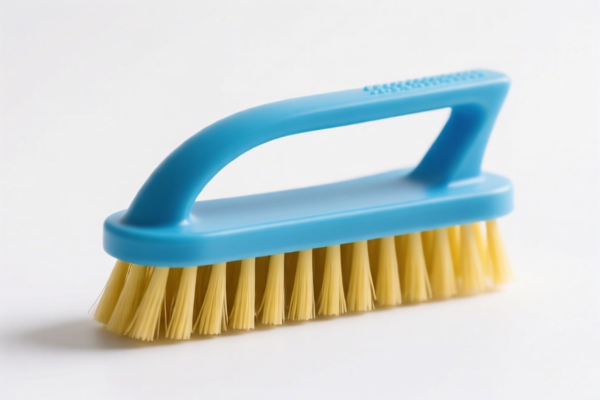
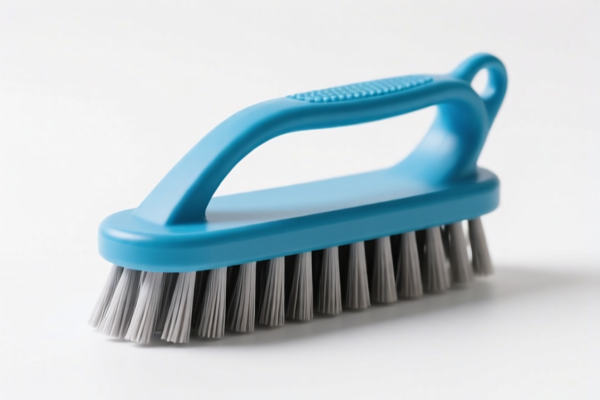
AI Analysis
💇♀️ Hair Removal Brush (毛刷)
🌐 HS Code Reference & Customs Clearance Guide | 2026 Latest Tariff Analysis | Professional Clearance Strategy
📌 I. Product Definition & Classification: Do You Really Understand the "Hair Removal Brush"?
A Hair Removal Brush is a specialized grooming tool. In international trade, its classification depends heavily on material composition (wood vs. bristles) and specific form. It is generally categorized under Chapter 44 (Wood) if the handle/body is wooden, or Chapter 96 (Brooms, Brushes) if it fits specific bristle/broom categories.
Key Distinction Points: * Wooden Handle/Body: If the primary structure is wood, it falls under HS 4417. * Bristle/Plant Material: If it resembles a traditional broom or uses plant fibers/synthetic bristles prominently, it falls under HS 9603.
⚠️ Critical Classification Note:
- If the brush has a wooden handle and body →归入 4417.00.80.90 or 4417.00.60.00
- If it is a synthetic/plant fiber brush without significant wooden structure →归入 9603.10.15.00 or 9603.10.90.00
- Shoe Brushes (often confused with hair brushes) may have different specific codes like 4417.00.80.10.
📦 II. HS Code Classification Details (2026 Latest Tariff Authority Comparison)
| HS Code | Product Description | Applicable Scenario | Material Conflict? |
|---|---|---|---|
4417.00.80.90 |
Wooden brushes, other | Wooden body/handle, general grooming brush | ❌ No conflict |
9603.10.15.00 |
Brooms & brushes made of vegetation/synthetic | Plant fiber or synthetic bristle brush, no wood conflict | ❌ No conflict |
9603.10.90.00 |
Other brooms & brushes | General hair removal brush, plant/fiber material | ❌ No conflict |
4417.00.60.00 |
Wooden tools, other | Wooden handle brush, tool attribute | ❌ No conflict |
4417.00.80.10 |
Shoe brushes (Wooden) | Daily consumer brush, synthetic/natural hair, tool attribute | ❌ No conflict |
🔍 Important Reminder:
- Wooden brushes are classified under Chapter 44, with tariffs heavily influenced by Section 301 and IEEPA measures. - Non-wooden brushes (Chapter 96) may have lower base tariffs but still incur additional duties. - Do not mix wooden and non-wooden components in unclear declarations; customs may reclassify based on primary material.
💰 III. 2026 Latest Tariff Rate Breakdown (Including Additional Taxes)
✅ Applicable Country: United States (US)
✅ Origin: China (CN)
✅ Effective Date: From November 10, 2025 (and subsequent imports)
🎯 1. 4417.00.80.90 —— Wooden Brush (Other)
| Item | Content |
|---|---|
| Base Tariff | 5.1% |
| Section 301 Additional Tariff | +25.0% |
| IEEPA Additional Tariff | +10% |
| Total Rate | 40.1% |
| Tax Calculation | CIF Value × 40.1% |
| De Minimis Eligible? | ❌ No (High risk of inspection) |
| Legal Basis Path | IEEPA:9903.01.25 → USITC:4417.00.80.90 |
📌 Explanation:
- Base 5.1%: Standard MFN tariff for wooden articles. - Section 301 (+25%): Applies to most wooden household goods from China. - IEEPA (+10%): Additional levy on Chinese products. - Total 40.1% is a high tariff. Cost calculation must include this.
🎯 2. 9603.10.15.00 —— Brooms & Brushes (Vegetation/Synthetic)
| Item | Content |
|---|---|
| Base Tariff | 5¢ each (Specific duty) |
| Section 301 Additional Tariff | +7.5% (Ad valorem) |
| IEEPA Additional Tariff | +10% (Ad valorem) |
| Total Rate | 5¢ each + 17.5% |
| Tax Calculation | (0.05 × Quantity) + (CIF × 17.5%) |
| De Minimis Eligible? | ❌ No (High value risk) |
| Legal Basis Path | IEEPA:9903.01.24 → USITC:9603.10.15.00 |
📌 Note:
- 5¢ each is a specific duty per unit. - 17.5% Total Ad Valorem (7.5% + 10%). - Suitable for brushes made of plant materials or synthetic fibers without wooden handles.
🎯 3. 9603.10.90.00 —— Other Brooms & Brushes
| Item | Content |
|---|---|
| Base Tariff | 10.0% |
| Section 301 Additional Tariff | +7.5% |
| IEEPA Additional Tariff | +10% |
| Total Rate | 27.5% |
| Tax Calculation | CIF Value × 27.5% |
| De Minimis Eligible? | ❌ No |
| Legal Basis Path | IEEPA:9903.01.24 → USITC:9603.10.90.00 |
📌 Note:
- 27.5% is lower than wooden brushes (40.1%) but still significant. - Applies to brushes not specified in other subheadings (e.g., generic hair brushes).
🎯 4. 4417.00.60.00 —— Wooden Tools (Other)
| Item | Content |
|---|---|
| Base Tariff | 0.0% |
| Section 301 Additional Tariff | +25.0% |
| IEEPA Additional Tariff | +10% |
| Total Rate | 35.0% |
| Tax Calculation | CIF Value × 35.0% |
| De Minimis Eligible? | ❌ No |
| Legal Basis Path | IEEPA:9903.01.25 → USITC:4417.00.60.00 |
📌 Note:
- Base 0% but 35% Total due to high additional tariffs. - Classified as "Wooden Tools" if the brush is considered a tool rather than a consumer good.
🎯 5. 4417.00.80.10 —— Shoe Brushes (Wooden)
| Item | Content |
|---|---|
| Base Tariff | 5.1% |
| Section 301 Additional Tariff | +25.0% |
| IEEPA Additional Tariff | +10% |
| Total Rate | 40.1% |
| Tax Calculation | CIF Value × 40.1% |
| De Minimis Eligible? | ❌ No |
| Legal Basis Path | IEEPA:9903.01.25 → USITC:4417.00.80.10 |
📌 Note:
- 40.1% same as general wooden brushes. - Even if labeled "Shoe Brush," if it's wooden, it faces the same high tariffs.
🛠️ IV. Customs Clearance Practical Advice (Real-World Pitfall Guide)
✅ 1. Required Documents List (None Missing)
| Document | Mandatory | Description |
|---|---|---|
| ✅ Product Spec Sheet | ✔️ | Include material (wood/synthetic), dimensions, bristle type |
| ✅ Product Photos | ✔️ | Clear images of front/back, label, and bristle detail |
| ✅ Commercial Invoice | ✔️ | Clearly state "Hair Removal Brush" or "Wooden Brush" |
| ✅ Packing List | ✔️ | Detail units per carton, gross/net weight |
| ✅ Certificate of Origin (CO) | ✔️ | If non-China origin, may apply for preferential rates |
| ✅ Third-Party Test Report | ✔️ | If applicable (e.g., safety for skin contact) |
✅ 2. Declaration Tips (Key Mantras)
🔥 "Material First, HS Code Right, Tariff Lower!"
| Situation | Correct Declaration | Wrong Practice |
|---|---|---|
| Wooden Handle Brush | 4417.00.80.90 |
Misdeclare as 9603 → Risk of reclassification |
| Synthetic Bristle Brush | 9603.10.15.00 |
Misdeclare as 4417 → Unnecessary 40.1% tax |
| Shoe Brush (Wooden) | 4417.00.80.10 |
Misdeclare as general brush → Same tax, but accurate description helps |
| Mixed Material Brush | Determine Primary Material | Ambiguous declaration → Delays & Penalties |
✅ 3. Special Circumstances Handling
| Situation | Handling Advice |
|---|---|
| OEM Custom Brush | Provide client order + design drawing to avoid "non-standard" classification |
| Brush with Plastic Handle | Re-evaluate if it fits 9603 (plastic/vegetation) rather than 4417 (wood) |
| Brush for Medical Use | If used in dermatology clinics, provide proof of specialized use; may qualify for different classification |
| Brush for Military | Special use declaration may lower tax, but requires prior communication |
🌍 V. Global Main Market Clearance Comparison (2026 Latest)
| Country/Region | Recommended HS Code | Tariff | Certification | Notes |
|---|---|---|---|---|
| 🇺🇸 USA | 4417.00.80.90 (Wood) |
40.1% (China) | No special | High tariffs due to Section 301 & IEEPA |
| 🇨🇳 China | 9603.10.90.00 |
5% | No special | Low base tariff, no additional taxes |
| 🇪🇺 EU | 9603.10.90.00 |
0% (if CE) | CE + RoHS | No additional tariffs |
| 🇦🇺 Australia | 9603.10.90.00 |
5% | RCM | No additional tariffs |
| 🇯🇵 Japan | 9603.10.90.00 |
0% | PSE | No additional tariffs |
📌 Conclusion:
- USA is the only market with high additional tariffs for Chinese-made brushes. - Chinese-origin brushes in the US face 27.5%~40.1% tariffs. - EU, Japan, Australia have much lower tariffs if certified correctly. - Consider supply chain relocation (Vietnam, Thailand) for US-bound wooden brushes to avoid high tariffs.
📌 VI. Common Errors & Pitfall Guide (Blood-Lesson Experience)
❌ Error 1: Declaring a wooden brush as 9603.10.90.00
👉 Consequence: Customs reclassifies → 40.1% tariff applied + penalty.
❌ Error 2: Declaring a synthetic brush as 4417.00.60.00
👉 Consequence: Incorrect material declaration → Delays & fines.
❌ Error 3: Not specifying material composition (Wood vs. Synthetic)
👉 Consequence: Customs uncertainty → 30+ day hold.
❌ Error 4: Using "Brush" without subcategory
👉 Consequence: Ambiguity → Audited and reassessed.
✅ Correct Practice:
“Hair Removal Brush, Wooden Handle, Synthetic Bristles, Model XYZ, FCC/RoHS Certified”
OR
“Wooden Hair Brush, Natural Bristles, Model ABC”
🎯 VII. Conclusion: Professional Declaration, Save Time, Reduce Costs!
🎯 Remember Mantras:
🔹 “Wooden? 4417. Synthetic? 9603. Tariff 40% or 27.5%. Get it right!”
🔹 “HS Code determines life, tariff difference 12.6%, declaration error, penalty thousands!”
📌 Tips:
- If your brushes are originated in Vietnam, Mexico, Thailand, or Malaysia, you may apply for IEEPA exemptions, with tariffs only 0%~5%.
- Suggest Advance Ruling application to avoid clearance risks.
📣 Immediate Action:
📞 Contact professional customs broker + Provide product images + Apply for HS Code Advance Ruling
🚀 Let your brushes, clear customs smoothly, export efficiently, double profits!
✨ Professional clearance starts with accurate classification!
💼 Every cent of your cost deserves precise calculation!
Customer Reviews
About HS Code Classification
The Harmonized System (HS) is an internationally standardized nomenclature developed by the World Customs Organization (WCO) to classify traded products. Over 200 countries use the HS system as the basis for customs tariffs, trade statistics, and import/export regulations.
Each HS code follows a hierarchical structure:
- Chapter (2 digits) — Broad category of goods (e.g., Chapter 84: Machinery and Mechanical Appliances)
- Heading (4 digits) — More specific grouping within the chapter
- Subheading (6 digits) — Internationally standardized breakdown, used by all WCO member countries
- National subdivisions (8-10 digits) — Country-specific extensions for further classification, such as US HTSUS 10-digit codes
Correct HS code classification is essential for smooth customs clearance, accurate duty payment, and compliance with trade regulations. Misclassification can lead to customs delays, overpayment of duties, or penalties.
When importing from CN to US, the applicable tariff rates may include:
- Most-Favored-Nation (MFN) rate — The standard duty rate applied to WTO members
- General rate — Applied to countries without trade agreements
- Trade remedy duties — Additional tariffs such as Section 301 (anti-dumping), Section 232 (national security), or countervailing duties
The information provided on this page is for reference purposes only. For official classification, please consult with your local customs authority or a licensed customs broker.