Hair Shampoo
CN → US| HS Code | Tariff Rate | Origin | Destination | Doc |
|---|---|---|---|---|
| 3305900000 | 35.0% | CN | US | Official Doc |
| 3305100000 | 35.0% | CN | US | Official Doc |
| 3307900000 | 40.4% | CN | US | Official Doc |
| 3307305000 | 39.9% | CN | US | Official Doc |
| 3401305000 | 35.0% | CN | US | Official Doc |
Product Images
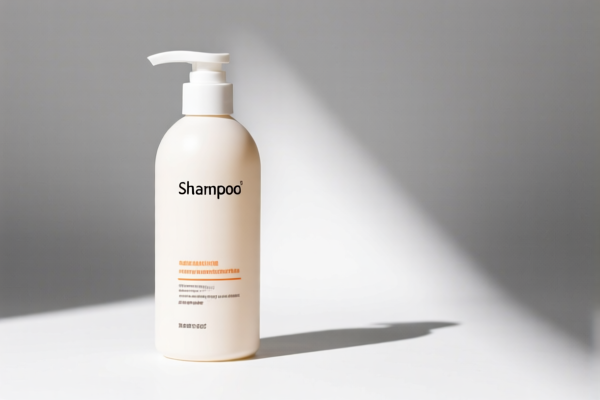
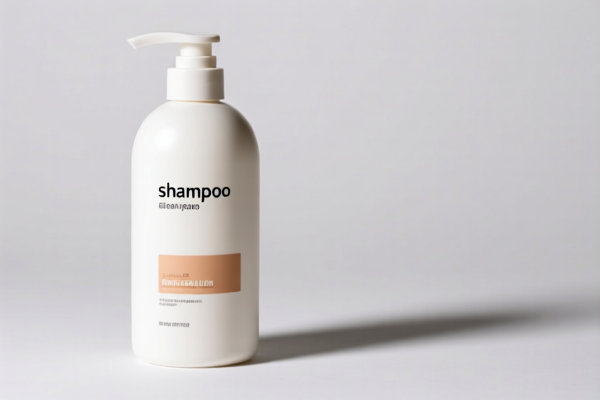
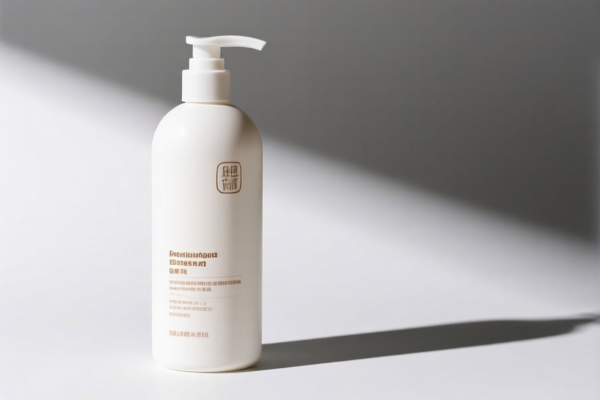
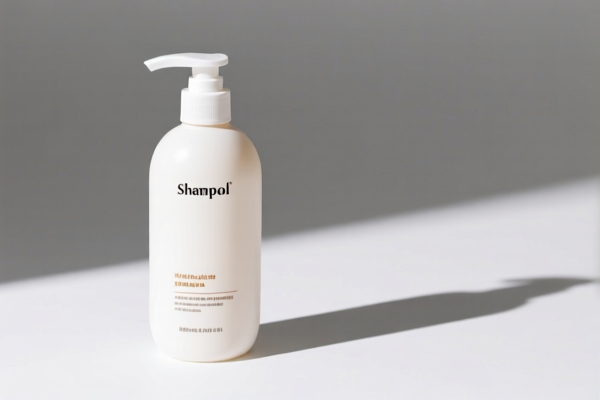
AI Analysis
🧴 Hair Shampoo (Shampoo)
🌐 HS Code Reference & Customs Clearance Guide | 2026 Latest Tariff Analysis | Professional Clearance Strategy
📌 I. Product Definition & Classification: Do You Really Understand "Shampoo"?
Hair shampoo is a personal care product designed for cleaning and conditioning hair. In international trade, it falls under Chapter 33 (Essential Oils and Resinoids; Perfumery, Cosmetics and Toilet Preparations). However, the exact HS Code depends on the specific formulation and declared purpose, leading to three primary classification pathways.
⚠️ Key Distinction Point:
- If the primary function is shampooing (cleansing the scalp/hair), it typically falls under 3305.
- If it is broadly classified as a toiletry/洗涤 preparation without specific shampoo designation, it may fall under 3307 or 3401.
- Crucial Note: All classifications below are subject to significant US Additional Duties due to trade tensions.
📦 II. HS Code Classification Details (2026 Latest Tariff Authority Comparison)
| HS Code | Product Description | Applicable Scenario | Logic/Justification |
|---|---|---|---|
3305.10.00.00 |
Preparations for shaving, shampoo, hair styling, and other hair care products | Shampoo specifically labeled for washing hair | Matches the explicit use "shampoo" in the subheading. |
3305.90.00.00 |
Hair care preparations (Other) | Hair care products where "shampoo" is implied but not the sole primary descriptor, or general hair treatment | Fits the definition of "hair care purposes" without material conflict. |
3307.90.00.00 |
Toiletry, perfumery, or cosmetics preparations (Other) | Classified broadly as toiletry/bath preparations | Fits the definition of "toiletry preparations" (盥洗品/洗浴制剂). |
3307.30.50.00 |
Perfumes and toilet waters (Note: Data summary indicates "Bath preparations") | Classified as bath preparations (沐浴制剂) | Fits the scope of "bath preparations" with no material conflict. |
3401.30.50.00 |
Soap and organic surface-active products for the skin (in the form of bars, cakes, moldings or pieces) | Liquid/Paste hair care products | Matches the form (liquid/paste) and care purpose. |
🔍 Key Reminder:
- 3305 Series is the most precise fit for products explicitly labeled and used as Shampoo.
- 3307/3401 are broader categories. Using these may lead to disputes if the product is clearly a shampoo.
- Material Conflict: None of the above have material conflicts for standard chemical/shampoo formulations.
💰 III. 2026 Latest Tariff Rate Breakdown (Including Additional Duties & Policy Surcharges)
✅ Applicable Country: United States (US)
✅ Country of Origin: China (CN)
✅ Effective Date: Post-2025 policies (Section 301 & Section 122)
🎯 1. 3305.10.00.00 & 3305.90.00.00 —— Shampoo / Hair Care Preparations
| Item | Content |
|---|---|
| Base Tariff | 0.0% (ad valorem) |
| Section 301 Additional Duty | +25.0% (From USITC Footnote 9903.88.01) |
| Section 122 Duty | +10.0% (Specific surcharge for Chinese goods under this category) |
| Total Tariff Rate | 35.0% |
| Tax Calculation | CIF Value × 35% |
| De Minimis Exemption | ❌ Not Eligible (deny_de_minimis) |
| Legal Basis Path | USITC:3305.10.00.00 → FOOTNOTE:9903.88.01 → Section 122 Rule |
📌 Explanation:
- "Section 301 25%": Standard additional tariff on Chinese goods under HTS 3305.
- "Section 122 10%": An additional layer of tariff applied to specific imports from China.
- Total 35%: This is a high tariff rate. Must be calculated into your landed cost.
🎯 2. 3307.90.00.00 —— Toiletry/Perfumery Preparations (Other)
| Item | Content |
|---|---|
| Base Tariff | 5.4% |
| Section 301 Additional Duty | +25.0% |
| Section 122 Duty | +10.0% |
| Total Tariff Rate | 40.4% |
| Tax Calculation | CIF Value × 40.4% |
| De Minimis Exemption | ❌ Not Eligible |
| Legal Basis Path | USITC:3307.90.00.00 → FOOTNOTE:9903.88.01 → Section 122 Rule |
📌 Warning:
- Classifying shampoo as "other toiletry preparations" increases the base rate to 5.4%.
- Total 40.4% is higher than the 35% for specific shampoo codes. Avoid this unless necessary.
🎯 3. 3307.30.50.00 —— Bath Preparations
| Item | Content |
|---|---|
| Base Tariff | 4.9% |
| Section 301 Additional Duty | +25.0% |
| Section 122 Duty | +10.0% |
| Total Tariff Rate | 39.9% |
| Tax Calculation | CIF Value × 39.9% |
| De Minimis Exemption | ❌ Not Eligible |
| Legal Basis Path | USITC:3307.30.50.00 → FOOTNOTE:9903.88.01 → Section 122 Rule |
📌 Note:
- Similar to above, classifying as "bath preparations" incurs a base rate of 4.9%.
- Total 39.9% is still higher than the optimal 35% for shampoo.
🎯 4. 3401.30.50.00 —— Soap & Surface Active Products (Liquid/Paste)
| Item | Content |
|---|---|
| Base Tariff | 0.0% |
| Section 301 Additional Duty | +25.0% |
| Section 122 Duty | +10.0% |
| Total Tariff Rate | 35.0% |
| Tax Calculation | CIF Value × 35% |
| De Minimis Exemption | ❌ Not Eligible |
| Legal Basis Path | USITC:3401.30.50.00 → FOOTNOTE:9903.88.01 → Section 122 Rule |
📌 Caution:
- While the rate is 35%, this code is for "Soap and organic surface-active products."
- Using this for shampoo might be rejected by Customs if the product is not chemically a "soap" but a synthetic detergent shampoo. Risk of misclassification penalty.
🛠️ IV. Customs Clearance Practical Advice (Real-World Pitfall Guide)
✅ 1. Preparation Checklist (Missing any item will cause delays)
| Document | Mandatory? | Description |
|---|---|---|
| ✅ Product Specification Sheet | ✔️ | Must list ingredients, pH, viscosity, and primary use: Shampoo. |
| ✅ Product Photos | ✔️ | Clear images of the bottle, label, and ingredients list. |
| ✅ Commercial Invoice | ✔️ | Must clearly state "Shampoo" or "Hair Care Preparation" as the commodity name. |
| ✅ Bill of Lading/Air Waybill | ✔️ | Consistent with invoice. |
| ✅ MSDS (Material Safety Data Sheet) | ✔️ | Required for chemical products, especially if flammable or hazardous. |
| ✅ FDA Registration (If applicable) | ✔️ | Cosmetics/shampoos imported into the US must comply with FDA regulations. |
✅ 2. Declaration Tips (Key Mantras)
🔥 "Declare as Shampoo, Not Soap, Not General Toiletry!"
| Scenario | Correct Declaration | Incorrect Declaration | Consequence |
|---|---|---|---|
| Product is Liquid Shampoo | HS 3305.10.00.00 (Shampoo) | "Hair Care Product" or "Soap" | Ambiguity leads to audit or higher tax (40.4%) |
| Product is Solid Shampoo Bar | Check if it's a "Soap" (3401) vs "Hair Care" (3305) | "Shampoo" | Misclassification if not strictly a shampoo prep |
| Product is Conditioner | HS 3305.90.00.00 | "Shampoo" | Misdeclaration |
| Product is Body Wash | HS 3307.90.00.00 | "Shampoo" | Misclassification |
📌 Critical Rule:
- Always use the term "Shampoo" in the description if the product is intended for washing hair.
- Avoid vague terms like "Bath Gel" or "Cleaner" unless it is explicitly a body wash.
✅ 3. Special Cases
| Situation | Handling Advice |
|---|---|
| OEM/Private Label | Ensure the supplier provides the correct HS Code declaration. Provide the original label sample. |
| Ingredients Containing Essential Oils | Still falls under 3305 if the primary use is shampoo. Do not let essential oil content push it to 3301 (Essential Oils) unless it's pure oil. |
| Medicated Shampoo | May require additional FDA documentation. Declare accurately as "Medicated Shampoo" to avoid health-related delays. |
| Small Samples for Testing | Still subject to duties. De Minimis ($800) does NOT apply to goods from China under Section 301/122. |
🌍 V. Global Market Comparison (2026 Latest)
| Country/Region | Recommended HS Code | Tariff (China Origin) | Certification Requirements | Notes |
|---|---|---|---|---|
| 🇺🇸 USA | 3305.10.00.00 |
35.0% (301+122) | FDA Compliance | Highest cost due to additional duties. |
| 🇨🇳 China | 3305.10.00.00 |
~10-15% (Import Duty) | N/A | Domestic market focus. |
| 🇪🇺 EU | 3305.10 |
0% (Most Favored Nation) | CPNP Notification, REACH | No additional tariffs, but strict cosmetic regulations. |
| 🇬🇧 UK | 3305.10 |
0% | UKCA Marking, SCPI Notification | Post-Brexit regulations apply. |
| 🇦🇺 Australia | 3305.10 |
5% | NICNAS/AGRC Listing | Moderate tariff, no Section 301 equivalent. |
📌 Conclusion:
- The USA is the most expensive market due to the 35% total tariff.
- For other markets, tariffs are significantly lower or zero, but regulatory compliance (FDA in US, CPNP in EU) is critical.
📌 VI. Common Errors & Pitfall Guide (Lessons Learned)
❌ Error 1: Declaring "Shampoo" as "Soap" (3401)
👉 Consequence: While tax is same (35%), it triggers FDA/Chemical scrutiny. Customs may reject if the product is clearly a detergent shampoo, not a true soap.
❌ Error 2: Declaring "Shampoo" as "General Cosmetics" (3307)
👉 Consequence: Tax jumps from 35% to 40.4%. Unnecessary cost increase.
❌ Error 3: Ignoring Section 122 Duty
👉 Consequence: Underpayment of 10%. Results in penalties, interest, and potential seizure.
❌ Error 4: Not providing FDA Documentation
👉 Consequence: Hold at port for FDA examination. Delays of weeks and storage fees.
✅ Correct Practice:
"Shampoo, Liquid, for Hair Cleaning, Containing [Ingredients], Model XYZ, FDA Registered Facility"
🎯 VII. Conclusion: Professional Declaration, Cost Control, Efficient Clearance!
🎯 Remember the Mantras:
🔹 "Shampoo goes to 3305, not 3307!"
🔹 "USA Tariff is 35%, not 5%! Include 301+122!"
🔹 "De Minimis does NOT apply to China-Shampoo!"
📌 Tips:
- If you are shipping small quantities to the US, consider using a DDP (Delivered Duty Paid) shipping method where the freight forwarder handles duties, but ensure they account for the 35%.
- For bulk shipments, calculate the landed cost carefully. A 5.4% difference in base rate between 3305 and 3307 is significant on large volumes.
📣 Immediate Action:
📞 Consult a Customs Broker: Verify the exact HS Code with your supplier's product specs.
📄 Prepare FDA Docs: Ensure the manufacturing facility is registered with the FDA.
🚀 Plan for 35% Duty: Do not underestimate the tariff impact on your margin.
✨ Professional Customs Clearance Starts with Accurate Classification!
💼 Every Percent of Tariff Counts!
Customer Reviews
About HS Code Classification
The Harmonized System (HS) is an internationally standardized nomenclature developed by the World Customs Organization (WCO) to classify traded products. Over 200 countries use the HS system as the basis for customs tariffs, trade statistics, and import/export regulations.
Each HS code follows a hierarchical structure:
- Chapter (2 digits) — Broad category of goods (e.g., Chapter 84: Machinery and Mechanical Appliances)
- Heading (4 digits) — More specific grouping within the chapter
- Subheading (6 digits) — Internationally standardized breakdown, used by all WCO member countries
- National subdivisions (8-10 digits) — Country-specific extensions for further classification, such as US HTSUS 10-digit codes
Correct HS code classification is essential for smooth customs clearance, accurate duty payment, and compliance with trade regulations. Misclassification can lead to customs delays, overpayment of duties, or penalties.
When importing from CN to US, the applicable tariff rates may include:
- Most-Favored-Nation (MFN) rate — The standard duty rate applied to WTO members
- General rate — Applied to countries without trade agreements
- Trade remedy duties — Additional tariffs such as Section 301 (anti-dumping), Section 232 (national security), or countervailing duties
The information provided on this page is for reference purposes only. For official classification, please consult with your local customs authority or a licensed customs broker.