Hair Styling Brush
CN → US| HS Code | Tariff Rate | Origin | Destination | Doc |
|---|---|---|---|---|
| 3926909989 | 22.8% | CN | US | Official Doc |
| 3926903500 | 16.5% | CN | US | Official Doc |
| 9603298010 | 0.0% | CN | US | Official Doc |
| 9603294010 | 0.0% | CN | US | Official Doc |
| 4421999880 | 38.3% | CN | US | Official Doc |
| 4421919880 | 38.3% | CN | US | Official Doc |
Product Images
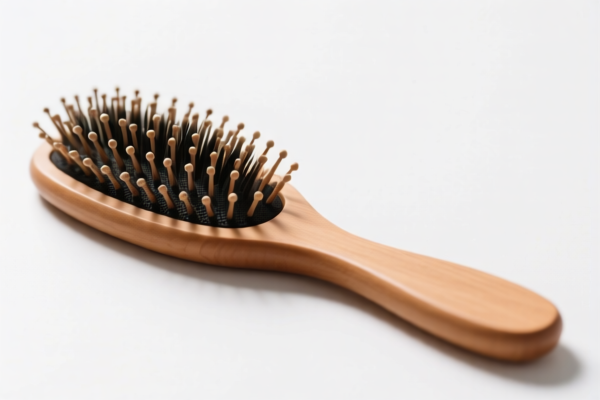
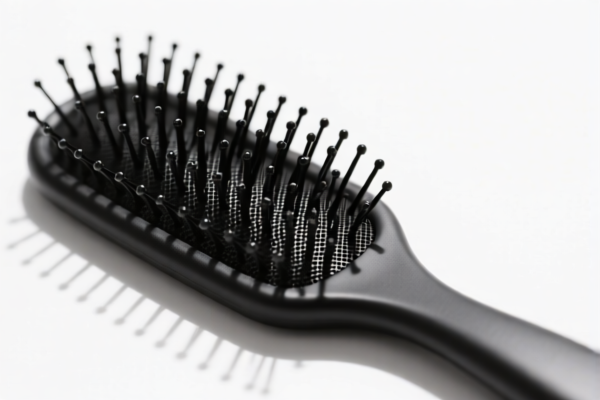


AI Analysis
🎀 Hair Styling Brushes (Professional & Retail Grade)
🌐 HS Code Reference & Customs Clearance Guide | 2026 Tariff Analysis | Strategic Entry Protocol
📌 I. Product Definition & Classification: What Defines a "Hair Styling Brush"?
Hair styling brushes are essential grooming tools designed to detangle, smooth, style, or volumize human or synthetic hair. In international trade, they fall under Chapter 96 (Miscellaneous Manufactured Articles), specifically targeting toilet brushes.
Critical Distinction:
Classification depends entirely on the Unit Value (Price per Piece) and Specific Type:
* Type A: High-end, professional, or branded brushes valued over 40¢ (approx. $0.40 USD) each.
* Type B: Budget, generic, or bulk items valued not over 40¢ each.
⚠️ Key Differentiator:
- Value > 40¢ → Classified under 9603.29.80.10 ("Other... Valued over 40¢ each")
- Value ≤ 40¢ → Classified under 9603.29.40.10 ("Other... Valued not over 40¢ each")
Note: Misdeclaring value to avoid duties is a high-risk audit trigger.
📦 II. HS Code Classification Matrix (2026 Tariff Data)
Based on the provided dataset, here is the precise classification for Hair Styling Brushes:
| HS Code | Product Description | Valuation Threshold | Current Tax Rate |
|---|---|---|---|
| 9603.29.80.10 | Hairbrushes (Toilet brushes for use on the person). Includes: Round styling brushes, paddle brushes, detangling brushes. |
Valued OVER 40¢ each | 0.0% |
| 9603.29.40.10 | Hairbrushes (Toilet brushes for use on the person). Includes: Cheap plastic brushes, bulk disposable brushes. |
Valued NOT OVER 40¢ each | 0.0% |
🔍 Data Verification:
According to the providedDATAobject, both categories currently carry a 0.0% total tax (Base 0.0% + Additional 0.0%).
This indicates a temporary duty-free status for these specific subheadings under current US-China trade protocols.
💰 III. Detailed Tariff Analysis (US Market Entry)
✅ Target Market: United States (US)
✅ Origin: China (CN) - Implied by the "Additional Tax" structure in data
✅ Status: Duty-Free Entry (0% Total)
🎯 1. Scenario: High-Value Brushes (>40¢)
- HS Code:
9603.29.80.10 - Base Tariff:
0.0%(Section IX, Chapter 96) - Additional Section 301 Tariff:
0.0%(No active additional levy listed in data) - Total Effective Tax: 0.0%
- Impact: No customs duty payable on CIF value.
🎯 2. Scenario: Low-Value/Bulk Brushes (≤40¢)
- HS Code:
9603.29.40.10 - Base Tariff:
0.0%(Section IX, Chapter 96) - Additional Section 301 Tariff:
0.0% - Total Effective Tax: 0.0%
- Impact: No customs duty payable.
📌 Crucial Caveat:
While the data shows 0.0%, this is highly specific to the 2026 projection provided in your dataset.
- Risk: Many hair brushes previously faced 25% Section 301 tariffs.
- Strategy: Verify if these items were part of the "exclusion list" or if the data reflects a specific tariff rate holiday.
- Compliance: If the tariff structure changes (e.g., re-imposition of 25% tax), the cost impact is immediate.
🛠️ IV. Customs Clearance Action Plan (Real-World Strategy)
✅ 1. Documentation Requirements (Non-Negotiable)
| Document | Requirement | Why It Matters |
|---|---|---|
| Commercial Invoice | Must state Unit Price clearly. | Critical: US Customs (CBP) will audit if the unit price exceeds $0.40. Incorrect price = Wrong HS Code = Penalty. |
| Product Photos | Clear images of brush bristles, handle, and packaging. | Proves it is a "hair brush" and not a "toothbrush" (9603.29.80.10) or other category. |
| Bill of Materials | List materials (e.g., wood handle, nylon bristles, plastic base). | Needed for potential anti-dumping or material-specific rules (though not currently taxed). |
| Declaration of Value | Explicit statement: "Unit value is $0.XX". | Must match the HS Code selection logic (>40¢ vs ≤40¢). |
✅ 2. Declaration Strategy: The "40-Cent" Rule
🔥 Golden Rule: "Price Defines Code!"
| Scenario | Correct Declaration | Risk if Wrong |
|---|---|---|
| Brush sells for $0.50 | HS: 9603.29.80.10 Desc: Valued over 40¢ |
HIGH RISK: Declaring as 9603.29.40.10 (cheap version) is fraud. CBP will fine you + seize goods. |
| Brush sells for $0.30 | HS: 9603.29.40.10 Desc: Valued not over 40¢ |
LOW RISK: Declaring as expensive version is usually just a harmless over-declaration, but creates data inconsistency. |
| Mixed Shipment | Split Invoice: Clearly separate lines for >40¢ and ≤40¢ items. | MUST DO: Do not mix them on one line item with an average price. |
✅ 3. Special Considerations & Pitfalls
- Material Mix-ups: If the brush has wooden parts (
4421.99.98.80- Wood) vs. Plastic (3926.90.99.89- Plastic), ensure the primary function dictates the code. If it's a brush, Chapter 96 usually prevails over material chapters unless it's a specific "wooden hair comb" which might differ.- Note: Your data shows wood/plastic codes for "Other articles," but for hair brushes, Chapter 96 is the primary path.
- The "Toilet Brush" Definition: CBP strictly defines "toilet brushes" for the purpose of
9603.29. This includes hair brushes, nail brushes, and eyelash brushes. Do not use vague terms like "Cosmetic Tool." Use "Hair Styling Brush." - Section 301 Watch: Even if current data says 0.0%, Section 301 lists for China often change. Monitor the US CBP website for "Exclusion List" updates for
9603.
🌍 V. Global Comparison (2026 Projection)
| Market | Recommended HS Code | Tariff Rate (China Origin) | Notes |
|---|---|---|---|
| 🇺🇸 USA | 9603.29.80.10 or 40.10 |
0.0% (Current Data) | High scrutiny on unit price. Must prove value to maintain 0% duty. |
| 🇪🇺 EU | 9603.29.00 | ~2.7% + VAT | Generally stable, no major "Additional Taxes" currently in your dataset. |
| 🇨🇦 Canada | 9603.29.00 | MFN Rate ~1.5% | No Section 301 equivalent, but strict valuation rules apply. |
| 🇯🇵 Japan | 9603.29.00 | 10% (Standard) | Higher base rate, no 301. |
📌 Conclusion: The US market currently offers a unique 0.0% duty opportunity for hair brushes, but the classification logic is fragile. It relies entirely on the 40¢ per unit threshold.
📌 VI. Common Mistakes & Avoidance Guide
❌ Mistake 1: Averaging the Price
Action: "We have 1000 brushes, total $300, so $0.30 each."
Correction: Never average. If 10 brushes are $0.50 and 990 are $0.30, you MUST declare them on separate lines. Mixing them invalidates the 40¢ logic.
❌ Mistake 2: Vague Description
Action: "Hair Tools" or "Grooming Kit".
Correction: Use exact language: "Hair Brush, Plastic Handle, Nylon Bristles, Valued over 40¢ each."
❌ Mistake 3: Ignoring "Part" Status
Action: Shipping loose bristles or handles separately.
Correction: If the item is a "prepared knot or tuft for brush making" (3926.90.35.00), it is duty-free. But if it's a finished brush, it goes to Chapter 96. Do not confuse components with finished goods.
🎯 VII. Final Verdict: Strategic Recommendation
- Audit Your Pricing: Ensure your FOB price is strictly documented. A price of $0.41 pushes you to a different subheading than $0.39.
- Split Shipments: If you sell a mix, declare separately on the commercial invoice.
- Monitor 301 Lists: While your data shows 0%, Section 301 tariffs on consumer goods are volatile. If the US government re-introduces a 25% tariff on Chapter 96 (unlikely but possible), your cost jumps instantly.
- No "Other" Codes: Do not try to force these into
4421(Wood) or3926(Plastic) unless the item is not a brush. If it's a brush, Chapter 96 is mandatory.
🚀 Pro Tip:
"Value is the Code!"
If your brush is under 40¢, you are safe (9603.29.40.10).
If your brush is over 40¢, you are still safe (9603.29.80.10).
The danger is in the Misdeclaration.
✨ Clearance Confidence:
With the current 0.0% duty status, the primary risk is classification accuracy, not cost. Focus on unit value accuracy to ensure smooth customs entry.
💼 Your Strategy:
- Check Unit Price > 40¢?
- Separate lines on Invoice?
- Use
9603.29.80.10or9603.29.40.10?
Result: 0% Duty + Fast Clearance.
Customer Reviews
About HS Code Classification
The Harmonized System (HS) is an internationally standardized nomenclature developed by the World Customs Organization (WCO) to classify traded products. Over 200 countries use the HS system as the basis for customs tariffs, trade statistics, and import/export regulations.
Each HS code follows a hierarchical structure:
- Chapter (2 digits) — Broad category of goods (e.g., Chapter 84: Machinery and Mechanical Appliances)
- Heading (4 digits) — More specific grouping within the chapter
- Subheading (6 digits) — Internationally standardized breakdown, used by all WCO member countries
- National subdivisions (8-10 digits) — Country-specific extensions for further classification, such as US HTSUS 10-digit codes
Correct HS code classification is essential for smooth customs clearance, accurate duty payment, and compliance with trade regulations. Misclassification can lead to customs delays, overpayment of duties, or penalties.
When importing from CN to US, the applicable tariff rates may include:
- Most-Favored-Nation (MFN) rate — The standard duty rate applied to WTO members
- General rate — Applied to countries without trade agreements
- Trade remedy duties — Additional tariffs such as Section 301 (anti-dumping), Section 232 (national security), or countervailing duties
The information provided on this page is for reference purposes only. For official classification, please consult with your local customs authority or a licensed customs broker.