Hair Ties
CN → US| HS Code | Tariff Rate | Origin | Destination | Doc |
|---|---|---|---|---|
| 9615903000 | 15.1% | CN | US | Official Doc |
| 6217109510 | 32.1% | CN | US | Official Doc |
| 3926909905 | 22.8% | CN | US | Official Doc |
| 3926909989 | 22.8% | CN | US | Official Doc |
| 6217108500 | 24.6% | CN | US | Official Doc |
| 6117808500 | 32.1% | CN | US | Official Doc |
Product Images
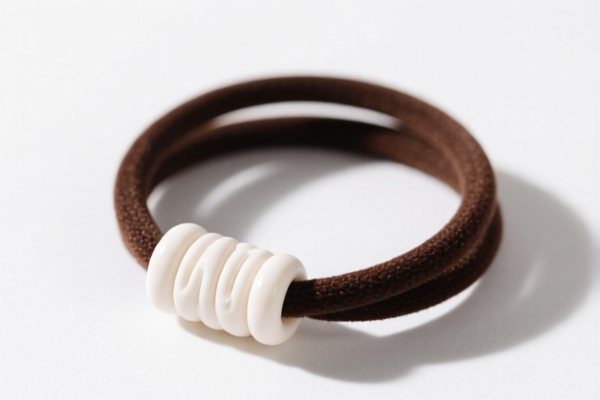
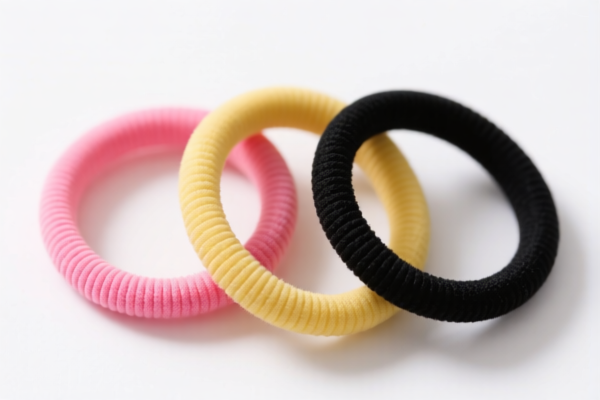


AI Analysis
🎀 Hair Ties (Hair Elastics / Scrunchies)
🌐 HS Code Reference & Customs Clearance Guide | 2024 Latest Tariff Analysis | Professional Clearance Strategy
📌 1. Product Definition & Classification: Do You Really Understand "Hair Ties"?
Hair ties are essential hair accessories used to secure hairstyles. In international trade, their classification depends heavily on material and manufacturing method. They are not a single category but span across textile, plastic, and general accessory classifications.
⚠️ Key Distinction Points:
- If made of woven fabric, non-woven, or elastic textile: Often classified as Headbands, Hair Rings, etc. (Chapter 61 or 62).
- If made of plastic/synthetic fibers with elastic properties: Often classified under Plastic Articles (Chapter 39).
- If considered a general clothing accessory (not specific to hair): May fall under Miscellaneous Made-Up Clothing Accessories (Chapter 61/62).
📦 2. HS Code Classification Details (Based on Provided Data)
| HS Code | Product Description | Summary/Reasoning |
|--------|--------------------------|
| 9615.90.30.00 | Hair Accessories | Hair ties are considered hair ornaments, fitting the use of clips and similar articles. Materials are typically fabric or plastic. |
| 6217.10.95.10 | Black Hair Ties (Textile) | Black hair ties are classified as clothing accessories, mostly made of fiber or fabric, fitting the "Other Made-Up Clothing Accessories" category. |
| 3926.90.99.05 | Black Hair Ties (Plastic/Elastic) | Material inferred as plastic or synthetic fiber, shape is elastic strip, fitting the classification of plastic elastic bands. |
| 3926.90.99.89 | Black Hair Ties (Plastic General) | Material inferred as plastic, fitting the 兜底 (Residual/Catch-all) category for other articles of plastics and other materials. |
| 6217.10.85.00 | Hair Ties (Textile Band) | Hair ties belong to hairbands, ponytail holders, etc., mostly textile or elastic fiber, fitting the Apparel Accessories category. |
| 6117.80.85.00 | Knitted Hair Ties | Hair ties are considered ponytail clips and similar items, made of knitted or crocheted material, fitting the Knitted/Crocheted Clothing Accessories category. |
🔍 Key Reminder:
- Material is king: Plastic vs. Textile drastically changes the HS code and duty rate.
- Color/Specificity: Some codes specifically mention "Black" items, while others are general. Ensure your product description matches the code's specificity.
- Manufacturing Method: Knitted vs. Woven vs. Moulded Plastic determines Chapter 61 vs. 62 vs. 39.
💰 3. 2024 Latest Tariff Rate Breakdown (Including Additional Duties)
✅ Applicable Country: United States (US)
✅ Origin: China (CN)
✅ Note: Rates include Base Tariff + Section 301 (7.5%) + Section 122 (10% where applicable).
🎯 1. 9615.90.30.00 —— Hair Accessories (General)
| Item | Content |
|---|---|
| Base Tariff | 5.1% |
| Additional Tariff (301) | 0.0% |
| Section 122 Tariff | 10.0% |
| Total Tax Rate | 15.1% |
| Tax Calculation | CIF Value × 15.1% |
| Legal Basis | Base Rate (5.1%) + Sec 122 (10%) |
📌 Explanation:
- This is the lowest tariff option among the provided codes.
- It applies if the hair tie is clearly defined as a "Hair Accessory" (Chapter 96) and does not trigger Section 301 additional duties (0%).
- Section 122 adds 10% on top of the base rate.
🎯 2. 6217.10.95.10 —— Black Hair Ties (Textile Clothing Accessory)
| Item | Content |
|---|---|
| Base Tariff | 14.6% |
| Additional Tariff (301) | 7.5% |
| Section 122 Tariff | 10.0% |
| Total Tax Rate | 32.1% |
| Tax Calculation | CIF Value × 32.1% |
| Legal Basis | Base (14.6%) + Sec 301 (7.5%) + Sec 122 (10%) |
📌 Explanation:
- Higher base rate due to textile classification.
- Subject to both Section 301 and Section 122.
🎯 3. 3926.90.99.05 —— Black Hair Ties (Plastic Elastic Band)
| Item | Content |
|---|---|
| Base Tariff | 5.3% |
| Additional Tariff (301) | 7.5% |
| Section 122 Tariff | 10.0% |
| Total Tax Rate | 22.8% |
| Tax Calculation | CIF Value × 22.8% |
| Legal Basis | Base (5.3%) + Sec 301 (7.5%) + Sec 122 (10%) |
📌 Explanation:
- Lower base rate than textile, but still hits both additional tariffs.
🎯 4. 3926.90.99.89 —— Black Hair Ties (Plastic General)
| Item | Content |
|---|---|
| Base Tariff | 5.3% |
| Additional Tariff (301) | 7.5% |
| Section 122 Tariff | 10.0% |
| Total Tax Rate | 22.8% |
| Tax Calculation | CIF Value × 22.8% |
| Legal Basis | Base (5.3%) + Sec 301 (7.5%) + Sec 122 (10%) |
📌 Explanation:
- Same rate as3926.90.99.05. This is the "catch-all" for plastic articles.
🎯 5. 6217.10.85.00 —— Hair Ties (Textile Band/Apparel Accessory)
| Item | Content |
|---|---|
| Base Tariff | 14.6% |
| Additional Tariff (301) | 0.0% |
| Section 122 Tariff | 10.0% |
| Total Tax Rate | 24.6% |
| Tax Calculation | CIF Value × 24.6% |
| Legal Basis | Base (14.6%) + Sec 122 (10%) |
📌 Explanation:
- Base rate is higher (14.6%), but no Section 301 duty (0%).
- Total rate is mid-range.
🎯 6. 6117.80.85.00 —— Knitted Hair Ties
| Item | Content |
|---|---|
| Base Tariff | 14.6% |
| Additional Tariff (301) | 7.5% |
| Section 122 Tariff | 10.0% |
| Total Tax Rate | 32.1% |
| Tax Calculation | CIF Value × 32.1% |
| Legal Basis | Base (14.6%) + Sec 301 (7.5%) + Sec 122 (10%) |
📌 Explanation:
- Highest tax rate (32.1%) due to knitted textile classification hitting all surcharges.
🛠️ 4. Customs Clearance Practical Advice (Real-World Pitfall Guide)
✅ 1. Recommended HS Code Strategy
| Priority | HS Code | Total Rate | Reason |
|---|---|---|---|
| 🥇 Best Rate | 9615.90.30.00 |
15.1% | Lowest total tax. No Sec 301. Classify as "Hair Accessory". |
| 🥈 Mid Rate | 6217.10.85.00 |
24.6% | No Sec 301, but higher base rate. Good for textile bands. |
| 🥉 Plastic Rate | 3926.90.99.xx |
22.8% | Lower base, but hits Sec 301 & 122. |
| ❌ Highest Cost | 6217.10.95.10 / 6117.80.85.00 |
32.1% | Avoid if possible. High base + all surcharges. |
📌 Strategy:
- Try to classify under9615.90.30.00if the product is clearly a hair accessory. This saves ~10-17% in duties compared to other options.
- Ensure your commercial invoice and description support this classification (e.g., "Hair Tie, Plastic/Fabric, for Hair Styling").
✅ 2. Documentation Requirements
| Document | Must Provide | Notes |
|---|---|---|
| ✅ Commercial Invoice | ✔️ | Clearly state "Hair Ties" or "Hair Accessories". Avoid vague terms like "Accessory". |
| ✅ Product Description | ✔️ | Specify material: "Plastic", "Knitted Fabric", or "Elastic Band". |
| ✅ Material Composition | ✔️ | E.g., "100% Polyester", "Plastic Core with Fabric Cover". |
| ✅ Photos | ✔️ | Show the item clearly to prove it’s a hair tie, not a clothing belt or other item. |
| ✅ Origin Certificate | ✔️ | If applicable, for any potential exemptions (though Sec 122/301 usually apply regardless). |
✅ 3. Common Mistakes & Pitfalls
❌ Mistake 1: Classifying as Textile Accessories when it’s Plastic
👉 Consequence: Higher base rate + Sec 301. If it’s plastic, use Chapter 39 codes.
❌ Mistake 2: Ignoring Section 122 Tariff
👉 Consequence: All provided codes include a 10% Sec 122 duty. Do not forget to budget for this.
❌ Mistake 3: Using Generic Terms like "Rubber Band"
👉 Consequence: Customs may misclassify as industrial rubber products, leading to delays or wrong duties. Use "Hair Tie" or "Hair Elastic".
❌ Mistake 4: Assuming Low Duty because it’s small
👉 Consequence: Small items are still subject to ad valorem duties. 15-32% on small items is significant.
✅ Correct Declaration Example:
"Hair Ties, Plastic Core with Fabric Cover, for Hair Styling, Model HT-001, Country of Origin: China"
🌍 5. Global Market Comparison (2024 Snapshot)
| Country/Region | Recommended HS Code | Est. Duty Rate (China Origin) | Notes |
|---|---|---|---|
| 🇺🇸 USA | 9615.90.30.00 |
15.1% | Best option. Includes Sec 122. |
| 🇨🇳 China | 9615.90.30.00 |
~5-7% | Lower base rate. No Sec 301/122. |
| 🇪🇺 EU | 9615.19.00 |
~4-6% | Different HS structure. No US-style surcharges. |
| 🇬🇧 UK | 9615.19.00 |
~4-6% | Post-Brexit, similar to EU. |
📌 Conclusion:
- USA has the most complex duty structure due to Section 301 and Section 122.
- Optimization is critical: Choosing the right HS code can save 10-17% in total duties.
📌 6. Final Recommendations
🎯 Key Takeaways:
1. Aim for 9615.90.30.00: It offers the lowest total duty (15.1%) and avoids the 7.5% Section 301 tariff.
2. Describe Accurately: Use "Hair Accessories" or "Hair Ties" in documentation.
3. Verify Material: Ensure the material matches the HS code (Plastic vs. Textile).
4. Budget for All Tariffs: Include Base + Sec 301 (if applicable) + Sec 122 (10%) in your cost model.
🚀 Action Plan:
- Step 1: Confirm material composition.
- Step 2: If possible, declare as9615.90.30.00.
- Step 3: Prepare clear product descriptions and photos.
- Step 4: Apply for Advance Ruling if unsure about classification.
✨ Professional Clearance Starts with Accurate Classification!
💼 Every Percent Counts in Customs Duties!
📣 Need Help?
📞 Contact a Licensed Customs Broker
📄 Request an HS Code Advance Ruling
📊 Use this guide to optimize your 2024 Import Strategy
Customer Reviews
About HS Code Classification
The Harmonized System (HS) is an internationally standardized nomenclature developed by the World Customs Organization (WCO) to classify traded products. Over 200 countries use the HS system as the basis for customs tariffs, trade statistics, and import/export regulations.
Each HS code follows a hierarchical structure:
- Chapter (2 digits) — Broad category of goods (e.g., Chapter 84: Machinery and Mechanical Appliances)
- Heading (4 digits) — More specific grouping within the chapter
- Subheading (6 digits) — Internationally standardized breakdown, used by all WCO member countries
- National subdivisions (8-10 digits) — Country-specific extensions for further classification, such as US HTSUS 10-digit codes
Correct HS code classification is essential for smooth customs clearance, accurate duty payment, and compliance with trade regulations. Misclassification can lead to customs delays, overpayment of duties, or penalties.
When importing from CN to US, the applicable tariff rates may include:
- Most-Favored-Nation (MFN) rate — The standard duty rate applied to WTO members
- General rate — Applied to countries without trade agreements
- Trade remedy duties — Additional tariffs such as Section 301 (anti-dumping), Section 232 (national security), or countervailing duties
The information provided on this page is for reference purposes only. For official classification, please consult with your local customs authority or a licensed customs broker.