Hair removed bovine leather whole hides
CN → US| HS Code | Tariff Rate | Origin | Destination | Doc |
|---|---|---|---|---|
| 4101201010 | 17.5% | CN | US | Official Doc |
| 4101203000 | 19.9% | CN | US | Official Doc |
Product Images
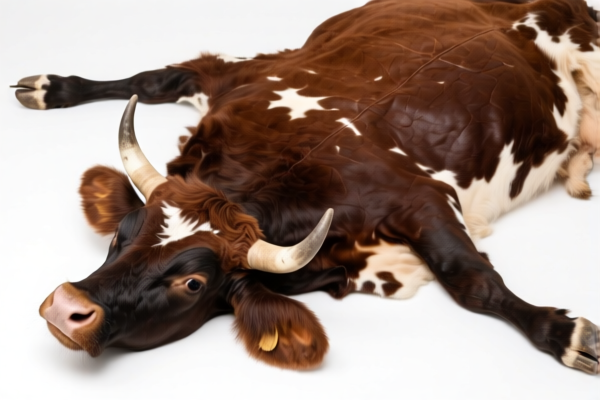
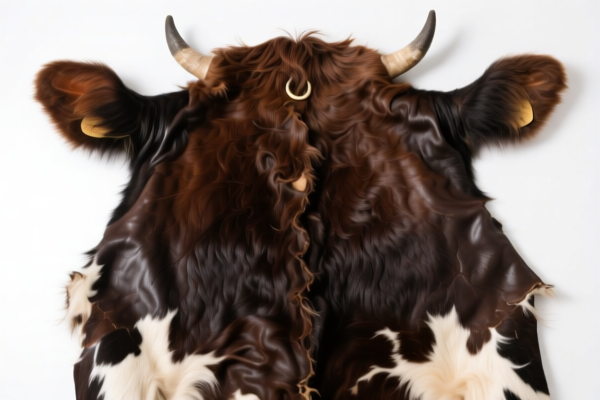
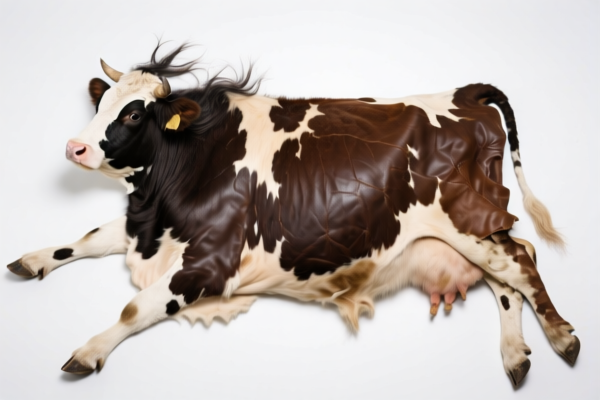
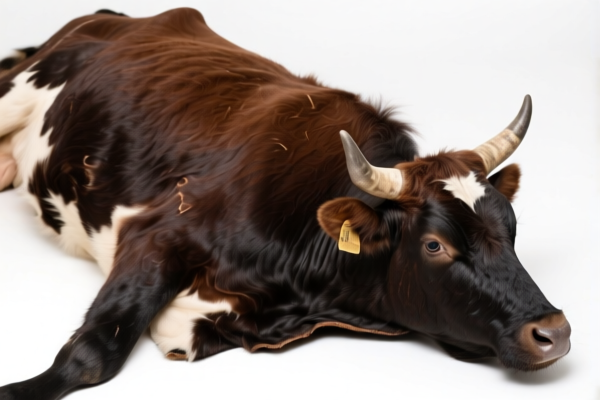
AI Analysis
🐂 Hair-Removed Bovine Whole Hides (Raw Hides & Skins)
🌐 HS Code Reference & Customs Clearance Guide | 2026 Latest Tariff Analysis | Professional Import Strategy
📌 I. Product Definition & Classification: Are You Importing Raw or Prepared Leather?
"Hair removed bovine leather whole hides" refers to raw hides from cattle (including buffalo) that have undergone initial processing to remove hair but have not yet been tanned, parchment-dressed, or further prepared. These are the foundational materials for the leather industry.
In international trade, the key distinction lies in the state of preservation (fresh, salted, dried, limed) and the physical state (split vs. unsplit).
⚠️ Critical Distinction:
- If the hide is not tanned but merely salted/dried with hair removed → Falls under Chapter 41 (Raw Hides & Skins).
- If the hide is tanned or further processed → Falls under Chapter 41 (Tanned Hides) or Chapter 42 (Articles of Leather).
- This guide strictly covers UNsplit, Raw, Hair-Removed Bovine Hides under HS Code 4101.
📦 II. HS Code Classification Details (2026 Latest Tariff Authority)
| HS Code | Product Description | Weight Criteria | Preservation Method | Key Condition |
|---|---|---|---|---|
4101.20.10.10 |
Whole hides and skins, unsplit, of bovine animals | ≤ 8 kg (dried), ≤ 10 kg (dry-salted), ≤ 16 kg (fresh/wet-salted) | Fresh, wet-salted, dried, limed, pickled | Not pretanned; Weight does not exceed limits |
4101.20.30.00 |
Other whole hides and skins, unsplit, of bovine animals | > 8 kg (dried), > 10 kg (dry-salted), or > 16 kg (fresh/wet-salted) | Any preserved state | Not pretanned; Weight exceeds standard limits OR surface area > 2.6 m² |
🔍 Important Notes:
- "Hair Removed" is implied in many raw hide categories but must be confirmed if specified in commercial invoices to avoid misclassification under unprocessed hides (which may have different weight thresholds).
- "Whole, Unsplit" means the hide has not been separated into two layers (grain and flesh). Split hides have different HS codes.
- "Not Pretanned" is crucial. If liming (chemical hair removal with lime) is done, it is still considered raw until tanning (chromium, vegetable, etc.) is complete.
💰 III. 2026 Latest Tariff Rate Breakdown (Including Additional Taxes)
✅ Applicable Country: United States (US)
✅ Origin: China (CN)
✅ Effective Date: 2025/2026 (Check current trade status)
🎯 1. 4101.20.10.10 – Small Bovine Hides (Unsplit, Raw, Hair-Removed)
| Item | Detail |
|---|---|
| Base Tariff | 0.0% |
| Section 301 Additional Tariff | +7.5% |
| Total Tariff Rate | 7.5% |
| Tax Calculation | CIF Value × 7.5% |
| De Minimis Exemption | ❌ Not Eligible (Deny de minimis for high-value leather goods if applicable, but generally raw hides are subject to standard duties) |
| Legal Basis Path | HTSUS:4101.20.10.10 → USITC Section 301 Footnote |
📌 Explanation:
- The base duty for raw bovine hides under this specific weight bracket is 0%, reflecting the low value-added nature of raw materials.
- However, the 7.5% additional tariff is applied under Section 301 of the Trade Act, targeting specific Chinese-origin goods.
- Total Cost Impact: 7.5% of the CIF value.
🎯 2. 4101.20.30.00 – Other Bovine Hides (Unsplit, Raw, Hair-Removed, Larger/Heavier)
| Item | Detail |
|---|---|
| Base Tariff | 2.4% |
| Section 301 Additional Tariff | +7.5% |
| Total Tariff Rate | 9.9% |
| Tax Calculation | CIF Value × 9.9% |
| De Minimis Exemption | ❌ Not Eligible |
| Legal Basis Path | HTSUS:4101.20.30.00 → USITC Section 301 Footnote |
📌 Explanation:
- This code applies to hides that exceed the weight limits of the first category (e.g., heavy salted hides >16 kg) or have a unit surface area greater than 2.6 m² (28 sq ft).
- The base tariff is 2.4%, plus the 7.5% Section 301 duty.
- Total Cost Impact: 9.9% of the CIF value.
- Surface Area Check: If your hide is large (e.g., full cow hide), it likely falls here unless the weight is very low (which is rare for whole unsplit hides).
🛠️ IV. Customs Clearance Practical Advice (Battle-Tested Pitfall Avoidance)
✅ 1. Required Documentation Checklist (Non-Negotiable)
| Document | Must Provide | Purpose |
|---|---|---|
| ✅ Commercial Invoice | ✔️ | Must state: "Raw Bovine Hides, Unsplit, Hair Removed, Preserved by [Method]" |
| ✅ Packing List | ✔️ | Clearly list Gross Weight and Net Weight per hide/skin |
| ✅ Phytosanitary Certificate | ✔️ | Critical for Raw Hides – Proves no animal diseases (e.g., Anthrax, FMD) |
| ✅ Veterinary Health Certificate | ✔️ | Issued by origin country’s veterinary authority |
| ✅ Proof of Preservation | ✔️ | Certificate or lab report showing method (e.g., "Dry-Salted", "Wet-Salted") |
| ✅ Declaration of Non-Tanning | ✔️ | Explicitly state "Not Tanned, Not Parchment-Dressed" to justify Chapter 41 classification |
✅ 2. Classification Strategy (Key Rules)
🔥 “Weight is King, Surface is Queen, Hair Removal is Standard!”
| Scenario | Correct HS Code | Reasoning |
|---|---|---|
| Small, Light Hides (≤16 kg fresh, ≤10 kg dry-salted) | 4101.20.10.10 |
Meets weight thresholds for lower tariff bracket (0% base) |
| Large, Heavy Hides (>16 kg fresh, >10 kg dry-salted) OR Surface >2.6 m² | 4101.20.30.00 |
Exceeds weight/surface limits; higher base tariff (2.4%) |
| Split Hides | ❌ Not in this dataset | Split hides have different HS codes (e.g., 4101.20.50.x) |
| Tanned Leather | ❌ Not in this dataset | Tanned hides fall under 4104 or 4105 |
📌 Pro Tip:
- Accurate Weight Declaration is Critical: If you declare a 18 kg wet-salted hide as 15 kg to qualify for4101.20.10.10, Customs will penalize you for misclassification.
- Surface Area Measurement: Use standard formulas (length × width) to calculate square meters. If >2.6 m², you must use4101.20.30.00.
✅ 3. Special Considerations for Raw Hides
| Issue | Solution |
|---|---|
| Biological Hazards | Ensure Phytosanitary/Veterinary Certs are obtained before shipment. Delays here cause demurrage. |
| Preservation Method | Clearly state if "Wet-Salted" or "Dry-Salted". Wet-salted hides have a 16 kg limit; dry-salted have a 10 kg limit. Wet-salted allows heavier hides! |
| Odor & Packaging | Use sealed, odor-proof containers to prevent Customs inspection delays due to smell complaints. |
| Country of Origin | If not from China, the 7.5% Section 301 may not apply. Check specific US trade agreements (e.g., USMCA for Canada/Mexico → 0% duty). |
🌍 V. Global Market Comparison (2026)
| Country/Region | Recommended HS Code | Base Duty | Additional Duty (China Origin) | Total Duty | Notes |
|---|---|---|---|---|---|
| 🇺🇸 USA | 4101.20.10.10 / 4101.20.30.00 |
0% / 2.4% | +7.5% | 7.5% / 9.9% | Section 301 applies |
| 🇪🇺 EU | 4101 20 10 / 4101 20 90 | 4.0% / 6.5% | None (usually) | 4.0-6.5% | No Section 301 equivalent |
| 🇨🇳 China | 4101 20 10 / 4101 20 90 | 10.5% / 13.5% | None | 10.5-13.5% | High base duty |
| 🇬🇧 UK | 4101 20 10 / 4101 20 90 | 4.0% / 6.5% | None (usually) | 4.0-6.5% | Post-Brexit tariffs similar to EU |
📌 Conclusion:
- The USA has a unique Section 301 surcharge of 7.5%, making it more expensive for Chinese-origin raw hides than the EU or UK.
- If possible, consider sourcing from non-China origins (e.g., Brazil, Argentina) to avoid the 7.5% additional duty if shipping to the US.
📌 VI. Common Errors & Pitfalls (Lessons Learned)
❌ Error 1: Misdeclaring "Split Hides" as "Whole Hides"
👉 Consequence: Misclassification penalty; split hides may have different duty rates or regulatory requirements.
❌ Error 2: Ignoring Weight Limits
👉 Consequence: If a 17 kg wet-salted hide is declared as 15 kg to avoid higher duty, Customs will audit and charge back taxes + fines.
❌ Error 3: Missing Phytosanitary Certificate
👉 Consequence: Shipment held or returned at US port of entry. No amount of paperwork can fix this after arrival.
❌ Error 4: Confusing "Hair-Removed" with "Tanned"
👉 Consequence: If you say "Tanned" but the goods are raw, Customs may reject the entry. If you say "Raw" but it’s tanned, you misclassify. Be precise.
✅ Correct Declaration Example:
"Raw Bovine Hides, Unsplit, Hair-Removed, Wet-Salted, Gross Weight 15kg per skin, Not Tanned, Certificate No. XXX"
🎯 VII. Conclusion: Precision in Raw Material Import
🎯 Remember the Mantra:
🔹 "Weight Defines the Code, Surface Area Confirms It."
🔹 "Hair Removed is Still Raw Until Tanned."
🔹 "Phytosanitary Cert is Your Ticket In."
📌 Pro Tip:
- If you are importing large volumes, consider applying for a Section 301 Exclusion if applicable (check current USITC exclusion lists).
- Always verify the weight at the point of export to ensure accurate HS code selection.
📣 Immediate Action:
📞 Contact Your Freight Forwarder to confirm Phytosanitary requirements in your country of origin.
⚖️ Consult a Customs Broker to pre-classify your hides based on exact weight and preservation method.
🚀 Ensure Your Commercial Invoice Matches the HS Code Description Exactly.
✨ Precision in Classification, Peace of Mind in Clearance!
💼 Your Raw Hides Are Just the Beginning – Don’t Let Paperwork Stop the Flow!
Customer Reviews
About HS Code Classification
The Harmonized System (HS) is an internationally standardized nomenclature developed by the World Customs Organization (WCO) to classify traded products. Over 200 countries use the HS system as the basis for customs tariffs, trade statistics, and import/export regulations.
Each HS code follows a hierarchical structure:
- Chapter (2 digits) — Broad category of goods (e.g., Chapter 84: Machinery and Mechanical Appliances)
- Heading (4 digits) — More specific grouping within the chapter
- Subheading (6 digits) — Internationally standardized breakdown, used by all WCO member countries
- National subdivisions (8-10 digits) — Country-specific extensions for further classification, such as US HTSUS 10-digit codes
Correct HS code classification is essential for smooth customs clearance, accurate duty payment, and compliance with trade regulations. Misclassification can lead to customs delays, overpayment of duties, or penalties.
When importing from CN to US, the applicable tariff rates may include:
- Most-Favored-Nation (MFN) rate — The standard duty rate applied to WTO members
- General rate — Applied to countries without trade agreements
- Trade remedy duties — Additional tariffs such as Section 301 (anti-dumping), Section 232 (national security), or countervailing duties
The information provided on this page is for reference purposes only. For official classification, please consult with your local customs authority or a licensed customs broker.