Hairless Buffalo Full Grain Leather Sheet for Shoe Making
CN → US| HS Code | Tariff Rate | Origin | Destination | Doc |
|---|---|---|---|---|
| 4104413060 | 12.4% | CN | US | Official Doc |
| 4107914000 | 12.5% | CN | US | Official Doc |
| 4114100000 | 38.2% | CN | US | Official Doc |
| 4114207000 | 36.6% | CN | US | Official Doc |
| 4104113060 | 12.4% | CN | US | Official Doc |
Product Images
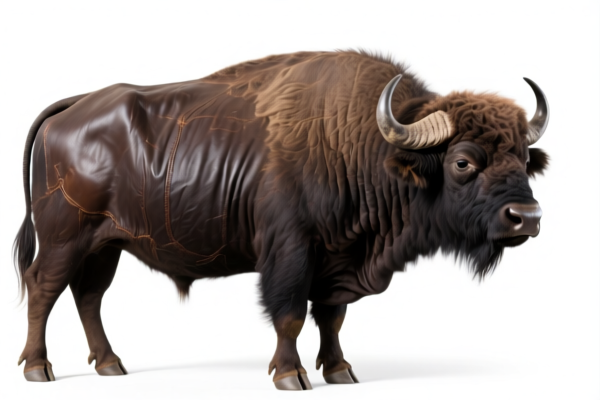
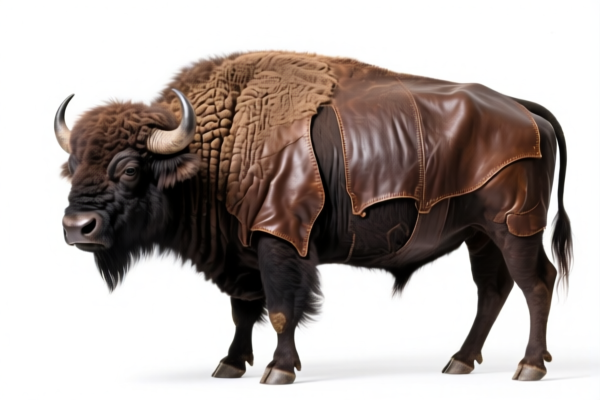
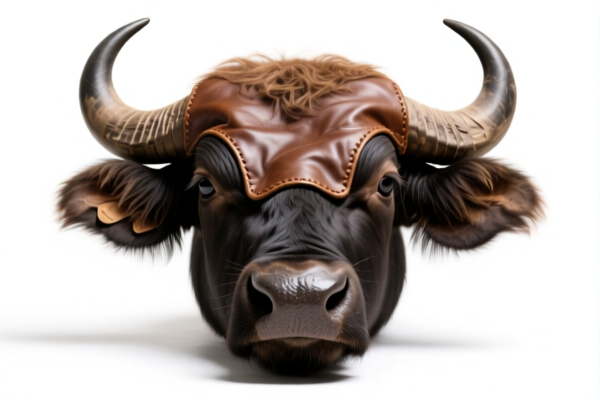
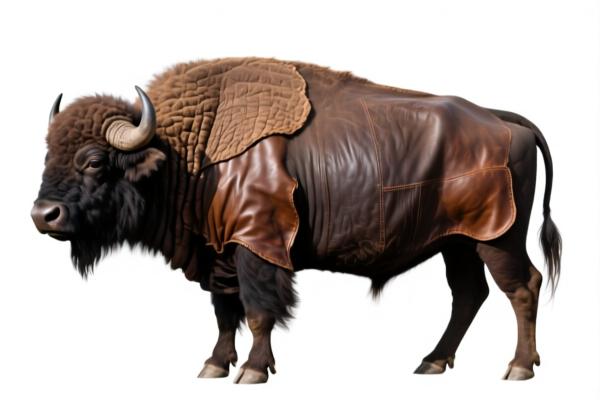
AI Analysis
🐃 Hairless Buffalo Full Grain Leather Sheet for Shoe Making
🌐 HS Code Reference & Customs Clearance Guide | 2026 Latest Tariff Analysis | Professional-Level Strategy
📌 I. Product Definition & Classification: Do You Really Understand "Hairless Buffalo Leather"?
Hairless buffalo full grain leather is a premium raw material characterized by the natural grain structure of the hide, with the hair removed (de-haired), without splitting or further chemical alteration beyond tanning and finishing. It is highly sought after for high-end shoe uppers, bags, and accessories due to its durability and aesthetic appeal.
In international trade, the classification hinges on three critical factors: 1. Processing Method: Is it merely de-haired (shaving), or has it undergone chrome/tanning (chemical fixation)? 2. Grain Status: Is it full-grain (unsplit) or split? 3. Intended Use: Although intended for shoe making, the raw material classification (Leather) often takes precedence over the end-product classification (Footwear) unless it is specifically prepared as "upper leather" under specific subheadings. However, note that 4114 codes often apply to leather further prepared or used for specific industrial purposes, while 4104/4107 cover basic tanned/hide states.
⚠️ Key Distinction Point:
- If the leather is simply tanned but not yet cut or finished specifically as "shoe upper" in a way that falls under specialized industrial leather categories, it may fall under general tanned hides (4104/4107).
- If it is classified as "other leather" or "lacquered/metallic" due to specific surface treatments, it may fall under 4114.
- Crucial Note: The provided data suggests conflicting classifications for similar descriptions. This highlights the risk of misclassification. We must analyze the specific HS codes provided in the dataset to understand the tariff implications.
📦 II. HS Code Classification Details (Based on Provided Data)
The dataset provides five potential HS codes for "Hairless Buffalo Full Grain Leather Sheet." Here is the breakdown of why each might apply and the associated tax implications.
| HS Code | Product Description (Summary from Data) | Key Classification Criteria | Total Tax Rate |
|---|---|---|---|
4104.41.30.60 |
Hairless buffalo full grain leather sheet, no hair, for handicrafts, fits "other buffalo leather" category, use: non-shoe upper. | Treated as tanned Bovine leather (Chapter 41, Heading 4104). "No hair" implies de-haired. "Non-shoe upper" classification avoids shoe-specific duties. | 12.4% |
4107.91.40.00 |
Hairless buffalo full grain leather sheet, no hair, processed with de-hairing method, form: full-grain, unsplit sheet. | Treated as Leather further prepared (Heading 4107). Focuses on the process (de-hairing) and form (sheet). | 12.5% |
4114.10.00.00 |
Buffalo leather sheet, leather category, form: leather sheet, use: handicrafts, fits leather processing attributes. | Treated as Other leather (Heading 4114). This is a catch-all for leather not specified elsewhere, often attracting higher duties. | 38.2% |
4114.20.70.00 |
Buffalo leather sheet, falls under the broad category of lacquered or metallized leather, no obvious material conflict. | Treated as Lacquered/Metallic Leather (Heading 4114, Subheading 20). If the leather has any surface coating (even minimal) that triggers this category, it applies. | 36.6% |
4104.11.30.60 |
Hairless buffalo full-grain, hairless leather sheet, form: not further processed, fits code definition features. | Treated as Tanned Bovine Leather (Heading 4104, Subheading 11). "Not further processed" suggests basic tanning without complex finishes. | 12.4% |
🔍 Critical Analysis:
- Codes4104and4107represent the lowest tax burden (~12.4-12.5%). These codes are for standard tanned leather or leather further prepared but not in the specialized "other leather" category.
- Codes4114represent the highest tax burden (36.6-38.2%). These codes are for "other leather," often used when the leather doesn't fit standard tanned categories or is treated as a specialty industrial material.
- Why the discrepancy? The classification depends on detailed product specifications: Was it chrome-tanned or vegetable-tanned? Does it have any surface coating? Is it explicitly declared for "handicrafts" vs. "industrial use"? Customs officers have discretion here.
💰 III. 2026 Latest Tariff Rate Breakdown (Including Additional Taxes, Policy Surcharges)
✅ Applicable Country: United States (US)
✅ Origin: China (CN)
✅ Effective Time: 2025/2026 Import Season
🎯 1. 4104.41.30.60 & 4104.11.30.60 —— Tanned Bovine Leather (Lowest Risk)
| Item | Content |
|---|---|
| Base Duty | 2.4% (Ad Valorem) |
| Section 301 Additional Duty | 0.0% (Exempt or not applicable in this specific subheading path?) |
| Section 122 Duty | 10% (Specific surcharge for certain leather goods/materials) |
| Total Tax Rate | 12.4% |
| Tax Calculation | CIF Value × 12.4% |
| De Minimis Eligibility | ❌ No (Deny De Minimis) |
| Legal Basis Path | Section 122: 10% + Base Tariff: 2.4% |
📌 Explanation:
- The Section 122 tariff is a specific US trade measure targeting certain leather products. It applies a flat 10% surcharge.
- The base duty is low (2.4%) because tanned leather is a raw material, not a finished good.
- Total 12.4% is relatively favorable compared to the4114codes.
🎯 2. 4107.91.40.00 —— Leather Further Prepared (Lowest Risk)
| Item | Content |
|---|---|
| Base Duty | 2.5% (Ad Valorem) |
| Section 301 Additional Duty | 0.0% |
| Section 122 Duty | 10% |
| Total Tax Rate | 12.5% |
| Tax Calculation | CIF Value × 12.5% |
| De Minimis Eligibility | ❌ No (Deny De Minimis) |
| Legal Basis Path | Section 122: 10% + Base Tariff: 2.5% |
📌 Explanation:
- Nearly identical to4104codes. The slight difference in base duty (2.5% vs 2.4%) is negligible.
- This code is appropriate if the leather has undergone specific "further preparation" beyond basic tanning but not reaching the level of "other leather."
🎯 3. 4114.10.00.00 —— Other Leather (High Risk)
| Item | Content |
|---|---|
| Base Duty | 3.2% (Ad Valorem) |
| Section 301 Additional Duty | 25.0% (High punitive duty) |
| Section 122 Duty | 10% |
| Total Tax Rate | 38.2% |
| Tax Calculation | CIF Value × 38.2% |
| De Minimis Eligibility | ❌ No (Deny De Minimis) |
| Legal Basis Path | Section 301: 25% + Section 122: 10% + Base Tariff: 3.2% |
📌 Explanation:
- The 25% Section 301 duty is the primary driver of cost. This is a punitive tariff on Chinese goods.
- This code likely applies if the leather is considered "specialty" or "industrial" and not falling under standard bovine leather categories.
- Total 38.2% is a significant cost increase.
🎯 4. 4114.20.70.00 —— Lacquered/Metallic Leather (High Risk)
| Item | Content |
|---|---|
| Base Duty | 1.6% (Ad Valorem) |
| Section 301 Additional Duty | 25.0% (High punitive duty) |
| Section 122 Duty | 10% |
| Total Tax Rate | 36.6% |
| Tax Calculation | CIF Value × 36.6% |
| De Minimis Eligibility | ❌ No (Deny De Minimis) |
| Legal Basis Path | Section 301: 25% + Section 122: 10% + Base Tariff: 1.6% |
📌 Explanation:
- Even though the base duty is lower (1.6%), the 25% Section 301 duty applies, making it nearly as expensive as4114.10.
- Critical Warning: If your leather has any surface coating (e.g., for aesthetics, durability, or water resistance), Customs may classify it as "lacquered" and apply this higher rate. Avoid this classification unless necessary.
🛠️ IV. Customs Clearance Practical Advice (Combat Pitfall Guide)
✅ 1. Documentation Checklist (Indispensable)
| Document | Must Provide | Explanation |
|---|---|---|
| ✅ Product Specification Sheet | ✔️ | Must detail: Type of tanning (Chrome/Veg), thickness, area, "Full Grain," "Hairless," and explicitly state "Not Lacquered/Metallic". |
| ✅ Photos of Leather Surface | ✔️ | Show natural grain, no obvious coating, no metallic sheen. Proves it's not 4114.20. |
| ✅ Commercial Invoice | ✔️ | Description: "Buffalo Full Grain Leather Sheet, Hairless, Untreated, for Shoe Upper." Avoid words like "Lacquered" or "Special Finish." |
| ✅ Certificate of Origin (CO) | ✔️ | To verify Chinese origin and apply relevant tariffs. |
| ✅ Packing List | ✔️ | Weight, dimensions, number of sheets. |
| ✅ Test Report (Optional) | ✔️ | If Customs questions "Full Grain" status, a lab report confirming no splitting can help support 4104/4107 classification. |
✅ 2. Declaration Tips (Key Mantra)
🔥 “Full Grain, Hairless, No Lacquer, Claim 4104/4107!”
| Scenario | Correct Declaration | Wrong Practice |
|---|---|---|
| Standard Tanned Leather | 4104.41.30.60 or 4107.91.40.00 |
Declaring as "Shoe Leather" (may trigger 4114 if misinterpreted) |
| Leather with Surface Coating | 4114.20.70.00 (Expect 36.6%) |
Hiding coating → Seizure/Fines |
| Split Leather (Not Full Grain) | Not applicable (Different HS) | Claiming "Full Grain" → Misclassification |
| Handicraft Use | Mention in description if relevant | No mention → May be flagged for incorrect use classification |
✅ 3. Special Cases Handling
| Situation | Handling Advice |
|---|---|
| Customs Questions "Full Grain" | Provide photos showing natural grain pores, no sanding. Emphasize "Unsplit." |
| Customs Suspects "Lacquering" | Provide chemical analysis or supplier declaration stating no lacquer/metallic coating was applied. |
| Section 122 Applicability | Confirm with your broker that Section 122 applies to your specific leather type. It adds 10% regardless of Section 301. |
| Section 301 Exemptions | Check if your specific leather product code is exempt from Section 301. (Data shows 25% applies to 4114, but 0% to 4104/4107 – this is a huge savings!). |
🌍 V. Global Main Market Clearance Comparison (2026 Latest)
| Country/Region | Recommended HS Code | Total Tax Rate | Certification Requirements | Notes |
|---|---|---|---|---|
| 🇺🇸 USA | 4104.41.30.60 / 4107.91.40.00 |
12.4% - 12.5% | None specific | Best Option. Avoids 25% Section 301 duty. |
| 🇺🇸 USA | 4114.10.00.00 / 4114.20.70.00 |
36.6% - 38.2% | None specific | High Risk. Avoid unless necessary. |
| 🇪🇺 EU | 4104.41 / 4107.91 |
~1.5% - 3% | REACH Compliance | No Section 122/301 duties. |
| 🇨🇳 China | 4104.41 / 4107.91 |
~10% - 15% | None | Import duty varies. |
📌 Conclusion:
- USA Market: Aggressively pursue4104or4107classification to save ~24-25% in tariffs compared to4114.
- Key to Success: Prove the leather is NOT lacquered, NOT metallic, and NOT split.
📌 VI. Common Mistakes & Pitfalls (Blood & Tears Lessons)
❌ Mistake 1: Declaring "Shoe Upper Leather" without specifying it's tanned hide.
👉 Consequence: Customs may reclassify to 4114 for "other leather," triggering 25% Section 301 duty.
👉 Fix: Use "Tanned Buffalo Full Grain Leather Sheet" in description.
❌ Mistake 2: Failing to disclose surface treatment.
👉 Consequence: If Customs finds a coating, they will assess 4114.20 (36.6%) + penalties.
👉 Fix: Provide supplier letter stating "No Lacquer/Metallic Coating."
❌ Mistake 3: Confusing "Hairless" with "Suede."
👉 Consequence: Suede is split leather (different HS). Misclassification leads to delays.
👉 Fix: Clearly state "Full Grain" and "Not Split."
❌ Mistake 4: Assuming all leather is taxed equally.
👉 Consequence: Paying 38% when 12% is possible.
👉 Fix: Apply for Pre-Ruling with US Customs (CBP) to confirm 4104 eligibility.
✅ Correct Action:
"Buffalo Full Grain Leather, Hairless, Tanned, Untreated, for Shoe Making, Model: BFG-001"
🎯 VII. Conclusion: Professional Declaration, Save Costs, Enhance Efficiency!
🎯 Remember the Mantra:
🔹 “Full Grain, No Lacquer, Claim 4104/4107!”
🔹 “HS Code is King, 25% Savings, Declare Properly!”
🔹 “Avoid 4114, It’s the Tax Trap!”
📌 Pro Tip:
If your leather is partially treated (e.g., light dyeing only), it may still qualify for 4104/4107. However, if it has a visible finish, be cautious.
Recommendation: Apply for a CBP Pre-Ruling before shipment to lock in the 12.4-12.5% rate. This provides legal protection against future classification disputes.
📣 Immediate Action:
📞 Contact your customs broker + Provide leather photos + Request CBP Pre-Ruling
🚀 Ensure your shipment clears smoothly, minimizes tax, and maximizes profit!
✨ Professional Clearance Starts with Accurate Classification!
💼 Every Cent Saved is Pure Profit!
Customer Reviews
About HS Code Classification
The Harmonized System (HS) is an internationally standardized nomenclature developed by the World Customs Organization (WCO) to classify traded products. Over 200 countries use the HS system as the basis for customs tariffs, trade statistics, and import/export regulations.
Each HS code follows a hierarchical structure:
- Chapter (2 digits) — Broad category of goods (e.g., Chapter 84: Machinery and Mechanical Appliances)
- Heading (4 digits) — More specific grouping within the chapter
- Subheading (6 digits) — Internationally standardized breakdown, used by all WCO member countries
- National subdivisions (8-10 digits) — Country-specific extensions for further classification, such as US HTSUS 10-digit codes
Correct HS code classification is essential for smooth customs clearance, accurate duty payment, and compliance with trade regulations. Misclassification can lead to customs delays, overpayment of duties, or penalties.
When importing from CN to US, the applicable tariff rates may include:
- Most-Favored-Nation (MFN) rate — The standard duty rate applied to WTO members
- General rate — Applied to countries without trade agreements
- Trade remedy duties — Additional tariffs such as Section 301 (anti-dumping), Section 232 (national security), or countervailing duties
The information provided on this page is for reference purposes only. For official classification, please consult with your local customs authority or a licensed customs broker.