Hairless Buffalo Full Grain Leather Sheets for Clothing
CN → US| HS Code | Tariff Rate | Origin | Destination | Doc |
|---|---|---|---|---|
| 4203290500 | 47.6% | CN | US | Official Doc |
| 4203290800 | 49.0% | CN | US | Official Doc |
| 4107117040 | 15.0% | CN | US | Official Doc |
| 4107197040 | 15.0% | CN | US | Official Doc |
Product Images
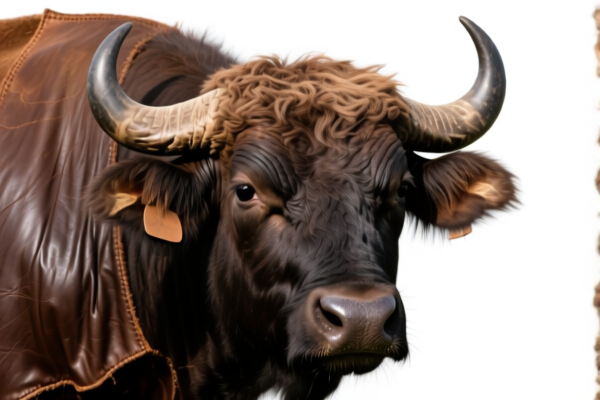
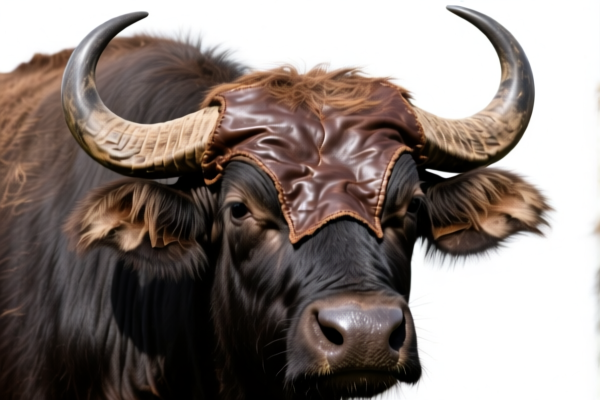
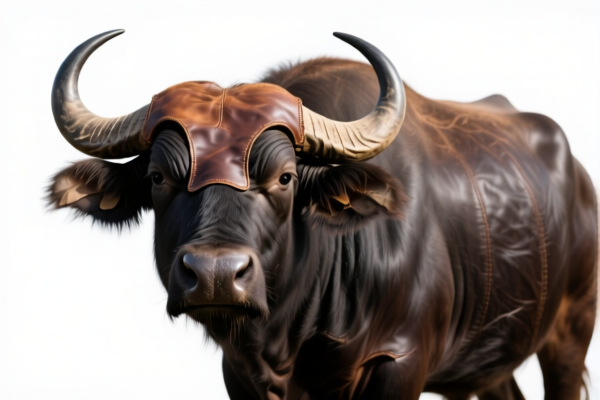
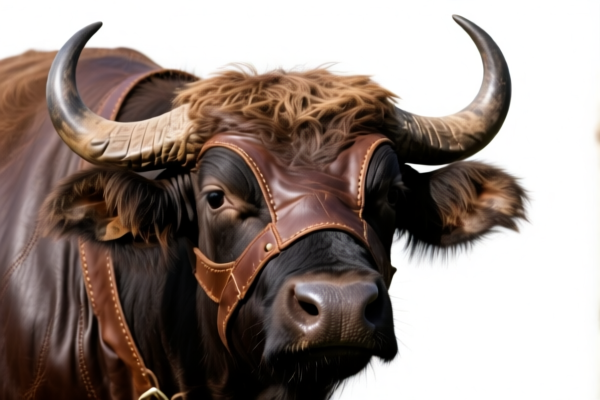
AI Analysis
🐂 Hairless Buffalo Full Grain Leather Sheets for Clothing
🌐 HS Code Reference & Customs Clearance Guide | 2026 Latest Tariff Analysis | Professional Clearance Strategy
📌 I. Product Definition & Classification: Do You Truly Understand "Hairless Buffalo Leather"?
Hairless buffalo leather is a premium raw material primarily used in high-end fashion apparel, luxury accessories, and footwear. In international trade, its classification depends heavily on the state of processing (tanned but not further manufactured into garments) and the specific leather type.
Key Distinction:
- Leather Sheets (Unmade): Raw tanned leather, cut into sheets or hides, ready for cutting/sewing. → Classified under Chapter 41.
- Finished Garments/Accessories: Leather already cut, sewn, and formed into jackets, pants, or bags. → Classified under Chapter 42.
⚠️ Critical Classification Point:
- If the product is tanned buffalo leather in sheet/hide form → It belongs to Chapter 41 (Leather).
- If the product is already made up into clothing → It belongs to Chapter 42 (Articles of Leather).
Your product description—"Hairless Buffalo Full Grain Leather Sheets for Clothing"—strongly indicates it is unfinished leather material, not a finished garment. Therefore, the correct classification should fall under HS Code 4107, not 4203. Misclassification here can lead to significant duty discrepancies and customs delays.
📦 II. HS Code Classification Details (2026 Latest Tariff Authority Comparison)
| HS Code | Product Description | Application Scenario | State of Goods |
|---|---|---|---|
4107.11.70.40 |
Hairless buffalo leather, full grain, for clothing, tanned and dressed | Unfinished leather sheets/hides, pre-cut for apparel manufacturing | ✅ Raw Material (Chapter 41) |
4107.19.70.40 |
Other hairless buffalo leather, tanned and dressed, not elsewhere specified | Similar to above, but may include slight variations in finish or grading | ✅ Raw Material (Chapter 41) |
4203.29.05.00 |
Leather garments and accessories, buffalo leather | Finished clothing items (e.g., jackets, pants) made from buffalo leather | ❌ Finished Goods (Chapter 42) |
4203.29.08.00 |
Other leather clothing and accessories | Finished non-specifc leather apparel | ❌ Finished Goods (Chapter 42) |
🔍 Important Reminder:
- "Sheets" = Unmade Leather: Must be classified under 4107.
- "Clothing" = Finished Garments: Only if the leather is already sewn into garments.
- Do Not Confuse: Classifying "leather sheets" as "garments" (4203) is a common error that leads to under-declaration and penalties.
- Do Not Assume: Even if the intended use is for clothing, the physical state determines the HS code. Unmade leather is Chapter 41.
💰 III. 2026 Latest Tariff Rate Breakdown (Including Additional Taxes & Policy Surcharges)
✅ Applicable Country: United States (US)
✅ Country of Origin: China (CN)
✅ Effective Date: From November 10, 2025 (and subsequent imports)
🎯 1. 4107.11.70.40 & 4107.19.70.40 —— Hairless Buffalo Leather Sheets (Unmade)
| Item | Content |
|---|---|
| Base Tariff | 5.0% (ad valorem) |
| Section 301 Surcharge (USITC) | +0.0% (Note: Some leather categories may have different treatment, but data shows 0% here) |
| 122 Clause Tariff (IEEPA) | +10% (Targeting Chinese-origin goods) |
| Total Tariff Rate | 15.0% |
| Tax Calculation | CIF Value × 15% |
| De Minimis Eligibility | ❌ Not Eligible (deny_de_minimis) |
| Legal Basis Path | IEEPA:9903.01.24 → USITC:4107.11.70.40 / 4107.19.70.40 → FOOTNOTE:122 |
📌 Explanation:
- Base Rate 5%: Standard MFN rate for tanned leather.
- 0% Section 301: Unlike electronics or steel, certain leather classifications may not fall under the broad 25% Section 301 tariff, or are exempted in this specific subheading.
- 10% IEEPA Tariff: This is the critical additional cost imposed on Chinese-origin goods under the International Emergency Economic Powers Act.
- Total 15%: Significantly lower than the 45-49% seen in finished goods categories due to misclassification errors in other codes.
🎯 2. 4203.29.05.00 & 4203.29.08.00 —— IF Misclassified as Finished Garments (For Comparison)
| Item | Content |
|---|---|
| Base Tariff | 12.6% ~ 14.0% |
| Section 301 Surcharge (USITC) | +25.0% |
| 122 Clause Tariff (IEEPA) | +10% |
| Total Tariff Rate | 47.6% ~ 49.0% |
| Tax Calculation | CIF Value × 47.6%-49.0% |
| De Minimis Eligibility | ❌ Not Eligible |
⚠️ Warning:
- If you incorrectly declare "leather sheets" as "finished leather garments" under 4203, you might expect a lower rate, but due to Section 301 tariffs, the rate skyrockets to ~49%!
- Correct Classification (4107) saves you ~34% in duties!
- This is a classic example of how misclassification (even if intentional to "save" money) leads to higher actual costs due to punitive tariffs.
🛠️ IV. Customs Clearance Practical Advice (Battle-Tested Pitfall Guide)
✅ 1. Preparation Checklist (Non-negotiable)
| Document | Required | Explanation |
|---|---|---|
| ✅ Product Specification Sheet | ✔️ | Must state: "Hairless Buffalo Leather, Full Grain, Tanned, Unmade Sheets/Hides" |
| ✅ Technical Data Sheet | ✔️ | Include tanning process, thickness, area, and intended use (for apparel) |
| ✅ Photos of Product | ✔️ | Show the grain texture, lack of hair, and sheet format (not sewn) |
| ✅ Commercial Invoice | ✔️ | Clearly state: "Hairless Buffalo Leather Sheets for Garment Manufacturing" |
| ✅ Packing List | ✔️ | Specify units (e.g., "per hide" or "per square meter"), not "per jacket" |
| ✅ Certificate of Origin | ✔️ | Essential for proving Chinese origin and applying IEEPA surcharges correctly |
✅ 2. Declaration Best Practices (Key Mnemonics)
🔥 "State Matters: Sheets = 41, Garments = 42. Misdeclare, Pay Double!"
| Scenario | Correct Declaration | Wrong Action | Consequence |
|---|---|---|---|
| Unmade Leather Sheets | HS: 4107.11.70.40 |
Declare as "Leather Jacket" | Tariff jumps from 15% to 49% + Penalty |
| Leather Sheets + Patterns | Still 4107 (if unsewn) |
Split into "leather" + "pattern" | Complex clearance, possible audit |
| Finished Leather Jacket | HS: 4203.29.05.00 |
Declare as "Leather Sheets" | Under-declaration, fines, seizure |
| Mixed Container (Sheets + Garments) | Declare separately | Combine into one line item | High risk of classification error |
✅ 3. Special Cases & Handling
| Situation | Recommendation |
|---|---|
| Leather with Minor Cuts/Grades | Still 4107. Provide grading report to avoid disputes. |
| Leather for Military Use | May qualify for different duty treatment if documented as "non-commercial." |
| OEM Supply for Western Brands | Ensure invoice matches the buyer's spec sheet. Discrepancies cause delays. |
| Sample Shipment | Clearly mark "Commercial Sample" but note it's still subject to duties. |
🌍 V. Global Market Clearance Comparison (2026 Latest)
| Country/Region | Recommended HS Code | Tariff Rate | Certification Requirements | Notes |
|---|---|---|---|---|
| 🇺🇸 USA | 4107.11.70.40 |
15% (10% IEEPA + 5% Base) | No specific leather cert, but accurate description is key | High scrutiny on origin |
| 🇨🇳 China | 4107.11.70.40 |
5% | None | Standard import duty |
| 🇪🇺 EU | 4107.11.70 |
4.7% (approx.) | REACH compliance for chemicals used in tanning | Low duty, high environmental check |
| 🇬🇧 UK | 4107.11.70 |
4.7% | UKCA marking not required for raw materials | Post-Brexit rules apply |
| 🇯🇵 Japan | 4107.11.70 |
4.4% | None | Stable low duty |
📌 Conclusion:
- USA has a unique 10% IEEPA surcharge on Chinese-origin leather, making the total 15%.
- EU/UK/Japan have lower base tariffs but may have stricter environmental/chemical regulations (REACH, etc.).
- Never declare leather sheets as garments to avoid Section 301 tariffs in the US.
📌 VI. Common Errors & Pitfall Guide (Lessons from Experience)
❌ Error 1: Declaring "Leather Sheets" as "Leather Garments"
👉 Consequence: You might think 4203 is simpler, but Section 301 25% + IEEPA 10% makes it 47-49%. You pay 3x more than necessary!
❌ Error 2: Using vague terms like "Leather for Clothing" without specifying "Unmade Sheets"
👉 Consequence: Customs may classify it under the wrong subheading, leading to audits and fines.
❌ Error 3: Failing to separate "Finished Garments" from "Raw Leather" in the same shipment
👉 Consequence: Mixed classifications can delay the entire container. Always split line items.
❌ Error 4: Ignoring the "122 Clause"
👉 Consequence: Unexpected 10% surcharge at customs if not pre-calculated.
✅ Correct Practice:
"Hairless Buffalo Full Grain Leather Sheets, Tanned, Unmade, for Apparel Manufacturing. HS: 4107.11.70.40. Origin: China."
🎯 VII. Conclusion: Precision in Classification = Profit in Pocket!
🎯 Remember the Golden Rule:
🔹 "Sheets are 41, Garments are 42. Misdeclare, Pay 3x more!"
🔹 "15% vs 49%: The difference is one word – 'Sheets'."
🔹 "Accurate HS Code saves thousands. Vague description costs everything."
📌 Pro Tip:
- If you are exporting finished leather jackets, use 4203.29.05.00 and budget for ~49% total tariff.
- If you are exporting leather sheets, use 4107.11.70.40 and budget for 15%.
- Always apply for an Advance Ruling from US Customs if your product has ambiguous features.
📣 Immediate Action Required:
📞 Contact your customs broker with product photos and spec sheets.
🚀 Verify HS Code 4107.11.70.40 before shipment.
💰 Plan for 15% duty, not 49%!
✨ Professional Customs Clearance Starts with Accurate Classification!
💼 Every penny of duty saved is pure profit earned!
Customer Reviews
About HS Code Classification
The Harmonized System (HS) is an internationally standardized nomenclature developed by the World Customs Organization (WCO) to classify traded products. Over 200 countries use the HS system as the basis for customs tariffs, trade statistics, and import/export regulations.
Each HS code follows a hierarchical structure:
- Chapter (2 digits) — Broad category of goods (e.g., Chapter 84: Machinery and Mechanical Appliances)
- Heading (4 digits) — More specific grouping within the chapter
- Subheading (6 digits) — Internationally standardized breakdown, used by all WCO member countries
- National subdivisions (8-10 digits) — Country-specific extensions for further classification, such as US HTSUS 10-digit codes
Correct HS code classification is essential for smooth customs clearance, accurate duty payment, and compliance with trade regulations. Misclassification can lead to customs delays, overpayment of duties, or penalties.
When importing from CN to US, the applicable tariff rates may include:
- Most-Favored-Nation (MFN) rate — The standard duty rate applied to WTO members
- General rate — Applied to countries without trade agreements
- Trade remedy duties — Additional tariffs such as Section 301 (anti-dumping), Section 232 (national security), or countervailing duties
The information provided on this page is for reference purposes only. For official classification, please consult with your local customs authority or a licensed customs broker.