Hairless Buffalo Full Grain Leather Sheets for Shoe Making
CN → US| HS Code | Tariff Rate | Origin | Destination | Doc |
|---|---|---|---|---|
| 4107996010 | 15.0% | CN | US | Official Doc |
| 4107994000 | 12.5% | CN | US | Official Doc |
Product Images
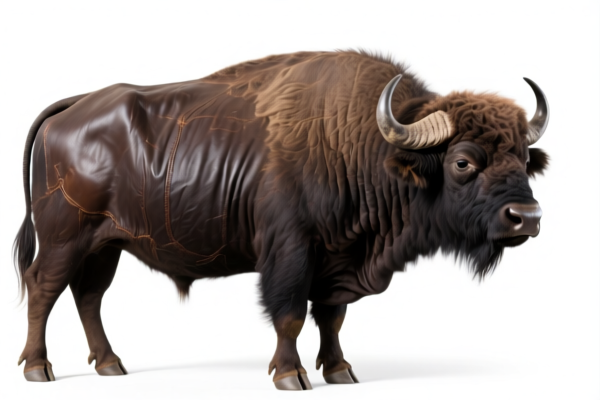
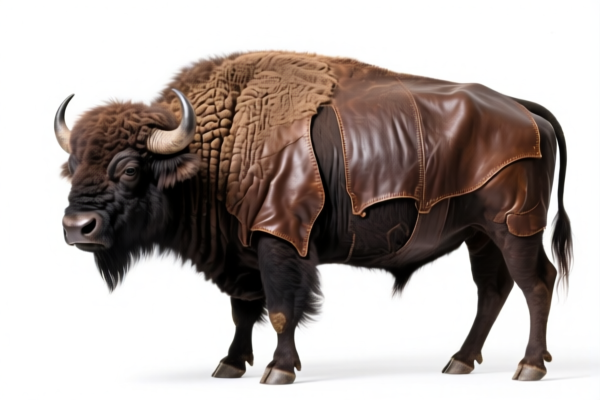
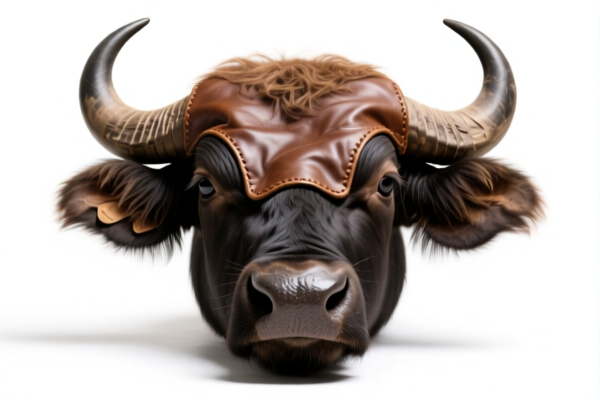
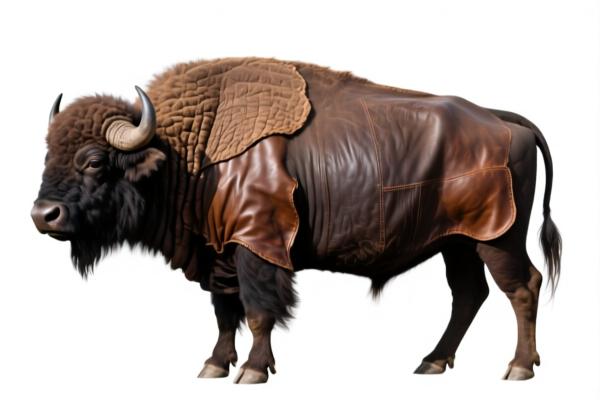
AI Analysis
🥾 Hairless Buffalo Full Grain Leather Sheets (Raw Material for Footwear)
🌐 HS Code Reference & Customs Clearance Guide | 2026 Latest Tariff Analysis | Professional Entry Strategy
📌 I. Product Definition & Classification: What Exactly Is "Buffalo Leather"?
Hairless Buffalo Full Grain Leather refers to the hide of the water buffalo (Bubalus bubalis) that has been tanned or crust-treated, retaining its original grain surface ("Full Grain"), with no hair/fur remaining ("Hairless"). It is a primary raw material for high-end footwear, leather goods, and upholstery.
⚠️ Key Classification Distinction:
- Bovine vs. Equine: Must be explicitly identified as "Buffalo" (a sub-category of Bovine). If mixed or unspecified, customs may default to general bovine rates, potentially causing delays or misclassification.
- Full Grain vs. Split: "Full Grain" means the outermost layer is intact. "Split" leather (the lower layers) falls under different sub-headings. Misdeclaring split as full grain can lead to penalties.
- Preparation Level: This product is "Further prepared after tanning or crusting" but is not parchment-dressed or leather of heading 4114 (chamois, etc.). It falls squarely under Heading 4107.
📦 II. HS Code Classification Details (2026 Authoritative对照)
Based on the provided data, there are two specific HS Codes for this product, distinguished by the specific tariff sub-categorization within "Other" bovine/equine leather.
| HS Code | Product Description | Key Characteristics | Tax Rate (Total) |
|---|---|---|---|
| 4107.99.40.00 | Leather, BoVine (Including Buffalo), Hairless, Other: Buffalo | Explicitly identified as Buffalo hide. No hair. Tanned/Crust. | 0.0% |
| 4107.99.60.10 | Leather, Bovine/Equine, Hairless, Other: Upper Leather; Sole Leather | Used for shoe uppers or soles. Often used when the specific "Buffalo" sub-category is not selected or for general "Upper/Sole" classification under "Other". | 0.0% |
🔍 Critical Note:
- Both codes listed in the data carry a 0.0% total tax rate (Base: 0.0%, Additional: 0.0%).
- 4107.99.40.00 is the more precise classification if the importer can strictly prove the material is Buffalo.
- 4107.99.60.10 is a broader "Other" category, specifically noting usage for Upper/Sole leather. If the buffalo origin is ambiguous, this code is often used for general bovine leather intended for footwear.
- Do not confuse with Heading 4114: This is not chamois, metallized, or patent leather.
💰 III. 2026 Latest Tariff Rate Breakdown (Detailed Tax Clauses)
✅ Applicable Market: Based on the provided data (likely China Export/Import or specific bilateral trade context where these 0% rates apply).
✅ Origin: Implied to be a jurisdiction where these specific HS codes enjoy 0% duty (e.g., intra-ASEAN, or specific duty-free lists).
✅ Validity: Current as of the provided data snapshot.
🎯 1. 4107.99.40.00 —— Buffalo Leather, Hairless, Other
| Item | Content |
|---|---|
| Base Tariff | 0.0% |
| Additional Tariff | 0.0% |
| Total Tariff | 0.0% |
| Tax Calculation | CIF Value × 0.0% = $0.00 |
| Exemption Eligibility | ✅ Yes (Duty-Free) |
| Legal Basis | HS Heading 4107 → Subheading .99 → .40.00 |
📌 Explanation:
- This code specifically captures Buffalo hides that do not fall under premium "Upper Leather" or "Sole Leather" specific quotas, or are classified under "Other" buffalo varieties.
- Zero Duty makes this highly competitive for bulk raw material import.
🎯 2. 4107.99.60.10 —— Other, Upper Leather; Sole Leather (BoVine/Equine)
| Item | Content |
|---|---|
| Base Tariff | 0.0% |
| Additional Tariff | 0.0% |
| Total Tariff | 0.0% |
| Tax Calculation | CIF Value × 0.0% = $0.00 |
| Exemption Eligibility | ✅ Yes (Duty-Free) |
| Legal Basis | HS Heading 4107 → Subheading .99 → .60.10 |
📌 Explanation:
- This code is explicitly linked to Footwear Materials ("Upper Leather; Sole Leather").
- Even if the leather is Buffalo, if it is designated for shoe parts, this code is appropriate.
- Zero Duty applies here as well, reflecting the importance of the footwear manufacturing supply chain in this tariff schedule.⚠️ Important:
- The provided data shows 0.0% for both. Do not assume standard MFN rates apply unless verified against the specific country's 2026 tariff book.
- If importing into the US or EU, these rates are NOT 0%. The data provided likely reflects a specific duty-free regime or origin (e.g., China import from ASEAN, or specific free trade agreement). Always verify the country of origin benefits.
🛠️ IV. Customs Clearance Practical Advice (Risk Avoidance Guide)
✅ 1. Document Preparation Checklist (Mandatory)
| Document | Required? | Description |
|---|---|---|
| ✅ Commercial Invoice | ✔️ | Must specify "Buffalo Leather", "Full Grain", "Hairless", and "For Footwear Use". |
| ✅ Packing List | ✔️ | Detail weight, volume, and number of hides/sheets. |
| ✅ Certificate of Origin | ✔️ | Critical to prove origin for 0% duty claims (if applicable via FTA). |
| ✅ Product Specification Sheet | ✔️ | Must include: Tanning method (Vegetable/Crust/Synthesis), Thickness, Grain Type (Full Grain vs Split). |
| ✅ Bill of Lading / Air Waybill | ✔️ | Standard transport docs. |
| ✅ Photos of Goods | ✔️ | Show the grain surface, edge, and any branding/hiding. |
✅ 2. Declaration Tips (Key Mantras)
🔥 "Specify 'Buffalo', Not Just 'Cow'; Define 'Full Grain', Not 'Split'; State 'For Shoes' if Applicable!"
| Scenario | Correct Declaration | Wrong Practice |
|---|---|---|
| Buffalo Hide | Explicitly state "Water Buffalo (Bubalus bubalis)" in description. | Just writing "Cow Leather" or "Bovine Leather" → May be rejected or audited. |
| Full Grain | Specify "Full Grain" and "No Split". | Writing "Split Leather" → Different HS Code, potentially different duty. |
| Usage | If for shoes, add "Intended for Shoe Upper/sole". | Omitting use → May fall under "Other" (4107.99.40.00) instead of "Upper/Sole" (4107.99.60.10). |
| Tanning Type | Specify if "Vegetable Tanned" or "Chrome Tanned" if required by destination country. | Vague terms like "Tanned Leather". |
✅ 3. Special Handling Cases
| Case | Recommendation |
|---|---|
| Mixed Hides (Buffalo + Cow) | Do NOT mix. Separate shipments. Mixing can invalidate the specific "Buffalo" HS Code and trigger general bovine rates (which may be higher). |
| Full Grain vs. Corrected Grain | If the grain is sanded or embossed, it may no longer be "Full Grain" in the strictest customs sense. Consult a broker. |
| Import into USA/EU | WARNING: The 0% rate in the data is NOT standard for US/EU imports from most countries. US MFN duty for 4107 is ~2-5%. EU is ~3-7%. The 0% data likely applies to a specific FTA or origin (e.g., China-ASEAN). Verify local tariff books. |
| Phytosanitary Requirements | Raw animal hides may require Phytosanitary Certificates or Veterinary Health Certificates to prevent disease. Check destination country biosecurity laws. |
🌍 V. Global Market Comparison (2026 Context)
| Market | Typical HS Code | Typical MFN Duty | Note |
|---|---|---|---|
| 🇺🇸 USA | 4107.99.50 / 4107.99.95 |
~2% - 5% | No 0% unless specific FTA (e.g., AGOA for Africa, but not Asia). |
| 🇪🇺 EU | 4107 21 / 4107 29 |
~3% - 7% | Strict animal health rules apply. |
| 🇨🇳 China (Import) | 4107.99.40.00 / 4107.99.60.10 |
0.0% (Per Data) | Data suggests duty-free for these specific sub-codes, possibly under FTA or specific policy. |
| 🇻🇳 Vietnam | 4107.99.10 |
~0% - 5% | ASEAN FTA may reduce to 0%. |
📌 Conclusion:
- The 0% rate is highly specific. If you are importing into a country other than the one generating this data, do NOT assume 0%.
- For USA/EU, budget for 2-7% duty + potential anti-dumping or environmental taxes.
📌 VI. Common Errors & Pitfalls (Lessons Learned)
❌ Error 1: Declaring "Buffalo Leather" as "Cow Leather" to avoid specific Buffalo inspections.
👉 Consequence: If inspected and found to be Buffalo, penalties for misdeclaration. Buffalo hides are often larger/thicker; weight discrepancies trigger audits.
❌ Error 2: Misidentifying "Split Leather" as "Full Grain".
👉 Consequence: Wrong HS Code. Split leather is cheaper. Customs may assess higher value backdated duties.
❌ Error 3: Ignoring Phytosanitary Certs.
👉 Consequence: Goods destroyed or returned at border. Animal products are strictly regulated.
❌ Error 4: Assuming 0% Duty for US/EU Imports.
👉 Consequence: Underpayment of taxes → Fines, penalties, and delayed release.
✅ Correct Practice:
"Water Buffalo Hide, Full Grain, Hairless, Tanned, For Footwear Upper. Origin: [Country]. HS Code: 4107.99.40.00."
🎯 VII. Conclusion: Precision Drives Profit!
🎯 Remember the Mantra:
🔹 "Buffalo is Not Cow. Full Grain is Not Split. Check Origin for 0% Duty."
🔹 "Docs Must Match: Invoice, Spec Sheet, and Certificate."
📌 Pro Tip:
If your leather is certified (e.g., LWG - Leather Working Group), include the certificate. Many modern brands require environmental compliance. This does not change the HS Code but speeds up clearance for premium buyers.
📣 Immediate Action:
📞 Contact your customs broker to confirm the 0% duty eligibility based on the country of origin.
🚀 Ensure Phytosanitary Certs are in order to avoid border delays.
✨ Smart Classification = Smarter Margins!
💼 Don't let tariff mistakes eat your leather profits!
Customer Reviews
About HS Code Classification
The Harmonized System (HS) is an internationally standardized nomenclature developed by the World Customs Organization (WCO) to classify traded products. Over 200 countries use the HS system as the basis for customs tariffs, trade statistics, and import/export regulations.
Each HS code follows a hierarchical structure:
- Chapter (2 digits) — Broad category of goods (e.g., Chapter 84: Machinery and Mechanical Appliances)
- Heading (4 digits) — More specific grouping within the chapter
- Subheading (6 digits) — Internationally standardized breakdown, used by all WCO member countries
- National subdivisions (8-10 digits) — Country-specific extensions for further classification, such as US HTSUS 10-digit codes
Correct HS code classification is essential for smooth customs clearance, accurate duty payment, and compliance with trade regulations. Misclassification can lead to customs delays, overpayment of duties, or penalties.
When importing from CN to US, the applicable tariff rates may include:
- Most-Favored-Nation (MFN) rate — The standard duty rate applied to WTO members
- General rate — Applied to countries without trade agreements
- Trade remedy duties — Additional tariffs such as Section 301 (anti-dumping), Section 232 (national security), or countervailing duties
The information provided on this page is for reference purposes only. For official classification, please consult with your local customs authority or a licensed customs broker.