Hairless Horse Skin Collectible Side Panel
CN → US| HS Code | Tariff Rate | Origin | Destination | Doc |
|---|---|---|---|---|
| 4106910000 | 38.3% | CN | US | Official Doc |
| 4106920000 | 38.3% | CN | US | Official Doc |
| 4101901040 | 17.5% | CN | US | Official Doc |
| 4101907000 | 20.8% | CN | US | Official Doc |
| 4107917090 | 15.0% | CN | US | Official Doc |
Product Images
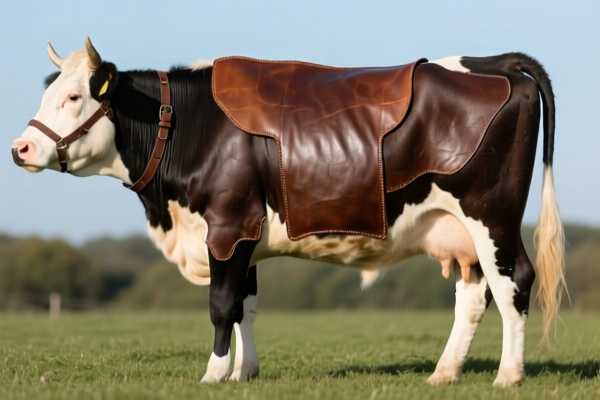
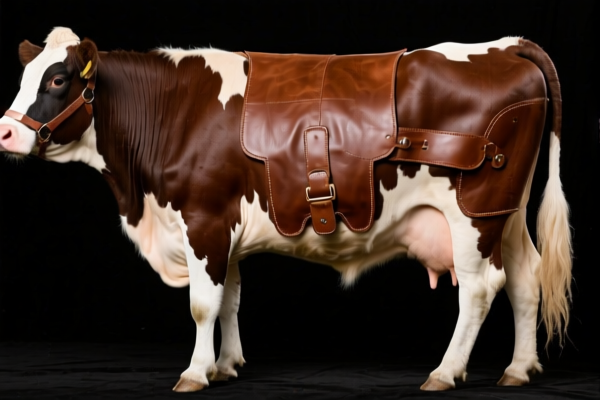
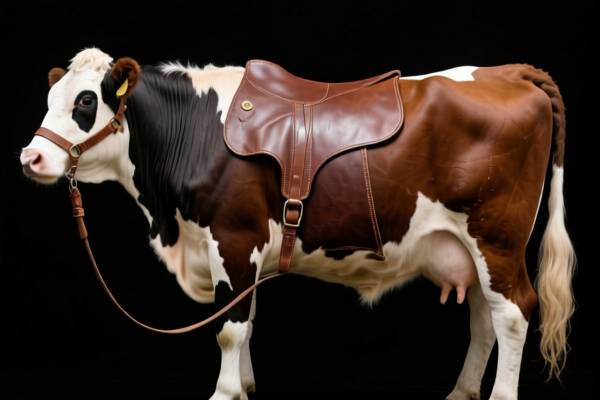
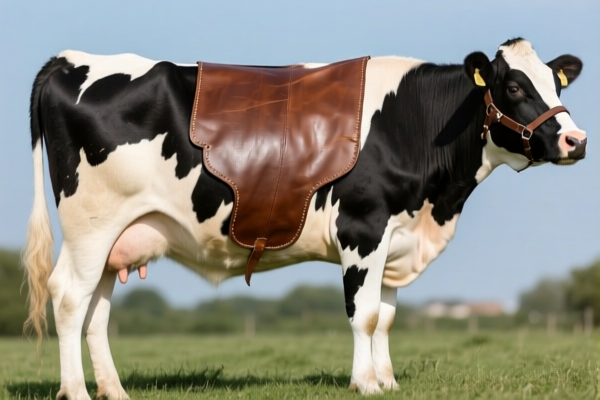
AI Analysis
🐴 Hairless Horse Skin Collectible Side Panel (Raw/Partially Tanned)
🌐 HS Code Reference & Customs Clearance Guide | 2026 Latest Tariff Analysis | Professional Customs Strategy for US Imports
📌 I. Product Definition & Classification: What Exactly is a "Hairless Horse Skin Side Panel"?
This product refers to horsehide leather side panels that have been processed to remove hair (de-haired) but remain in a semi-tanned or raw state, suitable for collectible, artistic, or further manufacturing purposes. In international trade, the classification depends heavily on the degree of processing and the specific part of the hide used.
Key Distinctions: 1. Raw/Un-tanned Hides (Chapter 4101): If the skin is essentially raw, salted, or only briefly limed without significant tanning, it falls under "Raw Hides and Skins." 2. Chrome-Tanned or Vegetable-Tanned Hides (Chapter 4106): If the skin has undergone a tanning process (even if incomplete or "semi-tanned"), it falls under "Leather." 3. "Hairless" Condition: This is a critical descriptor. Hair removal without tanning usually keeps it in Chapter 4101. Hair removal with tanning moves it to Chapter 4106.
⚠️ Critical Note for Customs:
- "Side Panel" (Loin/Back area): Often classified differently from "belly" or "cheek" sections due to quality and thickness.
- "Collectible": This term is not an HS Code descriptor. Customs will ignore "collectible" and focus on the material (horsehide) and process (tanned/untanned).
📦 II. HS Code Classification Details (2026 Latest Tariff Authority Cross-Reference)
Based on the provided data, here are the five possible classifications for "Hairless Horse Skin Collectible Side Panel" depending on the precise processing stage:
| HS Code | Product Description (Customs Interpretation) | Processing Stage | Key Characteristic |
|---|---|---|---|
| 4106.91.00.00 | Hairless horse skin side panels, semi-tanned or partially processed, meeting hairless condition | Semi-Tanned | Processed but not fully finished; specific to "side panels" with hair removed. |
| 4106.92.00.00 | Hairless horse skin side panels, meeting raw skin characteristics & hairless condition | Raw/Un-tanned | Essentially raw hides that have been hair-deprived; minimal processing. |
| 4101.90.10.40 | Other raw horsehide sections (non-ventral), inferred as primary raw material form | Raw (Other Sections) | Classified under "Other parts" of raw hides, likely due to specific cut/shape not covered by standard "sides." |
| 4101.90.70.00 | Raw horsehide side panels, un-tanned and un-further processed | Raw (Standard Side) | Fits the classic definition of raw hides and skins, specifically side cuts, without tanning. |
| 4107.91.70.90 | Other tanned hides and skins (non-sheep/goat), for unspecified uses | Tanned (Miscellaneous) | Used if the product is fully tanned but doesn’t fit specific "side panel" sub-categories; general "other" tanned leather. |
🔍 Classification Logic:
- 4106 vs. 4101: The core debate is whether the skin is "Tanned" (4106) or "Raw" (4101).
- "Semi-tanned" (4106.91) is a distinct category for skins that have undergone initial tanning processes but are not yet ready for final use.
- "Collectible" is a commercial term, not a technical one. Customs will classify based on material science, not end-use.
💰 III. 2026 Latest Tariff Rate Breakdown (Including Surtaxes & Policy Add-ons)
✅ Applicable Country: United States (US)
✅ Origin: China (CN)
✅ Effective Date: November 10, 2025 onwards (including subsequent imports)
🎯 1. 4106.91.00.00 & 4106.92.00.00 — Hairless Horse Skin Sides (Semi-Tanned/Raw)
| Item | Content |
|---|---|
| Base Duty Rate | 3.3% (ad valorem) |
| Section 301 Surtax | +25.0% (USITC Footnote 9903.88.01) |
| 122 Clause Tariff | +10.0% (Specific to certain leather/skin products under specific provisions) |
| Total Tariff Rate | 38.3% |
| Tax Calculation | CIF Value × 38.3% |
| De Minimis Exemption | ❌ Not Eligible (deny_de_minimis) |
| Legal Basis Path | USITC:4106.91.00.00 → FOOTNOTE:9903.88.01 → IEEPA:9903.01.25 |
📌 Explanation:
- These codes carry the highest tariff burden in this dataset.
- The 3.3% base is standard for leather imports.
- The 25% Section 301 is the major cost driver for Chinese-origin goods.
- The 10% "122 Clause" adds another layer, totaling 38.3%. This is a very high cost factor.
🎯 2. 4101.90.10.40 — Other Raw Horsehide Sections (Primary Form)
| Item | Content |
|---|---|
| Base Duty Rate | 0.0% |
| Section 301 Surtax | +7.5% (Reduced Section 301 applicability for certain raw hides) |
| 122 Clause Tariff | +10.0% |
| Total Tariff Rate | 17.5% |
| Tax Calculation | CIF Value × 17.5% |
| De Minimis Exemption | ❌ Not Eligible |
| Legal Basis Path | USITC:4101.90.10.40 → FOOTNOTE:9903.88.01 → IEEPA:9903.01.24 |
📌 Note:
- This is a significantly lower rate (17.5% vs 38.3%).
- Strategic Insight: If the product can be legitimately classified as "Raw" (4101) rather than "Semi-tanned" (4106), you can save 20.8% in duties.
- However, you must prove the skin is not tanned. If any tanning agents were used, customs may reject this code.
🎯 3. 4101.90.70.00 — Raw Horsehide Side Panels (Un-tanned)
| Item | Content |
|---|---|
| Base Duty Rate | 3.3% |
| Section 301 Surtax | +7.5% |
| 122 Clause Tariff | +10.0% |
| Total Tariff Rate | 20.8% |
| Tax Calculation | CIF Value × 20.8% |
| De Minimis Exemption | ❌ Not Eligible |
| Legal Basis Path | USITC:4101.90.70.00 → FOOTNOTE:9903.88.01 → IEEPA:9903.01.24 |
📌 Note:
- Slightly higher than 4101.90.10.40 due to the 3.3% base rate.
- Still much cheaper than the 4106 codes.
- Applicable if the side panels are clearly raw and un-tanned.
🎯 4. 4107.91.70.90 — Other Tanned Hides (Non-Sheep/Goat)
| Item | Content |
|---|---|
| Base Duty Rate | 5.0% |
| Section 301 Surtax | 0.0% (Exempt or not applicable to this specific sub-category) |
| 122 Clause Tariff | +10.0% |
| Total Tariff Rate | 15.0% |
| Tax Calculation | CIF Value × 15.0% |
| De Minimis Exemption | ❌ Not Eligible |
| Legal Basis Path | USITC:4107.91.70.90 → FOOTNOTE:9903.88.01 |
📌 Strategic Insight:
- This is the lowest total tariff (15.0%) in the dataset.
- However, it applies only if the leather is fully tanned and fits the "other" category.
- Risk: If customs determines the product is not "fully tanned" or is specifically a "side panel" (which might fall under 4106), this classification could be challenged.
- Best for: Fully finished, tanned leather panels that do not fit other specific tanned leather sub-codes.
🛠️ IV. Customs Clearance Practical Advice (Battle-Tested Pitfall Avoidance)
✅ 1. Preparation Checklist (Mandatory)
| Document | Required | Explanation |
|---|---|---|
| ✅ Product Specification Sheet | ✔️ | Must detail: Hair removal method, tanning process (if any), thickness, dimensions. |
| ✅ Chemical Composition Report | ✔️ | Crucial to prove raw vs. tanned. If tanned, list agents used. If raw, confirm no tanning chemicals. |
| ✅ High-Res Photos (Including Texture) | ✔️ | Show the "hairless" condition clearly. Show cross-section if possible. |
| ✅ Commercial Invoice | ✔️ | Must accurately describe as "Horsehide Side Panels," NOT "Collectible Art" (which raises red flags). |
| ✅ Bill of Lading / Packing List | ✔️ | Clearly state quantity, weight, and HS Code. |
| ✅ Origin Certificate (CO) | ✔️ | Required for Section 301 determination. |
✅ 2. Declaration Tips (Key Mantras)
🔥 “Raw vs. Tanned is Key, 15% vs. 38% is Life!”
| Scenario | Correct Declaration | Wrong Declaration |
|---|---|---|
| Un-tanned, Hair-Removed | 4101.90.70.00 (20.8%) |
4106.91.00.00 (38.3%) → Overpay 17.5% |
| Semi-Tanned | 4106.91.00.00 (38.3%) |
4101.90.70.00 (20.8%) → Audit Risk, Back Taxes + Penalties |
| Fully Tanned, General Use | 4107.91.70.90 (15.0%) |
4106.92.00.00 (38.3%) → Overpay 23.3% |
| Mislabeling as "Leather Goods" | ❌ Never | 4107.91.70.90 is for hides, not finished goods. If it's a bag, it's different. |
📌 Critical Advice:
- "Collectible" is a trap. Do not use it in the customs description. Use "Raw Horsehide Side Panel" or "Semi-Tanned Horsehide Panel."
- Prove the Process: If declaring 4107 (15%), you must prove it is fully tanned. If it’s only partially processed, customs will move it to 4106 (38.3%).
- If declaring 4101 (Raw), you must prove no tanning occurred. If any tanning agent is detected, you face penalties and reclassification to 4106 or 4107.
✅ 3. Special Case Handling
| Situation | Handling Strategy |
|---|---|
| Ambiguous "Semi-Tanned" Status | Provide lab test results showing chromic/vegetable content. If low, argue for 4101. If high, accept 4106. |
| "Side Panel" Specificity | If the shape is irregular, argue for 4101.90.10.40 (Other raw) to potentially get 17.5% if it qualifies as "raw." |
| Fully Finished Leather | If the product is dyed, finished, and ready for manufacturing, 4107.91.70.90 (15%) is the best option. Ensure it’s not "specifically tanned for fur" which has different codes. |
| Small Quantity (De Minimis) | ❌ No Exemption. All codes listed are deny_de_minimis. You must file a formal entry. |
🌍 V. Global Market Comparison (2026 Update)
| Country/Region | Recommended HS Code | Total Tariff | Certification | Notes |
|---|---|---|---|---|
| 🇺🇸 USA | 4107.91.70.90 |
15.0% | None Specific | Best Rate if fully tanned. Avoid 4106 (38.3%). |
| 🇨🇳 China | 4101.90.70.00 |
5.0-10% | None | Lower import duties for raw materials. |
| 🇪🇺 EU | 4107.91 |
6.5% | CE/RoHS (if applicable) | No Section 301 equivalent. |
| 🇬🇧 UK | 4107.91 |
6.0% | None | Post-Brexit tariff alignment. |
| 🇯🇵 Japan | 4107.91 |
5.0% | None | Competitive rate. |
📌 Conclusion:
- The USA is the most expensive market due to Section 301 and 122 Clause tariffs.
- Strategy: If your product is fully tanned, fight for 4107.91.70.90 (15%). If raw, aim for 4101.90.10.40 (17.5%). Avoid 4106 unless necessary.
📌 VI. Common Mistakes & Pitfalls (Lessons Learned)
❌ Mistake 1: Declaring "Hairless Horse Skin" as 4106.91.00.00 when it is actually fully tanned.
👉 Consequence: You pay 38.3% instead of 15.0%. Loss of 23.3% margin!
❌ Mistake 2: Declaring as 4101 (Raw) when traces of tanning are found.
👉 Consequence: Customs rejects entry, imposes penalties, and reclassifies to 4106 (38.3%). Back taxes + Fines!
❌ Mistake 3: Using "Collectible" in the customs description.
👉 Consequence: Customs flags for "misuse of commercial terms" or demands extra documentation. Delays!
❌ Mistake 4: Assuming small shipments qualify for De Minimis.
👉 Consequence: All these HS Codes are deny_de_minimis. Even $500 shipment requires formal entry. Administrative Cost Increase!
✅ Correct Approach:
"Horsehide Side Panels, Hair-Removed, [Raw/Semi-Tanned/Fully-Tanned], for Manufacturing Use, Model XYZ, No Tanning Agents (if raw) or Chrome-Tanned (if tanned)."
🎯 VII. Conclusion: Precision Classification Saves Money!
🎯 Remember the Mantra:
🔹 “Raw is 17-20%, Tanned is 15%, Semi-Tanned is 38%!”
🔹 “Don’t call it ‘Collectible’ – Call it ‘Leather’!”
🔹 “122 Clause hits all, but Section 301 is the big killer!”
📌 Pro Tip:
If you are importing fully tanned horsehide, ensure your supplier provides a Tanning Certificate proving it meets the definition of "fully tanned" for 4107.91.70.90. This can save you 23.3% in duties compared to the semi-tanned category.
For raw hides, ensure no tanning agents are present to qualify for 4101.90.10.40 (17.5%).
📣 Immediate Action:
📞 Consult a licensed US Customs Broker.
📋 Provide Lab Test Results on tanning status.
🚀 Apply for Advance Ruling (Pre-Submission) to lock in your HS Code and avoid post-clearance audits.
✨ Professional Customs Clearance Starts with Accurate Classification!
💼 Every Percentage Point Saved is Pure Profit!
Customer Reviews
About HS Code Classification
The Harmonized System (HS) is an internationally standardized nomenclature developed by the World Customs Organization (WCO) to classify traded products. Over 200 countries use the HS system as the basis for customs tariffs, trade statistics, and import/export regulations.
Each HS code follows a hierarchical structure:
- Chapter (2 digits) — Broad category of goods (e.g., Chapter 84: Machinery and Mechanical Appliances)
- Heading (4 digits) — More specific grouping within the chapter
- Subheading (6 digits) — Internationally standardized breakdown, used by all WCO member countries
- National subdivisions (8-10 digits) — Country-specific extensions for further classification, such as US HTSUS 10-digit codes
Correct HS code classification is essential for smooth customs clearance, accurate duty payment, and compliance with trade regulations. Misclassification can lead to customs delays, overpayment of duties, or penalties.
When importing from CN to US, the applicable tariff rates may include:
- Most-Favored-Nation (MFN) rate — The standard duty rate applied to WTO members
- General rate — Applied to countries without trade agreements
- Trade remedy duties — Additional tariffs such as Section 301 (anti-dumping), Section 232 (national security), or countervailing duties
The information provided on this page is for reference purposes only. For official classification, please consult with your local customs authority or a licensed customs broker.