Hairless Horsehide
CN → USProduct Images
AI Analysis
🐎 Hairless Horsehide (Horsehide Without Hair)
🌐 HS Code Reference & Customs Clearance Guide | 2026 Latest Tariff Breakdown | Professional Import Strategy
📌 One, Product Definition & Classification: Do You Really Know "Hairless Horsehide"?
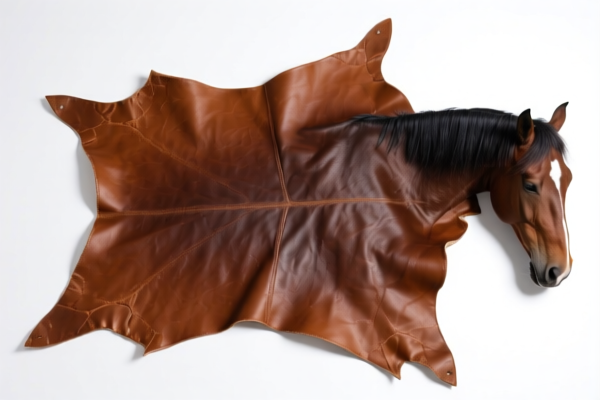
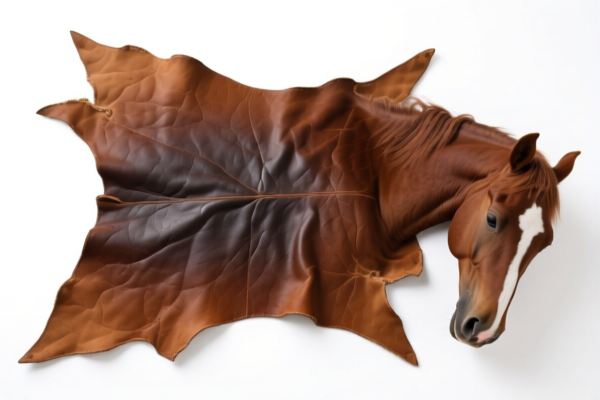
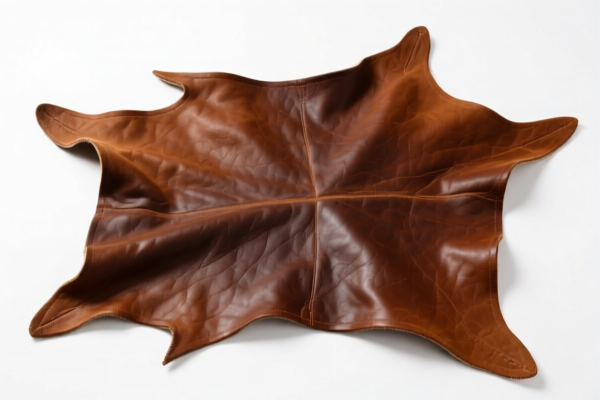
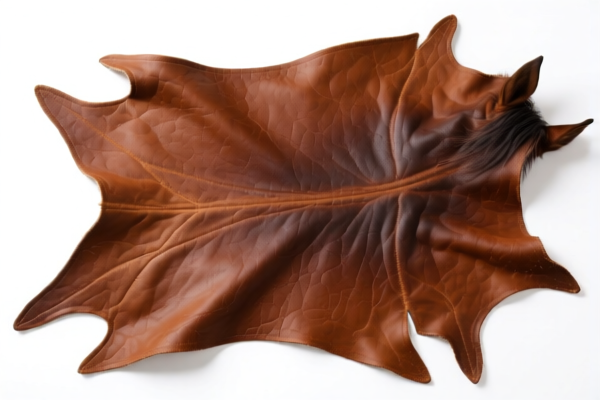
Hairless horsehide — also known as "dehaired horsehide" or "finished horse leather" — refers to horsehide that has undergone full dehairing, liming, and tanning processes, resulting in a smooth, pliable leather surface without any hair or follicles remaining. It is not raw hide, nor is it a partial product.
⚠️ Critical Distinction:
- If the hide still has hair, follicles, or epidermis intact → Not hairless → Not eligible for this HS code
- If the hide is fully dehaired, tanned, and finished (e.g., for shoes, bags, upholstery) → Correctly classified under 4107.90.00.00
📦 Two, HS Code Classification Details (2026 Latest Tariff Authority Match)
| HS Code | Product Description | Applicable Use Case | Hair Present? | Tanned? |
|---|---|---|---|---|
4107.90.00.00 |
Other horsehide, hairless, tanned or otherwise prepared for use as leather | Leather goods, footwear, handbags, furniture, automotive interiors | ❌ No | ✅ Yes |
4101.10.00.00 |
Raw horsehide, with hair | Unprocessed raw material, for tanneries | ✅ Yes | ❌ No |
4107.10.00.00 |
Horsehide, not hairless, tanned or otherwise prepared | Partially processed hides, still with hair | ✅ Yes | ✅ Yes |
4114.90.00.00 |
Other leather (not bovine, equine, or ovine), not tanned or prepared | Unprocessed leather scraps, unused material | ❌ No | ❌ No |
4115.90.00.00 |
Waste and scrap of leather (including hairless horsehide) | Recycled leather fragments, trimmings | ❌ No | ✅ Yes (if tanned) |
🔍 Key Insight:
- Only fully dehaired, tanned, and finished horsehide qualifies for4107.90.00.00
- If the product is not tanned, even if hairless → Not eligible → Must be declared under4114.90.00.00
- Do not use4107.90.00.00for raw, unprocessed, or partially processed hides
💰 Three, 2026 Latest Tariff Rate Breakdown (Including Additional Duties & Policy Charges)
✅ Applicable Country: United States (US)
✅ Origin: China (CN)
✅ Effective Date: November 10, 2025 (inclusive of future imports)
🎯 1. 4107.90.00.00 — Hairless Horsehide, Tanned or Otherwise Prepared
| Item | Details |
|---|---|
| Base Duty Rate | 0% (ad valorem) |
| USITC Additional Duty | +25% (under Section 301, U.S. Trade Act) |
| IEEPA Additional Duty | +10% (International Emergency Economic Powers Act, targeting China/HK) |
| Total Effective Duty | 35% |
| Tax Calculation | CIF Value × 35% |
| De Minimis Threshold | ❌ Not applicable (denied under 19 U.S.C. § 1304) |
| Legal Basis Path | IEEPA:9903.01.25 → IEEPA:9903.01.24 → USITC:4107.90.00.00 → FOOTNOTE:9903.88.01 |
📌 Explanation:
- The 25% USITC duty comes from Section 301 tariffs on Chinese goods deemed to have unfair trade practices.
- The 10% IEEPA duty is triggered under national emergency powers for China-origin goods.
- Combined, this results in 35% total duty, which is high but lower than panels or electronics.
- No de minimis exemption → even small shipments (under $800) are subject to full duty.
🛠️ Four, Customs Clearance Best Practices (Real-World Pro Tips)
✅ 1. Required Documentation Checklist (Must-Have)
| Document | Required? | Notes |
|---|---|---|
| ✅ Product Specification Sheet | ✔️ | Include thickness, tanning method (vegetable/Chrome), finish type (aniline, semi-aniline) |
| ✅ Tanning Process Certificate | ✔️ | Proof of full dehairing and tanning (e.g., lab report, tannery certificate) |
| ✅ Product Photos (with grain, edge, and label) | ✔️ | Must show smooth surface, no hair, and brand/model |
| ✅ Third-Party Test Report | ✔️ | REACH, RoHS, SVHC (if applicable), especially for EU/US markets |
| ✅ Commercial Invoice | ✔️ | Clearly state: "Hairless Horsehide, Tanned, for Leather Goods" |
| ✅ Certificate of Origin (CO) | ✔️ | If from Vietnam, Mexico, or Thailand, may qualify for IEEPA exemption |
| ✅ Packing List | ✔️ | Show weight, quantity, and whether packed as rolls or sheets |
✅ 2. Declaration Strategy (Golden Rules)
🔥 "No hair, no tanning, no code — tanned and hairless? Use 4107.90.00.00!"
| Scenario | Correct HS Code | Wrong Practice |
|---|---|---|
| Fully tanned, hairless horsehide (e.g., for handbags) | 4107.90.00.00 |
Misclassified as 4101.10.00.00 → 35% duty |
| Raw horsehide with hair | 4101.10.00.00 |
Misreported as finished leather → 35% duty |
| Horsehide with hair, but partially tanned | 4107.10.00.00 |
Not eligible for 4107.90.00.00 |
| Scrap leather (no hair, tanned) | 4115.90.00.00 |
Not for finished goods |
| Horsehide used in automotive seats | 4107.90.00.00 |
✅ Correct — even if used in vehicles |
✅ 3. Special Cases Handling
| Situation | Recommended Action |
|---|---|
| OEM leather for luxury brands | Provide customer contract + tanning process documentation |
| Horsehide with minor hair remnants | Do not declare as 4107.90.00.00 → Risk of rejection |
| Leather from non-China origin (e.g., Vietnam, Mexico) | Apply for IEEPA exemption → Duty drops to 0% |
| Leather used in medical or military gear | Apply for special-use exemption — requires prior approval |
| Leather with embossed or printed design | Still qualifies under 4107.90.00.00 — design doesn’t change classification |
🌍 Five, Global Customs Comparison (2026 Latest)
| Country/Region | Recommended HS Code | Duty Rate | Certification Required | Notes |
|---|---|---|---|---|
| 🇺🇸 United States | 4107.90.00.00 |
35% (China origin) | FDA (if for medical), REACH | IEEPA + USITC tariffs apply |
| 🇨🇳 China | 4107.90.00.00 |
0% | CCC (if for certain uses) | No additional tariffs |
| 🇪🇺 European Union | 4107.90.00.00 |
0% (if CE & REACH compliant) | CE, REACH, SVHC | No extra duties |
| 🇦🇺 Australia | 4107.90.00.00 |
5% | RCM | No IEEPA/USITC impact |
| 🇯🇵 Japan | 4107.90.00.00 |
0% | PSE | No additional taxes |
📌 Takeaway:
- The U.S. is the only major market imposing 35% duty on Chinese-origin hairless horsehide
- Vietnam/Mexico-origin horsehide can avoid IEEPA tariffs → 0% duty
- Always verify origin before shipment
📌 Six, Common Mistakes & Risk Avoidance (Learn from Others’ Errors)
❌ Mistake 1: Declaring raw horsehide (with hair) as "hairless horsehide"
👉 Result: Duty mismatch → $10,000+ in penalties + delayed release
❌ Mistake 2: Using 4107.90.00.00 for un-tanned hairless hide
👉 Result: Incorrect classification → 35% duty applied incorrectly → refund denied
❌ Mistake 3: Not providing tanning process proof
👉 Result: Customs may reject the declaration → return or destruction
❌ Mistake 4: Packing hairless horsehide with hair remnants in the same batch
👉 Result: Entire shipment may be rejected — no partial clearance
✅ Correct Declaration Example:
"Hairless Horsehide, Chrome-Tanned, 1.2 mm Thickness, Aniline Finish, for Handbags, 100% Dehaired, No Hair, Certificate of Tanning Process Attached, Origin: Vietnam"
🎯 Seven, Conclusion: Accurate Classification = Cost Control & Smooth Clearance
🎯 Remember the Mantra:
🔹 "No hair, tanned, finished? Use 4107.90.00.00 — don’t overpay!"
🔹 "If hair remains, it’s raw — use 4101.10.00.00!"
🔹 "Origin matters — Vietnam/Mexico = 0% duty!"
📌 Pro Tip:
If your horsehide is originating from Vietnam, Mexico, Thailand, or Malaysia, apply for IEEPA exemption — duty drops to 0%.
✅ Request an Advance Ruling (Pre-Clearance) from U.S. CBP — avoid surprises.
📣 Take Action Now:
📞 Contact a specialized leather customs broker
📂 Submit product photos + tanning certificate + origin proof
🚀 Get your HS Code pre-approved — avoid delays, penalties, and overpayment!
✨ Expert Customs, One Classification at a Time!
💼 Your leather’s value depends on how you classify it — get it right the first time!
Customer Reviews
About HS Code Classification
The Harmonized System (HS) is an internationally standardized nomenclature developed by the World Customs Organization (WCO) to classify traded products. Over 200 countries use the HS system as the basis for customs tariffs, trade statistics, and import/export regulations.
Each HS code follows a hierarchical structure:
- Chapter (2 digits) — Broad category of goods (e.g., Chapter 84: Machinery and Mechanical Appliances)
- Heading (4 digits) — More specific grouping within the chapter
- Subheading (6 digits) — Internationally standardized breakdown, used by all WCO member countries
- National subdivisions (8-10 digits) — Country-specific extensions for further classification, such as US HTSUS 10-digit codes
Correct HS code classification is essential for smooth customs clearance, accurate duty payment, and compliance with trade regulations. Misclassification can lead to customs delays, overpayment of duties, or penalties.
When importing from CN to US, the applicable tariff rates may include:
- Most-Favored-Nation (MFN) rate — The standard duty rate applied to WTO members
- General rate — Applied to countries without trade agreements
- Trade remedy duties — Additional tariffs such as Section 301 (anti-dumping), Section 232 (national security), or countervailing duties
The information provided on this page is for reference purposes only. For official classification, please consult with your local customs authority or a licensed customs broker.