Hairless Reptile Leather Blanket
CN → US| HS Code | Tariff Rate | Origin | Destination | Doc |
|---|---|---|---|---|
| 4205008000 | 35.0% | CN | US | Official Doc |
| 4202213000 | 40.3% | CN | US | Official Doc |
| 4205006000 | 39.9% | CN | US | Official Doc |
| 4203403000 | 39.9% | CN | US | Official Doc |
| 4205008000 | 35.0% | CN | US | Official Doc |
Product Images
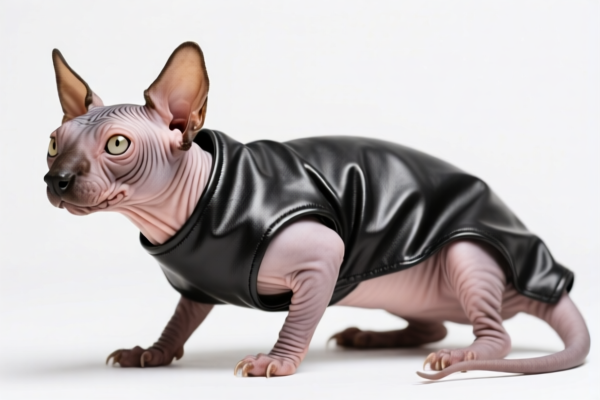
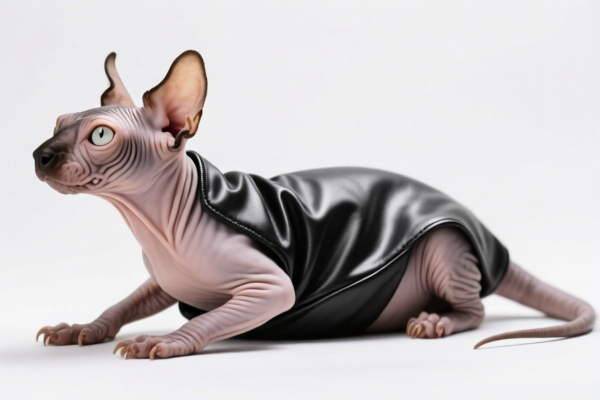
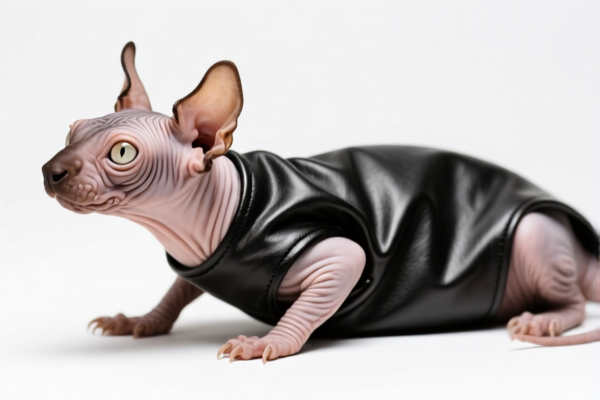

AI Analysis
🦎 Hairless Reptile Leather Blanket
🌐 HS Code Reference & Customs Clearance Guide | 2026 Latest Tariff Analysis | Professional Compliance Strategy
📌 I. Product Definition & Classification: What is a "Hairless Reptile Leather Blanket"?
A Hairless Reptile Leather Blanket is a specialized luxury bedding or decorative item made from the processed skin of hairless reptiles (such as monitor lizards, certain snakes, or geckos, depending on regional nomenclature, but specifically "hairless" here refers to the texture or specific species classification in trade). In international trade, it is classified under Chapter 42: Articles of Leather; Saddlery and Harness; Travel Goods, Handbags and Similar Containers.
Key Distinction: * Reptile Leather vs. Standard Leather: Reptile skins are considered "leather" but often have specific subheadings. However, "blankets" are not traditional outerwear. If it is a bed covering, it might be confused with textiles (Chapter 63). Crucially, the provided data classifies it as a Leather Good (Chapter 42), implying it is treated as a finished leather article, not a textile blanket. * "Hairless" Descriptor: This likely refers to the finish (smooth, non-scaly texture) or a specific trade term for certain processed reptile skins. The data explicitly uses this term for HS codes 4205.00.80.00.
⚠️ Key Classification Point:
- If classified as a finished leather article (e.g., a decorative throw, pillow, or non-textile cover) → 4205.00.80.00 or 4205.00.60.00
- If classified as a material/semi-finished product or other leather goods → 4202.21.30.00 or 4203.40.30.00
📦 II. HS Code Classification Details (2026 Latest Tariff Authority Comparison)
Based on the provided data, here are the four possible HS codes and their corresponding tax implications:
| HS Code | Product Description & Summary | Total Tax Rate | Tax Breakdown |
|---|---|---|---|
4205.00.80.00 |
Match with hairless reptile leather material, classified as leather goods | 35.0% | Base: 0.0%, Section 301: 25.0%, Section 122: 10% |
4202.21.30.00 |
Match with reptile leather material, classified as raw material or finished product | 40.3% | Base: 5.3%, Section 301: 25.0%, Section 122: 10% |
4205.00.60.00 |
Match with reptile leather material, meets classification requirements for leather goods | 39.9% | Base: 4.9%, Section 301: 25.0%, Section 122: 10% |
4203.40.30.00 |
Match with reptile leather material, classified as raw material or primary product | 39.9% | Base: 4.9%, Section 301: 25.0%, Section 122: 10% |
🔍 Focus Reminder:
- The lowest tax rate is 35.0% under4205.00.80.00, specifically for "hairless reptile leather" classified as leather goods. - All other classifications result in ~40% total tax, due to higher base tariffs (4.9% or 5.3%) before adding the same fixed additional tariffs (25% + 10%). - Section 122 Tariff (10%) and Section 301 Tariff (25%) are consistent across all codes, meaning the base tariff is the differentiator.
💰 III. 2026 Latest Tariff Rate Details (Including Additional Taxes)
✅ Applicable Country: United States (US)
✅ Origin: China (CN) (Assumed based on Section 122/301 context)
✅ Effective Date: 2025–2026 Period
🎯 1. 4205.00.80.00 – Hairless Reptile Leather, Classified as Leather Goods
| Item | Content |
|---|---|
| Base Tariff | 0% (ad valorem) |
| Section 301 Tariff | +25% (USITC Footnote 9903.88.01 or equivalent for Chapter 42) |
| Section 122 Tariff | +10% (Trade Enforcement Act, effective 2025) |
| Total Tax Rate | 35.0% |
| Tax Calculation | CIF Value × 35% |
| De Minimis Eligibility | ❌ No (Deny De Minimis) |
| Legal Basis Path | USITC:4205.00.80.00 → Section 301: 25% → Section 122: 10% |
📌 Explanation:
- This is the most favorable classification for "hairless reptile leather." - The 0% base tariff significantly reduces the total burden compared to other reptile leather codes. - Total 35% is still high due to geopolitical trade barriers (Section 301 & 122).
🎯 2. 4202.21.30.00 – Reptile Leather, Raw Material or Product
| Item | Content |
|---|---|
| Base Tariff | 5.3% |
| Section 301 Tariff | +25% |
| Section 122 Tariff | +10% |
| Total Tax Rate | 40.3% |
| Tax Calculation | CIF Value × 40.3% |
| De Minimis Eligibility | ❌ No |
| Legal Basis Path | USITC:4202.21.30.00 → Section 301: 25% → Section 122: 10% |
📌 Note:
- This code applies if the product is considered a handbag, briefcase, or similar container (Chapter 42, Heading 4202) or a broader "leather article." - The 5.3% base tariff makes it 5.3 percentage points more expensive than4205.00.80.00.
🎯 3. 4205.00.60.00 – Other Leather Articles
| Item | Content |
|---|---|
| Base Tariff | 4.9% |
| Section 301 Tariff | +25% |
| Section 122 Tariff | +10% |
| Total Tax Rate | 39.9% |
| Tax Calculation | CIF Value × 39.9% |
| De Minimis Eligibility | ❌ No |
| Legal Basis Path | USITC:4205.00.60.00 → Section 301: 25% → Section 122: 10% |
📌 Note:
- "Other articles of leather" (Chapter 42, Heading 4205). - Slightly cheaper than4202but more expensive than4205.00.80.00.
🎯 4. 4203.40.30.00 – Leather Accessories / Raw Material
| Item | Content |
|---|---|
| Base Tariff | 4.9% |
| Section 301 Tariff | +25% |
| Section 122 Tariff | +10% |
| Total Tax Rate | 39.9% |
| Tax Calculation | CIF Value × 39.9% |
| De Minimis Eligibility | ❌ No |
| Legal Basis Path | USITC:4203.40.30.00 → Section 301: 25% → Section 122: 10% |
📌 Note:
- Chapter 4203 covers "Clothing accessories, not knit or crochet." - If the "blanket" is interpreted as a large leather accessory or primary product, this code may apply.
🛠️ IV. Customs Clearance Practical Advice (Real-World Pitfall Guide)
✅ 1. Documentation Checklist (Essential)
| Document | Required | Notes |
|---|---|---|
| ✅ Product Specification Sheet | ✔️ | Must clearly state: "Hairless Reptile Leather," material composition, dimensions. |
| ✅ Commercial Invoice | ✔️ | Describe as "Hairless Reptile Leather Blanket/Throw," NOT "Textile Blanket." |
| ✅ Packing List | ✔️ | Detail items to avoid partial shipment confusion. |
| ✅ CITES Permit (if applicable) | ✔️ | Critical! Reptile leather often requires CITES documentation to prove legal sourcing. Without it, shipment may be seized. |
| ✅ Certificate of Origin | ✔️ | To confirm Chinese origin (if applicable) for tariff calculation. |
| ✅ Third-Party Test Report | ✔️ | Material analysis proving it is "hairless reptile leather" and not synthetic or textile. |
✅ 2. Declaration Tips (Key Mantras)
🔥 "Specify 'Hairless' Clearly, Classify as Leather Goods, CITES is a Must!"
| Scenario | Correct Declaration | Wrong Practice |
|---|---|---|
| Blanket as Textile | ❌ Do NOT declare as "Bedding" (Chapter 63) | Misclassification → Penalty + Back Taxes |
| Blanket as Leather Good | ✅ Declare as "Leather Article, Hairless Reptile" → 4205.00.80.00 |
Over-declaring as "Handbag" → Higher Tax |
| CITES Missing | ❌ Do NOT ship without CITES docs | Seizure by CBP/FWS |
| Vague Description | ❌ "Reptile Leather" | Use "Hairless Reptile Leather" to qualify for 0% base rate |
✅ 3. Special Cases
| Case | Handling Advice |
|---|---|
| CITES-Listed Species | Ensure the reptile species is not CITES Appendix I/II. If it is, a CITES Export Permit from China and Import Permit from US are mandatory. |
| Synthetic "Hairless" Material | If it is faux leather, do NOT declare as "Reptile Leather." Declare as "Artificial Leather" (Chapter 39 or 63) to avoid fraud charges and possibly lower taxes. |
| Mixed Material (Leather + Textile) | If the blanket has a textile backing, consult a customs broker. It may be classified under the essential character rule. If leather dominates, Chapter 42 applies. |
🌍 V. Global Market Comparison (2026)
| Country/Region | Recommended HS Code | Tariff Rate | Certification | Notes |
|---|---|---|---|---|
| 🇺🇸 USA | 4205.00.80.00 |
35.0% | CITES + FDA (if applicable) | Only market with Section 122 + 301 taxes |
| 🇨🇳 China | 4205.00.80.00 |
~0-5% | CITES | Lower taxes, but import restrictions on reptile products |
| 🇪🇺 EU | 4205.00 |
~4% | CITES + EORI | No Section 301/122, but strict CITES enforcement |
| 🇦🇺 Australia | 4205.00 |
~5% | CITES + Biosecurity | Strict biosecurity checks on animal products |
| 🇯🇵 Japan | 4205.00 |
~4% | CITES | Moderate tariffs, strong CITES compliance |
📌 Conclusion:
- USA is the most expensive market due to Section 301 (25%) and Section 122 (10%) tariffs. - CITES compliance is the biggest risk globally for reptile leather products.
📌 VI. Common Mistakes & Pitfalls (Lessons Learned)
❌ Mistake 1: Declaring as "Textile Blanket" (Chapter 63)
👉 Consequence: CBP may reclassify under Chapter 42, apply 35-40% tariff + penalties.
❌ Mistake 2: Ignoring CITES Requirements
👉 Consequence: Shipment seized, fined, and product destroyed. Reptile leather is highly regulated.
❌ Mistake 3: Using Generic Description "Leather Blanket"
👉 Consequence: Ambiguity may lead to higher base tariff codes (e.g., 4202.21.30.00 at 40.3%) instead of the optimal 4205.00.80.00 (35.0%).
❌ Mistake 4: Assuming "Hairless" Means Synthetic
👉 Consequence: If it is real reptile leather, misdeclaration is fraud. If synthetic, declare as such to avoid CITES issues.
✅ Correct Approach:
"Hairless Reptile Leather Throw/Blanket, 100% Reptile Skin (Non-CITES Species), Finished Leather Good, Model XYZ, CITES Compliant"
🎯 VII. Conclusion: Professional Classification, Cost Savings, Compliance!
🎯 Remember the Mantra:
🔹 "Hairless = 0% Base, CITES = Must, Section 122/301 = 35% Total!"
🔹 "HS Code 4205.00.80.00 is your best friend; any other code costs you 5% more!"
📌 Pro Tip:
- If your product is synthetic ("faux" hairless reptile), declare it as Artificial Leather or Textile to avoid CITES and potentially lower tariffs.
- Always apply for an Advance Ruling with US CBP if the classification is ambiguous.
📣 Immediate Action:
📞 Contact a licensed customs broker + Provide CITES documentation + Use HS Code 4205.00.80.00 if eligible.
🚀 Ensure smooth clearance, avoid fines, and maximize profit margins!
✨ Professional Customs Clearance Starts with Accurate Classification!
💼 Your every cent in tax is worth saving!
Customer Reviews
About HS Code Classification
The Harmonized System (HS) is an internationally standardized nomenclature developed by the World Customs Organization (WCO) to classify traded products. Over 200 countries use the HS system as the basis for customs tariffs, trade statistics, and import/export regulations.
Each HS code follows a hierarchical structure:
- Chapter (2 digits) — Broad category of goods (e.g., Chapter 84: Machinery and Mechanical Appliances)
- Heading (4 digits) — More specific grouping within the chapter
- Subheading (6 digits) — Internationally standardized breakdown, used by all WCO member countries
- National subdivisions (8-10 digits) — Country-specific extensions for further classification, such as US HTSUS 10-digit codes
Correct HS code classification is essential for smooth customs clearance, accurate duty payment, and compliance with trade regulations. Misclassification can lead to customs delays, overpayment of duties, or penalties.
When importing from CN to US, the applicable tariff rates may include:
- Most-Favored-Nation (MFN) rate — The standard duty rate applied to WTO members
- General rate — Applied to countries without trade agreements
- Trade remedy duties — Additional tariffs such as Section 301 (anti-dumping), Section 232 (national security), or countervailing duties
The information provided on this page is for reference purposes only. For official classification, please consult with your local customs authority or a licensed customs broker.