Hairless bovine belly leather
CN → US| HS Code | Tariff Rate | Origin | Destination | Doc |
|---|---|---|---|---|
| 4203290500 | 47.6% | CN | US | Official Doc |
| 4203290800 | 49.0% | CN | US | Official Doc |
| 4107117040 | 15.0% | CN | US | Official Doc |
| 4107197040 | 15.0% | CN | US | Official Doc |
| 4205008000 | 35.0% | CN | US | Official Doc |
Product Images

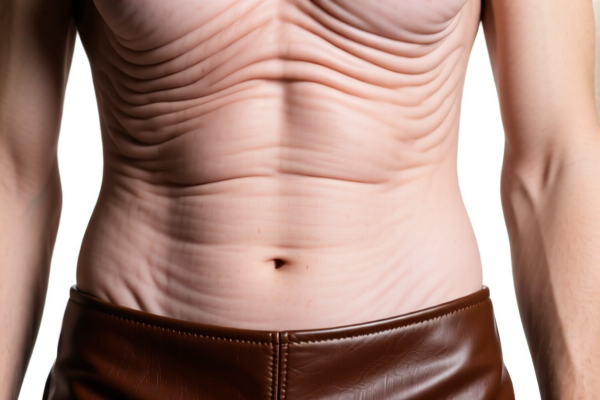
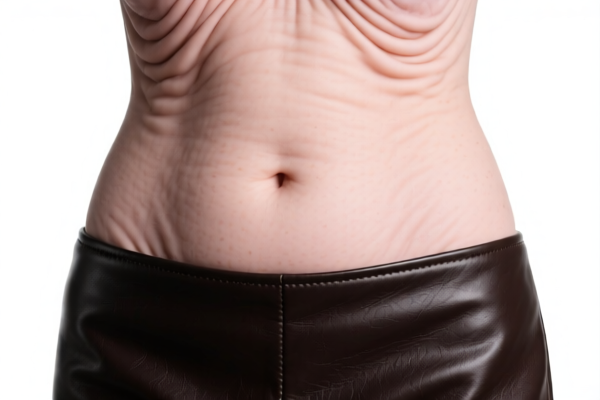

AI Analysis
🐮 Hairless Bovine Belly Leather (Clothing Grade)
🌐 HS Code Reference & Customs Clearance Guide | 2026 Latest Tariff Analysis | Professional Entry Strategy
📌 I. Product Definition & Classification: What Exactly Is "Hairless Bovine Belly Leather"?
Hairless bovine belly leather refers to vegetable-tanned or chrome-tanned cowhide sourced specifically from the belly region of the animal, where the fiber structure is looser and more elastic than the back or shoulder. This makes it ideal for garments, accessories, and flexible leather goods. In international trade, classification depends heavily on:
- Processing level: Finished vs. semi-finished
- Intended use: Garments vs. other leather products
- Species: Bovine (cow, cattle)
⚠️ Key Classification Points:
- If used for garments, it may fall under Chapter 42 (Articles of Leather)
- If classified as semi-finished leather, it may fall under Chapter 41 (Leather, Furskins, etc.)
- Belly leather is often treated as a special subtype due to its unique physical properties
📦 II. HS Code Classification Details (2026 Latest Tariff Authority Comparison)
| HS Code | Product Description | Application Scenario | Processing Stage |
|---|---|---|---|
4203.29.05.00 |
Hairless bovine leather for clothing, material is cowhide, form is clothing-grade leather, matches requirements for horse or cowhide garments | Finished leather garments, jackets, vests, belts | ✅ Finished |
4203.29.08.00 |
Hairless bovine leather for clothing, material is cowhide, form is clothing-grade leather, belongs to leather or synthetic leather garments and accessories | Similar to above, but broader category | ✅ Finished |
4107.11.70.40 |
Hairless bovine clothing leather, material and use fully match key restrictions | Semi-finished leather specifically for clothing | ✅ Semi-finished |
4107.19.70.40 |
Hairless bovine clothing leather, material, form, and use fully consistent with classification explanation | Semi-finished, with detailed use description | ✅ Semi-finished |
4205.00.80.00 |
Hairless reptile leather, material is leather, meets leather product requirements, no material conflict | Note: This code is not for bovine leather; it applies to reptile skins (e.g., snake, crocodile) | ✅ Finished |
🔍 Important Reminder:
- Bovine belly leather for garments should be classified under Chapter 42 if finished, or Chapter 41 if semi-finished. -4205.00.80.00is incorrect for bovine leather — it refers to reptile leather. Do not misclassify.
💰 III. 2026 Latest Tariff Rate Details (Including Additional Taxes, Policy Add-ons)
✅ Applicable Country: United States (US)
✅ Country of Origin: China (CN)
✅ Effective Date: November 10, 2025 (and subsequent imports)
🎯 1. 4203.29.05.00 — Hairless Bovine Leather for Clothing (Finished)
| Item | Content |
|---|---|
| Base Tariff | 12.6% (ad valorem) |
| USITC Additional Tariff | +25% (under Section 301) |
| IEEPA Additional Tariff | +10% (against Chinese products, effective Nov 10, 2025) |
| Total Tariff Rate | 47.6% |
| Tax Calculation | CIF Value × 47.6% |
| De Minimis Exemption | ❌ Not Eligible (deny_de_minimis) |
| Legal Basis Path | IEEPA:9903.01.25 → IEEPA:9903.01.24 → USITC:4203.29.05.00 → FOOTNOTE:9903.88.01 |
📌 Explanation:
- The 25% USITC tariff is imposed under Section 301 of the Trade Act for Chinese imports. - The 10% IEEPA tariff is under the International Emergency Economic Powers Act. - Total 47.6% is very high, making cost planning essential.
🎯 2. 4203.29.08.00 — Hairless Bovine Leather for Clothing (Finished, Broader Category)
| Item | Content |
|---|---|
| Base Tariff | 14.0% |
| USITC Additional Tariff | +25% |
| IEEPA Additional Tariff | +10% |
| Total Tariff Rate | 49.0% |
| Tax Calculation | CIF Value × 49.0% |
| De Minimis Exemption | ❌ Not Eligible |
| Legal Basis Path | IEEPA:9903.01.25 → IEEPA:9903.01.24 → USITC:4203.29.08.00 → FOOTNOTE:9903.88.01 |
📌 Note:
- Slightly higher base rate than4203.29.05.00, but otherwise identical in structure. - Use this code if the product is broader in application (e.g., not strictly limited to garments).
🎯 3. 4107.11.70.40 — Hairless Bovine Clothing Leather (Semi-Finished)
| Item | Content |
|---|---|
| Base Tariff | 5.0% |
| USITC Additional Tariff | 0.0% |
| IEEPA Additional Tariff | +10% |
| Total Tariff Rate | 15.0% |
| Tax Calculation | CIF Value × 15.0% |
| De Minimis Exemption | ❌ Not Eligible |
| Legal Basis Path | IEEPA:9903.01.25 → USITC:4107.11.70.40 |
📌 Explanation:
- Semi-finished leather (Chapter 41) is not subject to the 25% USITC tariff. - Only the 10% IEEPA tariff applies. - Significant cost savings compared to finished goods.
🎯 4. 4107.19.70.40 — Hairless Bovine Clothing Leather (Semi-Finished, Detailed Use)
| Item | Content |
|---|---|
| Base Tariff | 5.0% |
| USITC Additional Tariff | 0.0% |
| IEEPA Additional Tariff | +10% |
| Total Tariff Rate | 15.0% |
| Tax Calculation | CIF Value × 15.0% |
| De Minimis Exemption | ❌ Not Eligible |
| Legal Basis Path | IEEPA:9903.01.25 → USITC:4107.19.70.40 |
📌 Note:
- Same as above, but with more detailed usage description. - Ensure the export documentation clearly states the intended use for clothing.
❌ 5. 4205.00.80.00 — Hairless Reptile Leather (Incorrect for Bovine)
| Item | Content |
|---|---|
| Base Tariff | 0.0% |
| USITC Additional Tariff | +25% |
| IEEPA Additional Tariff | +10% |
| Total Tariff Rate | 35.0% |
| Tax Calculation | CIF Value × 35.0% |
| De Minimis Exemption | ❌ Not Eligible |
| Legal Basis Path | IEEPA:9903.01.25 → USITC:4205.00.80.00 |
🚫 Critical Warning:
- This HS code is for reptile leather (e.g., snake, crocodile), not bovine. - Misclassification can lead to severe penalties, back taxes, and shipment delays. - Do not use for cowhide, regardless of processing.
🛠️ IV. Customs Clearance Practical Advice (On-the-Ground Pitfall Avoidance Guide)
✅ 1. Required Documentation List (All Are Mandatory)
| Document | Required | Description |
|---|---|---|
| ✅ Product Specification Sheet | ✔️ | Includes tanning method, thickness, elasticity, intended use |
| ✅ Tanning Certificate | ✔️ | Confirms processing method (vegetable/chrome) |
| ✅ Product Photos (with Label) | ✔️ | Clear view of texture, thickness, and any markings |
| ✅ Third-Party Test Report | ✔️ | For compliance with chemical restrictions (e.g., REACH, Prop 65) |
| ✅ Commercial Invoice | ✔️ | Clearly state: "Hairless Bovine Belly Leather for Clothing" |
| ✅ Certificate of Origin (CO) | ✔️ | If not from China, may qualify for preferential rates |
| ✅ Packing List | ✔️ | Specify whether items are finished or semi-finished |
✅ 2. Declaration Tips (Key Mantra)
🔥 "Finished Garment Leather → Ch 42, Semi-finished → Ch 41, Reptile ≠ Bovine!"
| Scenario | Correct Declaration | Incorrect Practice |
|---|---|---|
| Finished leather for garments | 4203.29.05.00 or 4203.29.08.00 |
Misdeclare as semi-finished → 47.6% vs 15% |
| Semi-finished leather with clear clothing use | 4107.11.70.40 or 4107.19.70.40 |
Declare as finished → 47.6% instead of 15% |
| Reptile leather | 4205.00.80.00 |
Use for bovine → Illegal Misclassification |
| Mixed bovine and reptile | Split declaration | Combine under one code → High Risk |
✅ 3. Special Case Handling
| Scenario | Recommendation |
|---|---|
| OEM Custom Leather | Provide design drawings + customer order to prove specific use |
| Leather with Partial Tanning | Clearly state "semi-finished" and provide processing stage details |
| Leather for Non-Garment Use | Reclassify to appropriate Chapter (e.g., footwear, bags) |
| Leather Used in Medical Devices | If special use, apply for exemption with documentation |
| Leather for Military/Aerospace | Apply for special use declaration, may reduce tariffs |
🌍 V. Global Market Clearance Comparison (2026 Latest)
| Country/Region | Recommended HS Code | Tariff | Certification | Notes |
|---|---|---|---|---|
| 🇺🇸 USA | 4203.29.05.00 / 4107.11.70.40 |
47.6% / 15% (China-origin) | REACH, Prop 65 | High tariffs for finished goods |
| 🇨🇳 China | 4203.29.05.00 / 4107.11.70.40 |
5–14% | CCC, RoHS | No additional tariffs |
| 🇪🇺 EU | 4203.29.05.00 / 4107.11.70.40 |
0% (if CE compliant) | CE, REACH | No additional tariffs |
| 🇦🇺 Australia | 4203.29.05.00 / 4107.11.70.40 |
5% | RCM | No additional tariffs |
| 🇯🇵 Japan | 4203.29.05.00 / 4107.11.70.40 |
0% | PSE | No additional tariffs |
📌 Conclusion:
- USA imposes the highest tariffs on Chinese-sourced finished leather. - Semi-finished leather (Chapter 41) offers significant tariff advantages. - EU, Japan, Australia, China have lower or zero tariffs for compliant goods.
📌 VI. Common Mistakes & Pitfall Avoidance (Lessons from Experience)
❌ Mistake 1: Misclassifying finished garment leather as semi-finished
👉 Consequence: Under-declaration → Back taxes + fines
❌ Mistake 2: Using 4205.00.80.00 for bovine leather
👉 Consequence: Illegal misclassification → Shipment rejection, penalties
❌ Mistake 3: Not providing tanning certificates or test reports
👉 Consequence: Customs holds shipment for verification → Delays
❌ Mistake 4: Using generic terms like "leather" without specifying source, processing, and use
👉 Consequence: Customs may reclassify → Higher tariffs
✅ Correct Practice:
"Hairless Bovine Belly Leather, Chrome-Tanned, Semi-Finished, For Garment Use, Thickness: 1.2mm, Width: 120cm, Origin: China, REACH Compliant"
🎯 VII. Conclusion: Professional Declaration, Save Time, Reduce Costs!
🎯 Remember the Mantra:
🔹 "Finished Garment Leather → Ch 42, Semi-finished → Ch 41, Reptile ≠ Bovine!"
🔹 "HS Code Determines Tariff, 32.6% Difference, One Mistake Costs Thousands!"
📌 Pro Tip:
If your leather is sourced from Vietnam, Mexico, Thailand, or Malaysia, you may qualify for IEEPA exemptions, with tariffs as low as 0–5%.
Recommend applying for an Advance Ruling before shipment to avoid clearance risks.
📣 Take Action Now:
📞 Contact a professional customs broker + Provide product photos + Apply for HS Code Advance Ruling
🚀 Ensure your hairless bovine belly leather clears customs smoothly, efficiently, and cost-effectively!
✨ Professional clearance starts with accurate classification!
💼 Every cent of your cost deserves precise calculation!
Customer Reviews
About HS Code Classification
The Harmonized System (HS) is an internationally standardized nomenclature developed by the World Customs Organization (WCO) to classify traded products. Over 200 countries use the HS system as the basis for customs tariffs, trade statistics, and import/export regulations.
Each HS code follows a hierarchical structure:
- Chapter (2 digits) — Broad category of goods (e.g., Chapter 84: Machinery and Mechanical Appliances)
- Heading (4 digits) — More specific grouping within the chapter
- Subheading (6 digits) — Internationally standardized breakdown, used by all WCO member countries
- National subdivisions (8-10 digits) — Country-specific extensions for further classification, such as US HTSUS 10-digit codes
Correct HS code classification is essential for smooth customs clearance, accurate duty payment, and compliance with trade regulations. Misclassification can lead to customs delays, overpayment of duties, or penalties.
When importing from CN to US, the applicable tariff rates may include:
- Most-Favored-Nation (MFN) rate — The standard duty rate applied to WTO members
- General rate — Applied to countries without trade agreements
- Trade remedy duties — Additional tariffs such as Section 301 (anti-dumping), Section 232 (national security), or countervailing duties
The information provided on this page is for reference purposes only. For official classification, please consult with your local customs authority or a licensed customs broker.