Hairless equine leather splits
CN → US| HS Code | Tariff Rate | Origin | Destination | Doc |
|---|---|---|---|---|
| 4107997090 | 15.0% | CN | US | Official Doc |
| 4107197090 | 15.0% | CN | US | Official Doc |
| 4104415000 | 13.3% | CN | US | Official Doc |
| 4104495000 | 13.3% | CN | US | Official Doc |
| 4101901040 | 17.5% | CN | US | Official Doc |
| 4101907000 | 20.8% | CN | US | Official Doc |
Product Images
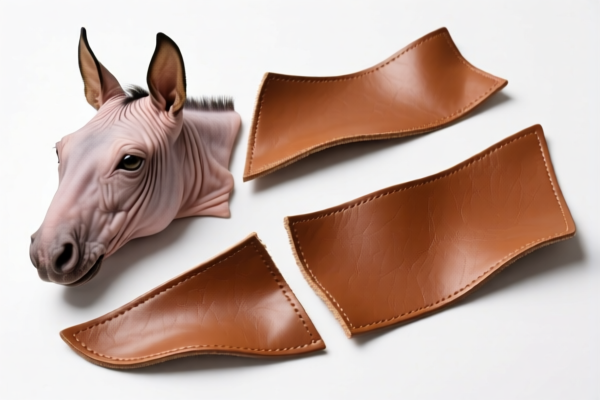

AI Analysis
🐎 Hairless Equine Leather Splits (Horsehide Leather)
🌐 HS Code Reference & Clearance Guide | 2024 Latest Tariff Analysis | Professional Clearance Strategy
📌 I. Product Definition and Classification: What exactly are "Hairless Equine Leather Splits"?
"Hairless equine leather splits" refer to layers of horsehide leather that have been processed. In international trade, these products are classified based on their state of tanning and processing. The key distinction lies in whether the leather is raw (un-tanned) or tanned, and whether it has been further processed into finished leather or remains in a basic split state.
Raw Horsehide Splits (Un-tanned): These are the split layers of the hide before any chemical tanning process. They are often referred to as "green hides" or raw splits. Tanned Horsehide Splits: These are the leather layers after the tanning process has been completed. They may be further processed into various types of finished leather or remain as basic tanned splits.
⚠️ Key Distinction Point:
- If the product is raw, un-tanned, and cut → It falls under Chapter 41, Heading 4101
- If the product is tanned but not further processed (basic state) → It falls under Chapter 41, Heading 4104
- If the product is finished leather (split or otherwise) → It falls under Chapter 41, Heading 4107
📦 II. HS Code Classification Details (2024 Latest Tariff Authority Comparison)
| HS Code | Product Description | Application Scenario | Tax Rate |
|--------|--------------------------|----------|
| 4101.90.10.40 | Horsehide splits, raw state, un-tanned | Raw hides ready for tanning | 17.5% |
| 4101.90.70.00 | Horsehide splits, raw state, cut, un-tanned | Raw splits, cut for further processing | 20.8% |
| 4104.41.50.00 | Horsehide splits, un-further processed leather layer | Basic tanned splits | 13.3% |
| 4104.49.50.00 | Horsehide splits, hairless, un-further processed leather state | Basic tanned, hairless splits | 13.3% |
| 4107.19.70.90 | Horsehide splits, tanned leather, other categories | Finished leather, split type | 15.0% |
| 4107.99.70.90 | Horsehide splits, non-patterned leather | Finished leather, non-patterned | 15.0% |
🔍 Key Reminder:
- Raw vs. Tanned: Raw hides (4101) are taxed differently than tanned hides (4104/4107).
- Processing Level: More processed leather (finished) generally incurs higher base tariffs but may have different surcharges.
- Cut State: Raw hides that are cut may incur higher tariffs due to the additional processing step.
💰 III. 2024 Latest Tariff Rate Details (Including Additional Taxes, Policy Surcharges)
✅ Applicable Country: United States (US)
✅ Country of Origin: China (CN)
✅ Effective Date: 2024 (Current regulations apply)
🎯 1. 4101.90.10.40 —— Horsehide Splits, Raw, Un-tanned
| Item | Content |
|---|---|
| Base Tariff | 0.0% |
| Section 301 Surcharge | 7.5% |
| 122 Provision Tariff | 10% |
| Total Tariff | 17.5% |
| Tax Calculation | CIF Value × 17.5% |
| De Minimis Eligibility | ❌ No |
| Legal Basis Path | Section 301: 4101.90.10.40 → 122 Provision: 10% |
📌 Explanation:
- The 0% base tariff is due to the raw nature of the product.
- The 7.5% Section 301 surcharge is applied to raw hides from China.
- The 10% 122 Provision Tariff is a specific surcharge on certain leather products.
- Total 17.5% is a moderate tariff, but still significant for high-volume shipments.
🎯 2. 4101.90.70.00 —— Horsehide Splits, Raw, Cut, Un-tanned
| Item | Content |
|---|---|
| Base Tariff | 3.3% |
| Section 301 Surcharge | 7.5% |
| 122 Provision Tariff | 10% |
| Total Tariff | 20.8% |
| Tax Calculation | CIF Value × 20.8% |
| De Minimis Eligibility | ❌ No |
| Legal Basis Path | Section 301: 4101.90.70.00 → 122 Provision: 10% |
📌 Note:
- The 3.3% base tariff is higher than raw uncut hides due to the cutting process.
- Total 20.8% is the highest tariff among raw horsehide splits.
- This classification is for raw hides that have already been cut into splits.
🎯 3. 4104.41.50.00 —— Horsehide Splits, Un-further Processed Leather Layer
| Item | Content |
|---|---|
| Base Tariff | 3.3% |
| Section 301 Surcharge | 0.0% |
| 122 Provision Tariff | 10% |
| Total Tariff | 13.3% |
| Tax Calculation | CIF Value × 13.3% |
| De Minimis Eligibility | ❌ No |
| Legal Basis Path | 122 Provision: 10% |
📌 Explanation:
- Tanned but not further processed leather benefits from a lower base tariff (3.3%).
- No Section 301 surcharge applies to tanned leather splits in this category.
- Total 13.3% is more favorable than raw splits.
🎯 4. 4104.49.50.00 —— Horsehide Splits, Hairless, Un-further Processed Leather State
| Item | Content |
|---|---|
| Base Tariff | 3.3% |
| Section 301 Surcharge | 0.0% |
| 122 Provision Tariff | 10% |
| Total Tariff | 13.3% |
| Tax Calculation | CIF Value × 13.3% |
| De Minimis Eligibility | ❌ No |
| Legal Basis Path | 122 Provision: 10% |
📌 Note:
- Similar to4104.41.50.00, this is for hairless, tanned, basic splits.
- Total 13.3% is the same as above.
- The distinction is primarily based on the hairless characteristic.
🎯 5. 4107.19.70.90 —— Horsehide Splits, Tanned Leather, Other Categories
| Item | Content |
|---|---|
| Base Tariff | 5.0% |
| Section 301 Surcharge | 0.0% |
| 122 Provision Tariff | 10% |
| Total Tariff | 15.0% |
| Tax Calculation | CIF Value × 15.0% |
| De Minimis Eligibility | ❌ No |
| Legal Basis Path | 122 Provision: 10% |
📌 Explanation:
- This category covers finished leather (tanned and processed) that does not fit specific subcategories.
- Base tariff 5.0% is higher than basic tanned splits.
- No Section 301 surcharge.
- Total 15.0% is moderate.
🎯 6. 4107.99.70.90 —— Horsehide Splits, Non-patterned Leather
| Item | Content |
|---|---|
| Base Tariff | 5.0% |
| Section 301 Surcharge | 0.0% |
| 122 Provision Tariff | 10% |
| Total Tariff | 15.0% |
| Tax Calculation | CIF Value × 15.0% |
| De Minimis Eligibility | ❌ No |
| Legal Basis Path | 122 Provision: 10% |
📌 Note:
- This is for non-patterned finished leather.
- Total 15.0% is the same as other finished leather categories.
- Applicable to horsehide splits that are finished but not patterned.
🛠️ IV. Clearance Practical Suggestions (Pitfall Avoidance Guide)
✅ 1. Document Checklist (Mandatory)
| Document | Required | Description |
|---|---|---|
| ✅ Product Specification Sheet | ✔️ | Include tanning method, split layer, hairless status |
| ✅ Tanning Certificate | ✔️ | For tanned products, provide proof of tanning process |
| ✅ Product Photos (including tags) | ✔️ | Clear images showing texture, layer, and any markings |
| ✅ Commercial Invoice | ✔️ | Clearly state "Horsehide Leather Splits" and HS Code |
| ✅ Packing List | ✔️ | Detail quantity, weight, and packaging type |
| ✅ Certificate of Origin (CO) | ✔️ | If applicable, for preferential tariffs |
✅ 2. Declaration Tips (Key Mnemonics)
🔥 "Raw vs Tanned, Split vs Finished, Name Precise, Tariff Minimized!"
| Scenario | Correct Declaration | Wrong Practice |
|---|---|---|
| Raw, uncut horsehide splits | 4101.90.10.40 |
Misdeclare as tanned → Higher tax |
| Raw, cut horsehide splits | 4101.90.70.00 |
Misdeclare as raw uncut → Audit risk |
| Tanned, basic splits | 4104.41.50.00 / 4104.49.50.00 |
Misdeclare as finished → Wrong tax |
| Finished, non-patterned splits | 4107.99.70.90 |
Misdeclare as raw → Severe penalties |
| Finished, specific category splits | 4107.19.70.90 |
Misdeclare as general finished → Higher tax |
✅ 3. Special Case Handling
| Scenario | Handling Suggestion |
|---|---|
| Mixed Raw and Tanned | Declare separately to avoid misclassification |
| Patterned Leather | Ensure correct subcategory under 4107 |
| OEM Custom Horsehide | Provide customer orders + design drawings |
| Used vs New | New leather is classified under 41; used may differ |
🌍 V. Global Market Clearance Comparison (2024 Latest)
| Country/Region | Recommended HS Code | Tariff | Certification Requirements | Remarks |
|---|---|---|---|---|
| 🇺🇸 United States | 4104.41.50.00 / 4107.99.70.90 |
13.3% - 15.0% | None specific | High scrutiny on origin |
| 🇨🇳 China | 4104.41.50.00 / 4107.99.70.90 |
3.3% - 5.0% | None specific | Low base tariffs |
| 🇪🇺 European Union | 4104.41.50.00 / 4107.99.70.90 |
4.7% - 6.5% | REACH Compliance | No Section 301 |
| 🇦🇺 Australia | 4104.41.50.00 / 4107.99.70.90 |
5.0% | None specific | Standard tariffs |
| 🇯🇵 Japan | 4104.41.50.00 / 4107.99.70.90 |
4.7% | None specific | Free Trade Agreement benefits |
📌 Conclusion:
- USA has additional surcharges (Section 301 and 122 Provision) for raw hides.
- EU and Japan have lower base tariffs and no political surcharges.
- China-origin horsehide splits face higher costs in the US compared to other markets.
📌 VI. Common Errors & Pitfall Avoidance (Blood Lessons)
❌ Error 1: Misdeclaring tanned leather as raw
👉 Consequence: Incorrect tariff application → Delay or return
❌ Error 2: Not specifying "hairless" or "split" characteristics
👉 Consequence: Customs may assign higher tariff category → Extra cost
❌ Error 3: Failing to provide tanning certificates for tanned products
👉 Consequence: Customs may question origin of processing → Delay
❌ Error 4: Using vague terms like "leather" without specifying type
👉 Consequence: Customs may choose highest possible tariff → Financial loss
✅ Correct Practice:
"Horsehide Leather Splits, Tanned, Hairless, Basic State, No Further Processing, Model HSL-001, 100% Horsehide"
🎯 VII. Conclusion: Precise Classification, Cost Savings, Efficient Clearance
🎯 Remember the Mnemonic:
🔹 "Raw has surcharges, tanned is cheaper, splits are basic, finished is processed, name it right, save your night!"
🔹 "HS Code is key, tariff diff is big, declare correctly, avoid big rig!"
📌 Tips:
- If your horsehide leather splits are sourced from Vietnam, Mexico, or Thailand, you may qualify for preferential tariffs under various Free Trade Agreements.
- Consider applying for a Binding Ruling with US Customs to confirm the correct HS Code and tariff rates.
- Keep detailed records of the tanning process and material composition to support your declaration.
📣 Take Action Now:
📞 Contact a professional customs broker + Provide product specs + Apply for HS Code Binding Ruling
🚀 Ensure smooth clearance, efficient export, and maximized profits!
✨ Professional clearance starts with accurate classification!
💼 Every cent of your cost deserves precise calculation!
Customer Reviews
About HS Code Classification
The Harmonized System (HS) is an internationally standardized nomenclature developed by the World Customs Organization (WCO) to classify traded products. Over 200 countries use the HS system as the basis for customs tariffs, trade statistics, and import/export regulations.
Each HS code follows a hierarchical structure:
- Chapter (2 digits) — Broad category of goods (e.g., Chapter 84: Machinery and Mechanical Appliances)
- Heading (4 digits) — More specific grouping within the chapter
- Subheading (6 digits) — Internationally standardized breakdown, used by all WCO member countries
- National subdivisions (8-10 digits) — Country-specific extensions for further classification, such as US HTSUS 10-digit codes
Correct HS code classification is essential for smooth customs clearance, accurate duty payment, and compliance with trade regulations. Misclassification can lead to customs delays, overpayment of duties, or penalties.
When importing from CN to US, the applicable tariff rates may include:
- Most-Favored-Nation (MFN) rate — The standard duty rate applied to WTO members
- General rate — Applied to countries without trade agreements
- Trade remedy duties — Additional tariffs such as Section 301 (anti-dumping), Section 232 (national security), or countervailing duties
The information provided on this page is for reference purposes only. For official classification, please consult with your local customs authority or a licensed customs broker.