Halide Paper Storage Box
CN → US| HS Code | Tariff Rate | Origin | Destination | Doc |
|---|---|---|---|---|
| 4819600000 | 35.0% | CN | US | Official Doc |
| 4819504040 | 35.0% | CN | US | Official Doc |
| 4821902000 | 35.0% | CN | US | Official Doc |
| 4821904000 | 35.0% | CN | US | Official Doc |
| 3923102000 | 35.0% | CN | US | Official Doc |
| 3923109000 | 38.0% | CN | US | Official Doc |
| 4823908000 | 35.0% | CN | US | Official Doc |
| 4823902000 | 35.0% | CN | US | Official Doc |
Product Images
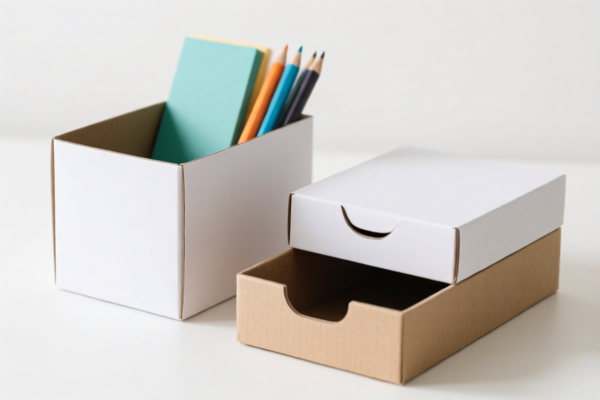
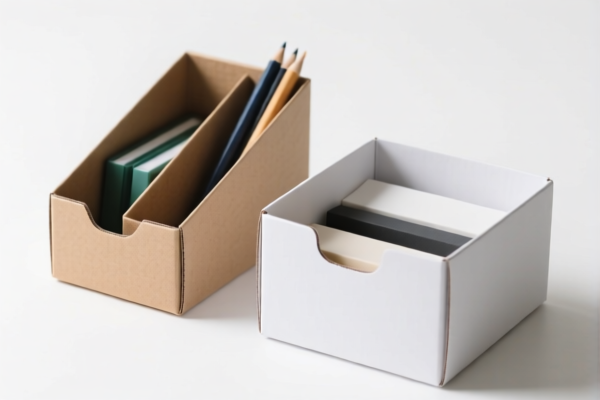
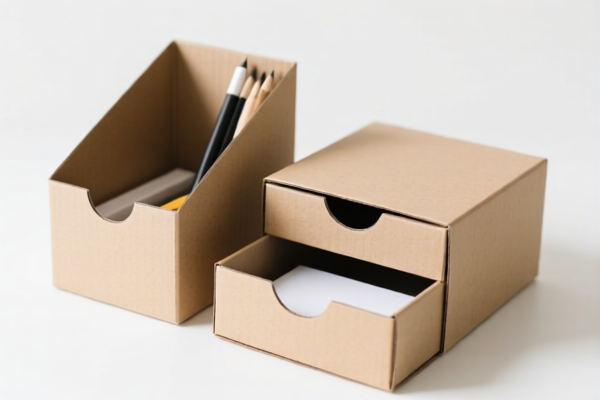
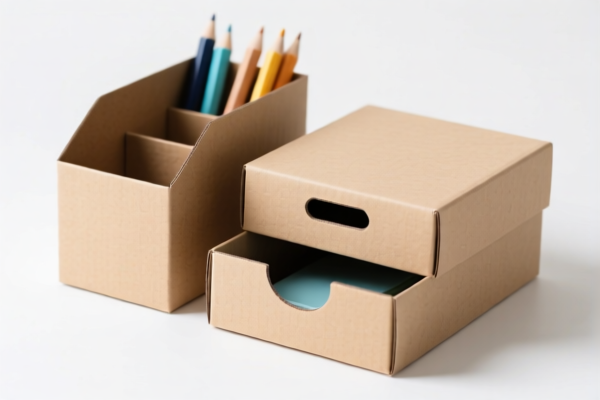
AI Analysis
📦 Halide Paper Storage Box (Chemical/Photographic Paper Container)
🌐 HS Code Reference & Customs Clearance Guide | 2026 Latest Tariff Analysis | Professional Compliance Strategy
📌 I. Product Definition & Classification: Do You Really Understand "Halide Paper Storage"?
Halide Paper (specifically photosensitive paper used in traditional photography, industrial radiography, or specialized medical imaging) is highly sensitive to light, humidity, and physical damage. The "Storage Box" in this context is not just a generic container; it is a specialized protective article designed to convey or pack these sensitive goods.
In international trade, the classification depends heavily on the material of the box and its specific function: 1. Plastic Containers: If the box is made of plastic and is specifically shaped/fitted for sensitive materials (like semiconductor masks or photographic plates/paper in some contexts), it may fall under specific plastic headings. However, standard plastic boxes for general goods fall under general plastic packaging. 2. Paper/Cardboard Containers: Most "halide paper boxes" are actually made of rigid paperboard or carton to prevent light leakage and provide cushioning. These are classified under paper packaging headings.
⚠️ Key Distinction Point:
- If the box is plastic and specifically shaped for semiconductor wafers/masks (often similar in precision to halide plate storage), it might be considered under 3923.10.20.00.
- If the box is plastic but is a general-purpose box/crate for packing goods (including halide paper), it falls under 3923.10.90.00.
- If the box is made of paper/paperboard (cardboard, rigid box), it is classified under 4819.50.40.40 (Rigid boxes and cartons) or 4819.60.00.00 (Box files/letter trays/office storage), depending on exact design.
- If it includes adhesive labels for chemical safety, those labels are classified separately under 4821.90.20.00 or 4821.90.40.00.
📦 II. HS Code Classification Details (2026 Latest Tariff Authority Reference)
Based on the provided data, the following HS Codes apply to packaging and labeling materials for goods like Halide Paper:
| HS Code | Product Description | Applicable Scenario | Material |
|---|---|---|---|
3923.10.20.00 |
Plastics articles for conveyance/packing: Specially shaped/fitted for semiconductor wafers, masks, or reticles | Strictly Limited: Only if the plastic box is specifically molded for semiconductor/reticle standards. Unlikely for general halide paper unless high-precision anti-static plastic is used and specifically claimed for such. | Plastic (Specialized) |
3923.10.90.00 |
Plastics articles for conveyance/packing: Other (Boxes, cases, crates) | General Plastic Boxes: Standard plastic containers, crates, or cases used to pack halide paper, if made of plastic. | Plastic (General) |
4819.60.00.00 |
Packing containers of paper/paperboard; box files, letter trays (office/shops) | Office/Specialty Paper Storage: If the box is a box file, letter tray, or similar office-style storage unit made of paper/cardboard. | Paper/Cardboard |
4819.50.40.40 |
Packing containers of paper/paperboard: Other packing containers... Rigid boxes and cartons | Most Likely for Halide Paper: Standard rigid cardboard boxes used for packaging photographic or industrial halide paper. | Paper/Cardboard (Rigid) |
4821.90.20.00 |
Paper/paperboard labels: Self-adhesive | Labels Only: If the "box" is primarily the adhesive labels attached to the package (e.g., chemical hazard labels). | Paper (Self-adhesive) |
4821.90.40.00 |
Paper/paperboard labels: Other | Labels Only: Non-self-adhesive paper labels (e.g., glue-on labels) for the packaging. | Paper (Non-adhesive) |
4823.90.80.00 |
Other paper articles: Gaskets, washers, seals | Minor Components: If the box includes paper gaskets or seals to ensure light-tightness. | Paper (Seals) |
4823.90.20.00 |
Other paper articles: Of papier-mâché | Rare: Unlikely for modern halide paper storage, but possible for decorative or low-cost molds. | Papier-mâché |
🔍 Key Reminder:
- Material is King: Determine if your box is Plastic or Paper/Cardboard.
- For Halide Paper: Most standard commercial storage boxes are Rigid Cardboard (4819.50.40.40) because plastic can sometimes cause static issues or is unnecessarily expensive for light-proofing.
- Semiconductor Exclusion: Do NOT use3923.10.20.00unless the box is explicitly designed for semiconductor wafers/masks. Using this for general halide paper may lead to misclassification penalties.
💰 III. 2026 Latest Tariff Rate Details (Including Surcharges & Policy Add-ons)
✅ Applicable Country: United States (US)
✅ Country of Origin: China (CN)
✅ Effective Date: From 2025/2026 onwards (subject to current USITC/IEEPA rules)
🎯 1. 3923.10.20.00 —— Plastics Articles (Specially Shaped for Semiconductors)
| Item | Content |
|---|---|
| Base Tariff | 0% |
| Additional Tariff | 25.0% (Section 301 / USITC) |
| Total Rate | 25.0% |
| Tax Calculation | CIF Value × 25% |
| De Minimis Exemption | ❌ Not Eligible (Deemed high-value/specialized) |
| Legal Basis | USITC:3923.10.20.00 → FOOTNOTE:301 |
📌 Explanation:
- This code has a 0% base tariff but carries a 25% surcharge due to trade measures against China.
- Critical: Only use if the plastic box is specially shaped for semiconductor wafers/masks. Misuse here is risky.
🎯 2. 3923.10.90.00 —— Plastics Articles (Other: General Boxes/Cases)
| Item | Content |
|---|---|
| Base Tariff | 3.0% |
| Additional Tariff | 25.0% (Section 301 / USITC) |
| Total Rate | 28.0% |
| Tax Calculation | CIF Value × 28% |
| De Minimis Exemption | ❌ Not Eligible |
| Legal Basis | USITC:3923.10.90.00 → FOOTNOTE:301 |
📌 Explanation:
- This is the most likely plastic-related code for general packaging.
- Total Burden: 28% is significant. Many importers switch to paper packaging to reduce costs.
🎯 3. 4819.60.00.00 —— Paper/Paperboard Packing Containers (Office/Specialty)
| Item | Content |
|---|---|
| Base Tariff | 0.0% |
| Additional Tariff | 25.0% (Section 301 / USITC) |
| Total Rate | 25.0% |
| Tax Calculation | CIF Value × 25% |
| De Minimis Exemption | ❌ Not Eligible |
| Legal Basis | USITC:4819.60.00.00 → FOOTNOTE:301 |
📌 Explanation:
- Applies if the box is considered an "office type" storage (e.g., box files).
- Total Burden: 25%.
🎯 4. 4819.50.40.40 —— Paper/Paperboard Rigid Boxes and Cartons
| Item | Content |
|---|---|
| Base Tariff | 0.0% |
| Additional Tariff | 25.0% (Section 301 / USITC) |
| Total Rate | 25.0% |
| Tax Calculation | CIF Value × 25% |
| De Minimis Exemption | ❌ Not Eligible |
| Legal Basis | USITC:4819.50.40.40 → FOOTNOTE:301 |
📌 Explanation:
- This is the MOST COMMON code for halide paper boxes.
- Total Burden: 25%.
- Why it’s popular: Base tariff is 0%, making it competitive against plastic alternatives, though the 25% surcharge is still high.
🎯 5. 4821.90.20.00 & 4821.90.40.00 —— Paper Labels
| Item | Content |
|---|---|
| Base Tariff | 0.0% |
| Additional Tariff | 25.0% (Section 301 / USITC) |
| Total Rate | 25.0% |
| Tax Calculation | CIF Value × 25% |
| De Minimis Exemption | ❌ Not Eligible |
| Legal Basis | USITC:4821.90.x0.00 → FOOTNOTE:301 |
📌 Explanation:
- If your shipment includes significant value in labels (e.g., chemical warning labels, barcodes), they are taxed separately.
- Total Burden: 25%.
🎯 6. 4823.90.80.00 & 4823.90.20.00 —— Other Paper Articles (Seals/Papier-mâché)
| Item | Content |
|---|---|
| Base Tariff | 0.0% |
| Additional Tariff | 25.0% (Section 301 / USITC) |
| Total Rate | 25.0% |
| Tax Calculation | CIF Value × 25% |
| De Minimis Exemption | ❌ Not Eligible |
| Legal Basis | USITC:4823.90.xx.00 → FOOTNOTE:301 |
📌 Explanation:
- Rare for main packaging. Only applies if selling standalone paper seals or papier-mâché molds.
🛠️ IV. Customs Clearance Practical Advice (Pitfall Avoidance Guide)
✅ 1. Preparation Checklist (Mandatory)
| Document | Required? | Description |
|---|---|---|
| ✅ Product Specification | ✔️ | Details: Material (Plastic vs. Paper), Dimensions, Light-proofness features, Stackability. |
| ✅ Material Composition | ✔️ | Explicitly state "100% Recycled Cardboard" or "HDPE Plastic". Do not say "Mixed Materials" unless separated. |
| ✅ Photographs | ✔️ | Clear shots of the box, including any labels, openings, and interior lining. |
| ✅ Commercial Invoice | ✔️ | Must specify "Storage Box for Halide Paper" or "Packaging Container". Avoid vague terms like "Container". |
| ✅ Packing List | ✔️ | Separate line items if boxes, labels, and seals are shipped separately. |
| ✅ HS Code Justification | ✔️ | Explain why 4819.50.40.40 (Rigid Box) is chosen over 3923.10.90.00 (Plastic). |
✅ 2. Declaration Tips (Key Mantras)
🔥 "Material First, Function Second, Label Clearly, Tax Will Be Clear!"
| Scenario | Correct Declaration | Incorrect Practice |
|---|---|---|
| Cardboard Box | 4819.50.40.40 - Rigid Paper Box |
Misclassified as Plastic 3923.10.90.00 → 28% vs 25% (Small diff, but accuracy matters) |
| Plastic Crate | 3923.10.90.00 - Plastic Crate |
Misclassified as Paper → 28% vs 25% |
| Specialized Plastic | 3923.10.20.00 - Semiconductor Box |
Only if it fits semiconductor standards. Otherwise, risk of penalty. |
| Labels Included | Declare separately 4821.90.20.00 |
Lump sum into box value → Potential re-classification audit |
📌 Note:
- Halide paper itself is not in the provided data. This guide focuses on the storage box. If you import the halide paper separately, it will have its own HS Code (likely under3701.99or3702.39depending on type) and potentially different tariffs.
- The box is often declared as packaging material or empty packaging. If sold with the paper, the box value is usually included in the total value of the paper shipment, but the paper itself may have different tariffs. Check the paper's HS Code separately!
✅ 3. Special Handling
| Scenario | Advice |
|---|---|
| Exporting to US | Be prepared for 25% additional tariff on almost all packaging materials from China. Factor this into pricing. |
| Light-Proofing | If the box has a black lining or aluminum foil layer, ensure the invoice describes it as "Paper box with light-proof lining". The lining does not change the HS Code if paper is the primary material. |
| Reusability | If the box is designed for return/reuse (e.g., rental crates), it might still be classified as 3923.10.90.00 or 4819.60.00.00. Declare as "Reusable Packaging". |
| Semiconductor Claim | Do not claim 3923.10.20.00 for halide paper boxes unless they are certified for semiconductor use. Customs may challenge this and assess penalties. |
🌍 V. Global Market Comparison (2026 Latest)
| Country/Region | Recommended HS Code | Tariff (China Origin) | Certification | Notes |
|---|---|---|---|---|
| 🇺🇸 USA | 4819.50.40.40 (Paper) |
25% (25% surcharge + 0% base) | None usually required for packaging | High Tax. Consider non-China origin for cost saving. |
| 🇺🇸 USA | 3923.10.90.00 (Plastic) |
28% (3% base + 25% surcharge) | None usually required | More expensive than paper. |
| 🇪🇺 EU | 4819.50 / 3923.10 |
0% - 2.5% (General MFN) | FSC/PEFC (Sustainability) | No Section 301 equivalent. Much cheaper. |
| 🇨🇳 China | 4819.50.40.40 |
5% - 12% | N/A | Import duty varies. |
📌 Conclusion:
- US Market: Packaging from China is heavily taxed (25-28%).
- Strategy: Consider sourcing packaging from Vietnam, Mexico, or EU to avoid the 25% surcharge if volumes are high.
- Material Choice: Paper boxes (4819.50.40.40) are slightly cheaper (25% total) than Plastic boxes (3923.10.90.00 at 28% total) in the US context.
📌 VI. Common Mistakes & Pitfalls (Lessons Learned)
❌ Mistake 1: Declaring "Plastic Box" when it's actually Cardboard.
👉 Consequence: Misclassification. Even if tax diff is small (3%), it triggers audits for material fraud.
❌ Mistake 2: Using 3923.10.20.00 for any plastic box.
👉 Consequence: This code is restricted to semiconductor wafers/masks. Using it for general halide paper packaging is incorrect and may lead to penalties or seizures.
❌ Mistake 3: Ignoring Labels.
👉 Consequence: If the box has hazardous material labels, the labels themselves (4821.90.20.00) are separate goods. Lump-sum declaration can lead to disputes.
❌ Mistake 4: Not specifying "Rigid".
👉 Consequence: 4819.50.40.40 specifies "Rigid boxes". If your box is a foldable carton, it might fall under 4819.10 (folded boxes). Ensure description matches the physical state.
✅ Correct Declaration Example:
"Rigid Cardboard Storage Box for Halide Paper, Light-Proof, Reusable, Model XYZ"
HS Code:4819.50.40.40
🎯 VII. Conclusion: Professional Declaration, Cost Control, Compliance!
🎯 Remember the Mantra:
🔹 "Paper is Cheaper (25%) than Plastic (28%) in the US!"
🔹 "Semiconductor Code is for Semiconductors Only!"
🔹 "Labels are Separate!"
🔹 "Rigid vs. Folded Matters!"
📌 Pro Tip:
If you are importing large volumes of packaging, consider Duty Drawback programs if the boxes are re-exported, or FTZ (Foreign Trade Zone) storage to defer taxes.
For Halide Paper itself, ensure you have the correct HS Code (e.g., 3701.99), as it has different tariffs than the box.
📣 Immediate Action:
📞 Verify Material: Is it 100% Paper or Plastic?
📞 Check Function: Is it Rigid or Foldable?
📞 Apply HS Code: Use4819.50.40.40for Rigid Paper Boxes.
🚀 Optimize Supply Chain: Consider non-China packaging sources to save 25% tariff.
✨ Professional Customs Compliance Starts with Accurate Classification!
💼 Every Dollar Saved in Tariffs is Pure Profit!
Customer Reviews
About HS Code Classification
The Harmonized System (HS) is an internationally standardized nomenclature developed by the World Customs Organization (WCO) to classify traded products. Over 200 countries use the HS system as the basis for customs tariffs, trade statistics, and import/export regulations.
Each HS code follows a hierarchical structure:
- Chapter (2 digits) — Broad category of goods (e.g., Chapter 84: Machinery and Mechanical Appliances)
- Heading (4 digits) — More specific grouping within the chapter
- Subheading (6 digits) — Internationally standardized breakdown, used by all WCO member countries
- National subdivisions (8-10 digits) — Country-specific extensions for further classification, such as US HTSUS 10-digit codes
Correct HS code classification is essential for smooth customs clearance, accurate duty payment, and compliance with trade regulations. Misclassification can lead to customs delays, overpayment of duties, or penalties.
When importing from CN to US, the applicable tariff rates may include:
- Most-Favored-Nation (MFN) rate — The standard duty rate applied to WTO members
- General rate — Applied to countries without trade agreements
- Trade remedy duties — Additional tariffs such as Section 301 (anti-dumping), Section 232 (national security), or countervailing duties
The information provided on this page is for reference purposes only. For official classification, please consult with your local customs authority or a licensed customs broker.