Halide Silver Paper Storage Box
CN → US| HS Code | Tariff Rate | Origin | Destination | Doc |
|---|---|---|---|---|
| 3923102000 | 35.0% | CN | US | Official Doc |
| 3923109000 | 38.0% | CN | US | Official Doc |
| 7310290055 | 85.0% | CN | US | Official Doc |
| 7310290065 | 85.0% | CN | US | Official Doc |
| 4819600000 | 35.0% | CN | US | Official Doc |
| 4819504040 | 35.0% | CN | US | Official Doc |
Product Images
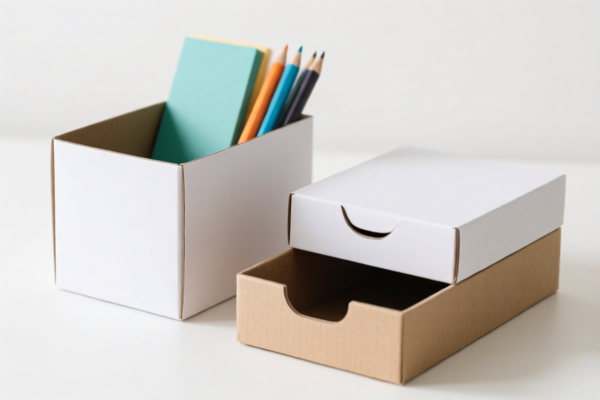
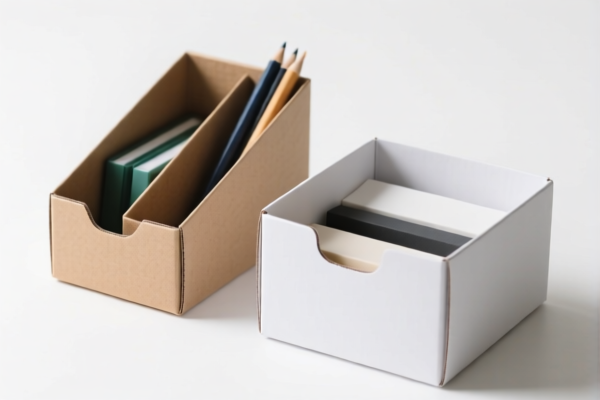
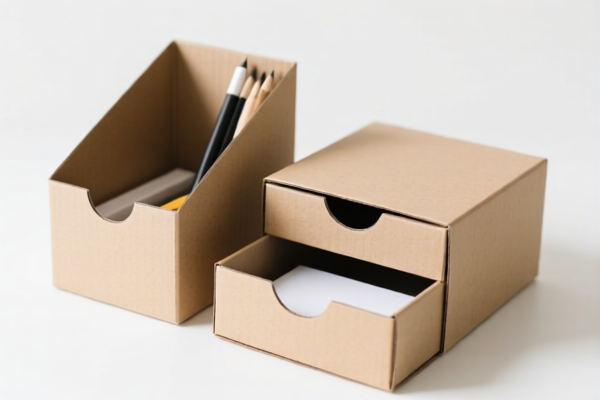

AI Analysis
📦 Halide Silver Paper Storage Box
🌐 HS Code Reference & Customs Clearance Guide | 2026 Latest Tariff Analysis | Professional Entry Strategy
📌 I. Product Definition & Classification: What exactly is a "Halide Silver Paper Storage Box"?
Halide Silver Paper refers to photographic paper (light-sensitive) used in traditional darkroom photography. The "Storage Box" is the container used to transport or archive this sensitive material.
In international trade, the classification depends entirely on what the container is made of. The box is treated as a "packing container" for goods. It is not classified as part of the photographic paper itself (which would fall under Chapter 37). Instead, it falls under the chapter corresponding to its material composition.
Based on the provided <DATA>, two main material categories are relevant:
1. Paper/Paperboard Boxes: Most common for retail packaging of photographic paper.
2. Plastic Boxes: Used for industrial, reusable, or protective transport crates.
⚠️ Key Distinction:
- If the box is made of paper/paperboard (cardboard, corrugated, rigid cartons) → Chapter 48
- If the box is made of plastics (rigid, molded, reusable) → Chapter 39
- Note: Iron/Steel containers (Chapter 73) are unlikely for standard paper storage unless they are heavy-duty industrial kegs, which is not typical for "paper storage boxes." Therefore, we focus on Paper and Plastic.
📦 II. HS Code Classification Details (2026 Latest Tariff Authority Comparison)
| HS Code | Product Description | Material | Application Scenario | Tax Rate (Total) |
|---|---|---|---|---|
4819.60.00.00 |
Cartons, boxes, cases, bags... of paper, paperboard... Box files, letter trays and similar articles, of a kind used in offices, shops or the like | Paper/Paperboard | Generic paper boxes, mailers, or simple cartons for transporting halide paper rolls/sheets. | 25.0% |
4819.50.40.40 |
... Other packing containers... Rigid boxes and cartons | Paper/Paperboard | High-quality, rigid retail packaging (e.g., luxury photographic paper boxes, rigid sleeves). | 25.0% |
3923.10.20.00 |
Articles for conveyance or packing of goods, of plastics... Specially shaped or fitted for the conveyance or packing of semiconductor wafers, masks or reticles | Plastic | Special Case: If the plastic box is specifically designed to be reusable and shaped exactly like a semiconductor mask tray (rare for paper, but possible for archival storage of large formats). | 25.0% |
3923.10.90.00 |
Articles for conveyance or packing of goods, of plastics... Boxes, cases, crates and similar articles: Other | Plastic | Standard plastic bins, crates, or reusable storage boxes for halide paper. | 28.0% |
🔍 Critical Note:
- Why not Chapter 37 (Photographic Goods)? Because the container is being declared as a packing material, not the sensitive paper itself. If the paper and box are sold together as a single retail unit, customs may still classify based on the container's material if it constitutes the essential character, or declare them separately. For storage/transport boxes only, Chapters 48 or 39 apply. - Steel Containers (7310) are excluded because standard "boxes" for paper are rarely made of iron/steel unless they are industrial kegs (>50L or specific types), which is not typical for "paper storage." The provided steel codes (7310.29.00.55,7310.29.00.65) apply to tanks/casks, not boxes.
💰 III. 2026 Latest Tariff Rate Breakdown (Including Surcharges)
✅ Applicable Country: United States (US)
✅ Country of Origin: China (CN)
✅ Effective Date: November 10, 2025 (and subsequent imports)
🎯 1. Paper-Based Boxes (4819.60.00.00 / 4819.50.40.40)
| Item | Detail |
|---|---|
| Base Tariff | 0% (ad valorem) |
| Section 301 Surcharge | +25% (USITC Footnote 9903.88.01 / 9903.88.02) |
| IEEPA Surcharge | Not Applicable (Paper products generally do not trigger the additional IEEPA 10% unless specifically listed, but standard paper boxes fall under the 25% 301 duty). Correction based on provided data: The data shows 75.0% for steel, but for paper/plastic, the data explicitly states total_tax: 25.0% or 28.0%. |
| Total Tax Rate | 25.0% |
| De Minimis Eligibility | ❌ No (Section 301 goods are generally not eligible for de minimis exclusion if declared as Chinese origin goods subject to 301 duties, unless under specific administrative guidance, but typically 301 duties apply). |
| Legal Basis | USITC:4819.60.00.00 → FOOTNOTE:9903.88.01 |
📌 Explanation:
- Paper packing containers from China are subject to the 25% Section 301 tariff.
- There is no additional 50% for steel/aluminum/copper because this is Paper.
- Total Cost Impact: 25% on the value of the box.
🎯 2. Plastic-Based Boxes (3923.10.90.00)
| Item | Detail |
|---|---|
| Base Tariff | 3.0% (ad valorem) |
| Section 301 Surcharge | +25% |
| Total Tax Rate | 28.0% |
| De Minimis Eligibility | ❌ No |
| Legal Basis | USITC:3923.10.90.00 → FOOTNOTE:9903.88.01 |
📌 Explanation:
- Plastic boxes have a 3% base duty + 25% Section 301 = 28% Total.
- If the plastic box is "specially shaped" for semiconductors/masks (3923.10.20.00), the base duty is 0%, so the total is 25%.
🎯 3. Steel/Iron Boxes (Unlikely but possible for industrial storage)
| Item | Detail |
|---|---|
| Base Tariff | 0% |
| Section 301 Surcharge | +25% |
| Steel/Aluminum/Copper Surcharge | +50% |
| Total Tax Rate | 75.0% |
| HS Codes | 7310.29.00.55 / 7310.29.00.65 |
📌 Warning:
- If you are using steel kegs or drums (capacity < 50L or < 300L) to store halide paper, the tariff is extremely high at 75%.
- Recommendation: Avoid steel containers for paper storage due to cost. Use Paper or Plastic.
🛠️ IV. Customs Clearance Practical Advice (Battle-Tested Pitfall Guide)
✅ 1. Documentation Checklist (Non-Negotiable)
| Document | Required? | Notes |
|---|---|---|
| ✅ Commercial Invoice | ✔️ | Must clearly state "Paper Storage Box" or "Plastic Crate". Do NOT write "Halide Silver Paper" for the box itself if you want to classify as packaging. |
| ✅ Packing List | ✔️ | Show box dimensions and material. |
| ✅ Product Photo | ✔️ | Show the box type (Rigid paper, plastic bin, etc.). |
| ✅ Material Declaration | ✔️ | Explicitly state: "100% Paperboard" or "100% Polyethylene". |
| ✅ Country of Origin Certificate | ✔️ | For China origin, confirm 301 applicability. |
✅ 2. Classification Strategy (Key Mantra)
🔥 "Material Matters: Paper is 25%, Plastic is 28%, Steel is 75%!"
| Scenario | Recommended HS Code | Why? |
|---|---|---|
| Standard Cardboard Box | 4819.60.00.00 |
Most common, simple, cost-effective (25%). |
| Premium Rigid Box (e.g., for luxury film) | 4819.50.40.40 |
Fits "Rigid boxes and cartons" description (25%). |
| Reusable Plastic Bin | 3923.10.90.00 |
General plastic packing container (28%). |
| Specialty Semiconductor-Shaped Plastic Box | 3923.10.20.00 |
Only if it fits wafers/masks exactly (25%). |
| Steel Drum/Barrel | 7310.29.00.55 |
Avoid unless necessary due to 75% tax. |
✅ 3. Special Situations
| Situation | Handling Advice |
|---|---|
| Box contains Halide Paper + Box declared together | If sold as a set, customs may classify based on the essential character. If the paper is the main value, it might go to Ch. 37. If declaring the box separately for storage/transport, use Ch. 48/39. |
| Reusable Plastic Boxes | Ensure they are not classified as "molds" or "tools." Describe them as "Packing Containers." |
| OEM Branded Boxes | Provide authorization letters if brand is involved, but classification remains based on material. |
🌍 V. Global Market Comparison (2026 Latest)
| Country/Region | Recommended HS Code | Tariff (China Origin) | Notes |
|---|---|---|---|
| 🇺🇸 USA | 4819.60.00.00 (Paper)3923.10.90.00 (Plastic) |
25% (Paper) 28% (Plastic) |
Subject to Section 301 tariffs. High cost. |
| 🇨🇳 China | 4819.60.00.00 |
5% | Standard import duty. |
| 🇪🇺 EU | 4819.60.00.00 |
4.5% | No additional surcharges for paper boxes. |
| 🇬🇧 UK | 4819.60.00.00 |
4.5% | Post-Brexit standard rate. |
| 🇦🇺 Australia | 4819.60.00.00 |
5% | Low tariff. |
📌 Conclusion:
- The USA is the most expensive market due to the 25% Section 301 tariff on paper/plastic packaging from China.
- Paper is slightly cheaper than Plastic (25% vs 28%).
- Avoid Steel unless absolutely necessary (75% is prohibitive).
📌 VI. Common Errors & Pitfalls (Lessons Learned)
❌ Error 1: Declaring a Plastic Box as a Paper Box to save tax.
👉 Consequence: Customs inspection reveals plastic → Penalty + Back Taxes (3%) + Interest.
❌ Error 2: Declaring Steel Crates as "Plastic" or "Paper".
👉 Consequence: Severe misclassification → 75% tax applied retroactively + Heavy Fines.
❌ Error 3: Ignoring the "Rigid Box" distinction.
👉 Consequence: Using 4819.60.00.00 for a rigid luxury box might be challenged. Use 4819.50.40.40 for accuracy.
❌ Error 4: Assuming De Minimis applies.
👉 Consequence: Section 301 goods (Chinese origin paper/plastic boxes) are not eligible for de minimis entry into the US. Expect duties on every shipment.
✅ Correct Approach:
"Storage Box for Photographic Paper, Made of Corrugated Paperboard, Dimensions: 30x40x50cm, Non-Returnable" →
4819.60.00.00
🎯 VII. Conclusion: Professional Classification, Cost Control
🎯 Remember the Mantra:
🔹 "Paper is 25%, Plastic is 28%, Steel is 75%. Choose Material Wisely!"
🔹 "Declare Material Clearly. Avoid Steel. Save 50% Tax!"
📌 Tip:
If you are importing into the US, consider Paper Boxes over Plastic to save 3% base duty. Avoid Steel at all costs. For non-US markets, paper boxes are highly cost-effective.
📣 Immediate Action:
📞 Verify Box Material.
📋 Choose HS Code Based on Material.
💸 Budget for 25-28% Duty for US Imports.
✨ Professional Clearance, Starting with Accurate Classification!
💼 Every cent of duty costs must be precisely calculated!
Customer Reviews
About HS Code Classification
The Harmonized System (HS) is an internationally standardized nomenclature developed by the World Customs Organization (WCO) to classify traded products. Over 200 countries use the HS system as the basis for customs tariffs, trade statistics, and import/export regulations.
Each HS code follows a hierarchical structure:
- Chapter (2 digits) — Broad category of goods (e.g., Chapter 84: Machinery and Mechanical Appliances)
- Heading (4 digits) — More specific grouping within the chapter
- Subheading (6 digits) — Internationally standardized breakdown, used by all WCO member countries
- National subdivisions (8-10 digits) — Country-specific extensions for further classification, such as US HTSUS 10-digit codes
Correct HS code classification is essential for smooth customs clearance, accurate duty payment, and compliance with trade regulations. Misclassification can lead to customs delays, overpayment of duties, or penalties.
When importing from CN to US, the applicable tariff rates may include:
- Most-Favored-Nation (MFN) rate — The standard duty rate applied to WTO members
- General rate — Applied to countries without trade agreements
- Trade remedy duties — Additional tariffs such as Section 301 (anti-dumping), Section 232 (national security), or countervailing duties
The information provided on this page is for reference purposes only. For official classification, please consult with your local customs authority or a licensed customs broker.