Halide Silver Photographic Paper Roll (610mm+)
CN → US| HS Code | Tariff Rate | Origin | Destination | Doc |
|---|---|---|---|---|
| 3703103090 | 38.7% | CN | US | Official Doc |
| 4823400000 | 35.0% | CN | US | Official Doc |
| 4823908680 | 35.0% | CN | US | Official Doc |
| 3703103060 | 38.7% | CN | US | Official Doc |
| 9007914000 | 17.5% | CN | US | Official Doc |
Product Images
AI Analysis
📸 Halide Silver Photographic Paper Roll (610mm+)
🌐 HS Code Reference & Clearance Guide | 2026 Latest Tariff Analysis | Professional Customs Strategy
📌 I. Product Definition & Classification: What Exactly Is "Halide Silver Photographic Paper"?
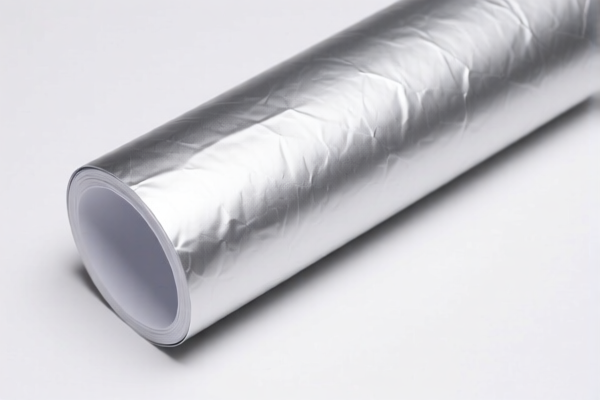
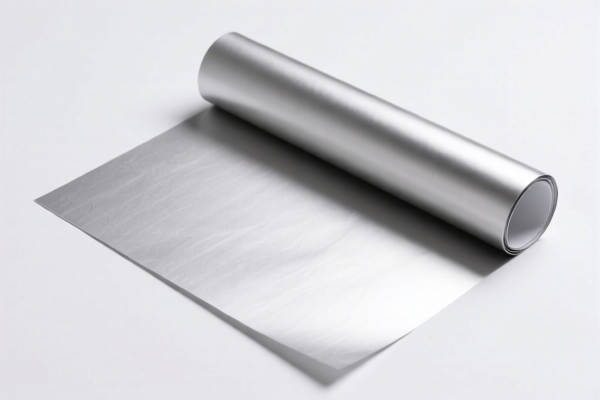
Halide Silver Photographic Paper (often referred to as Silver Salt Photo Paper) is a specialized imaging medium. It consists of paper coated with light-sensitive emulsions containing silver halides. The "(610mm+)" specification indicates it is a large-format roll, typically used in professional darkrooms, wide-format printers, or architectural photography, exceeding the standard A3/A2 width thresholds.
In international trade, the classification hinges on a critical distinction: Is it a finished photographic paper ready for printing (Chapter 48), or a raw/semi-finished light-sensitive material for industrial or specialized photographic processing (Chapter 37)?
⚠️ Key Distinction Point:
- If classified as Chapter 37 (Light-sensitive materials): It is treated as a chemical/photographic medium. Higher duties often apply due to the "halide silver" content and specific width restrictions.
- If classified as Chapter 48 (Paper products): It is treated as a coated paper product. Duties are generally lower (base 0%), but heavy trade remedies (Section 301/122) may still apply.
📦 II. HS Code Classification Details (2026 Latest Tariff Authority Comparison)
Based on the provided data, here are the possible HS Code classifications, ranging from direct photographic materials to general paper products.
| HS Code | Product Description | Application Scenario | Classification Logic |
|---|---|---|---|
3703.10.30.90 |
Halide Silver Photographic Paper, Roll, Width > 610mm | Professional large-format photo paper | ✅ Direct Match: Explicitly states "Halide Silver" and "Roll" with width > 610mm. |
3703.10.30.60 |
Halide Silver Photographic Paper, Roll, Width ≥ 610mm | Professional large-format photo paper | ✅ Direct Match: Same as above, slight sub-category variation for width compliance. |
4823.40.00.00 |
Paper Rolls for Printing | General printing paper rolls | ⚠️ Inferred: Assumes paper material based on "roll" shape and "printing" use. Ignores silver salt sensitivity. |
4823.90.86.80 |
Other Paper Articles, Cut to Size/Shape | Silver salt paper as "paper product" | ⚠️ Inferred: Treats it as a generic paper product cut to width. |
4811.90.20.00 |
Large Roll Paper, Photography Use | Wide-format photography paper | ⚠️ Inferred: Focuses on "Paper" material and "Photography" use, ignoring chemical composition. |
9007.91.40.00 |
Photographic Goods, Primary Form | Raw/Intermediate photographic material | ⚠️ Loose Fit: Treats it as a primary form of photographic material under cameras/equipment accessories. |
🔍 Key Reminder:
- HS 3703 is the most technically accurate for "Halide Silver" paper because it falls under Chapter 37 (Photographic goods).
- HS 48xx codes are risky because they classify the item as "Paper," potentially overlooking the sensitive emulsion, which may lead to customs scrutiny or misclassification penalties if the chemical nature is not declared.
- HS 9007 is unusual for paper rolls and typically refers to camera parts; using it here is a "primary form" argument that may be rejected if the item is clearly finished photographic paper.
💰 III. 2026 Latest Tariff Rate Breakdown (Including Additional Taxes, Policy Surcharges)
✅ Applicable Country: United States (US)
✅ Origin: China (CN)
✅ Effective Date: From November 10, 2025 (and subsequent imports)
🎯 1. 3703.10.30.90 & 3703.10.30.60 —— Halide Silver Photographic Paper
| Item | Content |
|---|---|
| Base Tariff | 3.7% (ad valorem) |
| Trade Remedy Tariff | +25.0% (Section 301 / Section 122) |
| 122 Clause Surcharge | +10.0% (Specific provision for photographic materials/paper) |
| Total Tariff Rate | 38.7% |
| Tax Calculation | CIF Value × 38.7% |
| De Minimis Eligibility | ❌ Not Allowed (deny_de_minimis) |
| Legal Basis Path | USITC:3703.10.30.90 → Footnote: 301/122 → IEEPA: Additional Tariff |
📌 Explanation:
- Base 3.7%: Standard Most Favored Nation (MFN) rate for photographic paper.
- 25% Surcharge: Applies to most Chinese goods under Section 301.
- 10% Surcharge: Specific "122 Clause" tariff often applied to certain paper/photographic categories to protect domestic manufacturing.
- Total 38.7%: A very high duty rate. Cost significantly impacts profit margins.
🎯 2. 4823.40.00.00, 4823.90.86.80, 4811.90.20.00 —— Paper Rolls / Paper Articles
| Item | Content |
|---|---|
| Base Tariff | 0.0% (ad valorem) |
| Trade Remedy Tariff | +25.0% (Section 301) |
| 122 Clause Surcharge | +10.0% |
| Total Tariff Rate | 35.0% |
| Tax Calculation | CIF Value × 35.0% |
| De Minimis Eligibility | ❌ Not Allowed (deny_de_minimis) |
| Legal Basis Path | USITC:4823.xxxx → Footnote: 301/122 → IEEPA: Additional Tariff |
📌 Explanation:
- Base 0%: Paper products often have low or zero base duties.
- Trade Remedies: Despite the low base, the 25% + 10% surcharges push the total to 35.0%.
- Risk: Misclassifying silver paper as "paper" might seem cheaper (35% vs 38.7%), but if Customs determines it is chemically sensitive (Chapter 37), they may reclassify it post-audit, leading to back taxes + penalties.
🎯 3. 9007.91.40.00 —— Photographic Goods (Primary Form)
| Item | Content |
|---|---|
| Base Tariff | 0.0% (ad valorem) |
| Trade Remedy Tariff | +7.5% |
| 122 Clause Surcharge | +10.0% |
| Total Tariff Rate | 17.5% |
| Tax Calculation | CIF Value × 17.5% |
| De Minimis Eligibility | ❌ Not Allowed (deny_de_minimis) |
| Legal Basis Path | USITC:9007.91.40.00 → Footnote: 7.5%/10% |
📌 Explanation:
- Base 0%: Camera accessories/parts often have 0% base duty.
- Lower Surcharges: This code has a lower trade remedy rate (7.5%) compared to standard 301 goods (25%).
- Risk: This is the cheapest option (17.5%) but the least accurate. "9007" is for cameras and lenses. Claiming paper is a "part of a camera" or "primary form" is a stretch and highly likely to be challenged by Customs if the product is clearly photo paper. Only use if you have strong legal precedent or advance ruling.
🛠️ IV. Clearance Practical Advice (Combat Pitfall Guide)
✅ 1. Document Preparation Checklist (All Required)
| Document | Required? | Description |
|---|---|---|
| ✅ Product Specification Sheet | ✔️ | Must detail: "Silver Halide Emulsion," "Paper Base," "Roll Width > 610mm," "Shelf Life," "Storage Temp." |
| ✅ Material Safety Data Sheet (MSDS) | ✔️ | Proves chemical composition (Silver content) if classified under Chapter 37. |
| ✅ Product Photos (Packaging & Label) | ✔️ | Must show "Photographic Paper," Brand, Model, and "Halide Silver" if visible. |
| ✅ Commercial Invoice | ✔️ | Description must be precise: "Roll of Halide Silver Photographic Paper, Width 610mm+, for Darkroom Use." Avoid vague terms like "Printing Paper." |
| ✅ Packing List | ✔️ | Clearly state gross/net weight and number of rolls. |
| ✅ Certificate of Origin (CO) | ✔️ | If not from China, may affect tariff. For China, confirms origin for surcharges. |
✅ 2. Declaration Tips (Key Mantra)
🔥 “Declare the Chemical, Not Just the Paper!”
| Scenario | Correct Declaration | Wrong Practice |
|---|---|---|
| Professional Photo Paper | 3703.10.30.90 / 3703.10.30.60Desc: "Halide Silver Photographic Paper Roll" |
4823.40.00.00Desc: "Paper Roll for Printing" |
| Wide Format Inkjet Paper (No Silver) | 4823.40.00.00 (if not sensitive) |
3703.10.30.90 (Wrong chapter) |
| Raw Silver Chloride Powder | 2808.00.00.00 (Chemical) |
3703.10.30.90 (Finished paper) |
| Used Photo Paper | 4803.00.00.00 (Waste Paper) |
3703.10.30.90 (New goods) |
⚠️ Critical Warning:
- Do not declare "Halide Silver Paper" as "General Printing Paper" (HS 4823) to save 3.7%. Customs may inspect the emulsion layer. If found, they will reclassify to 3703 and charge the difference + penalties.
- However, if the paper is not light-sensitive (e.g., matte coated for non-photographic use), then HS 4823 is correct and cheaper (35% vs 38.7%). Be honest about sensitivity.
✅ 3. Special Cases Handling
| Case | Handling Advice |
|---|---|
| OEM Custom Paper | Provide client design files + proof of exclusive use. Still classified under 3703 if silver-based. |
| Roll Width Exactly 610mm | Check if it falls under 3703.10.30.60 or 90. Small width differences change subcodes. |
| Hybrid Products (Digital + Silver) | If it’s a digital print on silver paper, it’s still photographic paper. No exemption. |
| Samples / Small Quantity | Still subject to tariffs. De minimis does not apply for Chinese goods in these categories. |
🌍 V. Global Market Clearance Comparison (2026 Latest)
| Country/Region | Recommended HS Code | Duty Rate (China Origin) | Certification Req. | Notes |
|---|---|---|---|---|
| 🇺🇸 USA | 3703.10.30.90 |
38.7% | FDA/MSDS (if chemical) | Highest duty due to 301+122. |
| 🇨🇳 China | 3703.10.30.90 |
3.7% | No special cert | No surcharges. |
| 🇪🇺 EU | 3703.91 / 4809 |
~6.5% | REACH (Silver compounds) | No 301 tariffs. |
| 🇬🇧 UK | 3703.91 |
~6.5% | UKCA | Post-Brexit rules apply. |
| 🇯🇵 Japan | 3703.91 |
6.0% | None | Low base duty. |
📌 Conclusion:
- USA is the most expensive market due to political tariffs (301/122).
- EU/Asia have stable, lower rates (~6-7%).
- Strategy: If exporting to the US, consider pre-packaging or value-add processing in a third country (e.g., Vietnam, Mexico) to avoid Chinese origin surcharges, if legally compliant (substantial transformation required).
📌 VI. Common Errors & Pitfall Guide (Blood & Tears Lessons)
❌ Error 1: Declaring "Halide Silver Paper" as "Office Paper" (4802)
👉 Consequence: Customs inspects, finds silver emulsion, reclassifies to 3703. Back taxes + 20% penalty.
💡 Fix: Always mention "Photographic" and "Silver Halide" in description.
❌ Error 2: Ignoring the "122 Clause"
👉 Consequence: Applying only 301 (25%) + Base (3.7%) = 28.7%, but actual duty is 38.7%. Short-paid by 10%.
💡 Fix: Check if the specific HS code is subject to Section 122 surcharges (common for certain papers/chemicals).
❌ Error 3: Using 9007.91.40.00 without Advance Ruling
👉 Consequence: Customs rejects it as "not a camera part." Delays shipment, demurrage fees.
💡 Fix: Only use 9007 if you have a binding opinion or the product is truly raw material, not finished paper.
❌ Error 4: Incorrect Width Declaration
👉 Consequence: Declaring 600mm when it’s 610mm+ shifts it to a different subcode.
💡 Fix: Measure accurately. "610mm+" is a specific threshold in HS codes.
✅ Correct Practice:
"Roll of Light-Sensitive Halide Silver Photographic Paper, on Paper Base, Width 610mm+, Coated with Silver Chloride Emulsion, for Professional Darkroom Use, Unexposed, Model: XYZ-610R"
🎯 VII. Conclusion: Precise Classification Saves Money & Time
🎯 Remember the Mantra:
🔹 "Silver Halide = Chapter 37".
🔹 "38.7% Total Duty in US is Non-Negotiable for Accurate Class".
🔹 "Misclassifying as Paper (35%) is Risky; 3.7% difference may not cover penalty risk".
🔹 "Always declare chemical sensitivity".
📌 Pro Tip:
- If you are importing large volumes to the US, apply for an Advance Ruling from CBP. It provides legal certainty on whether 3703 or 4823 is correct for your specific product.
- Consider supply chain diversification if possible. Products sourced from Vietnam/Thailand may avoid the 25% Section 301 tariff, though 122 clause may still apply depending on rules of origin.
📣 Immediate Action:
📞 Contact your customs broker: Provide the MSDS and Product Specs.
📋 Verify HS Code: Confirm if your specific paper batch falls under3703.10.30.90or60.
🚀 Budget for 38.7%: Ensure your pricing model accounts for the full landed cost including all surcharges.
✨ Professional Clearance, Start with Accurate Classification!
💼 Every Penny Saved in Dues is a Penny in Profit!
Customer Reviews
About HS Code Classification
The Harmonized System (HS) is an internationally standardized nomenclature developed by the World Customs Organization (WCO) to classify traded products. Over 200 countries use the HS system as the basis for customs tariffs, trade statistics, and import/export regulations.
Each HS code follows a hierarchical structure:
- Chapter (2 digits) — Broad category of goods (e.g., Chapter 84: Machinery and Mechanical Appliances)
- Heading (4 digits) — More specific grouping within the chapter
- Subheading (6 digits) — Internationally standardized breakdown, used by all WCO member countries
- National subdivisions (8-10 digits) — Country-specific extensions for further classification, such as US HTSUS 10-digit codes
Correct HS code classification is essential for smooth customs clearance, accurate duty payment, and compliance with trade regulations. Misclassification can lead to customs delays, overpayment of duties, or penalties.
When importing from CN to US, the applicable tariff rates may include:
- Most-Favored-Nation (MFN) rate — The standard duty rate applied to WTO members
- General rate — Applied to countries without trade agreements
- Trade remedy duties — Additional tariffs such as Section 301 (anti-dumping), Section 232 (national security), or countervailing duties
The information provided on this page is for reference purposes only. For official classification, please consult with your local customs authority or a licensed customs broker.