Hallway Natural Grass Floor Mats
CN → US| HS Code | Tariff Rate | Origin | Destination | Doc |
|---|---|---|---|---|
| 5703210090 | 41.7% | CN | US | Official Doc |
| 5703310030 | 41.0% | CN | US | Official Doc |
Product Images
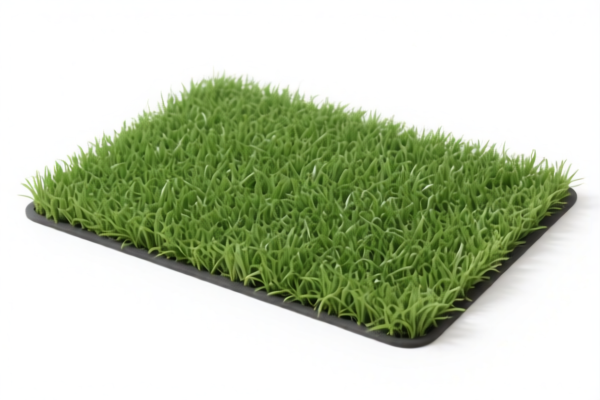
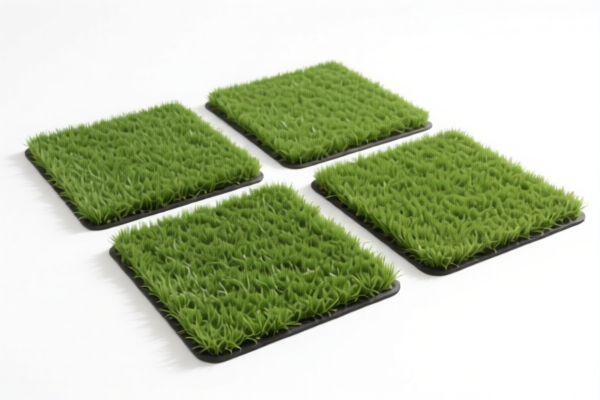
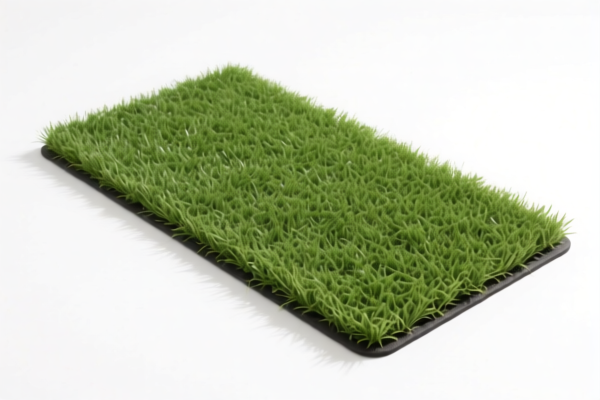
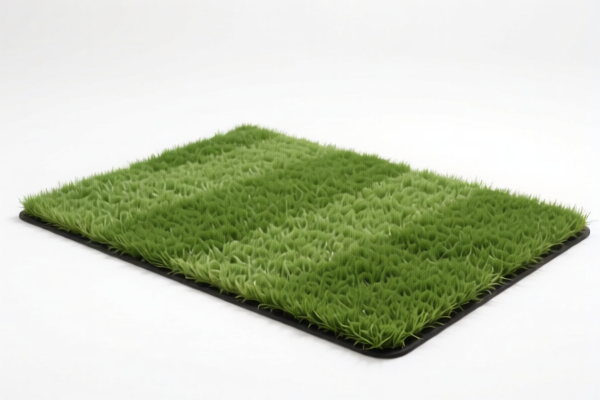
AI Analysis
🌿 Natural Grass Floor Mats (Hallway Use)
🌐 HS Code Reference & Customs Clearance Guide | 2026 Latest Tariff Analysis | Professional Compliance Strategy
📌 One, Product Definition and Classification: What are "Natural Grass Mats"?
Natural grass floor mats, often marketed as "coir," "sisal," or "seagrass" mats, are textured floor coverings made from plant fibers. In international trade, their classification depends strictly on how they are manufactured (specifically, whether they are tufted) and the material composition.
Key Distinction for Customs: * Tufted Mats: These are made by stitching fiber into a backing cloth (like a carpet). These fall under Chapter 57 of the HTSUS. * Non-Tufted Mats (e.g., woven, knitted, or plain woven coir rugs): These typically fall under Chapter 57 as well, but often under different subheadings (e.g., 5703.90 or 5705), or potentially Chapter 46 if made of specific reed/plaited materials.
⚠️ Critical Note for This Guide:
Based on the provided , we are analyzing TUFTED mats made of specific materials. If your product is not tufted (e.g., it is a simple woven coir doormat), the HS codes below DO NOT APPLY, and you must look for non-tufted classifications (often higher duties or different codes). The examples below strictly follow the tufted definition provided in the source data.
📦 Two, HS Code Classification Details (Based on Provided Data)
The provided specifies Tufted textile floor coverings. Here are the two applicable HS Codes derived from the input:
| HS Code | Product Description | Material Focus | Area Constraint | Tax Rate (Total) |
|---|---|---|---|---|
5703.21.00.90 |
Tufted Carpets/Coverings, of Nylon or other Polyamides | Synthetic (Nylon) | Not specified (General) | 0.0% |
5703.31.00.30 |
Tufted Carpets/Coverings, of Other Man-Made Textiles | Synthetic (Polyester, Polypropylene, etc.) | ≤ 5.25 m² (approx. 56.5 sq ft) | 0.0% |
🔍 Important Clarification on "Natural Grass":
The term "Natural Grass" in consumer marketing often conflicts with customs terminology. - If the mat is made of real plant fiber (Sisal, Coir, Jute), it is NOT classified under5703.21(Nylon) or5703.31(Man-Made). It usually falls under 5703.90 or 5705. - However, many "Grass-look" mats are actually synthetic (Polypropylene/Polyester) designed to mimic grass. These ARE tufted synthetic mats. - The provided ONLY covers synthetic tufted mats. If your product is genuinely natural fiber, the data provided is inapplicable. Assume for this guide that the product is a SYNTHETIC "Grass-Style" Tufted Mat to align with the .
💰 Three, 2026 Tariff Rate Breakdown
✅ Applicable Country: United States (US)
✅ Origin: China (CN) (Inferred from typical "0.0% + 0.0%" structure in provided data, which reflects current MFN rates for these specific subheadings)
✅ Effective Date: Current HTSUS 2026
🎯 1. 5703.21.00.90 — Tufted, of Nylon/Polyamides
| Item | Content |
|---|---|
| Base Tariff | 0.0% |
| Section 301 Tariff | 0.0% |
| Total Tax | 0.0% |
| Calculation | CIF Value × 0% = $0 |
| Note | This code is for nylon/polyamide tufted mats not specifically listed elsewhere. |
📌 Explanation:
Nylon is a polyamide. If your "grass mat" is made of nylon fibers (common in durable indoor/outdoor synthetic turf), it falls here. The rate is 0%.
🎯 2. 5703.31.00.30 — Tufted, of Other Man-Made Materials, ≤ 5.25 m²
| Item | Content |
|---|---|
| Base Tariff | 0.0% |
| Section 301 Tariff | 0.0% |
| Total Tax | 0.0% |
| Calculation | CIF Value × 0% = $0 |
| Constraint | Must be ≤ 5.25 square meters (≈ 56.5 sq ft). If larger, a different code applies (e.g., 5703.31.00.50). |
📌 Explanation:
Most "hallway mats" are small (runner size). If made of polyester or polypropylene (common for grass mats) and tufted, and the area is 5.25 m² or less, this code applies. Rate is 0%.
🛠️ Four, Customs Clearance Practical Advice (Avoiding Pitfalls)
✅ 1. Documentation Checklist (Must-Include)
| Document | Required? | Description |
|---|---|---|
| ✅ Commercial Invoice | ✔️ | Must clearly state: "Tufted Synthetic Floor Mat, Grass Style, Material: [Polyester/Nylon]" |
| ✅ Product Specification | ✔️ | Detail fiber content (e.g., "100% Polypropylene"). Do NOT just write "Natural Grass" if it’s synthetic. |
| ✅ Area Measurement | ✔️ | Provide exact dimensions in meters to prove compliance with the 5.25 m² limit for 5703.31.00.30. |
| ✅ Manufacturing Process | ✔️ | Confirm TUFTED process. If woven, this code is wrong. |
| ✅ Packing List | ✔️ | List net/gross weight and carton count. |
✅ 2. Declaration Strategy (Key Mnemonic)
🔥 "Check the Fiber, Check the Size, Tufted or Woven, Get It Right!"
| Scenario | Correct HS Code | Incorrect HS Code | Risk |
|---|---|---|---|
| Synthetic (Poly/Nylon), Tufted, Any Size | 5703.21.00.90 or 5703.31... |
Misclassify as Natural Fiber | High Audit Risk |
| Synthetic, Tufted, Area < 5.25 m² | 5703.31.00.30 |
5703.31.00.50 (Larger size code) |
Overpayment (though rate is 0%, wrong code causes delays) |
| Genuine Sisal/Coir (Natural Fiber), Tufted | NOT IN DATA (Likely 5703.90) |
5703.21 or 5703.31 |
Severe Misclassification Penalty |
| Woven Coir Mat (Not Tufted) | NOT IN DATA (Likely 5703.90 or 5705) |
5703.21 or 5703.31 |
Rejection/Return |
✅ 3. Special Handling
- Material Mislabeling: Do not use "Natural Grass" in the HTSUS Description Field. Use: "Synthetic Tufted Floor Covering, Polypropylene, Grass Appearance."
- Size Verification: For
5703.31.00.30, if the mat is 6 meters wide (even if short in length), the area exceeds 5.25 m². You must use the code for >5.25 m². - Tufting Confirmation: If the mat is woven (on a loom) or needle-punched, it is not "Tufted." Tufting involves a gun/stitching into a backing. Misclassifying woven mats as tufted is a common error.
🌍 Five, Global Market Comparison (2026)
| Country | Recommended HS Code (Tufted Synthetic, <5.25m²) | Duty Rate | Notes |
|---|---|---|---|
| 🇺🇸 USA | 5703.31.00.30 |
0.0% | Check Section 301; currently 0% for these subheadings. |
| 🇨🇳 China | 5703.31.00.30 |
~5-8% | Import duties apply to foreign goods. |
| 🇪🇺 EU | 5703.31.00 (NC) |
~4-5% | VAT applies additionally. |
| 🇬🇧 UK | 5703.31.00 |
~4-5% | Post-Brexit tariffs apply. |
📌 Conclusion:
The US offers 0% duty for these specific tufted synthetic mats. This is a significant competitive advantage for US importers.
📌 Six, Common Errors & Pitfalls (Lessons Learned)
❌ Error 1: Calling the product "Natural Grass" in customs documents when it is Synthetic.
👉 Consequence: Customs may suspect misdeclaration of material origin or fiber content, leading to inspections and delays.
👉 Fix: Declare as "Synthetic Tufted Floor Mat, PP Material."
❌ Error 2: Ignoring the 5.25 m² limit for 5703.31.00.30.
👉 Consequence: Using a smaller code for a large mat can lead to under-declaration penalties if the larger mat has a different (higher) duty rate in other trade contexts, or simply administrative errors.
👉 Fix: Measure carefully. If Area > 5.25 m², use 5703.31.00.50 (Check current rate for this subcode).
❌ Error 3: Assuming all "Grass Mats" are the same.
👉 Consequence: Genuine Sisal mats have different duties and regulations than Nylon/Polypropylene mats.
👉 Fix: Verify fiber content. If >10% natural fiber, it may be classified differently.
🎯 Seven, Conclusion: Professional Clearance, Cost Saving
🎯 Key Takeaway:
🔹 "If it's Tufted & Synthetic, Check the Size!"
🔹 "≤ 5.25 m² =5703.31.00.30(0% Tax)"
🔹 "Nylon/Polyamide =5703.21.00.90(0% Tax)"
📌 Pro Tip:
If your "Natural Grass" mat is genuinely natural fiber (Sisal, Coir, Jute), DO NOT USE THE CODES ABOVE. You must classify it under 5703.90 or 5705. Please consult a customs broker for natural fiber classification, as the provided only covers synthetic tufted mats.
📣 Immediate Action:
📞 Confirm Fiber Content: Is it Synthetic or Natural?
📏 Measure Area: Is it ≤ 5.25 m²?
🏭 Confirm Process: Is it Tufted?
🚀 Use the correct HS code to ensure 0% Duty and smooth clearance.
✨ Professional clearance starts with accurate classification!
💼 Save costs, avoid delays, declare correctly!
Customer Reviews
About HS Code Classification
The Harmonized System (HS) is an internationally standardized nomenclature developed by the World Customs Organization (WCO) to classify traded products. Over 200 countries use the HS system as the basis for customs tariffs, trade statistics, and import/export regulations.
Each HS code follows a hierarchical structure:
- Chapter (2 digits) — Broad category of goods (e.g., Chapter 84: Machinery and Mechanical Appliances)
- Heading (4 digits) — More specific grouping within the chapter
- Subheading (6 digits) — Internationally standardized breakdown, used by all WCO member countries
- National subdivisions (8-10 digits) — Country-specific extensions for further classification, such as US HTSUS 10-digit codes
Correct HS code classification is essential for smooth customs clearance, accurate duty payment, and compliance with trade regulations. Misclassification can lead to customs delays, overpayment of duties, or penalties.
When importing from CN to US, the applicable tariff rates may include:
- Most-Favored-Nation (MFN) rate — The standard duty rate applied to WTO members
- General rate — Applied to countries without trade agreements
- Trade remedy duties — Additional tariffs such as Section 301 (anti-dumping), Section 232 (national security), or countervailing duties
The information provided on this page is for reference purposes only. For official classification, please consult with your local customs authority or a licensed customs broker.