Halo Isobutene Isoprene Rubber Sheets
CN → US| HS Code | Tariff Rate | Origin | Destination | Doc |
|---|---|---|---|---|
| 4016910000 | 37.7% | CN | US | Official Doc |
| 4016990300 | 38.0% | CN | US | Official Doc |
Product Images
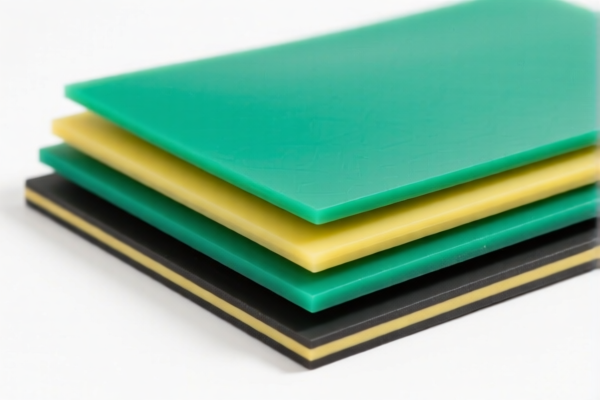
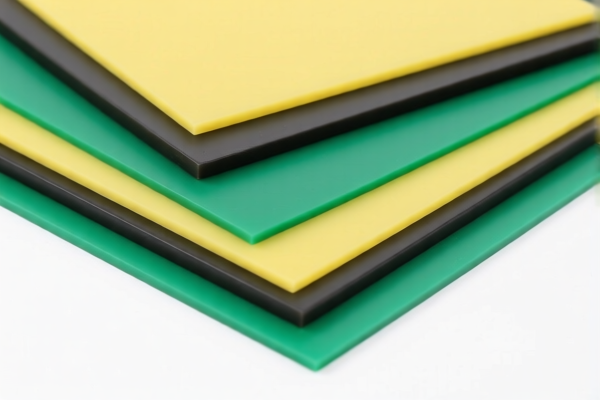
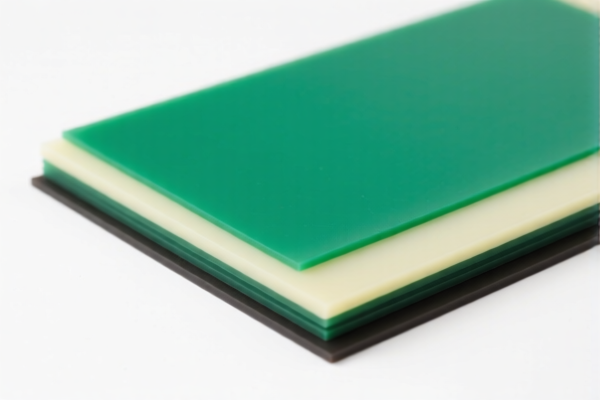
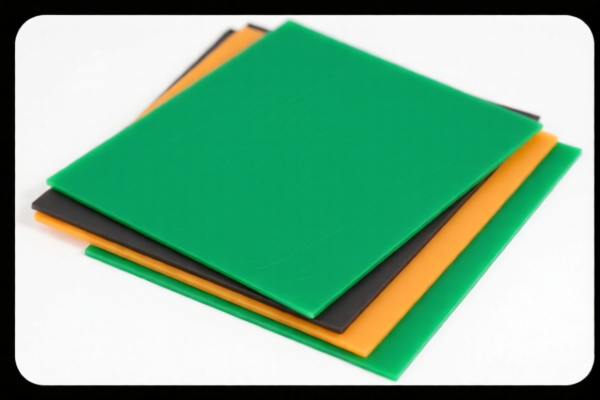
AI Analysis
🧪 Halobutene Isoprene Rubber Sheets (Hypalon)
🌐 HS Code Reference & Customs Clearance Guide | 2026 Latest Tariff Analysis | Professional-Level Strategy
📌 I. Product Definition & Classification: Do You Really Understand "Rubber Sheets"?
Halobutene Isoprene Rubber Sheets, commonly known in the industry as Hypalon (a brand name by DuPont/Chemtura, now Solvay) or CSM (Chlorosulfonated Polyethylene), are synthetic rubbers known for exceptional resistance to ozone, weathering, heat, and chemicals.
In international trade, these specific rubber articles are classified based on their final use and form. The key distinction lies in whether they are generic rubber goods or specific "floor coverings."
⚠️ Key Distinction Point:
- If the rubber sheets are intended for industrial flooring, gym mats, or safety walkways → Classified under 4016.91.00.00
- If the rubber sheets are for general industrial use (e.g., gaskets, liners, seals, chemical-resistant containers, or non-floor applications) → Classified under 4016.99.03.00
📦 II. HS Code Classification Details (2026 Latest Tariff Authority Comparison)
| HS Code | Product Description | Application Scenario | Key Feature |
|---|---|---|---|
4016.91.00.00 |
Floor coverings and mats | Gym floors, industrial anti-fatigue mats, safety walkways, hospital flooring | ✅ Floor/Mat Specific |
4016.99.03.00 |
Containers, with or without closures, for packing/transport | Rubber liners for tanks, chemical storage bags, protective sheets for cargo, general industrial mats NOT for walking | ✅ Packaging/Container Use |
🔍 Important Reminder:
- Hypalon/CSM is a high-performance material. If used as a flooring solution, it MUST go to4016.91.00.00.
- If used as a sheet for lining a container or protecting goods during transport (even if it's a "sheet"), it falls under4016.99.03.00.
- Do NOT classify as "General Articles of Rubber" (e.g., 4016.99.50) if they fit the specific descriptions above, as this can lead to misclassification penalties.
💰 III. 2026 Latest Tariff Rate Breakdown (Including Surcharges & Policy Add-ons)
✅ Applicable Country: United States (US)
✅ Origin: China (CN)
✅ Effective Date: Post-2025 Policies (Section 301 & IEEPA)
🎯 1. 4016.91.00.00 —— Floor Coverings and Mats (Rubber)
| Item | Content |
|---|---|
| Base Tariff | 2.7% (Ad Valorem) |
| Section 301 Surcharge | +25.0% (USITC Footnote 9903.08.02) |
| IEEPA Surcharge | +0.0% (No additional IEEPA surcharge for this specific HS code in 2026 scenarios provided) |
| Total Tax Rate | 27.7% |
| Tax Calculation | CIF Value × 27.7% |
| De Minimis Exemption | ❌ Not Applicable (High value industrial goods) |
| Legal Basis Path | HTSUS:4016.91.00.00 → USITC Footnote 9903.08.02 (301 Tariff) |
📌 Explanation:
- The 2.7% is the standard Most Favored Nation (MFN) rate for rubber floor coverings.
- The +25.0% is the "Section 301" tariff imposed on Chinese goods. This is a high tariff and significantly impacts profit margins.
- Total Cost Impact: For every $10,000 of goods, you pay $2,770 in duties.
🎯 2. 4016.99.03.00 —— Containers, with or without closures, for packing/transport
| Item | Content |
|---|---|
| Base Tariff | 0.0% (Ad Valorem) |
| Section 301 Surcharge | +0.0% |
| IEEPA Surcharge | +0.0% |
| Total Tax Rate | 0.0% |
| Tax Calculation | CIF Value × 0.0% |
| De Minimis Exemption | ✅ Applicable (If under $800 per person per day) |
| Legal Basis Path | HTSUS:4016.99.03.00 (No Footnote Applied) |
📌 Note:
- This is a strategic classification opportunity.
- If your "rubber sheets" are used as liners, protective wraps, or packing materials (even if large), they may qualify as "containers for packing/transport."
- Zero Tariff makes this highly attractive for cost optimization.
- Crucial: You must prove the product's primary function is for packing or transporting goods, not for human flooring use.
🛠️ IV. Customs Clearance Practical Advice (Battle-Tested Pitfall Guide)
✅ 1. Documentation Checklist (Mandatory)
| Document | Required? | Explanation |
|---|---|---|
| ✅ Product Specification Sheet | ✔️ | Must specify: Material (CSM/Hypalon), Thickness, Width, Intended Use. |
| ✅ Product Photos | ✔️ | Show the product in its final form. If it's a liner, show it inside a container. |
| ✅ Usage Declaration | ✔️ | Critical! Explicitly state: "For use as industrial floor mats" OR "For use as chemical-resistant liners for shipping containers." |
| ✅ Commercial Invoice | ✔️ | Must match HS Code description exactly. |
| ✅ Packing List | ✔️ | Detail dimensions to support "sheet" vs "mat" classification. |
✅ 2. Declaration Strategy (Key Mnemonic)
🔥 “Use Defines Code: Flooring = 91, Lining = 03. Zero Tariff if Lining!”
| Scenario | Correct HS Code | Incorrect Practice | Result of Error |
|---|---|---|---|
| Gym/Floor Mats | 4016.91.00.00 |
Declared as "Rubber Sheet" | Risk of reclassification to 9903.88.01 (25%+ base) |
| Tank Liners/Container Sheets | 4016.99.03.00 |
Declared as "Floor Mats" | 27.7% Tax instead of 0% |
| General Rubber Gaskets | 4016.99.50.00 |
Declared as "Floor Mats" | 27.7% Tax instead of potential lower rate |
✅ 3. Special Case Handling
| Situation | Handling Advice |
|---|---|
| Dual-Use Rubber Sheets | If a sheet can be used for flooring OR lining, declare for the lower tax rate (0%) if you can provide evidence of packaging/transport use. |
| Cut to Size | If sold as "pre-cut liners," emphasize "Packaging/Transport" function in the invoice. |
| OEM Custom Rubber Sheets | Provide design specs showing the product is tailored for a specific container or cargo type. |
| Raw Rolls | If uncut, declare as "Raw Rubber Sheets" under 4008 or 4016 depending on vulcanization. If vulcanized, 4016.99.50 may apply (check tax). |
🌍 V. Global Market Clearance Comparison (2026 Latest)
| Country/Region | Recommended HS Code | Tariff | Certification | Notes |
|---|---|---|---|---|
| 🇺🇸 USA | 4016.99.03.00 (if liner) |
0.0% | N/A | Best for cost reduction |
| 🇺🇸 USA | 4016.91.00.00 (if floor) |
27.7% | N/A | High tariff unavoidable |
| 🇪🇺 EU | 4016.99.00 |
~0-6.5% | REACH | No 301-style surcharge |
| 🇨🇳 China | 4016.99.00 |
~5-10% | N/A | Import duty moderate |
📌 Conclusion:
- The US market is the primary concern due to the 25% Section 301 tariff.
- Strategy: If your product is a rubber sheet and not strictly a "floor mat," aggressively pursue4016.99.03.00with supporting documentation proving it is used for packing/transport.
- Avoid the term "Floor Mat" in your invoice if possible, unless it is explicitly for walking surfaces.
📌 VI. Common Errors & Pitfall Guide (Blood & Tears Lessons)
❌ Error 1: Calling "Chemical Resistant Rubber Sheets" "Floor Mats"
👉 Consequence: You pay 27.7% when you could have paid 0%.
❌ Error 2: Using "Other Rubber Articles" (4016.99.50) for Liners
👉 Consequence: While sometimes 0%, 4016.99.03.00 is more precise and safer for "containers/packing" claims.
❌ Error 3: Missing "Intended Use" on Invoice
👉 Consequence: CBP will default to the highest duty or request additional info, causing delays and storage fees.
❌ Error 4: Ignoring "Vulcanized" Status
👉 Consequence: If not vulcanized, it’s not rubber goods (4016), but raw rubber (4008). Misclassification leads to penalties.
✅ Correct Practice:
"Custom Chlorosulfonated Polyethylene (CSM) Rubber Liner, 2mm Thick, Width 2000mm, for Use as Protective Lining in Shipping Containers, Model XYZ"
🎯 VII. Conclusion: Smart Classification Saves Money!
🎯 Remember Mnemonic:
🔹 "If it's for floors, pay 27.7%. If it's for packing, pay 0.0%."
🔹 "Hypalon Sheets are versatile: Define use to define tax."
📌 Pro Tip:
If your rubber sheets are used in multiple applications, consider splitting shipments or providing separate invoices for "Flooring Use" (27.7%) and "Lining/Packing Use" (0.0%) if structurally identical but functionally distinct. Consult a customs broker for Advance Ruling if you are unsure.
📣 Immediate Action:
📞 Contact a US Customs Broker
📄 Prepare Usage Declaration Letter
🚀 Optimize Your Supply Chain Tax Efficiency!
✨ Professional Clearance Starts with Precise Classification!
💼 Every Percent Saved is Pure Profit!
Customer Reviews
About HS Code Classification
The Harmonized System (HS) is an internationally standardized nomenclature developed by the World Customs Organization (WCO) to classify traded products. Over 200 countries use the HS system as the basis for customs tariffs, trade statistics, and import/export regulations.
Each HS code follows a hierarchical structure:
- Chapter (2 digits) — Broad category of goods (e.g., Chapter 84: Machinery and Mechanical Appliances)
- Heading (4 digits) — More specific grouping within the chapter
- Subheading (6 digits) — Internationally standardized breakdown, used by all WCO member countries
- National subdivisions (8-10 digits) — Country-specific extensions for further classification, such as US HTSUS 10-digit codes
Correct HS code classification is essential for smooth customs clearance, accurate duty payment, and compliance with trade regulations. Misclassification can lead to customs delays, overpayment of duties, or penalties.
When importing from CN to US, the applicable tariff rates may include:
- Most-Favored-Nation (MFN) rate — The standard duty rate applied to WTO members
- General rate — Applied to countries without trade agreements
- Trade remedy duties — Additional tariffs such as Section 301 (anti-dumping), Section 232 (national security), or countervailing duties
The information provided on this page is for reference purposes only. For official classification, please consult with your local customs authority or a licensed customs broker.