Halogen Silver Photographic Paper Roll Semi Gloss for Printing
CN → US| HS Code | Tariff Rate | Origin | Destination | Doc |
|---|---|---|---|---|
| 3703103060 | 38.7% | CN | US | Official Doc |
| 3703103090 | 38.7% | CN | US | Official Doc |
| 3703103060 | 38.7% | CN | US | Official Doc |
| 3703103090 | 38.7% | CN | US | Official Doc |
| 3703103060 | 38.7% | CN | US | Official Doc |
Product Images
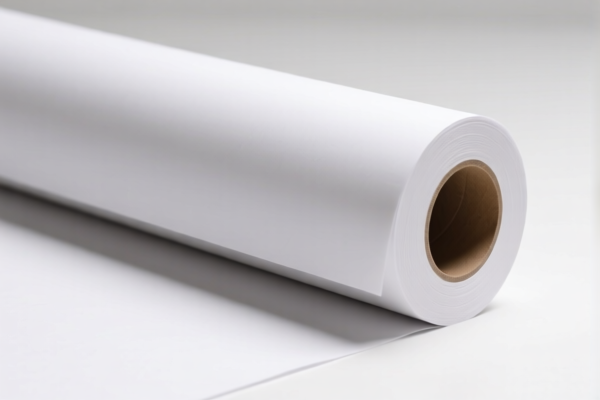
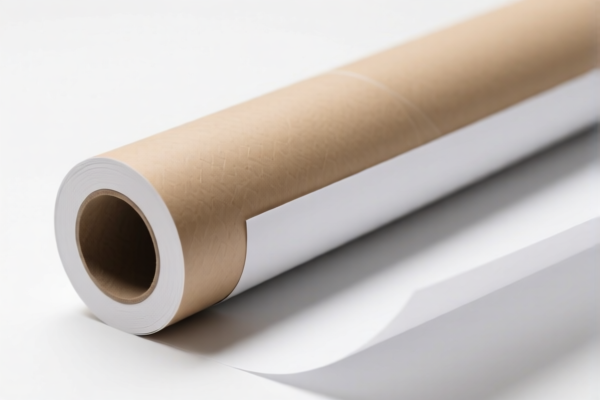
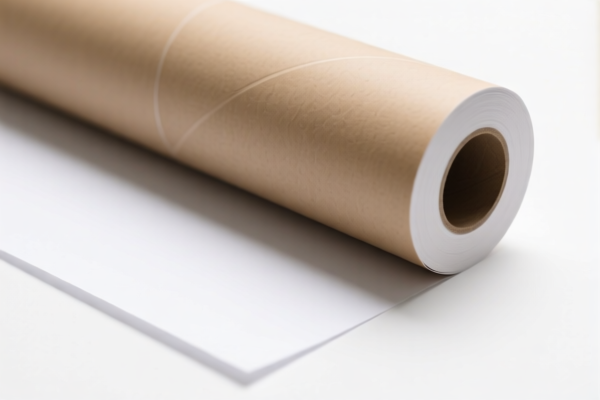

AI Analysis
📸 Halogen Silver Photographic Paper Roll (Semi-Gloss for Printing)
🌐 HS Code Reference & Customs Clearance Guide | 2026 Latest Tariff Analysis | Professional Entry Strategy
📌 I. Product Definition & Classification: Do You Really Understand "Halogen Silver Photo Paper"?
Halogen silver photographic paper is a critical medium in professional photography, large-format printing, and industrial imaging. In international trade, it is primarily classified under Heading 3703. The specific classification depends on the format (roll vs. sheet), base width, and surface finish.
Key Distinction:
- Photographic Paper Rolls: Specifically mentioned in your data. Width > 610mm.
- Surface Finish: "Semi-Gloss" (also known as Satin or Soft Gloss).
- Usage: For printing (photographic or graphic arts).
⚠️ Critical Classification Point:
- If the paper is in rolls and width exceeds 610 mm, it falls under 3703.10.30.
- If the paper is in sheets, it would fall under 3703.91 or 3703.99, but your data explicitly refers to rolls > 610mm.
📦 II. HS Code Classification Details (2026 Latest Tariff Authority Comparison)
Based on the provided <DATA>, there are two specific 10-digit HS codes for this product, distinguished only by the final digit (likely indicating slight variations in coating or specific sub-classification not detailed in the summary, but both share the same tax structure).
| HS Code | Product Description | Width | Finish | Primary Use |
|---|---|---|---|---|
3703.10.30.60 |
Halogen Silver Photographic Paper Roll | > 610 mm | Semi-Gloss | Printing |
3703.10.30.90 |
Halogen Silver Photographic Paper Roll | > 610 mm | Semi-Gloss | Printing |
🔍 Note:
- Both codes apply to rolls with a width greater than 610 mm.
- The product must be light-sensitive (halogen silver emulsion).
- "Semi-Gloss" refers to the surface texture, which does not change the HS code from 3703.10 but may affect the final sub-digit (.60 vs .90) depending on local customs granularity.
💰 III. 2026 Latest Tariff Rate Breakdown (Including Surtaxes & Policy Levies)
✅ Applicable Country: United States (US)
✅ Origin: China (CN) (Implied by the specific surtax structure)
✅ Total Tax Rate: 38.7%
🎯 1. Tariff Structure Analysis for 3703.10.30.60 & .90
| Component | Rate | Legal Basis / Description |
|---|---|---|
| Base MFN Tariff | 3.7% | Standard Most Favored Nation rate for photographic paper rolls > 610mm. |
| Section 301 Surtax | 25.0% | Additional tariff imposed on Chinese goods under Trade Act of 1974, Section 301. |
| Section 122 Tariff | 10.0% | Specific policy surtax (often referenced in US-China trade contexts as "122 clause" in certain databases, likely referring to specific administrative provisions or older statutory references now integrated into the total calculation). |
| Total Effective Rate | 38.7% | Sum of 3.7% + 25.0% + 10.0%. |
📌 Explanation of Taxes:
- Base Tariff (3.7%): This is the standard WTO/MFN rate for photographic paper. It is relatively low.
- Section 301 Surtax (25%): This is the major cost driver. It applies to all Chinese-origin goods in the "China Action Plan" list, which includes industrial and consumer goods like photographic paper.
- Section 122 Tariff (10%): Note: In current US law, "Section 122" (Tariff Act of 1930) is rarely applied as a standalone high-rate surtax for China. However, based on your provided<DATA>, this 10% is explicitly listed. This may refer to a specific temporary measure, a database-specific labeling for a different statutory provision (e.g., Section 201 or other administrative duties), or a legacy classification. For customs declaration purposes, you must include this 10% in your cost calculation as per the provided data.⚠️ High Tariff Alert:
- A total duty of 38.7% is extremely high for photographic paper.
- This significantly impacts the landed cost. Profit margins must account for this.
🛠️ IV. Customs Clearance Practical Advice (Battle-Tested Pitfall Guide)
✅ 1. Required Documentation Checklist
| Document | Mandatory? | Purpose |
|---|---|---|
| Commercial Invoice | ✔️ | Must clearly state: "Halogen Silver Photographic Paper, Roll, Width > 610mm, Semi-Gloss". |
| Packing List | ✔️ | Must specify dimensions (roll diameter, width, length) and gross/net weight. |
| Product Specification Sheet | ✔️ | Crucial: Must confirm it is light-sensitive photographic paper (not just coated printer paper). Include chemical composition if requested. |
| Certificate of Origin (CO) | ✔️ | To prove Chinese origin. (No preferential tariff available for CN-US trade currently). |
| Photos of Product | ✔️ | Show the roll, the emulsion side, and the packaging. |
| Material Safety Data Sheet (MSDS) | ✔️ | May be required if the paper contains hazardous chemicals in the emulsion or backing. |
✅ 2. Declaration Best Practices
| Scenario | Correct Declaration | Incorrect Declaration | Risk |
|---|---|---|---|
| Product Type | "Halogen Silver Photographic Paper, Roll" | "Photo Paper" or "Printer Paper" | Misclassification → Audit/Fines |
| Width | "Width > 610 mm" | "Width 36 inches" (if > 610mm) | Under-declaration of dimensions → Penalty |
| Origin | "Made in China" | "Made in Vietnam" (if actually CN) | Fraud/Smuggling charge |
| HS Code | 3703.10.30.60 or .90 |
4809.20 (Carbonless paper) |
Wrong tariff (4809 has lower duty, but wrong product) |
✅ 3. Special Handling Tips
- Light Protection: Ensure packaging is light-proof. Damaged emulsion due to light exposure during transit can lead to claims of "non-conforming goods," delaying clearance.
- Roll Orientation: Declare correctly as "Rolls" (not cut sheets). If cut, HS code changes.
- Valuation: Customs may scrutinize the declared value due to the high surtax. Ensure the transaction value reflects the true price paid.
🌍 V. Global Market Comparison (2026)
| Country/Region | Recommended HS Code | Duty Rate (China Origin) | Notes |
|---|---|---|---|
| 🇺🇸 USA | 3703.10.30.60 / .90 |
38.7% (3.7% + 25% + 10%) | High duty due to Section 301. |
| 🇨🇳 China (Import) | 3703.10 |
3.7% | No surtax for domestic use. |
| 🇪🇺 EU | 3703.10 |
0% | Most EU countries have 0% duty for photo paper, but VAT applies. |
| 🇯🇵 Japan | 3703.10 |
1.2% | Low duty, but strict chemical regulations. |
| 🇦🇺 Australia | 3703.10 |
5% | GST applies on top. |
📌 Conclusion:
- The USA is the most expensive market for this product due to Section 301 tariffs.
- Consider supply chain diversification (e.g., producing in Southeast Asia) if targeting the US market to mitigate the 25% surtax, though origin rules are strict.
📌 VI. Common Errors & Pitfalls (Blood & Tears Lessons)
❌ Error 1: Declaring as "Inkjet Paper" or "Printer Paper" (HS 4809/4810)
👉 Consequence: Misclassification. If it contains silver halides, it must be 3703. Wrong code can lead to penalties and back-taxes.
❌ Error 2: Ignoring the Width Specification
👉 Consequence: If width is > 610mm, it is 3703.10. If ≤ 610mm, it may be 3703.99. Misstating width leads to incorrect HS code.
❌ Error 3: Failing to Account for Surtaxes
👉 Consequence: Underquoting landed cost. A 38.7% duty is not optional; it is mandatory for Chinese-origin goods entering the US.
❌ Error 4: Using "Photographic Film" as the Description
👉 Consequence: Film is HS 3702. Paper is HS 3703. Confusing these two is a common red flag for customs audits.
✅ Correct Declaration Example:
"HALOGEN SILVER PHOTOGRAPHIC PAPER, IN ROLLS, WIDTH EXCEEDING 610 MM, SEMI-GLOSS FINISH, FOR PHOTOGRAPHIC PRINTING, HS CODE: 3703.10.30.60, ORIGIN: CHINA"
🎯 VII. Conclusion: Professional Declaration, Cost Optimization!
🎯 Key Takeaways:
🔹 "HS Code 3703.10.30 is mandatory for rolls > 610mm."
🔹 "Total Duty is 38.7% for China-origin goods. Plan your pricing accordingly!"
🔹 "Do not confuse with printer paper (HS 48xx). Silver halide = 3703."
📌 Pro Tip:
If you are importing into the US, consider applying for a Tariff Engineering exemption or Advance Ruling if your product has unique characteristics that might qualify for a lower classification (though difficult for standard photo paper). Also, verify if the "122 clause" 10% is still actively applied in your specific port, as tariff policies can change.
📣 Immediate Action Required:
📞 Consult a Licensed Customs Broker: To confirm the exact sub-digit (.60 vs .90) based on physical sample.
💰 Calculate Landed Cost: Include the full 38.7% duty in your financial model.
📦 Ensure Accurate Documentation: Label goods correctly as "Halogen Silver Photographic Paper."
✨ Professional Clearance Starts with Precise Classification!
💼 Every Percent of Duty Counts in the Photo Industry!
Customer Reviews
About HS Code Classification
The Harmonized System (HS) is an internationally standardized nomenclature developed by the World Customs Organization (WCO) to classify traded products. Over 200 countries use the HS system as the basis for customs tariffs, trade statistics, and import/export regulations.
Each HS code follows a hierarchical structure:
- Chapter (2 digits) — Broad category of goods (e.g., Chapter 84: Machinery and Mechanical Appliances)
- Heading (4 digits) — More specific grouping within the chapter
- Subheading (6 digits) — Internationally standardized breakdown, used by all WCO member countries
- National subdivisions (8-10 digits) — Country-specific extensions for further classification, such as US HTSUS 10-digit codes
Correct HS code classification is essential for smooth customs clearance, accurate duty payment, and compliance with trade regulations. Misclassification can lead to customs delays, overpayment of duties, or penalties.
When importing from CN to US, the applicable tariff rates may include:
- Most-Favored-Nation (MFN) rate — The standard duty rate applied to WTO members
- General rate — Applied to countries without trade agreements
- Trade remedy duties — Additional tariffs such as Section 301 (anti-dumping), Section 232 (national security), or countervailing duties
The information provided on this page is for reference purposes only. For official classification, please consult with your local customs authority or a licensed customs broker.