Halogenated Solvent Recovery
CN → US| HS Code | Tariff Rate | Origin | Destination | Doc |
|---|---|---|---|---|
| 8421290005 | 35.0% | CN | US | Official Doc |
| 8421390140 | 35.0% | CN | US | Official Doc |
| 8419400000 | 0.0% | CN | US | Official Doc |
| 8419400040 | 35.0% | CN | US | Official Doc |
Product Images
AI Analysis
🧪 Halogenated Solvent Recovery (Halogenated Solvent Recovery Systems)
🌐 HS Code Reference & Customs Clearance Guide | 2026 Latest Tariff Analysis | Professional Compliance Strategy
📌 I. Product Definition & Classification: What Exactly is "Halogenated Solvent Recovery"?
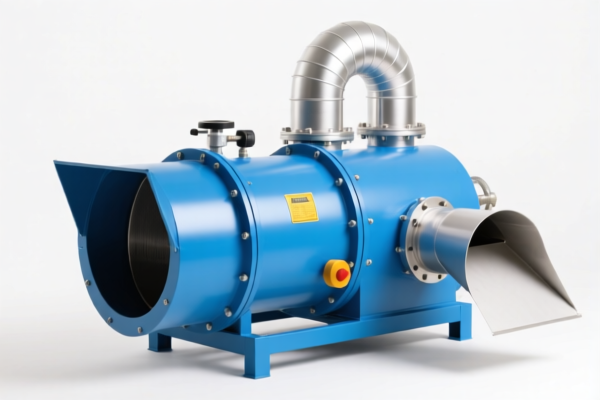
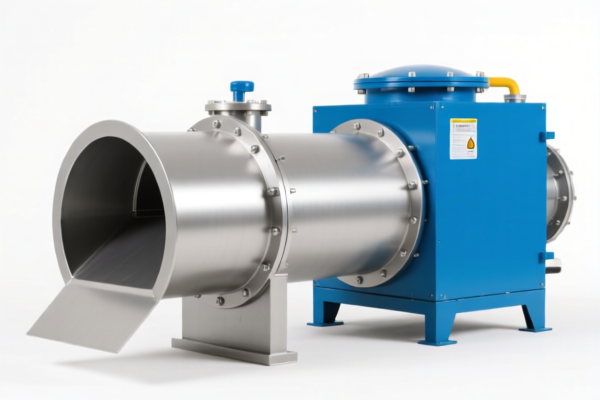
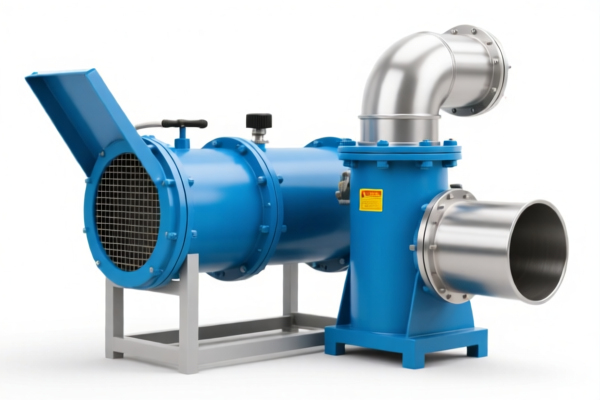
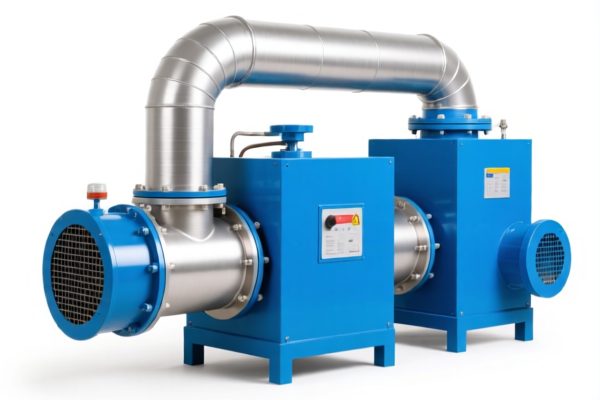
Halogenated Solvent Recovery units are specialized industrial machinery designed to recover, distill, and recycle halogenated solvents (such as Trichloroethylene, Perchloroethylene, Dichloromethane, etc.) from contaminated sources. These systems are critical for environmental compliance and cost reduction in manufacturing, dry cleaning, and metal degreasing industries.
In international trade, these units are categorized based on their primary function: 1. Liquid Filtration/Purification Systems: If the unit primarily uses filtration or membrane technologies to clean liquids. 2. Thermal Distillation/Rectification Plants: If the unit uses heating, evaporation, and condensation processes to separate solvents from impurities.
⚠️ Key Distinction Point:
- If the machine is a closed-loop distillation system involving heating, evaporation, and condensation → It falls under Heading 8419 (Machinery for treatment by change of temperature). - If the machine is purely a mechanical filtration or centrifugal dewatering unit (no thermal phase change) → It falls under Heading 8421 (Centrifuges/Filtering machinery). - Note: Many "Recovery Units" are actually distillation systems. Misclassifying a distiller as a simple filter can lead to severe penalties.
📦 II. HS Code Classification Details (2026 Latest Tariff Authority Comparison)
Based on the provided dataset, here are the relevant HS Codes. Please note: The dataset provided does not contain a specific HS Code exclusively for "Halogenated Solvent Recovery." Therefore, we must analyze the closest functional matches from the provided list and explain why certain codes might apply or must be avoided.
| HS Code | Product Description | Applicability to Solvent Recovery | Tax Details (Source Data) |
|---|---|---|---|
8419.40.00.40 |
Distilling or rectifying plant For food and beverages | ❌ Incorrect for general industrial solvents. Only applies if the recovered solvent is intended for food/beverage processing. | Base: 0.0%, Additional: 25.0% Total: 25.0% |
8419.40.00.00 |
Distilling or rectifying plant Other | ✅ Most Likely Match for industrial halogenated solvent recovery units that use thermal distillation. This covers non-food industrial distillation equipment. | ⚠️ Error: Failed to retrieve tax information |
8421.29.00.05 |
Filtering or purifying machinery for liquids: Other Refrigerant recovery and recycling units | ❌ Incorrect. This code is explicitly for Refrigerants (e.g., HVAC gases), not industrial solvents. Using this is a common misclassification error. | Base: 0.0%, Additional: 25.0% Total: 25.0% |
8421.39.01.40 |
Filtering or purifying machinery for gases: Gas separation equipment | ❌ Incorrect. Applies to gas separation, not liquid solvent recovery. | Base: 0.0%, Additional: 25.0% Total: 25.0% |
🔍 Critical Analysis: -
8421.29.00.05is a trap. Do NOT use this for halogenated solvents. It is strictly for refrigerant recovery (AC/Fridge units). -8419.40.00.40is limited to food/beverage. If you are recovering TCE (Trichloroethylene) for metal degreasing, this code is likely wrong. -8419.40.00.00("Distilling or rectifying plant Other") is the most probable correct classification for industrial halogenated solvent recovery systems that operate via distillation. However, the tax data is marked as "Error" in the source. In real-world practice, this usually carries a standard tariff + potential Section 301/IEEPA duties depending on origin.
💰 III. 2026 Latest Tariff Rate Details (Including Additional Taxes)
✅ Applicable Country: United States (US)
✅ Origin: China (CN) (Assumed based on typical trade context; verify origin)
✅ Effective Time: Post-November 2025 Policies
🎯 1. 8419.40.00.00 —— Distilling or Rectifying Plant (Other)
| Item | Content |
|---|---|
| Base Tariff | 0% (Ad Valorem, per standard US Harmonized Tariff Schedule for 8419.40) |
| Additional Tariffs | ⚠️ Data Error in Source: The provided dataset states "Failed to retrieve tax information." Industry Standard Estimate: Likely subject to 25% (Section 301) or 10% (IEEPA) if of Chinese origin, similar to other industrial machinery. |
| Total Rate | Unknown from Source (Likely 25%-35% range) |
| Calculation | CIF Value × Tariff Rate |
| De Minimis Exemption | ❌ Not Applicable (Industrial machinery > $800) |
| Legal Basis Path | HTSUS:8419.40.00.00 → [Customs Ruling Required] |
📌 Explanation:
- Since the source data fails to provide tax details for this code, customs brokers must consult the latest USITC database. - Warning: If you misclassify this as8421.29.00.05(Refrigerant), you face a 25% tax. If you misclassify as8419.40.00.40(Food), you also face 25%, but risk a compliance violation for incorrect HTS usage. - Recommendation: For industrial solvent recovery,8419.40.00.00is the technically correct HTS. Verify current additional duties via CBP ruling.
🎯 2. 8421.29.00.05 —— Refrigerant Recovery Units (Common Misclassification)
| Item | Content |
|---|---|
| Base Tariff | 0% |
| Additional Tariff | +25.0% |
| Total Rate | 25.0% |
| Applicability | ❌ DO NOT USE for Halogenated Solvents |
| Reason | This code is legally restricted to refrigerants (R-134a, R-410A, etc.). Halogenated solvents (TCE, PCE, DCM) are not refrigerants. |
📌 Risk Alert:
- Using8421.29.00.05for solvent recovery is a major red flag for customs audits. - Consequences: Seizure of goods, monetary penalties, and loss of import privileges.
🛠️ IV. Customs Clearance Practical Advice (Battle-Tested Pitfall Avoidance)
✅ 1. Documentation Checklist (Non-Negotiable)
| Document | Required | Explanation |
|---|---|---|
| ✅ Product Specification Sheet | ✔️ | Must clearly state: "Halogenated Solvent Recovery Unit," "Distillation Process," "Solvent Types Handled (e.g., TCE, PCE)." |
| ✅ Process Flow Diagram | ✔️ | Shows heating, evaporation, condensation. Proves it is 8419 (Distiller), not 8421 (Filter). |
| ✅ Commercial Invoice | ✔️ | Description must NOT say "Refrigerant Recovery." Must say "Industrial Solvent Distillation Unit." |
| ✅ Origin Certificate | ✔️ | To determine applicable Section 301/IEEPA rates. |
| ✅ UL/CE Safety Certs | ✔️ | Halogenated solvents are hazardous; safety certification is mandatory for US entry. |
| ✅ EPA Registration Info | ✔️ | Some solvents require EPA handling compliance; check if end-product needs EPA notification. |
✅ 2. Declaration Tips (Key Mnemonic)
🔥 "It Distills, It's 8419! It Filters Only, It's 8421! Not a Fridge, So NOT 8421.29!"
| Scenario | Correct HS Code | Wrong Code | Consequence |
|---|---|---|---|
| Industrial Solvent Recovery Unit (Thermal Distillation) | 8419.40.00.00 |
8421.29.00.05 |
High Compliance Risk |
| Food-Grade Solvent Recovery (e.g., for Oil Extraction) | 8419.40.00.40 |
8419.40.00.00 |
Minor (but 8419.40.00.40 is more precise) |
| Refrigerant Recovery Machine (HVAC) | 8421.29.00.05 |
8419.40.00.00 |
Tariff Error |
✅ 3. Special Situation Handling
| Situation | Handling Advice |
|---|---|
| Hybrid Units (Filtration + Distillation) | Declare as Distiller (8419.40.00.00). The primary function (distillation) dictates classification. |
| Parts Only (Condenser, Heater) | Classify parts individually. Condensers may fall under 8419.60 (Heat exchangers). |
| Used/Refurbished Units | Ensure EPA and CPSC compliance for used machinery. Some states ban import of used solvency equipment. |
| Mixed Containers | Do not mix with refrigerant recovery units. Mixed shipments trigger intense scrutiny. |
🌍 V. Global Market Clearance Comparison (2026 Latest)
| Country/Region | Recommended HS Code | Tariff (Approx.) | Certification | Note |
|---|---|---|---|---|
| 🇺🇸 USA | 8419.40.00.00 |
0% + Additional Duties* | UL, EPA | Avoid 8421.29.00.05 |
| 🇨🇳 China | 8419.40.00 |
0% - 5% | CCC (if electrical) | No additional duties |
| 🇪🇺 EU | 8419.40 |
0% | CE, ATEX (Explosive Zone) | ATEX critical for solvent vapors |
| 🇬🇧 UK | 8419.40 |
0% | UKCA | Post-Brexit rules |
| 🇯🇵 Japan | 8419.40 |
0% - 2.5% | PSE, JIS | Strict safety standards |
📌 Conclusion:
- USA: Highest risk due to potential additional duties and strict classification enforcement. Do not use8421.29.00.05. - EU/UK: ATEX certification is vital for solvents due to explosion risks. - Global Trend: Increasing scrutiny on environmental compliance (EPA in US, REACH in EU).
📌 VI. Common Mistakes & Pitfall Guide (Lessons Learned)
❌ Mistake 1: Using 8421.29.00.05 for Halogenated Solvent Recovery
👉 Reason: Confusing "Halogenated" with "Refrigerant."
👉 Consequence: Customs may accept it temporarily, but during audit, you will be reclassified, fined, and back-tariffs applied. Refrigerants ≠ Industrial Solvents.
❌ Mistake 2: Declaring as 8421.31 (Centrifuges)
👉 Reason: Assuming "separation" means centrifugal force.
👉 Consequence: If the machine uses heat/distillation, this is wrong. 8421 is for mechanical separation only.
❌ Mistake 3: Vague Description "Solvent Machine"
👉 Reason: Lack of technical detail.
👉 Consequence: Customs will request additional info, delaying clearance by weeks.
❌ Mistake 4: Ignoring Aero-Explosive (ATEX/NEC) Requirements
👉 Reason: Halogenated solvents often produce flammable vapors.
👉 Consequence: Safety rejection, product recall, or fines.
✅ Correct Declaration Example:
"Industrial Halogenated Solvent Recovery Unit, Model XYZ, Uses Thermal Distillation Process to Recover Trichloroethylene (TCE), Rated 120V/60Hz, UL Certified, For Metal Degreasing Industry. NOT for Refrigerant Use."
🎯 VII. Conclusion: Precision in Classification Saves Money & Time
🎯 Remember the Mnemonic:
🔹 "Solvent Recovery = Distillation = 8419.40.00.00"
🔹 "Refrigerant Recovery = 8421.29.00.05"
🔹 "Never Mix Them Up!"
📌 Pro Tip:
- If your solvent recovery unit includes filtration pre-treatment, declare the entire unit as a Distiller (8419.40.00.00) under the principle of essential character.
- Request a Binding Ruling from CBP if the classification is uncertain. The cost of a ruling is far less than the cost of misclassification penalties.
📣 Immediate Action Required:
📞 Contact a Licensed Customs Broker
📄 Submit Product Specs + Process Diagram
🚀 Verify Origin Duties (Section 301/IEEPA)
✈️ Ensure Safe, Compliant, and Cost-Effective Clearance!
✨ Professional Classification Starts with Technical Accuracy!
💼 Don't let a wrong HS Code cost you 25%+ in unnecessary tariffs and delays!
Customer Reviews
About HS Code Classification
The Harmonized System (HS) is an internationally standardized nomenclature developed by the World Customs Organization (WCO) to classify traded products. Over 200 countries use the HS system as the basis for customs tariffs, trade statistics, and import/export regulations.
Each HS code follows a hierarchical structure:
- Chapter (2 digits) — Broad category of goods (e.g., Chapter 84: Machinery and Mechanical Appliances)
- Heading (4 digits) — More specific grouping within the chapter
- Subheading (6 digits) — Internationally standardized breakdown, used by all WCO member countries
- National subdivisions (8-10 digits) — Country-specific extensions for further classification, such as US HTSUS 10-digit codes
Correct HS code classification is essential for smooth customs clearance, accurate duty payment, and compliance with trade regulations. Misclassification can lead to customs delays, overpayment of duties, or penalties.
When importing from CN to US, the applicable tariff rates may include:
- Most-Favored-Nation (MFN) rate — The standard duty rate applied to WTO members
- General rate — Applied to countries without trade agreements
- Trade remedy duties — Additional tariffs such as Section 301 (anti-dumping), Section 232 (national security), or countervailing duties
The information provided on this page is for reference purposes only. For official classification, please consult with your local customs authority or a licensed customs broker.