Hand Cream
CN → US| HS Code | Tariff Rate | Origin | Destination | Doc |
|---|---|---|---|---|
| 3307490000 | 41.0% | CN | US | Official Doc |
| 3304995000 | 35.0% | CN | US | Official Doc |
| 3307900000 | 40.4% | CN | US | Official Doc |
| 3304300000 | 35.0% | CN | US | Official Doc |
| 3304991000 | 35.0% | CN | US | Official Doc |
Product Images
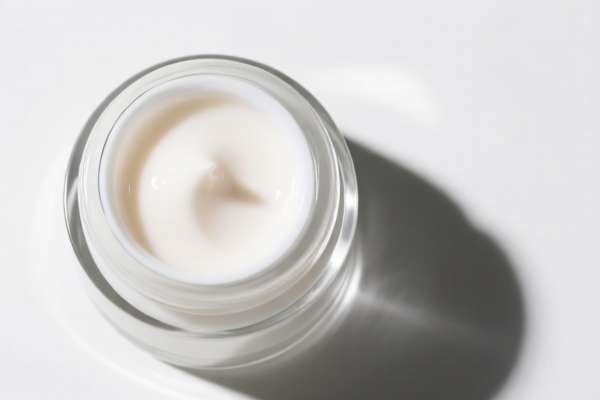
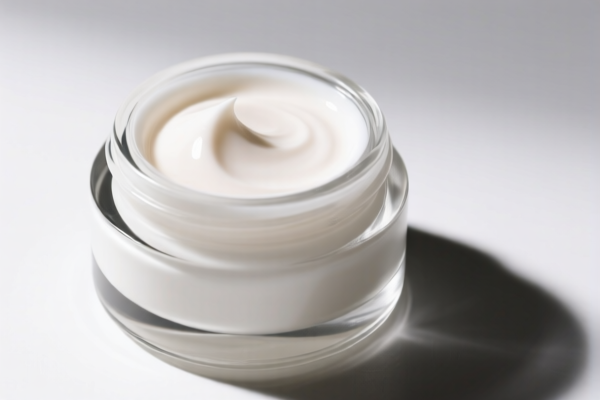


AI Analysis
🧴 Hand Cream: The Ultimate HS Code Classification & US Import Strategy (2026 Edition)
🌐 HS Code Reference & Clearance Guide | 2026 Tariff Deep Dive | Professional Customs Strategy
📌 I. Product Definition & Classification: Do You Really Understand "Hand Cream"?
Hand Cream is a ubiquitous personal care product designed to moisturize, soften, and protect the skin on the hands. However, in the complex landscape of international trade, "Hand Cream" is not a single tariff entry. Its classification depends entirely on its primary function, packaging format, and intended use.
In the US market, it falls primarily under Chapter 33 (Essential Oils & Perfumery, Toilet Preparations) and Chapter 34 (Soap & Lubricants), specifically targeting: 1. Skin Care Preparations (Nutritive/Protective) → HS Code 3304 2. Cosmetic/Toilet Preparations (General Hygiene) → HS Code 3307
⚠️ Critical Distinction:
- If the product is marketed as a beauty/skin care treatment (moisturizing, anti-aging, protective) → Likely 3304. - If the product is marketed as a general toilet preparation or hygiene product (e.g., scented hand lotion, general cleanser base) → Likely 3307. - The difference can change your tax bill by 0% to 5% on the base rate!
📦 II. HS Code Classification Matrix (2026 Authorized Data)
Based on the authoritative 2026 tariff data, here are the 5 specific HS Codes relevant to Hand Cream imports:
| HS Code | Product Description (Summary) | Primary Function | Base Tariff | Total Tax Rate (2026) |
|---|---|---|---|---|
| 3307.49.00.00 | Other Perfumed Toilet Preparations | General hygiene, scented lotion, "Cosmetic/Toilet" attribute | 6.0% | 41.0% |
| 3304.99.50.00 | Other Beauty/Skin Care Prep | Skin nourishment, moisturizing, non-specific beauty | 0.0% | 35.0% |
| 3307.90.00.00 | Other Cosmetics/Toilet Prep | General cream/lotion format, "Other" category | 5.4% | 40.4% |
| 3304.30.00.00 | Skin Care: Nail Preparations | Note: Includes hand creams matching nail care function | 0.0% | 35.0% |
| 3304.99.10.00 | Other Skin Care/Cosmetic | General beauty definition, skin protection | 0.0% | 35.0% |
🔍 Key Insight:
- Codes 3304.99.50.00, 3304.30.00.00, and 3304.99.10.00 offer a Base Tariff of 0% (due to "MFN" status for most skin care items), but the Total Tax remains high due to Section 301 and 122 duties. - Codes 3307.49.00.00 and 3307.90.00.00 carry a Base Tariff (5.4% or 6.0%) before the heavy penalties are added.
💰 III. 2026 Tariff Rate Breakdown (The "Total Tax" Calculation)
✅ Target Market: United States (US)
✅ Origin: China (CN)
✅ Applicable Timeline: Post-November 2025 (Active Section 301 & 122 rules)
🎯 1. The "35% Total Tax" Cluster (Codes: 3304.99.50 / 3304.30 / 3304.99.10)
Most common classification for moisturizing hand creams.
| Tax Component | Rate | Source / Legal Basis |
|---|---|---|
| Base Tariff | 0.0% | General MFN Rate (Free) |
| Section 301 (Add-on) | +25.0% | Trade Act of 1974 (Section 301 List) |
| Section 122 (Add-on) | +10.0% | Executive Order / USITC Specifics |
| TOTAL RATE | 35.0% | 0 + 25 + 10 |
| Calculation | CIF Value × 35% |
Applies to the total value of goods + insurance + freight. |
| De Minimis? | ❌ NO | Goods under $800 are exempt, but commercial imports are fully taxed. |
📌 Why 35%?
Even though the base tariff is "free" (0%), the US imposes a heavy 25% Section 301 tariff on Chinese cosmetics/skin care, plus a specific 10% Section 122 tariff. Result: For every $100 of Hand Cream, you pay $35 in duties.
🎯 2. The "40.4% Total Tax" Cluster (Code: 3307.90.00.00)
General toilet preparations or non-specific lotions.
| Tax Component | Rate | Source / Legal Basis |
|---|---|---|
| Base Tariff | 5.4% | Standard MFN Rate for "Other" cosmetics |
| Section 301 (Add-on) | +25.0% | Trade Act of 1974 (Section 301 List) |
| Section 122 (Add-on) | +10.0% | Executive Order / USITC Specifics |
| TOTAL RATE | 40.4% | 5.4 + 25 + 10 |
| Calculation | CIF Value × 40.4% |
Higher base rate increases the burden. |
🎯 3. The "41.0% Total Tax" Cluster (Code: 3307.49.00.00)
Scented/Perfumed Toilet Preparations.
| Tax Component | Rate | Source / Legal Basis |
|---|---|---|
| Base Tariff | 6.0% | Standard MFN Rate for Perfumed items |
| Section 301 (Add-on) | +25.0% | Trade Act of 1974 (Section 301 List) |
| Section 122 (Add-on) | +10.0% | Executive Order / USITC Specifics |
| TOTAL RATE | 41.0% | 6.0 + 25 + 10 |
| Calculation | CIF Value × 41.0% |
Highest Tax Scenario for Hand Cream. |
🚨 Critical Warning:
Section 122 is a specific punitive tariff applied to certain Chinese cosmetic and toilet preparations. It is non-negotiable and applied on top of the Section 301 duties.
🛠️ IV. Practical Clearance Advice (Avoiding Pitfalls)
✅ 1. Documentation Checklist (Must-Have)
| Document | Requirement | Why? |
|---|---|---|
| Product Label (English) | Must list ingredients, net weight, manufacturer, "Made in China" | FDA & CBP requirement for cosmetics. |
| Formula / SDS | Safety Data Sheet or Full Ingredient List | To prove it is "Skin Care" (3304) vs. "Perfume" (3307). |
| Commercial Invoice | Must state "Hand Cream" clearly, HS Code, CIF Value | Mismatch in description triggers manual review. |
| Usage Description | "Moisturizing" vs. "Cleansing" vs. "Perfumed" | Determines if you use 3304 (0% base) or 3307 (Base fee). |
| Certificate of Analysis | Proof of safety/quality | Required for FDA cosmetic registration if marketed as "Drug". |
✅ 2. Strategic Classification Tips
🔥 Golden Rule: "Function Over Format" - Best Case Scenario: Classify under 3304.99.50.00 or 3304.99.10.00. - Benefit: 0% Base Tariff. - Cost: Still 35% total, but slightly lower than 3307 variants. - Avoid: Classifying as 3307.49.00.00 (Perfumed Toilet Prep). - Cost: 41.0% Total. That extra 6% base tariff is pure loss. - Reason: Only use 3307 if the product is primarily a soap substitute or scented water, not a moisturizer.
✅ 3. Special Case Handling
| Situation | Advice |
|---|---|
| "Medicated" Hand Cream | If it claims to treat eczema, psoriasis, or fungus, it may be classified as a Drug (Chapter 30). Do not use Chapter 33 codes. This changes the entire regulatory path (FDA Drug vs. Cosmetic). |
| OEM / Private Label | The "Brand Name" does not change the HS Code. The function does. Ensure the description matches the formula. |
| Small Samples | If value < $800 (De Minimis), no duty is collected. But for commercial shipments, this exemption does not apply. |
🌍 V. Global Market Comparison (2026)
| Market | Typical HS Code | Total Tax Estimate | Notes |
|---|---|---|---|
| 🇺🇸 USA | 3304.99.50.00 |
35.0% | Heavy 301 + 122 penalties. |
| 🇨🇳 China | 3304.99.50.00 |
0% - 10% | No Section 301/122. |
| 🇪🇺 EU | 3304.99.50.00 |
0% - 3% | Generally duty-free, high regulatory (CPNP) barrier. |
| 🇯🇵 Japan | 3304.99.50.00 |
0% - 3% | Low tariff, strict cosmetic standards. |
📌 Conclusion: The US is the most expensive market for Hand Cream due to the layered 35% tariff. If shipping to the US, your margin must account for this.
📌 VI. Common Errors & Avoidance Guide (Lessons Learned)
❌ Error 1: Misclassifying "Medicated" Cream as Cosmetic
👉 Risk: Classifying a cream that claims to "heal cracked skin" under 3304 is illegal. It must be 3006 (Drug).
👉 Consequence: Seizure, FDA Warning Letter, 100% fine.
❌ Error 2: Claiming "Perfumed" to hide Base Tariff
👉 Risk: Trying to put a moisturizer into 3307 to avoid scrutiny, but the base tax is higher.
👉 Consequence: 41% tax instead of 35%. Lost profit.
❌ Error 3: Ignoring Section 122
👉 Risk: Calculating only 25% (Section 301) and forgetting the 10% penalty.
👉 Consequence: Underpayment of duties → Audit & Back-taxes + Interest.
✅ Correct Practice:
"Hand Cream, Moisturizing, Non-Medicated, 100ml, Made in China. HS Code: 3304.99.50.00. Total Duty: 35%."
🎯 VII. Final Verdict: Action Plan
🎯 Remember the Math:
🔹 3304 Codes: 0% Base + 25% (301) + 10% (122) = 35% Total (Best Choice).
🔹 3307 Codes: 5.4%-6.0% Base + 25% (301) + 10% (122) = 40.4% - 41.0% Total.
🔹 Never try to avoid Section 122; it applies to all cosmetics/soaps from China.🔹 "3304 is King": Always strive to classify under 3304.99.50.00 or 3304.99.10.00 to keep the base tariff at 0%.
📌 Pro Tip:
If you are importing Medicated Hand Cream (e.g., with Benzocaine or Salicylic Acid), STOP. You are likely importing a Drug, not a cosmetic. This requires a NDA (New Drug Application) or OTC Monograph compliance, and the HS Code changes completely.
📣 Immediate Action:
1. Verify Formula: Is it purely moisturizing (Cosmetic) or healing (Drug)?
2. Select Code: Choose 3304.99.50.00 (Safest & Lowest Base).
3. Calculate Cost: Budget for 35% duty on CIF value.
4. Consult Broker: Submit a Ruling Request (Advance Ruling) to CBP if unsure.
✨ Smart Classification = Maximized Profit!
💼 Don't let a 6% tariff difference eat your margin. Get it right!
Customer Reviews
About HS Code Classification
The Harmonized System (HS) is an internationally standardized nomenclature developed by the World Customs Organization (WCO) to classify traded products. Over 200 countries use the HS system as the basis for customs tariffs, trade statistics, and import/export regulations.
Each HS code follows a hierarchical structure:
- Chapter (2 digits) — Broad category of goods (e.g., Chapter 84: Machinery and Mechanical Appliances)
- Heading (4 digits) — More specific grouping within the chapter
- Subheading (6 digits) — Internationally standardized breakdown, used by all WCO member countries
- National subdivisions (8-10 digits) — Country-specific extensions for further classification, such as US HTSUS 10-digit codes
Correct HS code classification is essential for smooth customs clearance, accurate duty payment, and compliance with trade regulations. Misclassification can lead to customs delays, overpayment of duties, or penalties.
When importing from CN to US, the applicable tariff rates may include:
- Most-Favored-Nation (MFN) rate — The standard duty rate applied to WTO members
- General rate — Applied to countries without trade agreements
- Trade remedy duties — Additional tariffs such as Section 301 (anti-dumping), Section 232 (national security), or countervailing duties
The information provided on this page is for reference purposes only. For official classification, please consult with your local customs authority or a licensed customs broker.