Hand Plane
CN → US| HS Code | Tariff Rate | Origin | Destination | Doc |
|---|---|---|---|---|
| 8205306000 | 40.0% | CN | US | Official Doc |
| 8205303000 | 40.7% | CN | US | Official Doc |
| 8201906000 | 35.0% | CN | US | Official Doc |
| 8201406080 | 41.2% | CN | US | Official Doc |
Product Images
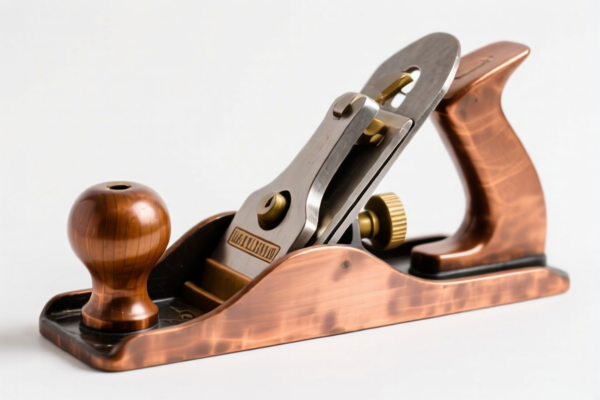
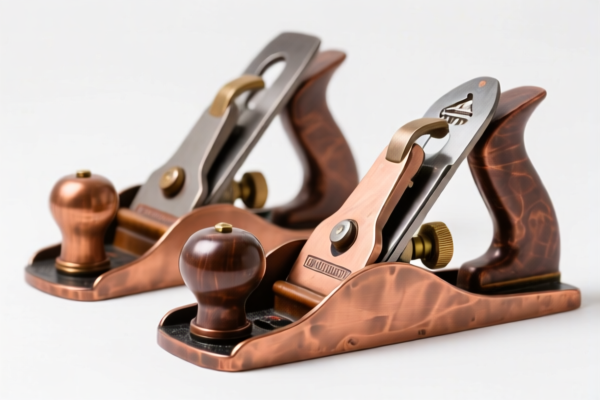
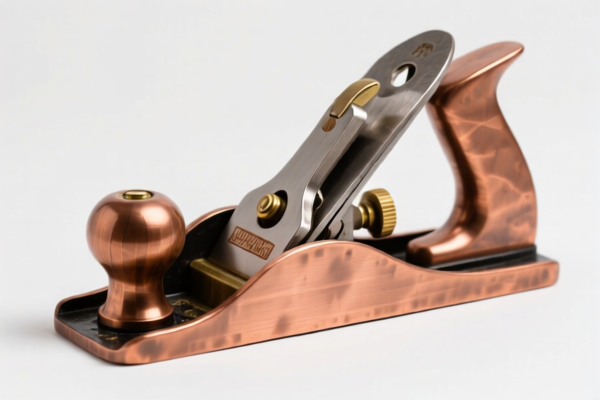
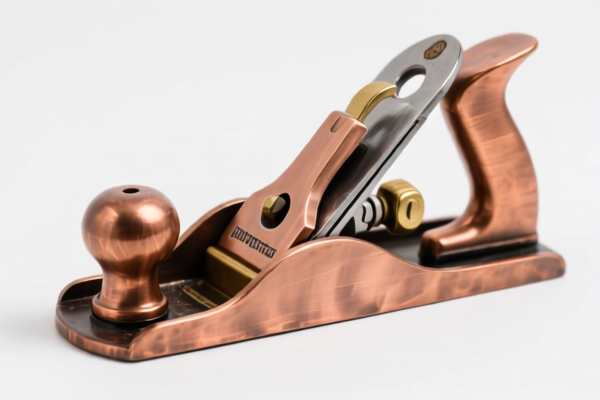
AI Analysis
🛠️ Hand Plane (Woodworking Manual Tools)
🌐 HS Code Reference & Customs Clearance Guide | 2026 Latest Tariff Analysis | Professional Clearance Strategy
📌 I. Product Definition & Classification: What is a "Hand Plane"?
A Hand Plane is a fundamental woodworking tool used to smooth, flatten, or shape wood surfaces. In international trade, these tools are classified under Chapter 82 (Tools, Implements, Spoons and Forks of Base Metal), specifically within the sub-heading for Hand Tools.
The classification hinges on the specific type of plane, its structure, and whether it falls under "Axe-type" tools or general "Woodworking Planes." This distinction drastically affects the applicable tariff rates due to US Section 301 and IEEPA penalties on Chinese goods.
⚠️ Key Classification Distinction:
- General Woodworking Planes (8205.30): Traditional bench planes, block planes, etc., defined specifically as "Planing Tools."
- Other Hand Tools for Agriculture/Forestry (8201.90/8201.40): Some specific manual tools might be argued as "other hand tools for agriculture/forestry" or "axe-type tools," leading to different tax bases.
📦 II. HS Code Classification Details (2026 Latest Tariff Authority Cross-Reference)
| HS Code | Product Description | Application Scenario | Tariff Basis |
|---|---|---|---|
8201.90.60.00 |
Hand tools for agriculture, horticulture, or silviculture (Other) | Classified as "Other" hand tools under agricultural/forestry categories. | Base: 0% |
8201.40.60.80 |
Axe, hatchet, billhook, hewing axe, hand sledge, wedges, and other axe-type tools (Other) | Classified as "Other" axe-type manual tools (excluding axes/mauls). | Base: 6.2% |
8205.30.60.00 |
Planing tools (other than skiving knives) for wood, bone, or hard rubber (Planing Tools) | Directly matches the function of "Hand Plane" (Woodworking Planing Tool). | Base: 5.0% |
8205.30.30.00 |
Other hand tools (Planing tools for wood) | Matches function and morphology, inferred as metal cutting tool without material conflict. | Base: 5.7% |
🔍 Key Reminder:
- 8205.30 is the most direct fit for "Hand Plane" as it explicitly covers "Planing Tools."
- 8201.90 and 8201.40 represent alternative classifications where the plane might be viewed broadly as an "Agricultural/Forestry Hand Tool" or "Other Axe-Type Tool," often resulting in different base rates.
- All listed codes are subject to significant additional tariffs due to US-China trade tensions.
💰 III. 2026 Latest Tariff Rate Breakdown (Including Surcharges & Policy Add-ons)
✅ Applicable Country: United States (US)
✅ Origin: China (CN)
✅ Effective Time: From November 10, 2025 (including subsequent imports)
🎯 1. 8201.90.60.00 —— Hand Tools (Agriculture/Forestry "Other")
| Item | Content |
|---|---|
| Base Tariff | 0.0% (ad valorem) |
| Section 301 Surcharge | +25.0% |
| 122 Clause Tariff | +10.0% |
| Total Tariff Rate | 35.0% |
| Tax Calculation | CIF Value × 35.0% |
| De Minimis Eligibility | ❌ No (Denied) |
| Legal Basis Path | USITC:8201.90.60.00 → Section 301: 25% → 122 Clause: 10% |
📌 Explanation:
- The Base Rate is 0%, but the heavy surcharges drive the total cost up.
- 25% comes from Section 301 (Trade Act of 1974).
- 10% is the specific "122 Clause" tariff targeting certain Chinese hand tools.
- Total 35% is high; ensure documentation clearly supports the "Agriculture/Forestry" classification if using this code, though it is less common for standard woodworking planes.
🎯 2. 8201.40.60.80 —— Other Axe-Type Hand Tools
| Item | Content |
|---|---|
| Base Tariff | 6.2% |
| Section 301 Surcharge | +25.0% |
| 122 Clause Tariff | +10.0% |
| Total Tariff Rate | 41.2% |
| Tax Calculation | CIF Value × 41.2% |
| De Minimis Eligibility | ❌ No (Denied) |
| Legal Basis Path | USITC:8201.40.60.80 → Section 301: 25% → 122 Clause: 10% |
📌 Note:
- This code applies if the hand plane is classified broadly under "Axe-type tools" or "Other hand tools for forestry" in specific interpretations.
- The Base Rate is higher (6.2%), leading to a higher total rate (41.2%) compared to the 0% base option.
- Use this only if legal counsel advises that the specific plane design fits this "Other Axe-Type" category.
🎯 3. 8205.30.60.00 —— Planing Tools (Woodworking)
| Item | Content |
|---|---|
| Base Tariff | 5.0% |
| Section 301 Surcharge | +25.0% |
| 122 Clause Tariff | +10.0% |
| Total Tariff Rate | 40.0% |
| Tax Calculation | CIF Value × 40.0% |
| De Minimis Eligibility | ❌ No (Denied) |
| Legal Basis Path | USITC:8205.30.60.00 → Section 301: 25% → 122 Clause: 10% |
📌 Explanation:
- This is the most standard classification for "Hand Planes" (Woodworking).
- Base Rate: 5.0%.
- Surcharges: 25% (Section 301) + 10% (122 Clause).
- Total 40.0% is the prevailing rate for standard woodworking planes.
- Ensure the description clearly states "Woodworking Planing Tool" to justify this code.
🎯 4. 8205.30.30.00 —— Other Hand Tools (Planing Tools)
| Item | Content |
|---|---|
| Base Tariff | 5.7% |
| Section 301 Surcharge | +25.0% |
| 122 Clause Tariff | +10.0% |
| Total Tariff Rate | 40.7% |
| Tax Calculation | CIF Value × 40.7% |
| De Minimis Eligibility | ❌ No (Denied) |
| Legal Basis Path | USITC:8205.30.30.00 → Section 301: 25% → 122 Clause: 10% |
📌 Note:
- Very similar to8205.30.60.00, but with a slightly higher base rate (5.7% vs 5.0%).
- Applies to planing tools that may not fit the "60" sub-category precisely but are still recognized as planing tools.
- Total 40.7% is slightly higher than the 60.00 code. Opt for8205.30.60.00if applicable to save 0.7%.
🛠️ IV. Customs Clearance Practical Advice (Real-World Pitfall Guide)
✅ 1. Required Documentation Checklist (Non-Negotiable)
| Document | Mandatory | Explanation |
|---|---|---|
| ✅ Product Specifications | ✔️ | Must specify: Material (Steel/Wood), Type (Bench/Block), Intended Use (Woodworking). |
| ✅ Product Photos | ✔️ | Clear images of the plane, sole, blade, and adjustment mechanisms. |
| ✅ Commercial Invoice | ✔️ | Must accurately describe the item as "Hand Plane for Woodworking" or similar. Avoid vague terms like "Tool." |
| ✅ Packing List | ✔️ | Detail individual units, packaging type, and weight. |
| ✅ Proof of Origin | ✔️ | Essential for confirming Chinese origin to apply correct tariffs. |
| ✅ Usage Declaration | ✔️ | Explicitly state "For Woodworking" to support 8205 classification vs. 8201 (Agricultural). |
✅ 2. Declaration Strategies (Key Mantras)
🔥 "Classify by Function, Specify Material, Declare Use Clearly!"
| Scenario | Correct Declaration | Wrong Approach |
|---|---|---|
| Standard Woodworking Plane | 8205.30.60.00 (Hand Plane) |
Calling it "Agricultural Tool" → Risk of Misclassification |
| Plane for Metalworking | Not Covered (May fall under 8207 or other chapters) | Assuming all planes are wood-specific |
| Complete Kit (Plane + Chisels) | Split Declaration | Bundling into one code → Potential Audit/Rejection |
| Raw Blade Only | 8207.10/20 (Interchangeable Tools) |
Declaring as "Hand Plane" → HS Code Error |
✅ 3. Special Cases Handling
| Situation | Handling Advice |
|---|---|
| OEM/Custom Planes | Provide design drawings to prove specific function; may still fall under 8205.30. |
| Antique/Vintage Planes | If >100 years old, may qualify for different duty rates (collectible); provide provenance. |
| Planes with Wooden Handles & Steel Body | Classified by component value or essential character (usually steel blade defines it as metal tool). |
| Digital/Automated Planes | Excluded from Hand Tool chapters; may fall under 8463 (Other machine-tools). |
🌍 V. Global Market Comparison (2026 Latest)
| Country/Region | Recommended HS Code | Tariff (CN Origin) | Certification Required | Notes |
|---|---|---|---|---|
| 🇺🇸 USA | 8205.30.60.00 |
40.0% | N/A | High tariffs due to Section 301 + 122 Clause. |
| 🇨🇳 China | 8205.30.60.00 |
5.0% | N/A | Domestic market; no surcharges. |
| 🇪🇺 EU | 8205.30 |
0% - 4% | CE (if applicable) | Generally low/no tariffs for hand tools. |
| 🇬🇧 UK | 8205.30 |
0% - 4% | UKCA | Post-Brexit rules similar to EU for this category. |
| 🇯🇵 Japan | 8205.30 |
0% - 3.5% | PSE (if electric) | Standard hand tools have low tariffs. |
📌 Conclusion:
- The US is the most challenging market for Hand Planes due to Section 301 and 122 Clause tariffs.
- EU, UK, and Japan are much more favorable, with tariffs often below 5%.
- Cost Optimization: Consider routing through third countries (with substantial transformation) or sourcing from non-China origins to avoid US surcharges.
📌 VI. Common Errors & Pitfalls (Lessons Learned)
❌ Error 1: Misclassifying Woodworking Planes as "Agricultural Tools" (8201.90)
👉 Consequence: While base rate is 0%, customs may reject the classification if not genuinely for agriculture, leading to back taxes + penalties.
👉 Fix: Use 8205.30 for standard woodworking planes.
❌ Error 2: Ignoring the "122 Clause"
👉 Consequence: Underestimating total duty by 10%. A 30% rate becomes 40%.
👉 Fix: Always add +10% to Section 301 rates for relevant 8201/8205 codes.
❌ Error 3: Vague Descriptions ("Hand Tool")
👉 Consequence: Customs may assign a higher default code (e.g., general hand tools with higher base rates) or delay clearance for further inquiry.
👉 Fix: Use precise terms: "Woodworking Hand Plane, Steel Blade, Wooden Sole."
✅ Correct Approach:
"Hand Plane, Model XY, Steel Blade, Wooden Base, for Smoothing Wood Surfaces, HS 8205.30.60.00"
🎯 VII. Conclusion: Precision in Classification Saves Money!
🎯 Remember the Mantra:
🔹 "Woodworking = 8205.30; Base 5%, Total 40%."
🔹 "Don't Mix Agriculture and Woodworking Codes."
🔹 "122 Clause is Real: Add 10% to Your Cost Model."
📌 Pro Tip:
If you are shipping to the US, consider applying for a Customs Bond and exploring Section 301 Exclusions if your specific product type is eligible (though rare for standard planes).
For non-US markets, the 40% hit disappears, making Hand Planes highly competitive.
📣 Immediate Action:
📞 Consult a Customs Broker to validate HS Code
8205.30.60.00for your specific plane design.
🚀 Calculate Total Landed Cost including the 40% tariff to ensure profitability in the US market.
✨ Professional Clearance Starts with Accurate Classification!
💼 Every Percent Counts in Global Trade!
Customer Reviews
About HS Code Classification
The Harmonized System (HS) is an internationally standardized nomenclature developed by the World Customs Organization (WCO) to classify traded products. Over 200 countries use the HS system as the basis for customs tariffs, trade statistics, and import/export regulations.
Each HS code follows a hierarchical structure:
- Chapter (2 digits) — Broad category of goods (e.g., Chapter 84: Machinery and Mechanical Appliances)
- Heading (4 digits) — More specific grouping within the chapter
- Subheading (6 digits) — Internationally standardized breakdown, used by all WCO member countries
- National subdivisions (8-10 digits) — Country-specific extensions for further classification, such as US HTSUS 10-digit codes
Correct HS code classification is essential for smooth customs clearance, accurate duty payment, and compliance with trade regulations. Misclassification can lead to customs delays, overpayment of duties, or penalties.
When importing from CN to US, the applicable tariff rates may include:
- Most-Favored-Nation (MFN) rate — The standard duty rate applied to WTO members
- General rate — Applied to countries without trade agreements
- Trade remedy duties — Additional tariffs such as Section 301 (anti-dumping), Section 232 (national security), or countervailing duties
The information provided on this page is for reference purposes only. For official classification, please consult with your local customs authority or a licensed customs broker.