Hand Spinner
CN → US| HS Code | Tariff Rate | Origin | Destination | Doc |
|---|---|---|---|---|
| 8482105068 | 44.0% | CN | US | Official Doc |
| 9503000073 | 10.0% | CN | US | Official Doc |
| 9503000090 | 10.0% | CN | US | Official Doc |
| 3926909989 | 22.8% | CN | US | Official Doc |
| 3926909905 | 22.8% | CN | US | Official Doc |
Product Images
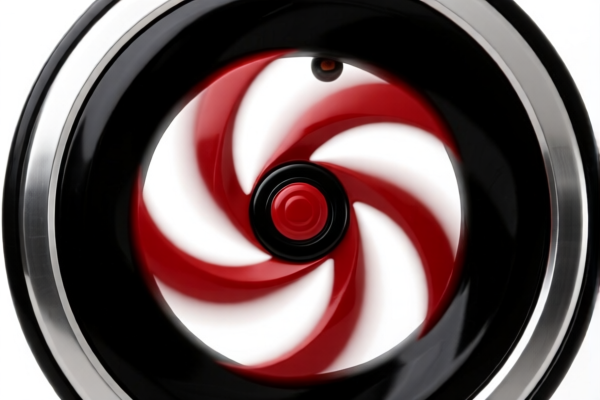
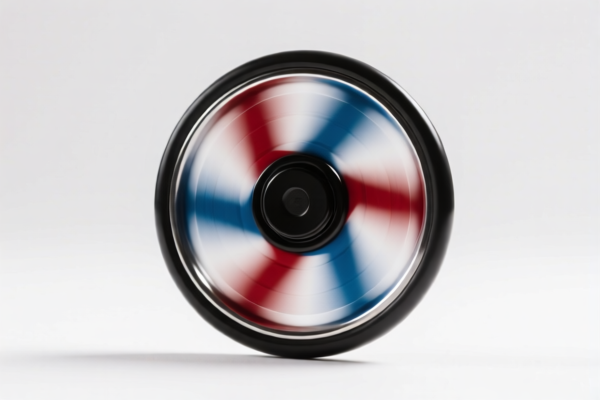
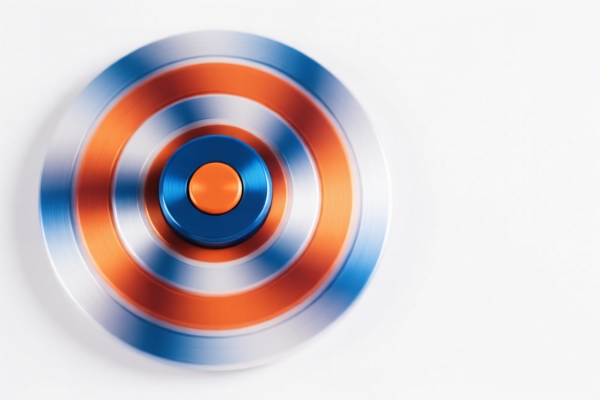
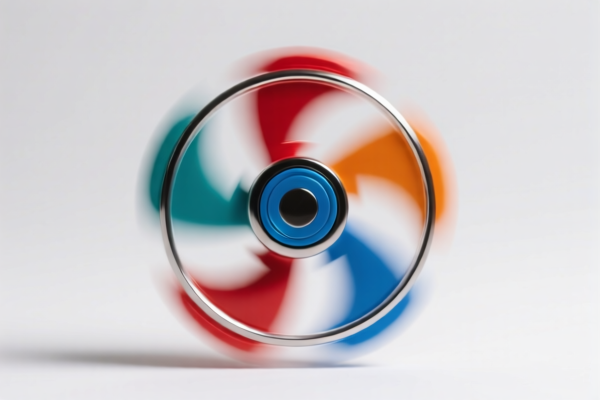
AI Analysis
🎡 Hand Spinner (Fidget Spinners / Toy Top)
🌐 HS Code Reference & Customs Clearance Guide | 2026 Latest Tariff Analysis | Professional Strategy
📌 I. Product Definition & Classification: Do You Really Understand the "Hand Spinner"?
The Hand Spinner, widely known as a Fidget Spinner or Toy Top, is a popular desk toy and stress-relief device. In international trade, its classification is not straightforward because it straddles the line between mechanical components (bearings) and consumer goods (toys/plastics).
🔍 Key Distinction:
- As a Mechanical Component: If viewed primarily for its function as a rotating bearing device, it falls under Chapter 84 (Machinery).
- As a Toy: If viewed as an item for amusement, it falls under Chapter 95 (Toys).
- As a Plastic Article: If viewed primarily by its material composition (plastic body), it may fall under Chapter 39 (Plastics).
⚠️ Critical Insight:
The total tax burden varies drastically based on the chosen HS Code, ranging from 10% to 44%. The classification depends on the primary purpose (amusement vs. mechanical function) and material.
📦 II. HS Code Classification Details (2026 Latest Tariff Authority)
Based on the provided data, here are the four potential classifications with their corresponding tax structures.
| HS Code | Product Description | Material/Function | Total Tax Rate |
|---|---|---|---|
8482.10.50.68 |
Ball Bearings (Other) | Core component is the bearing; classified as a mechanical part. | 44.0% |
9503.00.00.73 |
Other Toys | Metal or plastic toy; classified under "Other Toys". | 10.0% |
9503.00.00.90 |
Other Toys (Rotating) | Rotating toy; classified under "Other Toys" definition. | 10.0% |
3926.90.99.89 |
Other Plastic Articles | Primarily plastic material; classified as plastic制品. | 22.8% |
3926.90.99.05 |
Other Plastic Articles | Plastic material; classified as "Other" plastic items. | 22.8% |
🔍 Key Takeaway:
- Lowest Tax: 10% (under Toy categories9503.00.00.73or9503.00.00.90).
- Highest Tax: 44% (under Bearing category8482.10.50.68).
- Middle Ground: 22.8% (under Plastic categories3926.90.99.89or3926.90.99.05).
💰 III. 2026 Latest Tariff Rate Breakdown (Including Surtaxes & Policy Surcharges)
✅ Applicable Country: United States (US)
✅ Origin: China (CN)
✅ 生效时间: 2025年11月10日起 (including subsequent imports)
🎯 1. 8482.10.50.68 —— Ball Bearings (Other)
| Item | Content |
|---|---|
| Base Duty | 9.0% (Ad Valorem) |
| Section 301 Surtax | +25.0% |
| Section 122 Surtax | +10.0% |
| Total Tax Rate | 44.0% |
| Tax Calculation | CIF Value × 44% |
| De Minimis Exemption | ❌ Not Eligible |
| Legal Basis | High tariff burden due to combined base, Section 301, and Section 122 duties. |
📌 Explanation:
- This classification treats the spinner as a mechanical bearing.
- 44% is a very high effective rate. It includes the base 9%, the heavy Section 301 tariff of 25%, and the Section 122 tariff of 10%.
- Strategy Avoidance: Unless the product is only the bearing assembly without toy features, this is the most expensive option.
🎯 2. 9503.00.00.73 / 9503.00.00.90 —— Other Toys
| Item | Content |
|---|---|
| Base Duty | 0.0% |
| Section 301 Surtax | 0.0% |
| Section 122 Surtax | +10.0% |
| Total Tax Rate | 10.0% |
| Tax Calculation | CIF Value × 10% |
| De Minimis Exemption | ❌ Not Eligible (Subject to Section 122) |
| Legal Basis | Toy category benefits from 0% base and 0% Section 301. Only Section 122 applies. |
📌 Explanation:
- These codes classify the item as a toy (metal or plastic).
- 10% is the lowest possible rate.
- Why? Because toys generally have 0% base duty and 0% Section 301 duty. Only the Section 122 tariff (10%) is applied.
- Strategy Priority: This is the optimal classification for cost-saving purposes, provided the product is marketed and perceived as a toy.
🎯 3. 3926.90.99.89 / 3926.90.99.05 —— Other Plastic Articles
| Item | Content |
|---|---|
| Base Duty | 5.3% |
| Section 301 Surtax | +7.5% |
| Section 122 Surtax | +10.0% |
| Total Tax Rate | 22.8% |
| Tax Calculation | CIF Value × 22.8% |
| De Minimis Exemption | ❌ Not Eligible |
| Legal Basis | Plastic article category with moderate base and Section 301 rates. |
📌 Explanation:
- If the spinner is made primarily of plastic and not strictly classified as a toy, it falls here.
- 22.8% is a moderate rate.
- It has a 5.3% base duty and 7.5% Section 301 duty, plus the 10% Section 122 duty.
- Strategy: Use this only if the toy classification is rejected by customs, but the plastic content is dominant.
🛠️ IV. Customs Clearance Practical Advice (Avoid Pitfalls)
✅ 1. Preparation Checklist (Essential Documents)
| Document | Required | Purpose |
|---|---|---|
| ✅ Product Specification | ✔️ | Must clearly state material (Plastic/Metal) and function (Toy/Stress Relief). |
| ✅ Product Photos | ✔️ | Show the item as a finished toy, not just a bearing component. |
| ✅ Commercial Invoice | ✔️ | Describe as "Toy Spinner" or "Fidget Toy," NOT "Ball Bearing." |
| ✅ Marketing Materials | ✔️ | Brochures/web pages showing it used for amusement/stress relief support 9503. |
| ✅ Material Declaration | ✔️ | Specify if >50% plastic to support 3926 if 9503 is challenged. |
✅ 2. Declaration Strategy (Key Rules)
🔥 “Market as Toy, Declare as Toy, Save 34%!”
| Scenario | Recommended HS Code | Tax Rate | Risk Level |
|---|---|---|---|
| Standard Spinner (Plastic/Metal) | 9503.00.00.73 or 9503.00.00.90 |
10% | ✅ Low (If marketed as toy) |
| Bearing-Only Component | 8482.10.50.68 |
44% | ⚠️ High (Avoid unless necessary) |
| Plastic-Only, No Toy Features | 3926.90.99.89 |
22.8% | ⚠️ Medium |
📌 Critical Warning:
- Do NOT declare as "Ball Bearing" (8482) unless it is purely a mechanical part with no toy characteristics. The 44% rate is punitive.
- Do NOT use "Bearing" in the description if it is sold as a toy. Customs will reclassify it to8482and charge 44%.
- Use "Toy" Keywords: "Fidget Toy," "Desk Toy," "Stress Relief Spinner" in the description to support9503.
✅ 3. Special Handling
| Situation | Handling Advice |
|---|---|
| Metal Spinner | Still classify as 9503 (Toy). Material does not override function if it’s a toy. |
| Plastic Spinner | Prefer 9503 over 3926 to save 12.8% tax. |
| Mixed Material | If it has metal bearings but is sold as a toy, 9503 is still preferred. |
| Customs Challenge | Provide photos showing it being used by humans for amusement, not industrial rotation. |
🌍 V. Global Market Comparison (2026 Latest)
| Country/Region | Recommended HS Code | Tariff (China Origin) | Remarks |
|---|---|---|---|
| 🇺🇸 USA | 9503.00.00.73 |
10% | Best rate for toys. |
| 🇺🇸 USA | 8482.10.50.68 |
44% | Avoid this classification. |
| 🇪🇺 EU | 9503.00.00 |
0% (General) | No Section 122 equivalent. |
| 🇨🇳 China | 9503.00.00 |
0% | No import duty for toys. |
📌 Conclusion:
- In the US market, the difference between 10% and 44% is massive.
- Correct classification as a Toy (9503) is the single most important factor for cost control.
📌 VI. Common Mistakes & Pitfalls (Lessons Learned)
❌ Mistake 1: Declaring as "Ball Bearing"
👉 Consequence: Tax jumps from 10% to 44%. Overpayment of 34%.
❌ Mistake 2: Using ambiguous terms like "Rotating Device"
👉 Consequence: Customs may misclassify as 8482 or 3926. Delays + Higher Tax.
❌ Mistake 3: Ignoring Section 122 in Toy Classification
👉 Consequence: Thinking tax is 0%. It is 10% due to Section 122. Underestimation of Cost.
✅ Correct Practice:
“Fidget Spinner Toy, Plastic/Metal, For Stress Relief, Model XYZ”
HS Code:9503.00.00.73
Tax: 10%
🎯 VII. Conclusion: Professional Declaration, Save Big!
🎯 Remember the Golden Rule:
🔹 “Toy = 10%, Bearing = 44%. Choose Wisely.”
🔹 “Market as Toy, Declare as Toy, Avoid the 44% Trap.”
📌 Pro Tip:
If your product is primarily a bearing with minimal toy features, the 10% toy rate might be challenged. However, if it is sold as a consumer toy, the 9503 classification is robust and the most cost-effective.
📣 Immediate Action:
📞 Consult your customs broker to ensure the product description emphasizes “Toy” and “Amusement.”
🚀 Save 34% on tariffs by choosing the correct HS Code!
✨ Professional Customs Clearance Starts with Accurate Classification!
💼 Every Percentage Point Counts in Your Profit Margin!
Customer Reviews
About HS Code Classification
The Harmonized System (HS) is an internationally standardized nomenclature developed by the World Customs Organization (WCO) to classify traded products. Over 200 countries use the HS system as the basis for customs tariffs, trade statistics, and import/export regulations.
Each HS code follows a hierarchical structure:
- Chapter (2 digits) — Broad category of goods (e.g., Chapter 84: Machinery and Mechanical Appliances)
- Heading (4 digits) — More specific grouping within the chapter
- Subheading (6 digits) — Internationally standardized breakdown, used by all WCO member countries
- National subdivisions (8-10 digits) — Country-specific extensions for further classification, such as US HTSUS 10-digit codes
Correct HS code classification is essential for smooth customs clearance, accurate duty payment, and compliance with trade regulations. Misclassification can lead to customs delays, overpayment of duties, or penalties.
When importing from CN to US, the applicable tariff rates may include:
- Most-Favored-Nation (MFN) rate — The standard duty rate applied to WTO members
- General rate — Applied to countries without trade agreements
- Trade remedy duties — Additional tariffs such as Section 301 (anti-dumping), Section 232 (national security), or countervailing duties
The information provided on this page is for reference purposes only. For official classification, please consult with your local customs authority or a licensed customs broker.