Hand Tool Parts
CN → US| HS Code | Tariff Rate | Origin | Destination | Doc |
|---|---|---|---|---|
| 8205513060 | 38.7% | CN | US | Official Doc |
| 8207303050 | 40.7% | CN | US | Official Doc |
| 8466100175 | 38.9% | CN | US | Official Doc |
| 8205595560 | 40.3% | CN | US | Official Doc |
| 8466939885 | 39.7% | CN | US | Official Doc |
Product Images
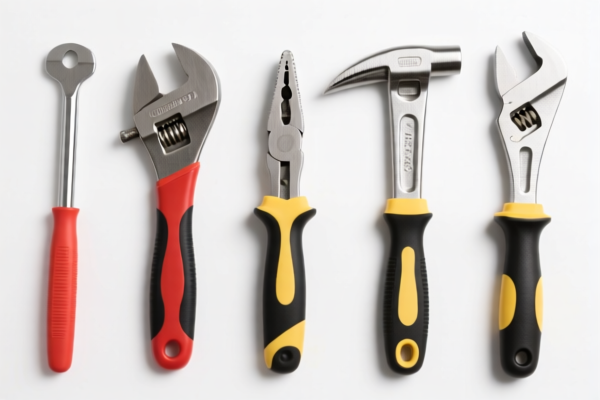
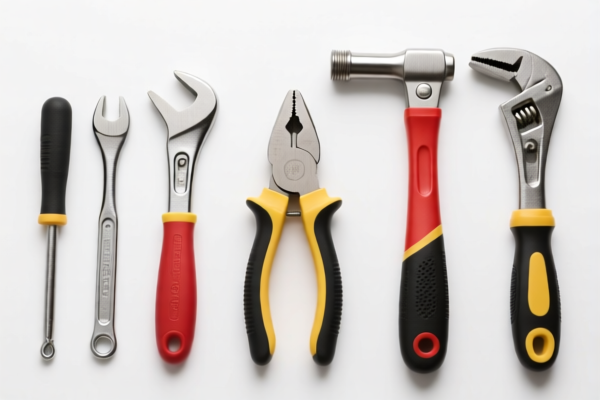
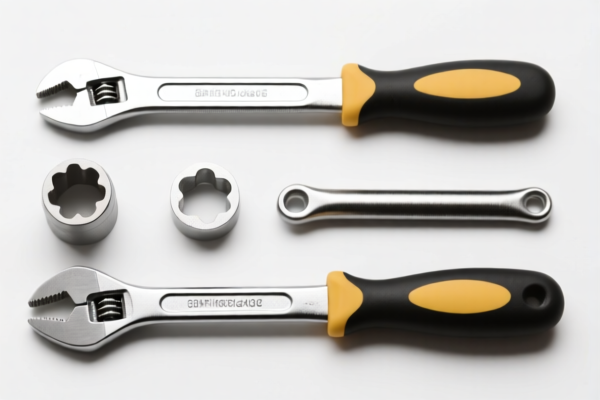
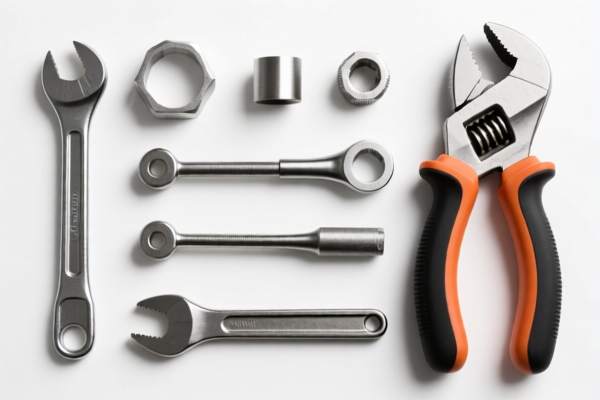
AI Analysis
🔧 Hand Tool Parts (Hand Tool Components)
🌐 HS Code Reference & Customs Clearance Guide | 2026 Latest Tariff Analysis | Professional Clearance Strategy
📌 I. Product Definition & Classification: What Exactly Are "Hand Tool Parts"?
"Hand Tool Parts" refer to the replaceable components, accessories, or sub-assemblies that constitute manual tools (such as wrenches, pliers, screwdrivers, hammers, etc.). Unlike power tools, these parts do not contain electric motors or engines. However, they are critical for the functionality and repair of the primary tool.
In international trade, classification depends heavily on material, specific function, and whether they are designed for machine tools vs. general hand tools. Since the input is generic ("Hand Tool Parts"), customs authorities often look for the most specific "Other" or "Parts" category that fits the physical description.
⚠️ Key Distinction:
- If the part is a general metal accessory not specific to a machine tool → Look at Chapter 82 (Cutting tools, hand tools).
- If the part is a fixture, holder, or specific adapter for a machine tool (like a CNC machine) → Look at Chapter 84 (Machine tools, nuclear reactors, boilers, parts).
- Risk: Misclassifying a simple metal rod as a "Machine Tool Part" can trigger higher tariffs or legal scrutiny.
📦 II. HS Code Classification Details (2026 Latest Authorized Tariff Reference)
Based on the provided data context, here are the five most likely HS Codes for generic "Hand Tool Parts," ranked by relevance and tax impact.
| HS Code | Product Description | Applicability & Logic | Tax Rate (Total) |
|---|---|---|---|
8207.30.30.50 |
Parts of Hand Tools (Specifically for tools under 82.05/82.06) | Best Match. Explicitly covers "Parts" for hand tools. No material conflict noted. High specificity. | 40.7% |
8466.93.98.85 |
Parts & Accessories for Machine Tools (Other) | Fallback Option. Used when no specific hand tool part exists. "Other" category for machine tool accessories. | 39.7% |
8466.10.01.75 |
Tool Holders for Machine Tools | Functional Match. If the part serves as a holder/fixture for a machine, it falls here. Default match if no material conflict. | 38.9% |
8205.59.55.60 |
Other Hand Tools / Parts (Including Parts) | Material Assumption. Classified as "Other" parts. Assumes metal material due to lack of specific non-metal description. | 40.3% |
8205.51.30.60 |
Other Hand Tools / Parts | Generic Default. Simple "Other" category for parts. Default preference applied due to no obvious material/form conflict. | 38.7% |
🔍 Key Insight:
-8207.30.30.50is the most accurate for actual hand tool components (e.g., replaceable bits, grips, jaws).
-8466codes are used if the "part" is actually an accessory for a powered machine (e.g., a CNC chuck or fixture), even if loosely termed "hand tool part" in casual language.
- Base Tax Rates vary slightly (3.7% – 5.7%) but the Add-on Tariffs are the dominant cost driver.
💰 III. 2026 Latest Tariff Rate Breakdown (Including Surcharges & Policy Add-ons)
✅ Applicable Country: United States (US)
✅ Origin: China (CN)
✅ Effective Time: November 10, 2025 (and subsequent imports)
🎯 1. 8207.30.30.50 —— Parts of Hand Tools (Primary Recommendation)
| Item | Content |
|---|---|
| Base Duty | 5.7% (ad valorem) |
| USITC Surcharge (Section 301) | +25.0% |
| IEEPA Surcharge (122 Clause) | +10.0% |
| Total Duty Rate | 40.7% |
| Tax Calculation | CIF Value × 40.7% |
| De Minimis Exemption? | ❌ No (deny_de_minimis) |
| Legal Basis Path | USITC:8207.30.30.50 → FOOTNOTE:301 → IEEPA:9903.01.24 |
📌 Explanation:
- This code carries the highest total duty (40.7%) among the specific hand tool parts.
- The 25% Section 301 tariff applies to a wide range of Chinese-manufactured metal goods.
- The 10% IEEPA tariff is a specific surcharge on Chinese origin goods, effective from late 2025.
- Cost Impact: For a $10,000 shipment, you will pay $4,070 in duties.
🎯 2. 8466.93.98.85 —— Other Parts of Machine Tools (Fallback)
| Item | Content |
|---|---|
| Base Duty | 4.7% |
| USITC Surcharge (Section 301) | +25.0% |
| IEEPA Surcharge (122 Clause) | +10.0% |
| Total Duty Rate | 39.7% |
| Tax Calculation | CIF Value × 39.7% |
| De Minimis Exemption? | ❌ No |
| Legal Basis Path | USITC:8466.93.98.85 → FOOTNOTE:301 → IEEPA:9903.01.24 |
📌 Note:
- Slightly 1.0% cheaper than the primary hand tool code.
- Only use this if the part is clearly a machine tool accessory (e.g., a fixture for a lathe) and not a direct component of a hammer, wrench, or screwdriver.
🎯 3. 8466.10.01.75 —— Tool Holders for Machine Tools
| Item | Content |
|---|---|
| Base Duty | 3.9% |
| USITC Surcharge (Section 301) | +25.0% |
| IEEPA Surcharge (122 Clause) | +10.0% |
| Total Duty Rate | 38.9% |
| Tax Calculation | CIF Value × 38.9% |
| De Minimis Exemption? | ❌ No |
📌 Strategy:
- If your part can be classified as a "Tool Holder" (e.g., a drill chuck, a lathe tool post), this is the lowest duty option (38.9%).
- Caution: Must prove it is a holder/fixture, not a replaceable cutting insert or handle.
🎯 4. 8205.59.55.60 & 8205.51.30.60 —— Other Hand Tool Parts
| Code | Total Duty | Base Duty | Note |
|---|---|---|---|
8205.59.55.60 |
40.3% | 5.3% | Assumes metal material. |
8205.51.30.60 |
38.7% | 3.7% | Lowest base duty, but "Other" category. |
📌 Summary:
- These codes are generic. Use them only if the part doesn't fit neatly into "Tool Holders" or "Specific Parts."
-8205.51.30.60offers the lowest overall rate (38.7%) but requires strong justification that it is not a machine tool part.
🛠️ IV. Customs Clearance Practical Advice (Real-World Pitfall Guide)
✅ 1. Documentation Checklist (Non-Negotiable)
| Document | Required? | Description |
|---|---|---|
| ✅ Product Specification Sheet | ✔️ | Must detail: Material (e.g., Alloy Steel, Carbon Steel), Dimensions, Function. |
| ✅ Structural Diagram | ✔️ | Show how the part fits into the tool/machine. Is it a holder? A replaceable tip? |
| ✅ High-Res Photos | ✔️ | Include close-ups of threading, mounting interfaces, and any branding. |
| ✅ Commercial Invoice | ✔️ | Clearly state "Part for Hand Tool [Model]" or "Accessories for Machine Tool." Avoid vague terms like "Metal Object." |
| ✅ Origin Certificate | ✔️ | Confirm China Origin. No preferential treatment available for these codes from China. |
| ✅ Bill of Lading / Packing List | ✔️ | Ensure weight and dimensions match the declared value. |
✅ 2. Declaration Tips (Critical Keywords)
🔥 “Specify Function, Specify Material, Specify Tool Type!”
| Scenario | Correct Declaration | Wrong Declaration | Risk |
|---|---|---|---|
| Replaceable Screwdriver Bit | "Carbide Tipped Bits for Hand Screwdrivers, HS 8207.30.30.50" | "Metal Bits" | ❌ High Audit Risk |
| Lathe Tool Holder | "Steel Tool Holder for CNC Lathe, HS 8466.10.01.75" | "Part for Machine" | ❌ Delayed Clearance |
| Wrench Handle | "Replacement Handle for Pliers, HS 8205.59.55.60" | "Plastic Handle" (if metal) | ❌ Misclassification |
| Generic Metal Pin | "Steel Pin for Tool Assembly, HS 8205.51.30.60" | "Hardware" | ❌ Low Value Declaration Penalty |
✅ 3. Special Case Handling
| Scenario | Handling Advice |
|---|---|
| Mixed Shipment | If you ship Machine Tool Parts and Hand Tool Parts together, declare separately. Mixing them can void the lower duty rate for one category. |
| OEM Custom Parts | Provide the customer's design drawing to prove the part's specific function. This supports classification under 8207 or 8466 rather than generic "Other." |
| Material Change | If the part is plastic or rubber, the 8205/8207 codes may not apply. Check Chapter 39 or 40. The current data assumes metal parts. |
| Pre-Ruling Application | Highly Recommended. Apply for an Advance Ruling from US CBP before shipment. The cost is low, but it prevents $10k+ in surprise duties. |
🌍 V. Global Market Clearance Comparison (2026)
| Country/Region | Recommended HS Code | Duty Rate | Certification | Notes |
|---|---|---|---|---|
| 🇺🇸 USA | 8207.30.30.50 |
40.7% | None Specific | High surcharges (25% + 10%). Costly. |
| 🇨🇳 China | 8207.30.30.50 |
~5-10% | CCC (if applicable) | No Section 301. Lower cost domestically. |
| 🇪🇺 EU | 8207.30.30.50 |
~5-8% | CE (if applicable) | No US-style add-ons. More predictable. |
| 🇬🇧 UK | 8207.30.30.50 |
~5-8% | UKCA | Post-Brexit rules apply, but generally lower than US. |
| 🇯🇵 Japan | 8207.30.30.50 |
~5-8% | PSE (if electrical) | Low duty, stable process. |
📌 Conclusion:
- USA is the most expensive market for hand tool parts due to the 35% combined surcharge (25% + 10%).
- EU/UK/Japan are significantly more favorable for duty purposes.
- Strategy: If exporting to the US, consider supply chain diversification (e.g., final assembly in Vietnam/Mexico) if volume is high, to avoid the China-origin surcharges.
📌 VI. Common Mistakes & Pitfalls (Blood & Tears Lessons)
❌ Mistake 1: Classifying machine tool accessories as hand tool parts (or vice versa)
👉 Consequence: If CBP reclassifies 8466 (38.9%) as 8207 (40.7%), you pay the difference. If they think it's a general article, they may apply Section 301 broadly.
❌ Mistake 2: Vague description: "Tool Parts"
👉 Consequence: CBP will assign the highest possible duty rate in their system and hold the cargo for inspection. Delays of 2-4 weeks are common.
❌ Mistake 3: Ignoring the 10% IEEPA Surcharge
👉 Consequence: Many importers forget this post-2025 surcharge. Your landed cost calculation will be wrong by 10%, killing your profit margin.
❌ Mistake 4: Assuming "Plastic" parts don't need material declaration
👉 Consequence: If the part is metal-coated or has metal inserts, it may still fall under Chapter 82. Incorrect material declaration leads to false claims penalties.
✅ Correct Approach:
"Steel Replacement Jaws for Pliers, Model XYZ, Designed for Hand Tool Use, HS 8207.30.30.50, Origin: China"
🎯 VII. Conclusion: Professional Declaration Saves Money!
🎯 Remember the Key Takeaway:
🔹 "Be Specific: Hand Tool vs. Machine Tool."
🔹 "US Duties are High: 40.7% is the Reality for Chinese-Origin Parts."
🔹 "Apply for a Pre-Ruling: It's Cheap Insurance."
📌 Pro Tip:
If your hand tool parts are shipped with the main tool (e.g., a new wrench with a spare tip), declare the entire set under the main tool's HS code if possible, which might have a different rate. However, spare parts shipped separately must be classified individually.
📣 Immediate Action:
📞 Contact a Customs Broker
📄 Prepare Detailed Product Specs
🚀 File for an Advance Ruling before your first shipment
✨ Precision Classification, Smooth Customs, Maximized Profits!
💼 Your Duty Rate is a Business Decision, Not Just a Number!
Customer Reviews
About HS Code Classification
The Harmonized System (HS) is an internationally standardized nomenclature developed by the World Customs Organization (WCO) to classify traded products. Over 200 countries use the HS system as the basis for customs tariffs, trade statistics, and import/export regulations.
Each HS code follows a hierarchical structure:
- Chapter (2 digits) — Broad category of goods (e.g., Chapter 84: Machinery and Mechanical Appliances)
- Heading (4 digits) — More specific grouping within the chapter
- Subheading (6 digits) — Internationally standardized breakdown, used by all WCO member countries
- National subdivisions (8-10 digits) — Country-specific extensions for further classification, such as US HTSUS 10-digit codes
Correct HS code classification is essential for smooth customs clearance, accurate duty payment, and compliance with trade regulations. Misclassification can lead to customs delays, overpayment of duties, or penalties.
When importing from CN to US, the applicable tariff rates may include:
- Most-Favored-Nation (MFN) rate — The standard duty rate applied to WTO members
- General rate — Applied to countries without trade agreements
- Trade remedy duties — Additional tariffs such as Section 301 (anti-dumping), Section 232 (national security), or countervailing duties
The information provided on this page is for reference purposes only. For official classification, please consult with your local customs authority or a licensed customs broker.