Hand Tools (HS Code 8205594500)
CN → US| HS Code | Tariff Rate | Origin | Destination | Doc |
|---|---|---|---|---|
| 8204110030 | 44.0% | CN | US | Official Doc |
| 8205592000 | 35.0% | CN | US | Official Doc |
| 8204110060 | 44.0% | CN | US | Official Doc |
| 8205593080 | 35.0% | CN | US | Official Doc |
| 8205598000 | 38.7% | CN | US | Official Doc |
Product Images
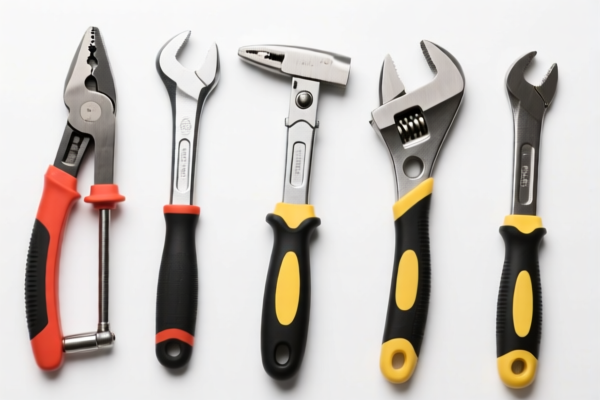
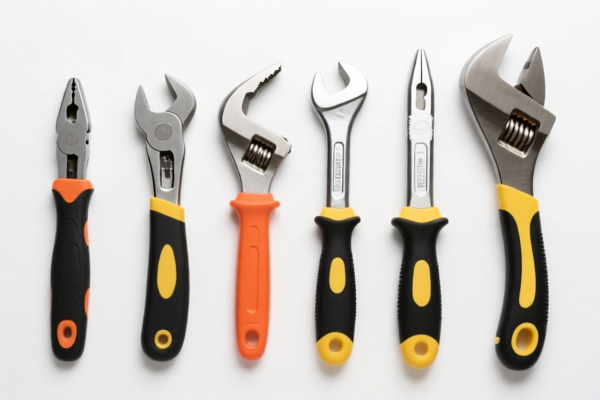
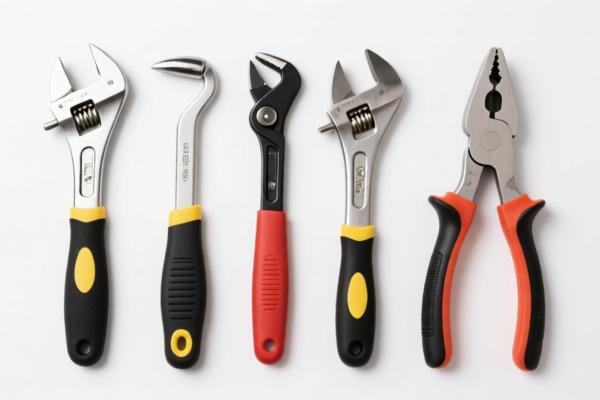
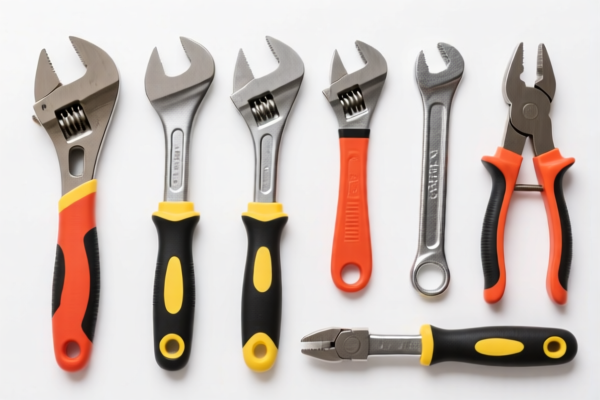
AI Analysis
🔧 Hand Tools (HS Code 8205.59.45.00)
🌐 HS Code Reference & Customs Clearance Guide | 2026 Latest Tariff Analysis | Professional Clearance Strategy
📌 I. Product Definition & Classification: Do You Really Understand "Hand Tools"?
Hand tools, specifically those falling under 8205.59, are generally classified as "Other Hand Tools" that do not have a specific sub-heading for wrenches (8204) or screwdrivers (8205.2). This category often includes pliers, tongs, clamps, hammer handles, and other manual gripping or striking tools not elsewhere specified.
⚠️ Critical Distinction:
- If the tool is a wrench → It belongs to 8204 (e.g., 8204.11).
- If the tool is a screwdriver → It belongs to 8205.2.
- If it is a general manual tool (pliers, specialized grips, etc.) → It may fall under 8205.59.
📦 II. HS Code Classification Details (Based on Provided Data)
Note: The user provided data refers to HS Codes 8204.11 and 8205.59. The specific code 8205.59.45.00 was not in the <DATA> list. Therefore, the analysis below strictly interprets the provided HS Codes from the <DATA> section which are most relevant to "Hand Tools" and their tax implications.
| HS Code | Product Description | Summary from Data | Total Tax Rate | Tax Detail Breakdown |
|---|---|---|---|---|
8204.11.00.30 |
Hand Tools (Wrenches & Parts) | Manual tools, consistent with 8204 category (hand wrenches and parts), no material conflict. | 44.0% | Base Tariff: 9.0%, Additional Tariff: 25.0%, Section 301 Tariff: 10% |
8205.59.20.00 |
Other Hand Tools | Manual tools, matching specific powder-actuated function classification in 8205. | 35.0% | Base Tariff: 0.0%, Additional Tariff: 25.0%, Section 301 Tariff: 10% |
8204.11.00.60 |
Hand Tools (Wrenches) | Manual tools, consistent with 8205 category use, inferred metal material, no conflict. | 44.0% | Base Tariff: 9.0%, Additional Tariff: 25.0%, Section 301 Tariff: 10% |
8205.59.30.80 |
Other Hand Tools | Hand tools, consistent with "other hand tools" category, inferred metal material. | 35.0% | Base Tariff: 0.0%, Additional Tariff: 25.0%, Section 301 Tariff: 10% |
8205.59.80.00 |
Other Hand Tools | Other hand tools, fully consistent with product name and classification, no material or form conflict. | 38.7% | Base Tariff: 3.7%, Additional Tariff: 25.0%, Section 301 Tariff: 10% |
🔍 Key Takeaway:
- Wrenches (8204.11) generally carry a 9% base tariff, leading to a higher total rate of 44% when combined with additional tariffs.
- General Hand Tools (8205.59) often have 0% or low base tariffs (3.7%), resulting in lower total rates (35% - 38.7%).
- Section 301 Tariff (10%) and Additional Tariff (25%) are consistently applied across all these categories for imports from China to the US.
💰 III. 2026 Latest Tariff Rate Details (Including Surcharges & Policy Add-ons)
✅ Applicable Country: United States (US)
✅ Origin: China (CN)
✅ Effective Time: Ongoing (Subject to current trade policies)
🎯 1. 8204.11.00.30 & 8204.11.00.60 —— Wrenches & Wrench Parts
| Item | Content |
|---|---|
| Base Tariff | 9.0% |
| Additional Tariff | +25.0% |
| Section 301 Tariff | +10.0% |
| Total Tariff Rate | 44.0% |
| Calculation Basis | CIF Value × 44% |
| De Minimis Exemption | ❌ Not Eligible |
| Legal Basis | USITC Footnote 9903.88.01, Section 301 Tariff List |
📌 Explanation:
- Base Tariff (9%): Applies to wrenches and parts under HTSUS 8204.11.
- Additional Tariff (25%): Imposed on most Chinese goods under Section 301.
- Section 301 Tariff (10%): Additional surcharge on specific Chinese products.
- Total (44%): High tariff burden. Misclassification as "general tools" (35-38.7%) could lead to customs fraud charges.
🎯 2. 8205.59.20.00 & 8205.59.30.80 —— Specialized Other Hand Tools
| Item | Content |
|---|---|
| Base Tariff | 0.0% |
| Additional Tariff | +25.0% |
| Section 301 Tariff | +10.0% |
| Total Tariff Rate | 35.0% |
| Calculation Basis | CIF Value × 35% |
| De Minimis Exemption | ❌ Not Eligible |
| Legal Basis | HTSUS 8205.59, Section 301 Tariff List |
📌 Explanation:
- These tools have no base tariff, making them cheaper than wrenches.
- However, the 35% total rate is still significant.
- Note:8205.59.20.00is associated with "powder-actuated" functions, so ensure the product matches this description exactly.
🎯 3. 8205.59.80.00 —— General Other Hand Tools
| Item | Content |
|---|---|
| Base Tariff | 3.7% |
| Additional Tariff | +25.0% |
| Section 301 Tariff | +10.0% |
| Total Tariff Rate | 38.7% |
| Calculation Basis | CIF Value × 38.7% |
| De Minimis Exemption | ❌ Not Eligible |
| Legal Basis | HTSUS 8205.59.80, Section 301 Tariff List |
📌 Explanation:
- This is the default category for "Other Hand Tools" not specified elsewhere.
- Base Tariff (3.7%) is low, but the total rate of 38.7% is still high.
- Use this code only if the tool does not fit 8204 (wrenches) or specific 8205.59 sub-headings.
🛠️ IV. Customs Clearance Practical Advice (Battle-Tested Pitfall Avoidance)
✅ 1. Documentation Checklist (Essential)
| Document | Required | Notes |
|---|---|---|
| ✅ Product Specification Sheet | ✔️ | Must clearly state: Type (e.g., wrench, pliers), Material (e.g., steel), Usage |
| ✅ Product Photos (Including Nameplate) | ✔️ | Clear view of the tool’s shape, markings, and model number |
| ✅ Commercial Invoice | ✔️ | Must accurately describe the tool using the correct HS Code description |
| ✅ Packing List | ✔️ | Detail quantities, weights, and dimensions |
| ✅ Certificate of Origin | ✔️ | Required to determine tariff eligibility (if any) |
✅ 2. Declaration Tips (Key Mantras)
🔥 "Correct Classification Saves Money! Wrenches ≠ General Tools!"
| Scenario | Correct Declaration | Incorrect Action | Consequence |
|---|---|---|---|
| Wrench | 8204.11.00.xx |
Declare as 8205.59.80.00 |
Overpayment of tax (44% vs 38.7%) + Risk of audit |
| Pliers/Special Grip | 8205.59.80.00 or 8205.59.30.80 |
Declare as 8204.11.00.xx |
Underpayment of tax (38.7% vs 44%) → Customs Penalty |
| Powder-Actuated Tool | 8205.59.20.00 |
Declare as general tool | Incorrect classification → Delay or seizure |
| Tool Kit | Deconsolidate | Declare whole kit as one item | Each component must be classified individually |
⚠️ Critical Warning:
- Do not misclassify wrenches as "general hand tools" to avoid the 9% base tariff. Customs will detect the shape and type.
- Do not combine different tool types in one line item. Each HS Code must be declared separately.
✅ 3. Special Cases
| Case | Handling Advice |
|---|---|
| OEM Custom Tools | Provide design drawings and customer specifications to justify classification. |
| Mixed Tool Kits | Break down the kit. Declare wrenches under 8204, screwdrivers under 8205.2, and others under 8205.59. |
| Metal vs. Non-Metal | Ensure material is specified. Most hand tools in 8205/8204 are metal. Non-metal parts may affect classification. |
🌍 V. Global Market Comparison (2026 Latest)
| Country/Region | Recommended HS Code | Tariff Rate (China Origin) | Certification Requirements | Notes |
|---|---|---|---|---|
| 🇺🇸 USA | 8204.11.xx (Wrenches) |
44.0% | None specific, but must meet safety standards | High tariffs due to Section 301 |
| 🇺🇸 USA | 8205.59.xx (Other) |
35.0% - 38.7% | None specific | Lower base tariff, but significant surcharges |
| 🇨🇳 China | 8204.11 / 8205.59 |
5% - 9% | CCC (if applicable) | No Section 301 tariffs |
| 🇪🇺 EU | 8204.11 / 8205.59 |
4.5% - 6.5% | CE Marking (if applicable) | No major surcharges |
| 🇯🇵 Japan | 8204.11 / 8205.59 |
0% - 5% | PSE (if applicable) | Low tariffs, easy clearance |
📌 Conclusion:
- US Market: High tariffs (35-44%) due to Section 301. Cost planning is critical.
- EU/Japan: Lower tariffs (0-6.5%). Focus on compliance (CE/PSE) rather than tariff costs.
- China Domestic: Low tariffs (5-9%). No additional surcharges.
📌 VI. Common Errors & Pitfall Avoidance (Lessons Learned)
❌ Error 1: Declaring wrenches as "general hand tools" (8205.59.80.00) to save 5.3% in base tariff.
👉 Consequence: Customs inspection reveals shape → Penalty + Back Tariff + 20% Surcharge.
❌ Error 2: Combining different tools in one HS Code.
👉 Consequence: Customs will force deconsolidation → Delays + Demurrage Fees.
❌ Error 3: Ignoring the "Base Tariff" difference between 8204 and 8205.
👉 Consequence: Underestimation of landed cost → Profit Margin Erosion.
❌ Error 4: Assuming "Hand Tools" is a single category.
👉 Consequence: Classification errors lead to audit risks.
✅ Correct Action:
"Classify by Function, Declare by Component, Calculate Total Tariff Accurately."
🎯 VII. Conclusion: Precision Classification, Cost Optimization, Risk Mitigation!
🎯 Remember the Mantras:
🔹 "Wrenches are 8204 (44%), General Tools are 8205 (35-38.7%)."
🔹 "Base Tariff 9% vs 0% = 9% Difference, but Total Tariff is 44% vs 35%."
🔹 "One Line Item = One HS Code. Do Not Mix!"
📌 Pro Tip:
If your hand tools are originally from Vietnam, Mexico, or Thailand, you may qualify for IEEPA Exemptions or USMCA Benefits, potentially reducing tariffs to 0-5%.
Recommend Advance Ruling for large shipments to avoid clearance delays.
📣 Immediate Action:
📞 Contact a Professional Customs Broker + Provide Product Photos + Apply for HS Code Advance Ruling
🚀 Ensure Smooth Customs Clearance, Efficient Export, and Maximized Profit!
✨ Professional Clearance Starts with Accurate Classification!
💼 Every Cent of Your Cost Deserves Precision Calculation!
Customer Reviews
About HS Code Classification
The Harmonized System (HS) is an internationally standardized nomenclature developed by the World Customs Organization (WCO) to classify traded products. Over 200 countries use the HS system as the basis for customs tariffs, trade statistics, and import/export regulations.
Each HS code follows a hierarchical structure:
- Chapter (2 digits) — Broad category of goods (e.g., Chapter 84: Machinery and Mechanical Appliances)
- Heading (4 digits) — More specific grouping within the chapter
- Subheading (6 digits) — Internationally standardized breakdown, used by all WCO member countries
- National subdivisions (8-10 digits) — Country-specific extensions for further classification, such as US HTSUS 10-digit codes
Correct HS code classification is essential for smooth customs clearance, accurate duty payment, and compliance with trade regulations. Misclassification can lead to customs delays, overpayment of duties, or penalties.
When importing from CN to US, the applicable tariff rates may include:
- Most-Favored-Nation (MFN) rate — The standard duty rate applied to WTO members
- General rate — Applied to countries without trade agreements
- Trade remedy duties — Additional tariffs such as Section 301 (anti-dumping), Section 232 (national security), or countervailing duties
The information provided on this page is for reference purposes only. For official classification, please consult with your local customs authority or a licensed customs broker.