Hand Tools (e.g., Hammer, Screwdriver, Wrench)
CN → US| HS Code | Tariff Rate | Origin | Destination | Doc |
|---|---|---|---|---|
| 8205203000 | 41.2% | CN | US | Official Doc |
| 8205400000 | 41.2% | CN | US | Official Doc |
| 8204110030 | 44.0% | CN | US | Official Doc |
| 8204120000 | 44.0% | CN | US | Official Doc |
| 8204110030 | 44.0% | CN | US | Official Doc |
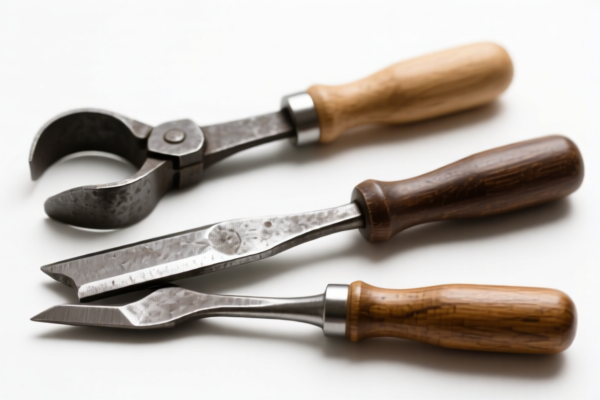
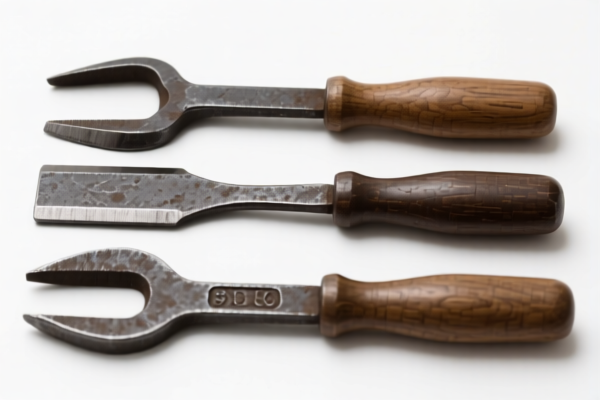
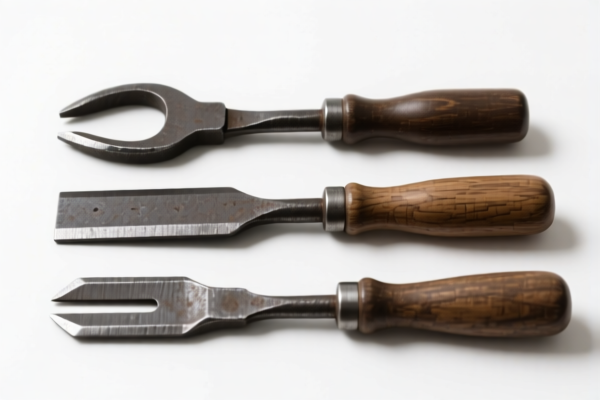
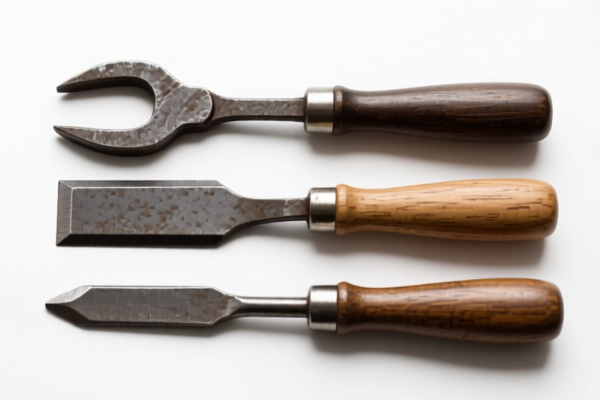
Product Images
AI Analysis
🔨 Hand Tools (Hammer, Screwdriver, Wrench)
🌐 HS Code Reference & Customs Clearance Guide | 2024-2026 Latest Tariff Analysis | Professional Strategy for US Imports
📌 I. Product Definition & Classification: Understanding "Hand Tools"
Hand tools are non-electric tools operated by hand power. In international trade, they are strictly categorized by mechanical function and adjustability. Misclassification is the most common error in this category, leading to severe penalties.
⚠️ Key Distinction:
- Hammers & Screwdrivers → Generally grouped under 8205 (Miscellaneous hand tools).
- Wrenches → Grouped under 8204, split strictly by adjustability (Fixed vs. Adjustable).
- Electrical/Powered Tools → NOT included here. If it has a battery or cord, it belongs to Chapter 85 (e.g., 8207.80 or 8467), which has completely different tax rates.
📦 II. HS Code Classification Details (Based on Provided Data)
| HS Code | Product Description | Applicable Scenarios | Key Identification Feature |
|---|---|---|---|
8205.20.30.00 |
Hammer (Non-electric) | Claw hammers, ball-peen hammers, sledgehammers, mallets. | Head shape suitable for striking; no moving parts. |
8205.40.00.00 |
Screwdriver (Non-electric) | Flathead, Phillips, Torx, hex drivers, screwdriver bits (if sold as tools, not parts). | Blade shape matches screw head; hand-operated rotation. |
8204.11.00.30 |
Adjustable Spanner/Wrench | Adjustable wrenches (crescent wrenches), pipe wrenches. | Jaw width can be changed via a screw/mechanism. |
8204.12.00.00 |
Fixed Spanner/Wrench | Open-end wrenches, ring-end wrenches, combination wrenches. | Jaw size is fixed; cannot be adjusted. |
🔍 Critical Note on Wrenches:
- If the wrench has a movable jaw (like a Crescent wrench), it MUST go to8204.11.00.30.
- If the wrench has two fixed jaws (like a standard socket or open-end), it MUST go to8204.12.00.00.
- Do not mix these up! The tax base differs slightly (9% vs 6.2%), though total liability is similar due to add-on tariffs.
💰 III. 2024-2026 Detailed Tariff Breakdown (US Imports from China)
✅ Applicable Country: United States (US)
✅ Origin: China (CN)
✅ Effective Time: Current rates apply (Section 301 & Section 122 Tariffs Active)
🎯 1. Hammers & Screwdrivers (8205.20.30.00 & 8205.40.00.00)
| Item | Detail |
|---|---|
| Base Duty Rate | 6.2% |
| Section 301 Tariff | +25.0% (25% ad valorem) |
| Section 122 Tariff | +10.0% (Note: Verify if Section 122 is still active for your specific entry; some periods have expired, but data indicates inclusion) |
| Total Effective Rate | 41.2% |
| Calculation | CIF Value × 41.2% |
| De Minimis Exemption | ❌ NOT Eligible (Value > $800 threshold does not apply to Section 301 goods from China) |
📌 Explanation:
- Base Rate (6.2%): Standard Most Favored Nation (MFN) rate for hand tools.
- Section 301 (25%): Imposed under Trade Act of 1974, Section 301, against Chinese goods.
- Section 122 (10%): Imposed under Section 122 of the Trade Act of 1974 (national security/emergency powers). Note: Ensure your broker confirms if Section 122 is currently applicable to your shipment date, as these orders can expire.
- Total: 41.2% is a very high burden. Cost-plus pricing must reflect this.
🎯 2. Wrenches (8204.11.00.30 & 8204.12.00.00)
| Item | Detail |
|---|---|
| Base Duty Rate | 9.0% |
| Section 301 Tariff | +25.0% |
| Section 122 Tariff | +10.0% |
| Total Effective Rate | 44.0% |
| Calculation | CIF Value × 44.0% |
| De Minimis Exemption | ❌ NOT Eligible |
📌 Explanation:
- Base Rate (9.0%): Higher than hammers/screwdrivers due to the precision engineering required for adjustable mechanisms or specific steel alloys in wrenches.
- Add-ons: Same 25% (Sec 301) + 10% (Sec 122).
- Total: 44.0%.
- Impact: Wrenches are 2.8% more expensive to import than hammers/screwdrivers due to the higher base rate.
🛠️ IV. Customs Clearance Practical Advice (Avoiding Pitfalls)
✅ 1. Documentation Checklist (Non-Negotiable)
| Document | Required? | Notes |
|---|---|---|
| Commercial Invoice | ✅ Yes | Must explicitly state "Hand Tool, Non-Electric". Avoid vague terms like "Hardware". |
| Product Photos | ✅ Yes | Clear images showing the tool's mechanism. Crucial for distinguishing Adjustable vs. Fixed wrenches. |
| Material Composition | ✅ Yes | Specify if made of Carbon Steel, Chrome Vanadium, etc. (May affect base rate verification). |
| Country of Origin Cert | ✅ Yes | To confirm China origin and trigger correct Section 301/122 duties. |
| Binding Tariff Ruling | ⭐ Recommended | If importing mixed containers, get an Advance Ruling to prevent misclassification of wrenches. |
✅ 2. Declaration Best Practices
| Scenario | Correct Declaration | Incorrect Declaration | Consequence |
|---|---|---|---|
| Adjustable Wrench | "Adjustable Spanner, Hand Tool" | "Spanner" (Vague) | High risk of audit; potential reclassification to higher tax bracket or penalty. |
| Fixed Wrench | "Open End Wrench, Hand Tool" | "Tool Set" | If part of a set, whole set may be classified by "essential character", potentially changing HS Code. |
| Screwdriver Set | "Screwdrivers, Hand Tool" | "Screwdriver Bits" | Bits may be classified under parts (8205.90) with different rates. Declare the tool, not just the bit. |
| Electric Hammer | 8207.80 or 8467.21 |
8205.20 |
MAJOR ERROR. Electric tools are not "hand tools" in HS Chapter 82 context. Misdeclaration leads to fraud allegations. |
✅ 3. Special Tips for Mixed Shipments
- Tool Sets: If you import a kit containing a hammer, screwdriver, and wrench, the entire set is often classified under the HS code of the item that gives the set its essential character (e.g., if the hammer is the most valuable/largest, the whole set might go to
8205.20.30.00). - Strategy: Separate shipment types if possible to simplify classification and ensure accurate tax calculation.
- Branding: Private labeling is allowed, but ensure the "Country of Origin" is clearly marked on the product or packaging (e.g., "Made in China").
🌍 V. Global Market Comparison (2026 Outlook)
| Region | Recommended HS Code | Base Duty | Section 301/Retaliatory? | Total Est. Duty (China Origin) |
|---|---|---|---|---|
| 🇺🇸 USA | 8205.20.30.00 / 8204.12.00.00 |
6.2% - 9.0% | +25% +10% | 41.2% - 44.0% |
| 🇨🇳 China | 8205.20.30.00 |
6.2% | No | 6.2% |
| 🇪🇺 EU | 8205.20.30.00 |
4.5% - 6.0% | No (Generally) | ~5.0% |
| 🇬🇧 UK | 8205.20.30.00 |
3.7% - 5.5% | No | ~4.5% |
| 🇲🇽 Mexico | 8205.20.30.00 |
0% (USMCA if origin qualifies) | No | 0% (If USMCA origin) |
📌 Key Insight:
- The US market is significantly more expensive for Chinese hand tools due to aggressive tariffs.
- Diversification Strategy: Consider sourcing from Vietnam, Thailand, or Mexico to bypass Section 301 tariffs (0% or low duty).
📌 VI. Common Mistakes & Blood-Tear Lessons
❌ Mistake 1: Declaring an Adjustable Wrench as a Fixed Wrench to save 0.8% base duty.
👉 Result: Customs audit, penalty, and retroactive payment of difference + interest.
❌ Mistake 2: Including Electric Screwdrivers in the same declaration as Hand Screwdrivers.
👉 Result: The entire shipment may be rejected or classified under the electric HS code, causing delays and higher duties.
❌ Mistake 3: Ignoring Section 122 tariffs.
👉 Result: Unexpected 10% charge at the border, eroding profit margins. Always verify current active tariffs.
❌ Mistake 4: Using "Tools" as a generic description on the Invoice.
👉 Result: Customs broker cannot determine the correct HS code. Shipment held for examination.
✅ Correct Approach:
"Non-Electric Hand Tool, Adjustable Wrench, Chrome Vanadium Steel, Made in China, HS 8204.11.00.30"
🎯 VII. Conclusion: Precision Saves Money
🎯 Remember:
🔹 "Adjustable vs. Fixed" is the critical divider for Wrenches.
🔹 "Electric vs. Hand" is the critical divider for Hammers/Screwdrivers.
🔹 "41.2% - 44.0%" is the real cost for Chinese Hand Tools in the US.
📌 Pro Tip:
If your profit margin is thin, do not ship via de minimis (Section 321). The $800 exemption does not apply to goods subject to Section 301 tariffs. Always declare properly and budget for the full 41-44% duty.
📣 Immediate Action:
📞 Consult a licensed US Customs Broker before shipping.
📦 Label every carton with "Made in China" and exact HS Code.
💰 Calculate landed cost using 44% for wrenches and 41.2% for hammers/screwdrivers.
✨ Accurate Classification is Your First Step to Profitability!
💼 Don't let tariffs eat your margin!
Customer Reviews
About HS Code Classification
The Harmonized System (HS) is an internationally standardized nomenclature developed by the World Customs Organization (WCO) to classify traded products. Over 200 countries use the HS system as the basis for customs tariffs, trade statistics, and import/export regulations.
Each HS code follows a hierarchical structure:
- Chapter (2 digits) — Broad category of goods (e.g., Chapter 84: Machinery and Mechanical Appliances)
- Heading (4 digits) — More specific grouping within the chapter
- Subheading (6 digits) — Internationally standardized breakdown, used by all WCO member countries
- National subdivisions (8-10 digits) — Country-specific extensions for further classification, such as US HTSUS 10-digit codes
Correct HS code classification is essential for smooth customs clearance, accurate duty payment, and compliance with trade regulations. Misclassification can lead to customs delays, overpayment of duties, or penalties.
When importing from CN to US, the applicable tariff rates may include:
- Most-Favored-Nation (MFN) rate — The standard duty rate applied to WTO members
- General rate — Applied to countries without trade agreements
- Trade remedy duties — Additional tariffs such as Section 301 (anti-dumping), Section 232 (national security), or countervailing duties
The information provided on this page is for reference purposes only. For official classification, please consult with your local customs authority or a licensed customs broker.