Hand Tools Base Metal
CN → US| HS Code | Tariff Rate | Origin | Destination | Doc |
|---|---|---|---|---|
| 8205100000 | 41.2% | CN | US | Official Doc |
| 8204110030 | 44.0% | CN | US | Official Doc |
| 8204120000 | 44.0% | CN | US | Official Doc |
| 8203202000 | 39.0% | CN | US | Official Doc |
| 8203103000 | 35.0% | CN | US | Official Doc |
| 8205598000 | 38.7% | CN | US | Official Doc |
Product Images
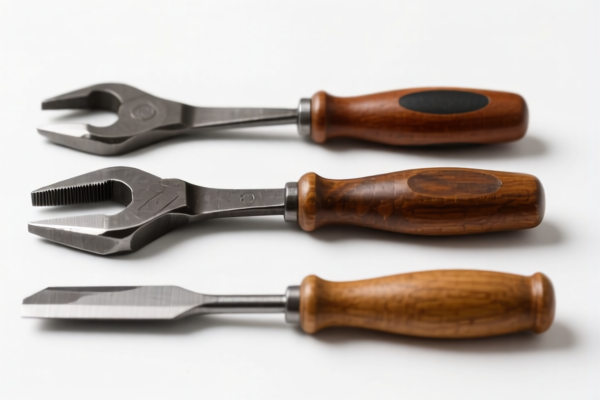
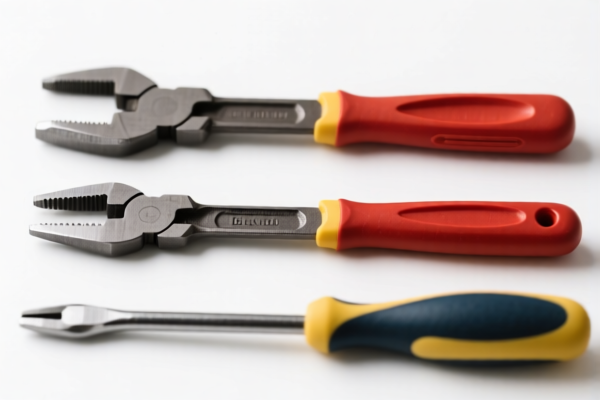
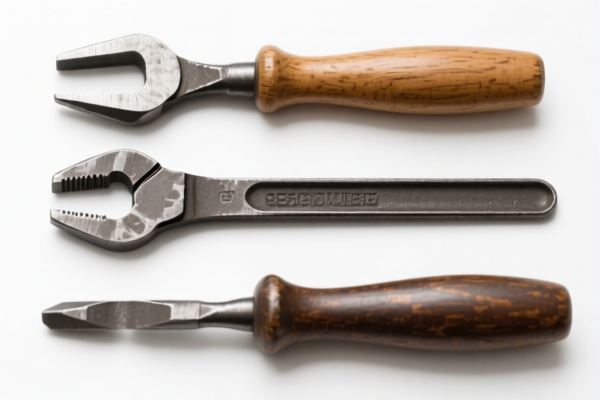
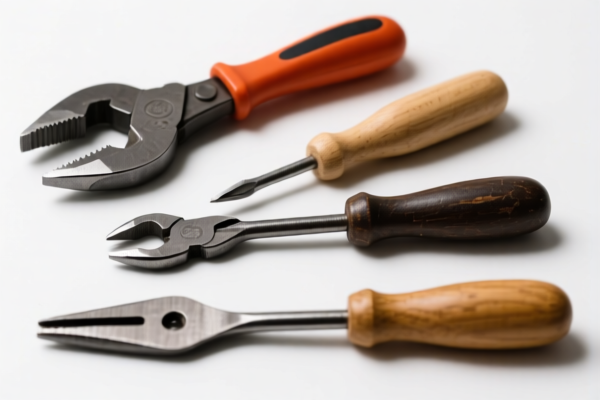
AI Analysis
🛠️ Hand Tools (Base Metal)
🌐 HS Code Reference & Clearance Guide | 2026 Latest Tariff Analysis | Professional Customs Strategy
📌 I. Product Definition & Classification: What Exactly Are "Base Metal Hand Tools"?
Hand tools made of base metal refer to manual devices used for cutting, shaping, gripping, or fastening, constructed primarily from non-precious metals (such as iron, steel, copper, aluminum, etc.), excluding power tools. In international trade, these items are strictly regulated under Chapter 82 of the Harmonized System.
The classification hinges on two critical factors: 1. Material: Must be "base metal" (not precious metals like gold/silver). 2. Function: Must be "hand-operated" (no electric motors, pneumatics, or hydraulics).
⚠️ Key Distinction:
- If the tool is power-driven (electric, pneumatic) → It falls under Chapter 84 or 85, NOT Chapter 82.
- If it is a part of a hand tool (e.g., a loose blade or handle) → It may fall under 8207 or 8205, but only if it cannot be identified as a specific tool.
- If it is a knife for household use → It may fall under Chapter 82 or Chapter 83 depending on the blade material and handle.
📦 II. HS Code Classification Details (2026 Latest Tariff Authority对照)
Based on the provided data, here are the precise HS Codes for base metal hand tools, along with their tax implications and specific matching criteria.
| HS Code | Product Description & Summary | Matching Criteria | Total Tax Rate (China→US) |
|---|---|---|---|
8205.10.00.00 |
Hand Tools of Base Metal (Summary: Basic metal hand tools, matching material and use) |
General category for standard hand tools (e.g., hammers, tongs, pincers) made of base metal. | 41.2% |
8204.11.00.30 |
Hand Tools of Base Metal (Summary: Matches manual attribute and material) |
Specifically for Wrenches/Spanners (adjustable or fixed). | 44.0% |
8204.12.00.00 |
Hand Tools of Base Metal (Summary: Material and use consistent) |
Specifically for Other Wrenches (not adjustable). | 44.0% |
8203.20.20.00 |
Hand Tools and Implements (Summary: Highly matched base metal hand tools and parts) |
Tools like Pliers, Pincers, Tweezers, and similar gripping tools. | 39.0% |
8203.10.30.00 |
Hand Tools and Implements (Summary: No material or form conflict) |
Tools like Chisels, Punches, Scalers, etc. | 35.0% |
8205.59.80.00 |
Other Hand Tools (Summary: Metal material, matches attributes of hand tools and parts) |
Other metal hand tools not specified above (e.g., screwdrivers, specialized gripping tools). | 38.7% |
🔍 Focus Reminder:
- Wrenches (Spanners) generally incur the highest tax rate (44.0%) due to specific subheading classifications (8204).
- Chisels and Punches have the lowest tax rate (35.0%) in this dataset (8203.10).
- All listed codes include US Additional Tariffs for Chinese-origin goods.
💰 III. 2026 Latest Tariff Rate Breakdown (Including Surtaxes)
✅ Applicable Country: United States (US)
✅ Origin: China (CN)
✅ Effective Time: Post-2025 regulations (Section 301 & IEEPA)
🎯 1. 8204.11.00.30 & 8204.12.00.00 — Wrenches/Spanners
Highest Tax Bracket: 44.0%
| Item | Detail |
|---|---|
| Basic Duty | 9.0% (Standard MFN rate) |
| Section 301 Surtax | +25.0% (Trade War Tariff) |
| Section 122 Duty | +10.0% (Specific policy surcharge) |
| Total Effective Rate | 44.0% |
| Tax Calculation | CIF Value × 44.0% |
| De Minimis Exemption | ❌ Not Eligible (Valued > $800 threshold triggers full duty) |
| Legal Basis | USITC:8204 → Section 301 Footnote → IEEPA/Section 122 |
📌 Explanation:
- 9.0% is the standard Base Tariff for wrenches.
- 25.0% is the aggressive Section 301 tariff on Chinese steel/manufactured goods.
- 10.0% is an additional surcharge under Section 122 (or similar specific trade remedy).
- Total: 44.0%. This is a high-cost category.
🎯 2. 8205.10.00.00 — General Base Metal Hand Tools
Tax Bracket: 41.2%
| Item | Detail |
|---|---|
| Basic Duty | 6.2% |
| Section 301 Surtax | +25.0% |
| Section 122 Duty | +10.0% |
| Total Effective Rate | 41.2% |
| Tax Calculation | CIF Value × 41.2% |
📌 Explanation:
- Lower base duty (6.2%) compared to wrenches.
- Surtaxes remain constant at 35.0% (25% + 10%).
- Suitable for general-purpose tools like hammers, tongs, or non-specified metal grips.
🎯 3. 8203.20.20.00 — Pliers/Pincers
Tax Bracket: 39.0%
| Item | Detail |
|---|---|
| Basic Duty | 4.0% |
| Section 301 Surtax | +25.0% |
| Section 122 Duty | +10.0% |
| Total Effective Rate | 39.0% |
| Tax Calculation | CIF Value × 39.0% |
🎯 4. 8203.10.30.00 — Chisels/Punches
Lowest Tax Bracket: 35.0%
| Item | Detail |
|---|---|
| Basic Duty | 0.0% |
| Section 301 Surtax | +25.0% |
| Section 122 Duty | +10.0% |
| Total Effective Rate | 35.0% |
| Tax Calculation | CIF Value × 35.0% |
📌 Explanation:
- Zero Base Duty makes this the most tax-efficient category.
- However, 35.0% total is still significant.
- Only applies to specific implements like chisels, punches, and scalers.
🎯 5. 8205.59.80.00 — Other Hand Tools
Tax Bracket: 38.7%
| Item | Detail |
|---|---|
| Basic Duty | 3.7% |
| Section 301 Surtax | +25.0% |
| Section 122 Duty | +10.0% |
| Total Effective Rate | 38.7% |
| Tax Calculation | CIF Value × 38.7% |
🛠️ IV. Practical Customs Clearance Advice (Real-World Pitfall Guide)
✅ 1. Documentation Checklist (Non-Negotiable)
| Document | Required? | Purpose |
|---|---|---|
| ✅ Product Specification Sheet | ✔️ | Must specify material (e.g., "Chrome Vanadium Steel"), dimensions, and handle type. |
| ✅ Photos (Labeled) | ✔️ | Clear images of the tool, showing no electrical components. |
| ✅ Commercial Invoice | ✔️ | Must clearly state "Hand Tools, Base Metal, Made in China." |
| ✅ Packing List | ✔️ | Itemize quantities and weights per HS Code. |
| ✅ Country of Origin Certificate | ✔️ | Proof of Chinese origin (triggers the 35-44% tariff). |
| ✅ Material Declaration | ✔️ | Confirm no precious metals or alloys that might reclassify under Chapter 71 or 83. |
✅ 2. Declaration Tips (Critical Keywords)
🔥 "Hand-Operated, Base Metal, No Power Source"
| Scenario | Correct Declaration | Wrong Declaration | Consequence |
|---|---|---|---|
| Adjustable Wrench | 8204.11.00.30 - Adjustable Wrench, Steel |
"General Tool" | 44.0% + Potential Audit |
| Pliers | 8203.20.20.00 - Pliers, Base Metal |
"Hand Tool, Miscellaneous" | 39.0% + Possible Rejection |
| Screwdriver | 8205.59.80.00 - Screwdriver, Metal Handle |
"Part of Machine" | 38.7% |
| Power Drill | DO NOT USE CH 82 | 8203.xxxxxx |
Rejected/Seized (Must use Ch 84) |
| Ceramic Knife | 8211/8213 (Not Ch 82) |
8205.xxxxxx |
Misclassification Penalty |
✅ 3. Special Cases & Mitigation
| Situation | Handling Advice |
|---|---|
| Mixed Containers | If a container has both wrenches (44%) and chisels (35%), declare separately. Do not lump them under the highest rate unless you lack detail. |
| OEM Private Label | Provide the brand name, but material description is key. Customs looks at the physical product, not the label. |
| Sets of Tools | If sold as a "Mechanic's Set," classify by the principal component (usually the wrenches or pliers). This likely triggers 44.0% on the whole set. |
| Aluminum Handles | If the tool is steel but has an aluminum handle, it is still "Base Metal" and falls under Chapter 82. |
🌍 V. Global Market Comparison (2026 Update)
| Country | Recommended HS Code | Est. Total Duty (China) | Notes |
|---|---|---|---|
| 🇺🇸 USA | 8204/8203/8205 |
35% – 44% | High Section 301 + IEEPA/122 tariffs. Expensive. |
| 🇨🇳 China | 8204/8203/8205 |
0% – 9% | Low import duty for raw tools. No surtaxes. |
| 🇪🇺 EU | 8204/8203/8205 |
~4.5% – 6.5% | No Section 301. Only standard EU duties. Cheaper. |
| 🇬🇧 UK | 8204/8203/8205 |
~4.5% – 6.5% | Post-Brexit tariff aligns closely with EU. |
| 🇦🇺 AU | 8204/8203/8205 |
~5% | Low tariffs, no surcharges. |
📌 Conclusion:
- The US market is highly punitive for Chinese base metal hand tools (35-44% tax).
- EU/UK/AU are significantly more cost-effective (~5%).
- Consider supply chain diversification (e.g., sourcing from Vietnam or Thailand) to avoid Section 301 tariffs if exporting to the US.
📌 VI. Common Mistakes & Pitfalls (Lessons Learned)
❌ Mistake 1: Declaring Power Tools under 8203 or 8205.
👉 Result: Seizure or Heavy Penalty. Power tools belong in Chapter 84.
✅ Fix: Explicitly state "Hand-Operated" or "Manual."
❌ Mistake 2: Lumping All Hand Tools under one HS Code (8205.90).
👉 Result: Inaccurate Declaration. Wrenches (8204) have different rates than pliers (8203).
✅ Fix: Split shipment by tool type.
❌ Mistake 3: Ignoring Section 122/IEEPA.
👉 Result: Underpayment. Assuming only 25% tax when 35%+ applies.
✅ Fix: Always add the +10% surcharge for Chinese origin.
❌ Mistake 4: Using vague descriptions like "Tool."
👉 Result: Customs Detention. Officers cannot determine the exact HS Code.
✅ Fix: Use precise names: "Adjustable Wrench, Steel, 10 inch."
🎯 VII. Conclusion: Smart Declaration, Cost Control
🎯 Remember the Key Takeaways:
🔹 Wrenches = 44% (Highest)
🔹 Chisels/Punches = 35% (Lowest)
🔹 All = Base Tariff + 25% (Sec 301) + 10% (Sec 122)
🔹 "HS Code determines your profit margin. A 9% difference is $9,000 on every $100,000 shipment!"
🔹 "Never misclassify power tools as hand tools."
📌 Pro Tip:
If your product is not made in China (e.g., Vietnam, Germany), the 25% Section 301 tax does NOT apply.
- German Wrenches: ~4.5% duty (EU standard).
- Vietnamese Wrenches: Check for de minimis or lower tariffs based on US-Vietnam trade relations.
✅ Strategy: Consider sourcing from non-China origins for US export to save ~25-30% in taxes.
📣 Immediate Action:
📞 Contact a Licensed Customs Broker.
📄 Provide Product Photos & Material Specs.
🚀 Get a Pre-Ruling (Advance Ruling) from CBP to lock in the HS Code and avoid surprises at the border.
✨ Professional Clearance Starts with Accurate Classification!
💼 Every Percentage Point Saved is Pure Profit!
Customer Reviews
About HS Code Classification
The Harmonized System (HS) is an internationally standardized nomenclature developed by the World Customs Organization (WCO) to classify traded products. Over 200 countries use the HS system as the basis for customs tariffs, trade statistics, and import/export regulations.
Each HS code follows a hierarchical structure:
- Chapter (2 digits) — Broad category of goods (e.g., Chapter 84: Machinery and Mechanical Appliances)
- Heading (4 digits) — More specific grouping within the chapter
- Subheading (6 digits) — Internationally standardized breakdown, used by all WCO member countries
- National subdivisions (8-10 digits) — Country-specific extensions for further classification, such as US HTSUS 10-digit codes
Correct HS code classification is essential for smooth customs clearance, accurate duty payment, and compliance with trade regulations. Misclassification can lead to customs delays, overpayment of duties, or penalties.
When importing from CN to US, the applicable tariff rates may include:
- Most-Favored-Nation (MFN) rate — The standard duty rate applied to WTO members
- General rate — Applied to countries without trade agreements
- Trade remedy duties — Additional tariffs such as Section 301 (anti-dumping), Section 232 (national security), or countervailing duties
The information provided on this page is for reference purposes only. For official classification, please consult with your local customs authority or a licensed customs broker.