Hand Twist Drill Bit Set
CN → US| HS Code | Tariff Rate | Origin | Destination | Doc |
|---|---|---|---|---|
| 8205100000 | 41.2% | CN | US | Official Doc |
| 8467210050 | 11.7% | CN | US | Official Doc |
| 8467115020 | 35.0% | CN | US | Official Doc |
| 8205906000 | 0.0% | CN | US | Official Doc |
| 8207502055 | 40.0% | CN | US | Official Doc |
Product Images
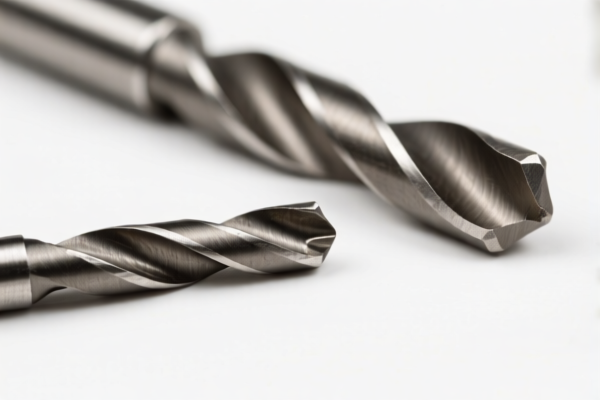
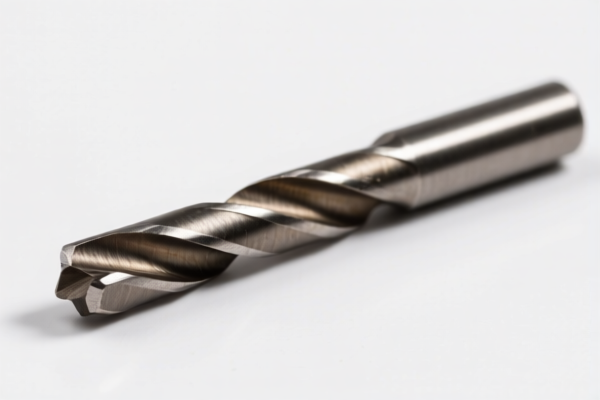
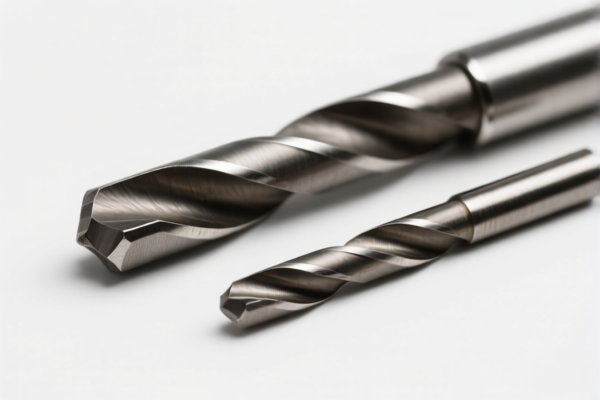
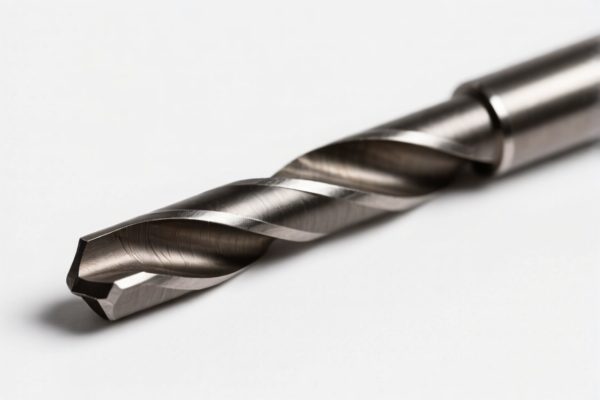
AI Analysis
🛠️ Hand Twist Drill Bit Set (麻花钻套装)
🌐 HS Code Reference & Customs Clearance Guide | 2026 Latest Tariff Analysis | Professional Clearance Strategy
📌 I. Product Definition & Classification: Do You Really Understand "Drill Bit Sets"?
A Hand Twist Drill Bit Set is a collection of twisting drills used for hand-held power tools or manual screwdrivers. In international trade, these fall under the category of "Hand Tools" or "Tools for Working in the Hand." However, the specific HS Code classification varies significantly based on material composition, drive mechanism, and whether they are classified as a "Set."
⚠️ Key Distinction Point:
- If the set is composed of items that are not similar (e.g., mixing drills with wrenches), it falls under "Assorted Sets" (8205.90);
- If composed of similar items (e.g., multiple twist drills), it may be classified by the essential character or specific drill type (8205.10);
- If powered (pneumatic/electric), it moves to Chapter 84 (8467.11 / 8467.21).
📦 II. HS Code Classification Details (2026 Latest Tariff Authority Comparison)
Based on the provided data, here are the potential HS Codes and their logical justifications:
| HS Code | Product Description | Classification Logic | Total Tax Rate |
|---|---|---|---|
8205.10.00.00 |
Twist Drill Bit Sets | Matches the "Hand Tools" category; specifically identifies as a twist drill set (drilling tool). | 41.2% |
8467.21.00.50 |
Rotary Drills (Fallback) | Classified under "Rotary Drills" as a fallback for drill-related tools/accessories not strictly defined elsewhere. | 11.7% |
8467.11.50.20 |
Pneumatic/Hand Drills | Focuses on the "Drill" function within pneumatic/hand tools usage. | 35.0% |
8205.90.60.00 |
Assorted Hand Tool Sets | Fits the "Two or more different articles in a set" criterion, falling under unclassified hand tool sets. | ~35.0%* |
8207.50.20.55 |
Alloy Cutting Tools | Matches purpose and form; material composition (alloy) fits metal cutting requirements. | 40.0% |
* Note for
8205.90.60.00: The base duty is variable ("rate applicable to that article"), but the total effective rate shown is approx. 35.0%.🔍 Important Note:
-8205.10.00.00is the most direct fit for standard twist drill sets made of non-metallic handles or unmeasured hand tools.
-8467codes apply if the drills are powered accessories (pneumatic/electric) rather than manual hand tools.
-8207applies if the focus is on the cutting tool material (carbide/alloy) rather than the "set" aspect.
💰 III. 2026 Latest Tariff Rate Breakdown (Including Surcharges & Policy Add-ons)
✅ Applicable Country: United States (US)
✅ Origin: China (CN)
✅ Effective Date: Post-November 2025 (Includes subsequent imports)
🎯 1. 8205.10.00.00 — Twist Drill Sets (Hand Tools)
| Item | Content |
|---|---|
| Base Tariff | 6.2% |
| Section 301 Surcharge | +25.0% |
| Section 122 Surcharge | +10.0% |
| Total Tax Rate | 41.2% |
| Tax Calculation | CIF Value × 41.2% |
| De Minimis Exemption | ❌ Not Eligible |
| Legal Basis Path | Base: 8205.10 → Section 301: 25% → Section 122: 10% |
📌 Explanation:
- 6.2% Base: Standard MFN tariff for hand tools.
- 25% Section 301: Additional tariff on Chinese goods under US Trade Act Section 301.
- 10% Section 122: Additional tariff under International Emergency Economic Powers Act (IEEPA) Section 122 for certain Chinese imports.
- Total 41.2% is high. Pre-calculation is essential.
🎯 2. 8467.21.00.50 — Rotary Drills (Fallback Category)
| Item | Content |
|---|---|
| Base Tariff | 1.7% |
| Section 301 Surcharge | 0.0% |
| Section 122 Surcharge | +10.0% |
| Total Tax Rate | 11.7% |
| Tax Calculation | CIF Value × 11.7% |
| De Minimis Exemption | ❌ Not Eligible |
| Legal Basis Path | Base: 8467.21 → Section 122: 10% |
📌 Explanation:
- This is the lowest tax option (11.7%) in the provided data.
- However, classification must be justified: The drill must be interpreted as a "rotary drill" accessory rather than a manual hand tool.
- Risk: Customs may challenge this if the item is clearly a manual set without power components.
🎯 3. 8467.11.50.20 — Pneumatic/Hand Drills
| Item | Content |
|---|---|
| Base Tariff | 0.0% |
| Section 301 Surcharge | +25.0% |
| Section 122 Surcharge | +10.0% |
| Total Tax Rate | 35.0% |
| Tax Calculation | CIF Value × 35.0% |
| De Minimis Exemption | ❌ Not Eligible |
| Legal Basis Path | Base: 8467.11 → Section 301: 25% → Section 122: 10% |
📌 Explanation:
- If the drills are pneumatic (air-powered), the base duty is 0%, but the 25% Section 301 applies.
- This is a middle-ground option (35.0%).
- Key: Must prove the tool is pneumatic/electric, not purely manual.
🎯 4. 8205.90.60.00 — Assorted Hand Tool Sets
| Item | Content |
|---|---|
| Base Tariff | Variable (Rate applicable to the subject article in the set) |
| Section 301 Surcharge | +25.0% |
| Section 122 Surcharge | +10.0% |
| Total Tax Rate | ~35.0% |
| De Minimis Exemption | ❌ Not Eligible |
| Legal Basis Path | Variable Base → Section 301: 25% → Section 122: 10% |
📌 Explanation:
- Used if the set contains mixed items (e.g., drill bits + wrenches + screwdrivers).
- The base duty depends on the principal item.
- Risk: Complex calculation; requires detailed itemization.
🎯 5. 8207.50.20.55 — Alloy Cutting Tools
| Item | Content |
|---|---|
| Base Tariff | 5.0% |
| Section 301 Surcharge | +25.0% |
| Section 122 Surcharge | +10.0% |
| Total Tax Rate | 40.0% |
| De Minimis Exemption | ❌ Not Eligible |
| Legal Basis Path | Base: 8207.50 → Section 301: 25% → Section 122: 10% |
📌 Explanation:
- Focuses on the material (alloy/carbon steel) and function (metal cutting).
- Higher base duty (5.0%) but same surcharges as other 301/122 items.
- Risk: May be rejected if the item is marketed as a "hand tool set" rather than a "cutting tool."
🛠️ IV. Customs Clearance Practical Advice (Real-World Pitfall Guide)
✅ 1. Documentation Checklist (All Required)
| Document | Mandatory | Notes |
|---|---|---|
| ✅ Product Specifications | ✔️ | Must specify: Material (HSS/Carbide), Drive Type (Manual/Pneumatic), Set Composition. |
| ✅ Product Photos | ✔️ | Clear images of the set, packaging, and individual drills. Show handles, shanks, and flutes. |
| ✅ Commercial Invoice | ✔️ | Description must match HS Code logic (e.g., "Twist Drill Set" vs. "Rotary Drill Accessory"). |
| ✅ Packing List | ✔️ | List each item in the set. If assorted, specify quantities per type. |
| ✅ Certificate of Origin | ✔️ | Essential for determining Section 301/122 applicability. |
| ✅ Third-Party Test Report | ✔️ | If claiming pneumatic, provide pressure ratings. If alloy, provide material certs. |
✅ 2. Declaration Tips (Key Mantras)
🔥 "Match the Tool, Match the Tax! Manual ≠ Pneumatic, Set ≠ Single."
| Scenario | Correct Declaration | Wrong Practice |
|---|---|---|
| Manual Twist Drill Set | 8205.10.00.00 (41.2%) |
Misdeclaring as 8467 → 11.7% (High Risk of Audit) |
| Pneumatic Drill Set | 8467.11.50.20 (35.0%) |
Misdeclaring as manual → Overpaying 6.2% base |
| Mixed Tool Set | 8205.90.60.00 (~35.0%) |
Declaring as single item → Incorrect classification |
| Alloy Cutting Bits Only | 8207.50.20.55 (40.0%) |
Declaring as hand tool set → Potential penalty |
⚠️ Warning:
- If you declare Manual Drills as Pneumatic (8467), Customs will request proof of power mechanism. Lack of it leads to reclassification + penalties.
- If you declare Assorted Sets as Single Items, the Section 301/122 calculations may be incorrect.
✅ 3. Special Cases
| Case | Handling Advice |
|---|---|
| OEM Custom Sets | Provide design specs. If unique, may qualify for different base duty, but surcharges still apply. |
| Carbide-Tipped Drills | May lean towards 8207.50 (40.0%) rather than 8205 (41.2%). Slight savings. |
| Portable/Pocket Sets | Still fall under Hand Tools (8205). No exemption for size. |
| Drills for Medical Use | If specialized, may require additional FDA/CE docs, but HS Code remains tool-based. |
🌍 V. Global Market Comparison (2026 Latest)
| Country/Region | Recommended HS Code | Tariff | Certifications | Notes |
|---|---|---|---|---|
| 🇺🇸 USA | 8205.10.00.00 |
41.2% | None Specific | High due to 301/122. |
| 🇨🇳 China | 8205.10.00.00 |
6.2% | None | No surcharges. |
| 🇪🇺 EU | 8205.10.00 |
0-6.5% | CE (if powered) | Lower base tariffs. |
| 🇬🇧 UK | 8205.10.00 |
0-6.5% | UKCA | Post-Brexit rules apply. |
| 🇦🇺 Australia | 8205.10.00 |
5% | None | Free Trade Agreement (CHAFTA) may reduce. |
📌 Conclusion:
- USA is the most expensive market for drill bits due to Section 301 (25%) + Section 122 (10%).
- Total 41.2% (or 35-40%) significantly impacts margin. Consider pricing strategy or supply chain diversification.
📌 VI. Common Mistakes & Pitfall Guide (Lessons Learned)
❌ Mistake 1: Declaring Manual Drills as Pneumatic (8467) to save tax (11.7% vs 41.2%)
👉 Result: Customs rejects due to lack of air hose/power cord. Penalties + Back Taxes!
❌ Mistake 2: Declaring Assorted Sets as Single Item
👉 Result: Incorrect base duty calculation. Audit Risk!
❌ Mistake 3: Ignoring Section 122
👉 Result: Underpaying by 10%. Post-Entry Correction Required!
❌ Mistake 4: Vague Description: "Drill Bits"
👉 Result: Customs assigns worst-case HS Code. Delay + Storage Fees!
✅ Correct Approach:
"Hand Twist Drill Bit Set, HSS Material, 10-Piece, Manual Operation, Model XYZ, Country of Origin: China"
🎯 VII. Conclusion: Professional Declaration, Save Time & Money!
🎯 Remember the Mantra:
🔹 "Manual = 8205, Pneumatic = 8467, Alloy = 8207. Tax is 41.2% in USA, so declare right!"
🔹 "HS Code determines tax. A 30% difference means profit or loss!"
📌 Pro Tip:
If your drills are carbide-tipped, consider
8207.50(40.0%) vs.8205.10(41.2%). Small savings, but every bit counts.
Apply for Advance Ruling if unsure. It provides legal certainty and prevents post-import audits.
📣 Immediate Action:
📞 Contact a Professional Broker + Provide Photos + Apply for HS Code Pre-Ruling
🚀 Ensure smooth customs clearance, avoid delays, and protect your profit margins!
✨ Professional Customs Clearance Starts with Accurate Classification!
💼 Your Cost, Precisely Calculated!
Customer Reviews
About HS Code Classification
The Harmonized System (HS) is an internationally standardized nomenclature developed by the World Customs Organization (WCO) to classify traded products. Over 200 countries use the HS system as the basis for customs tariffs, trade statistics, and import/export regulations.
Each HS code follows a hierarchical structure:
- Chapter (2 digits) — Broad category of goods (e.g., Chapter 84: Machinery and Mechanical Appliances)
- Heading (4 digits) — More specific grouping within the chapter
- Subheading (6 digits) — Internationally standardized breakdown, used by all WCO member countries
- National subdivisions (8-10 digits) — Country-specific extensions for further classification, such as US HTSUS 10-digit codes
Correct HS code classification is essential for smooth customs clearance, accurate duty payment, and compliance with trade regulations. Misclassification can lead to customs delays, overpayment of duties, or penalties.
When importing from CN to US, the applicable tariff rates may include:
- Most-Favored-Nation (MFN) rate — The standard duty rate applied to WTO members
- General rate — Applied to countries without trade agreements
- Trade remedy duties — Additional tariffs such as Section 301 (anti-dumping), Section 232 (national security), or countervailing duties
The information provided on this page is for reference purposes only. For official classification, please consult with your local customs authority or a licensed customs broker.