Hand sewn rhinestone buttons
CN → US| HS Code | Tariff Rate | Origin | Destination | Doc |
|---|---|---|---|---|
| 9606220000 | 35.0% | CN | US | Official Doc |
| 3926904000 | 12.8% | CN | US | Official Doc |
| 9606296000 | 37.9% | CN | US | Official Doc |
| 7117909000 | 28.5% | CN | US | Official Doc |
Product Images
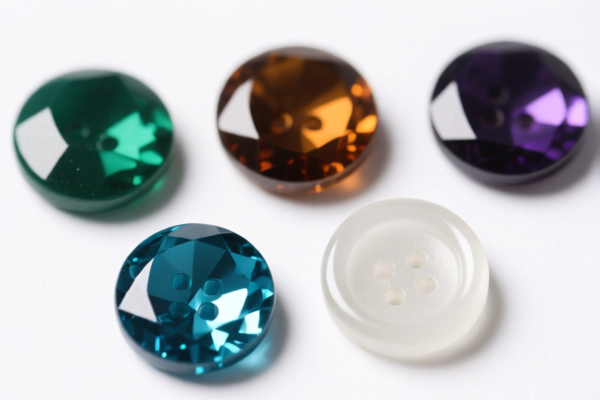
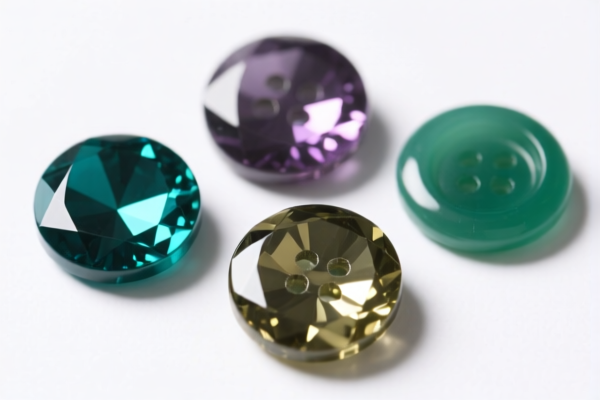
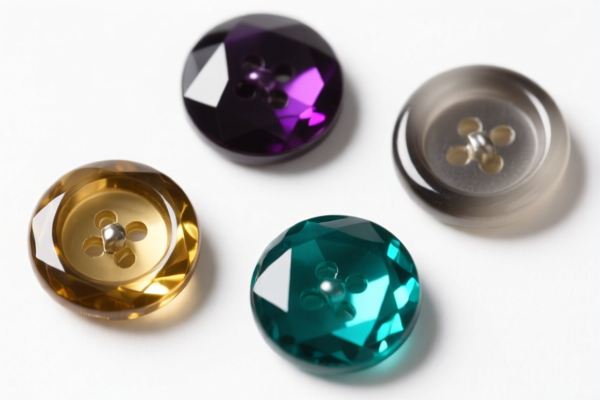
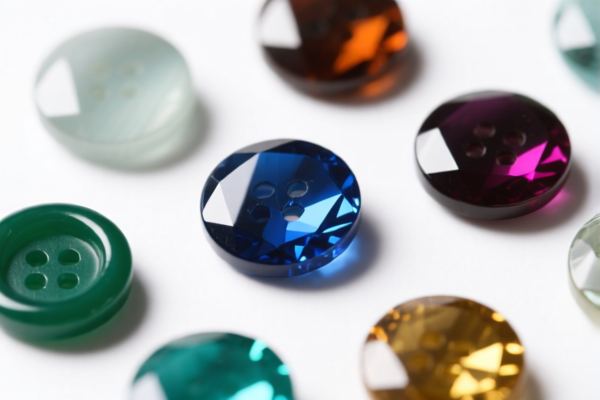
AI Analysis
✨ Hand Sewn Rhinestone Buttons: The Sparkle Strategy 🧵💎
🌐 HS Code Reference & Customs Clearance Guide | 2026 Latest Tariff Analysis | Professional Classification Strategy
📌 I. Product Definition & Classification: Do You Really Know "Rhinestone Buttons"?
Hand-sewn rhinestone buttons are decorative fasteners used primarily in high-end fashion, costumes, and accessories. In international trade, their classification is tricky because they sit at the intersection of apparel accessories and imitation jewelry. The key to correct classification lies in their primary function (fastening vs. decoration) and material composition.
⚠️ Critical Distinction:
- If the button’s primary function is to fasten garments and it fits the standard definition of a button → Chapter 96 (Buttons)
- If the button is primarily a decorative imitation jewelry piece (e.g., large, purely ornamental, not functional for fastening) → Chapter 71 (Imitation Jewelry)
- If the base material is clearly plastic/resin and acts as a general plastic accessory → Chapter 39 (Plastics)
📦 II. HS Code Classification Details (2026 Latest Tariff Authority Comparison)
| HS Code | Product Description | Application Scenario | Total Tax Rate |
|---|---|---|---|
9606.22.00.00 |
Hand-sewn buttons: Handmade, falls under the category of buttons and related parts. | Small to medium size, functional fasteners with rhinestone embellishments, hand-sewn attachment. | 35.0% |
3926.90.40.00 |
Other articles of plastic: Contains artificial gems, made of plastic/resin decorative items, fits "other plastic products." | Buttons made entirely of plastic/resin base with glued-on rhinestones; mass-produced, non-hand-sewn specific construction. | 12.8% |
9606.29.60.00 |
Other buttons: Infer material as metal or plastic, fits the fallback rule for "other" categories. | Buttons not specifically hand-sewn or of other unspecified materials; generic button classification. | 37.9% |
7117.90.90.00 |
Imitation jewelry: Contains simulated gems, decorative components, fits "imitation jewelry" category. | Large, ornamental buttons used primarily for aesthetic purposes (e.g., costume jewelry), not functional fastening. | 28.5% |
🔍 Key Reminder:
- "Hand-sewn" (9606.22.00.00) is a specific sub-category. If the product is genuinely handmade and designed for sewing onto garments, this is the most precise functional fit, BUT it carries a 35% total tax.
- "Plastic/Resin" (3926.90.40.00) offers the lowest tax (12.8%), but you must prove the item is primarily a plastic article, not a button. This is risky if the item is clearly used for fastening.
- "Imitation Jewelry" (7117.90.90.00) is the sweet spot for cost (28.5%) if the buttons are large, ornamental, and not used for functional fastening. Customs may challenge this if the buttons are small and functional.
💰 III. 2026 Latest Tariff Rate Details (Including Surcharges & Policy Add-ons)
✅ Applicable Country: United States (US)
✅ Origin: China (CN)
✅ Effective Date: November 10, 2025 onwards (including subsequent imports)
🎯 1. 9606.22.00.00 —— Hand-sewn Buttons (Functional Fasteners)
| Item | Content |
|---|---|
| Base Tariff | 0% (ad valorem) |
| Section 301 Surcharge | +25% (USITC Footnote 9903.88.01) |
| Section 122 Tariff | +10% (Specific provision for buttons/fasteners) |
| Total Tax Rate | 35.0% |
| Tax Calculation | CIF Value × 35% |
| De Minimis Exemption? | ❌ No (deny_de_minimis) |
| Legal Basis Path | USITC:9606.22.00.00 → FOOTNOTE:9903.88.01 → Section 122: 10% |
📌 Explanation:
- The 25% is the standard Section 301 tariff on Chinese goods.
- The 10% is the additional Section 122 tariff specifically targeting certain textile accessories/buttons.
- Total 35% is significant. Ensure the product is genuinely "hand-sewn" to qualify for this specific HS code; misclassification can lead to penalties.
🎯 2. 3926.90.40.00 —— Other Plastic Articles (Lowest Cost Option)
| Item | Content |
|---|---|
| Base Tariff | 2.8% |
| Section 301 Surcharge | +0.0% (Plastics often exempt from 301, but verify current list) |
| Section 122 Tariff | +10% |
| Total Tax Rate | 12.8% |
| Tax Calculation | CIF Value × 12.8% |
| De Minimis Exemption? | ❌ No (deny_de_minimis) |
| Legal Basis Path | USITC:3926.90.40.00 → Section 122: 10% |
📌 Explanation:
- This is the most cost-effective option.
- Risk: Customs may reclassify this as a "button" (9606) if the item is clearly used for fastening garments. You must argue that the item is primarily a plastic decorative article (e.g., large costume buttons, non-functional displays).
- Strategy: Use for large, ornamental buttons not intended for garment fastening.
🎯 3. 9606.29.60.00 —— Other Buttons (Fallback Category)
| Item | Content |
|---|---|
| Base Tariff | 2.9% |
| Section 301 Surcharge | +25% |
| Section 122 Tariff | +10% |
| Total Tax Rate | 37.9% |
| Tax Calculation | CIF Value × 37.9% |
| De Minimis Exemption? | ❌ No (deny_de_minimis) |
| Legal Basis Path | USITC:9606.29.60.00 → FOOTNOTE:9903.88.01 → Section 122: 10% |
📌 Explanation:
- This is the highest tax rate (37.9%).
- Use only if the button does not fit "hand-sewn" (9606.22) and is not plastic-based. It’s a general fallback, so avoid if possible.
🎯 4. 7117.90.90.00 —— Imitation Jewelry (Best Balance for Ornamental Items)
| Item | Content |
|---|---|
| Base Tariff | 11.0% |
| Section 301 Surcharge | +7.5% |
| Section 122 Tariff | +10% |
| Total Tax Rate | 28.5% |
| Tax Calculation | CIF Value × 28.5% |
| De Minimis Exemption? | ❌ No (deny_de_minimis) |
| Legal Basis Path | USITC:7117.90.90.00 → FOOTNOTE:9903.88.01 → Section 122: 10% |
📌 Explanation:
- 28.5% is lower than the functional button rate (35%).
- Strategy: If your rhinestone buttons are large, elaborate, and used for costumes or fashion accents (not strict garment closure), classify as imitation jewelry. This can save 6.5% in taxes compared to the hand-sewn button category.
🛠️ IV. Customs Clearance Practical Advice (Avoid Pitfalls)
✅ 1. Documentation Checklist (All Required)
| Document | Required | Note |
|---|---|---|
| ✅ Product Specification | ✔️ | Include dimensions, weight, material composition (e.g., "Plastic base, acrylic rhinestones") |
| ✅ Photos (Front/Back) | ✔️ | Show sewing holes, size relative to a coin, and rhinestone detail |
| ✅ Commercial Invoice | ✔️ | Clearly state "Rhinestone Buttons" or "Imitation Jewelry Buttons" – be consistent with HS code |
| ✅ Packing List | ✔️ | List quantity per carton, total weight |
| ✅ Certificate of Origin | ✔️ | Required for Section 301/122 determination |
| ✅ Function Statement | ✔️ | If classifying as 7117 or 3926, provide a statement that items are for decorative use only or not primarily for fastening |
✅ 2. Declaration Tips (Key Mnemonic)
🔥 "Function Defines Class, Not Just Looks! Decorate = 7117, Fasten = 9606, Plastic = 3926!"
| Scenario | Correct Declaration | Wrong Approach |
|---|---|---|
| Small, functional button for shirts | 9606.22.00.00 (35%) |
Declare as "Jewelry" → Penalty for misclassification |
| Large, ornamental button for costumes | 7117.90.90.00 (28.5%) |
Declare as "Button" → Higher tax, but safer |
| Plastic button with glued rhinestones (mass-produced) | 3926.90.40.00 (12.8%) |
Declare as "Button" → Risky, but lowest cost if accepted |
| Metal button with rhinestones | 9606.29.60.00 (37.9%) |
Avoid if possible; high tax |
✅ 3. Special Handling
| Situation | Recommendation |
|---|---|
| Mixed Shipments | Separate "functional buttons" from "ornamental jewelry buttons" in different invoices/HS codes to optimize tax |
| OEM Custom Buttons | Provide design drawings showing sewing holes and intended use. If for costumes, emphasize "decorative" |
| Rhinestone Material | Specify "Acrylic" or "Glass" – if "Glass," customs may lean toward 7117 (jewelry) rather than 3926 (plastic) |
| De Minimis (Section 321) | ❌ Not eligible – All these HS codes are subject to deny_de_minimis due to Section 301 and 122 tariffs |
🌍 V. Global Market Clearance Comparison (2026 Latest)
| Country/Region | Recommended HS Code | Tariff | Certification | Note |
|---|---|---|---|---|
| 🇺🇸 USA | 7117.90.90.00 |
28.5% (Ornamental) / 35% (Functional) | None required | Highest scrutiny; ensure correct classification |
| 🇨🇳 China | 9606.22.00.00 |
5-10% (Import) | None | Low import tax, focus on domestic market |
| 🇪🇺 EU | 9606.22.00 |
0-1.7% (Depending on material) | CE (if electronic, not applicable here) | Low tariff, but strict rules of origin |
| 🇬🇧 UK | 9606.22.00 |
0-1.7% | UKCA (if applicable) | Post-Brexit rules apply |
📌 Conclusion:
- USA is the most critical market due to high Section 301 and Section 122 tariffs.
- Optimize by classifying ornamental items as "Imitation Jewelry" (7117) to save 6.5% vs. "Hand-sewn Buttons."
- Avoid "Other Buttons" (9606.29.60.00) due to the highest tax rate (37.9%).
📌 VI. Common Errors & Pitfalls (Lessons Learned)
❌ Error 1: Declaring functional buttons as "Imitation Jewelry" (7117)
👉 Consequence: Customs audit, fines for misclassification, retroactive tax + penalties.
👉 Fix: Only use 7117 for large, decorative, non-functional buttons.
❌ Error 2: Using Plastic Code (3926) for hand-sewn buttons
👉 Consequence: Customs may reject if sewing holes are evident, leading to reclassification to 9606 (35%).
👉 Fix: Use 3926 only for mass-produced plastic accessories without sewing functionality.
❌ Error 3: Ignoring Section 122 Tariff
👉 Consequence: Underpaying by 10% → Seizure or heavy penalties.
👉 Fix: Always include Section 122 in cost calculations for buttons/accessories.
❌ Error 4: Assuming De Minimis Exemption applies
👉 Consequence: Package seized at border, delayed delivery.
👉 Fix: All these HS codes are denied de minimis – ensure formal entry procedures.
✅ Correct Declaration Example:
"Decorative Rhinestone Buttons, Plastic Base, Acrylic Gems, Ornamental Use Only, Model XYZ, 100pcs/box"
🎯 VII. Conclusion: Smart Classification, Maximize Profit!
🎯 Remember the Mnemonic:
🔹 "Decorate = 7117 (28.5%), Fasten = 9606 (35%), Plastic = 3926 (12.8%)"
🔹 "Classify by Function, Not Just Sparkle!"
📌 Pro Tip:
If your rhinestone buttons are large, costume-oriented, and not used for garment closure, classify as Imitation Jewelry (7117.90.90.00) to save 6.5% in taxes compared to functional buttons. Always provide photos and a functional statement to justify the classification.
📣 Immediate Action:
📞 Consult a Customs Broker + Provide Product Photos + Request Advance Ruling
🚀 Optimize your HS Code, Reduce Costs, and Clear Customs Smoothly!
✨ Professional Classification Starts with Precision!
💼 Every Percentage Point Counts in Global Trade!
Customer Reviews
About HS Code Classification
The Harmonized System (HS) is an internationally standardized nomenclature developed by the World Customs Organization (WCO) to classify traded products. Over 200 countries use the HS system as the basis for customs tariffs, trade statistics, and import/export regulations.
Each HS code follows a hierarchical structure:
- Chapter (2 digits) — Broad category of goods (e.g., Chapter 84: Machinery and Mechanical Appliances)
- Heading (4 digits) — More specific grouping within the chapter
- Subheading (6 digits) — Internationally standardized breakdown, used by all WCO member countries
- National subdivisions (8-10 digits) — Country-specific extensions for further classification, such as US HTSUS 10-digit codes
Correct HS code classification is essential for smooth customs clearance, accurate duty payment, and compliance with trade regulations. Misclassification can lead to customs delays, overpayment of duties, or penalties.
When importing from CN to US, the applicable tariff rates may include:
- Most-Favored-Nation (MFN) rate — The standard duty rate applied to WTO members
- General rate — Applied to countries without trade agreements
- Trade remedy duties — Additional tariffs such as Section 301 (anti-dumping), Section 232 (national security), or countervailing duties
The information provided on this page is for reference purposes only. For official classification, please consult with your local customs authority or a licensed customs broker.