Hand woven Products
CN → US| HS Code | Tariff Rate | Origin | Destination | Doc |
|---|---|---|---|---|
| 9703900000 | 17.5% | CN | US | Official Doc |
| 7117909000 | 28.5% | CN | US | Official Doc |
| 9703100000 | 17.5% | CN | US | Official Doc |
| 4421919880 | 38.3% | CN | US | Official Doc |
| 4421999880 | 38.3% | CN | US | Official Doc |
Product Images
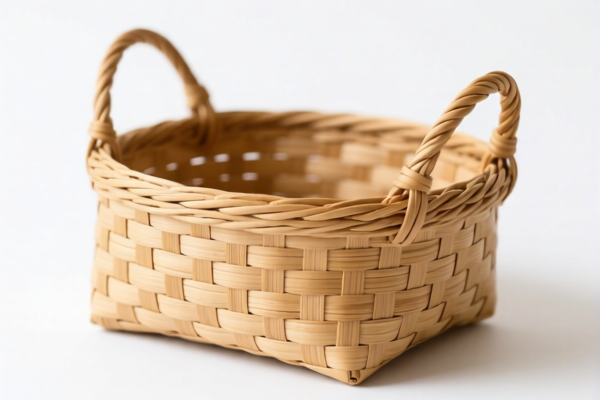
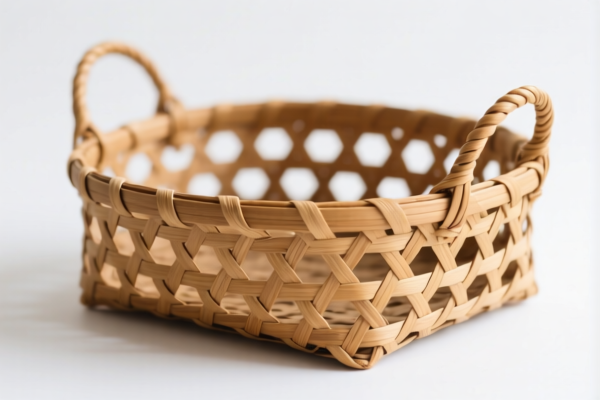
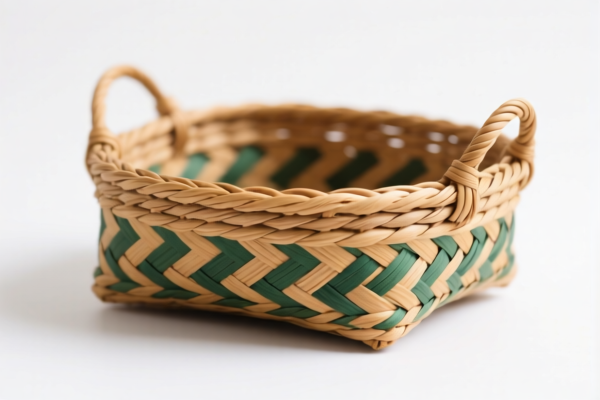
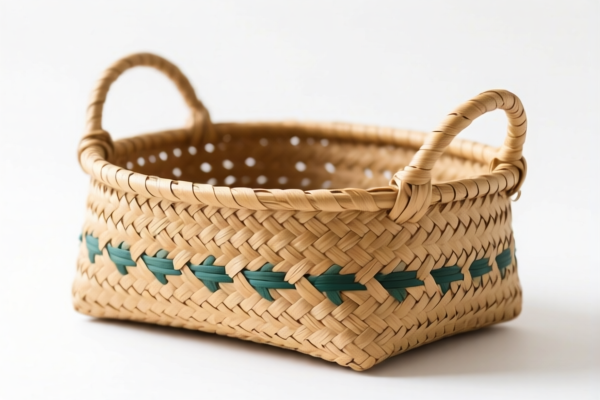
AI Analysis
🧶 Hand Woven Products: HS Code Classification & US Customs Clearance Guide (2026)
🌐 HS Code Reference & Clearance Guide | 2026 Latest Tariff Rates | Professional Customs Strategy
📌 I. Product Definition & Classification: Do You Truly Understand "Hand Woven"?
Hand Woven Products are textiles or articles created using traditional looms or hand-tools, distinct from mass-produced, machine-woven goods. In international trade (specifically US Customs), the classification hinges on material composition, end-use, and manufacturing origin.
⚠️ Key Distinction Point:
- If the item is artistic/sculptural (e.g., tapestry art, decorative wall hangings treated as art) → Falls under Chapter 97.
- If the item is functional/apparel (e.g., clothing, bags, mats) → Falls under Chapter 44 (Wood/Bamboo) or Chapter 71 (Imitations) or general textile chapters depending on specific description.
- Crucial Note: The provided data suggests these items are being evaluated for potential duty pitfalls under specific "fallback" or "artistic" classifications due to their handmade nature.
📦 II. HS Code Classification Details (Based on Provided Data)
The following HS Codes are derived from the specific scenarios and "fallback" inferences in your dataset.
| HS Code | Product Description (Summary from Data) | Classification Logic | Total Tax Rate |
|---|---|---|---|
| 9703.90.00.00 | Handcrafted items classified as Original Sculptures/Statues of other materials. | Items shaped or crafted to resemble art/sculpture rather than utility. | 17.5% |
| 9703.10.00.00 | Handcrafted items fitting the morphological characteristics of Original Sculptures & Statues. | Similar to above; emphasizes the "art" aspect over "craft/utility." | 17.5% |
| 7117.90.90.00 | Handcrafted items inferred as Imitation Jewelry based on fallback categories. | Items that might look like jewelry or accessories but are handmade/non-precious. | 28.5% |
| 4421.91.98.80 | Handcrafted items inferred as Wooden/Bamboo Materials based on fallback categories. | Items made primarily of wood/bamboo that don’t fit specific furniture codes. | 38.3% |
| 4421.99.98.80 | Handcrafted items inferred as Containing Wooden Materials based on other categories. | Similar to above; generic wooden handicrafts. | 38.3% |
🔍 Critical Insight:
- Chapter 97 (Art) often attracts lower base tariffs (0%) but still faces Section 301 and 122 duties.
- Chapter 44 (Wood) and Chapter 71 (Jewelry) carry higher base tariffs, leading to significantly higher total costs.
- Misclassification Risk: Declaring a wooden hand-bag as "Jewelry" (Ch 71) or "Sculpture" (Ch 97) incorrectly can lead to severe penalties. The "fallback" inferences in the data suggest that if the item isn't clearly art, it may default to material-based classifications (Wood/Jewelry).
💰 III. 2026 Latest Tariff Rate Breakdown (Detailed Duty Analysis)
✅ Applicable Country: United States (US)
✅ Country of Origin: China (CN) (Implied by "Section 122" and high add-on duties)
✅ Effective Date: Current rates apply as per 2025/2026 trade policies.
🎯 1. 9703.90.00.00 & 9703.10.00.00 —— Original Sculptures & Statues
| Item | Content |
|---|---|
| Base Tariff | 0.0% (General Rate for Art/Statues) |
| Section 301 Duty (Add-on) | 7.5% (Standard for many Chinese goods, varies by list) |
| Section 122 Duty (Add-on) | 10.0% (Specific additional duty on certain Chinese imports) |
| Total Tax Rate | 17.5% |
| Calculation Basis | CIF Value × 17.5% |
| De Minimis Exemption | ❌ Not Applicable (Section 301/122 duties generally override de minimis for high-value art, or require formal entry if value > $800) |
| Legal Basis Path | HTSUS:9703 → Section 301 (Footnote 1) → Section 122 |
📌 Explanation:
- Art items often enjoy 0% base duty. However, the 7.5% (Section 301) and 10% (Section 122) are additive.
- Total: 17.5%. This is the most favorable rate among the options provided.
- Risk: Must prove "Original Art" status. Mass-produced "hand-woven" items may be reclassified as textiles (higher duty).
🎯 2. 7117.90.90.00 —— Imitation Jewelry / Accessories
| Item | Content |
|---|---|
| Base Tariff | 11.0% |
| Section 301 Duty (Add-on) | 7.5% |
| Section 122 Duty (Add-on) | 10.0% |
| Total Tax Rate | 28.5% |
| Calculation Basis | CIF Value × 28.5% |
| De Minimis Exemption | ❌ Not Applicable |
| Legal Basis Path | HTSUS:7117 → Section 301 → Section 122 |
📌 Explanation:
- Total: 28.5%.
- This category is used if the hand-woven item is deemed an accessory or jewelry-like object.
- Warning: If the item is a bag, scarf, or mat, declaring it as "jewelry" is customs fraud. It must match the functional description.
🎯 3. 4421.91.98.80 & 4421.99.98.80 —— Wooden/Bamboo Handicrafts
| Item | Content |
|---|---|
| Base Tariff | 3.3% |
| Section 301 Duty (Add-on) | 25.0% (High tariff for wooden products) |
| Section 122 Duty (Add-on) | 10.0% |
| Total Tax Rate | 38.3% |
| Calculation Basis | CIF Value × 38.3% |
| De Minimis Exemption | ❌ Not Applicable |
| Legal Basis Path | HTSUS:4421 → Section 301 → Section 122 |
📌 Explanation:
- Total: 38.3%.
- This is the highest cost option.
- Applies if the hand-woven product is made of wood/bamboo (e.g., baskets, furniture parts, decorative wooden weaves) and doesn't fit specific furniture codes.
- Key Risk: Many "hand-woven" items are mistakenly declared as "textiles" (lower duty) but are actually wood-based, triggering this high rate + penalties.
🛠️ IV. Clearance Practical Advice (Avoiding Pitfalls)
✅ 1. Essential Documentation Checklist
| Document | Required? | Notes |
|---|---|---|
| ✅ Product Photos | ✔️ | Must clearly show material (wood, fiber, metal) and construction (hand-woven vs. machine). |
| ✅ Material Declaration | ✔️ | Specify 100% cotton, 100% bamboo, mixed materials, etc. |
| ✅ Proof of "Handmade" | ✔️ | Provide invoices, artisan certifications, or production process descriptions to justify Chapter 97 if applicable. |
| ✅ Commercial Invoice | ✔️ | Accurate description: e.g., "Hand-woven Bamboo Basket" vs. "Decorative Wooden Sculpture." |
| ✅ HS Code Pre-Ruling | ✔️ | Strongly Recommended for high-value shipments to avoid 38.3% misclassification. |
✅ 2. Classification Strategy & Tips
🔥 "Material First, Use Second, Art Last!"
| Scenario | Recommended HS Code | Why? |
|---|---|---|
| Hand-woven Art Tapestry (Non-functional, displayed as art) | 9703.90.00.00 |
Lowest duty (17.5%). Must be proven as "Original Art." |
| Hand-woven Bag/Accessory (Looks like jewelry/fashion item) | 7117.90.90.00 |
If no specific textile code fits, this is the fallback. Duty: 28.5%. |
| Hand-woven Wooden Basket/Container | 4421.91.98.80 |
Material-based classification. High duty (38.3%). |
| Hand-woven Textile (Cotton/Wool) | Not in Data | Usually lower duty (e.g., 10-15%), but not listed in your provided data. If the data forces a choice, ensure it's not "wood" or "jewelry." |
⚠️ Critical Warning:
- Do NOT declare a wooden basket as "Sculpture" (Ch 97) unless it is truly artistic and non-functional. Customs will reclassify and charge the difference + penalties.
- Do NOT declare a textile scarf as "Imitation Jewelry" (Ch 71) to avoid higher duties. It will be rejected.
✅ 3. Special Cases & Optimization
| Situation | Strategy |
|---|---|
| Mixed Materials (e.g., Wood frame with fabric weave) | Classify by Essential Character. If wood is dominant → Ch 44 (38.3%). If fabric is dominant → Textile code (not in data, but likely lower). |
| De Minimis (Section 321) | For items < $800, ensure the HS code allows de minimis. Section 301/122 duties often apply even under de minimis for Chinese goods. Check if your specific HS code is exempt. Note: Most Ch 44 and Ch 71 items are NOT exempt from Section 301. |
| Pre-Ruling Request | Submit a request to CBP for an Advance Ruling. This locks in the HS code and duty rate, protecting you from audits. |
🌍 V. Global Market Comparison (2026)
| Market | Recommended HS Code (Example: Hand-woven Basket) | Approx. Duty | Notes |
|---|---|---|---|
| 🇺🇸 USA | 4421.91.98.80 (Wood) |
38.3% | High due to Section 301 (25%) + 122 (10%) + Base (3.3%). |
| 🇺🇸 USA | 9703.90.00.00 (Art) |
17.5% | Only if classified as original art. |
| 🇪🇺 EU | Various (Chapter 46 or 97) | Varies (0-6.5%) | EU has different Section 301 rules. Generally lower total duty. |
| 🇨🇳 China (Export) | N/A | 0% | Export duty is usually 0, but import duties apply at destination. |
📌 Conclusion:
- The US market is the most expensive for hand-woven products from China due to layered tariffs (Base + 301 + 122).
- Strategy: If possible, structure products as Art (Ch 97) to reduce duty to 17.5%. However, this requires robust proof of artistic value.
📌 VI. Common Errors & Pitfalls (Lessons Learned)
❌ Error 1: Declaring a wooden basket as "Hand-woven Textile"
👉 Consequence: Customs reclassifies to 4421... → Back duty + Penalty. Duty jumps from ~5% (textile) to 38.3%.
❌ Error 2: Declaring a mass-produced hand-woven mat as "Original Sculpture" (Ch 97)
👉 Consequence: CBP rejects "Art" status → Reclassifies to Chapter 57 (Rugs/Mats) or Chapter 44. Potential duty increase.
❌ Error 3: Ignoring Section 122 (10%)
👉 Consequence: Underpaying duties. Section 122 applies to many Chinese goods regardless of Chapter. Always include 10% in calculation.
✅ Correct Approach:
"Hand-woven Bamboo Basket, Size 12x12 inches, Natural Finish, For Home Decor. HS Code: 4421.91.98.80. Total Duty: 38.3%."
🎯 VII. Conclusion: Precise Classification Saves Money!
🎯 Remember the Formula:
🔹 Art = 17.5% (Lowest, but hard to prove)
🔹 Jewelry/Accessory = 28.5% (Medium)
🔹 Wood/Bamboo = 38.3% (Highest, common for functional woven goods)
📌 Pro Tip:
- If your product is functional (baskets, mats, bags), expect 28.5% - 38.3%.
- If your product is purely decorative/art, fight for Ch 97 (17.5%).
- Always include Section 301 (7.5% or 25%) and Section 122 (10%) in your landed cost calculation.
📣 Immediate Action:
📞 Contact a US Customs Broker for an Advance Ruling before shipping.
📸 Provide Clear Photos of the product’s material and craftsmanship.
📄 Prepare Detailed Descriptions that justify the chosen HS Code.
✨ Professional Clearance Starts with Accurate Classification!
💼 Your Profit Margin Depends on the Right HS Code!
Customer Reviews
About HS Code Classification
The Harmonized System (HS) is an internationally standardized nomenclature developed by the World Customs Organization (WCO) to classify traded products. Over 200 countries use the HS system as the basis for customs tariffs, trade statistics, and import/export regulations.
Each HS code follows a hierarchical structure:
- Chapter (2 digits) — Broad category of goods (e.g., Chapter 84: Machinery and Mechanical Appliances)
- Heading (4 digits) — More specific grouping within the chapter
- Subheading (6 digits) — Internationally standardized breakdown, used by all WCO member countries
- National subdivisions (8-10 digits) — Country-specific extensions for further classification, such as US HTSUS 10-digit codes
Correct HS code classification is essential for smooth customs clearance, accurate duty payment, and compliance with trade regulations. Misclassification can lead to customs delays, overpayment of duties, or penalties.
When importing from CN to US, the applicable tariff rates may include:
- Most-Favored-Nation (MFN) rate — The standard duty rate applied to WTO members
- General rate — Applied to countries without trade agreements
- Trade remedy duties — Additional tariffs such as Section 301 (anti-dumping), Section 232 (national security), or countervailing duties
The information provided on this page is for reference purposes only. For official classification, please consult with your local customs authority or a licensed customs broker.