Hand woven Rattan Cushion
CN → US| HS Code | Tariff Rate | Origin | Destination | Doc |
|---|---|---|---|---|
| 4602123500 | 35.0% | CN | US | Official Doc |
| 5705002090 | 38.3% | CN | US | Official Doc |
| 5705001000 | 35.0% | CN | US | Official Doc |
| 4602124500 | 41.6% | CN | US | Official Doc |
| 4602198000 | 37.3% | CN | US | Official Doc |
Product Images
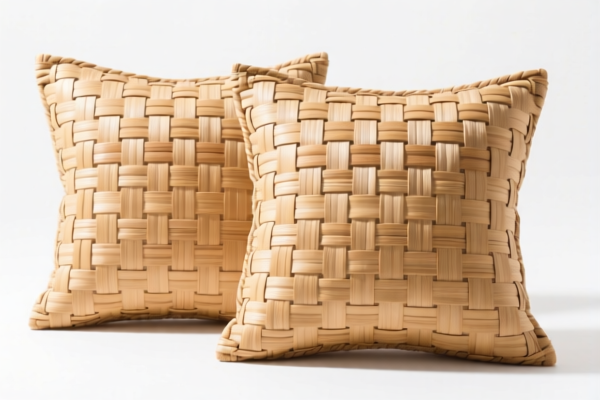
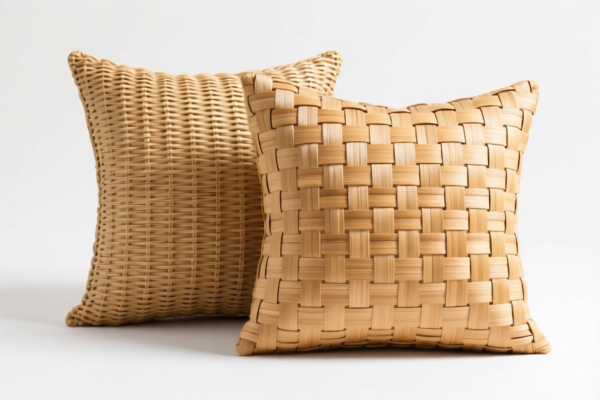
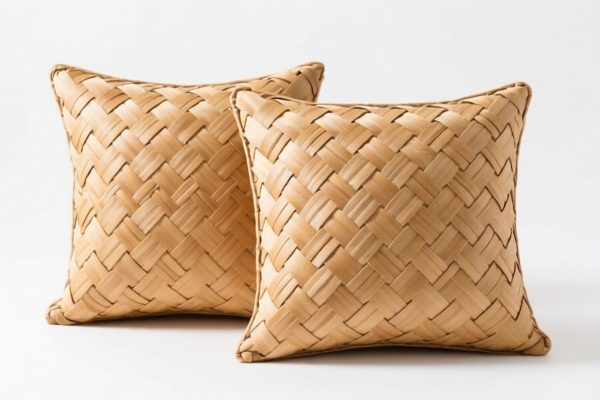
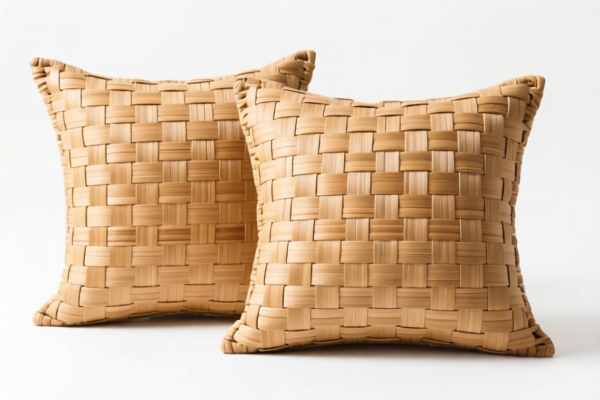
AI Analysis
🧺 Hand Woven Rattan Cushion (Natural Rattan Mats/Pads)
🌐 HS Code Reference & Customs Clearance Guide | 2026 Latest Tariff Analysis | Professional Clearance Strategy
📌 I. Product Definition & Classification: Do You Truly Understand "Rattan Cushions"?
Hand-woven rattan cushions, often referred to as "natural rattan mats" or "rattan floor pads," are traditional furniture accessories and home decor items made from natural plant fibers. In international trade, their classification depends heavily on whether they are viewed as woven articles or floor coverings.
Woven Articles (Chapter 46): Rattan products classified under Chapter 46 are considered "woven goods of vegetable materials." If the product is primarily recognized as a decorative mat or cushion with specific rattan weaving characteristics, it often falls here.
Floor Coverings (Chapter 57): If the product is explicitly marketed or designed as a floor covering (e.g., area rugs, mats for flooring), it may be classified under Chapter 57 as "Other textile floor coverings."
⚠️ Key Distinction Point:
- If the product is a loose pad/cushion primarily made of rattan weaving, often used for seating or decoration → It leans towards Chapter 46 (Woven Articles).
- If the product is a floor mat/rug used for walking or floor decoration → It leans towards Chapter 57 (Floor Coverings).
- Critical Note: Misclassification between Chapter 46 and 57 can lead to significant tariff discrepancies due to different base rates and additional duties.
📦 II. HS Code Classification Details (2026 Latest Tariff Authority Comparison)
| HS Code | Product Description | Application Scenario | Classification Logic |
|---|---|---|---|
4602.12.35.00 |
Natural Rattan Mat, matched with rattan woven product classification | Decorative rattan cushions, specific rattan weaving items | ✅ Primary Choice for Woven Rattan Goods |
4602.12.45.00 |
Natural Rattan Mat, matched with woven product category | General woven rattan products, broader category | ✅ Alternative for Woven Rattan Goods |
4602.19.80.00 |
Rattan weaving mat raw material, matched with primary form of plant materials | Raw or semi-processed rattan mats, less specific | ✅ Less Common for Finished Cushions |
5705.00.20.90 |
Natural Rattan Mat, matched with other textile floor coverings | Floor mats, rugs made from rattan/textile mix | ⚠️ Only if sold strictly as "Floor Covering" |
5705.00.10.00 |
Natural Rattan Mat, matched with other textile floor coverings | General textile floor coverings | ⚠️ Only if sold strictly as "Floor Covering" |
🔍 Key Reminder:
- For finished hand-woven rattan cushions/pads, Chapter 46 (4602.12.35.00or4602.12.45.00) is the most accurate classification because rattan is a vegetable material, and these goods are typically considered "woven articles" rather than "textile floor coverings" (which usually imply fiber-based textiles like wool, synthetic, etc., though Chapter 57 can include other materials).
- If customs officers insist on Chapter 57, it is usually because the product is explicitly marketed as a "floor mat" rather than a "cushion" or "woven article."
💰 III. 2026 Latest Tariff Rate Breakdown (Including Surtaxes, Policy Add-ons)
✅ Applicable Country: United States (US)
✅ Origin: China (CN)
✅ Effective Date: 2025 November 10 onwards (for imports after this date)
🎯 1. 4602.12.35.00 —— Natural Rattan Mat, Woven Product Classification
| Item | Content |
|---|---|
| Base Tariff Rate | 0% (ad valorem) |
| USITC Surtax (Section 301) | +25% |
| IEEPA Surtax (Section 122) | +10% |
| Total Tariff Rate | 35.0% |
| Tax Calculation | CIF Value × 35.0% |
| De Minimis Exemption Available? | ❌ No (deny_de_minimis) |
| Legal Basis Path | IEEPA:9903.01.25 → IEEPA:9903.01.24 → USITC:4602.12.35.00 → FOOTNOTE:9903.88.01 |
📌 Explanation:
- The "USITC Surtax 25%" comes from the Section 301 tariffs under the US Trade Act;
- The "IEEPA 10%" is the additional tariff on Chinese/HK products under the International Emergency Economic Powers Act;
- Total 35%, which is a high tariff for woven vegetable products. Must be factored into cost calculations!
🎯 2. 4602.12.45.00 —— Natural Rattan Mat, Woven Product Category
| Item | Content |
|---|---|
| Base Tariff Rate | 6.6% (ad valorem) |
| USITC Surtax (Section 301) | +25% |
| IEEPA Surtax (Section 122) | +10% |
| Total Tariff Rate | 41.6% |
| Tax Calculation | CIF Value × 41.6% |
| De Minimis Exemption Available? | ❌ No (deny_de_minimis) |
| Legal Basis Path | IEEPA:9903.01.25 → IEEPA:9903.01.24 → USITC:4602.12.45.00 → FOOTNOTE:9903.88.01 |
📌 Note:
- This code has a higher base rate (6.6%) compared to4602.12.35.00(0%).
- Even though both are in Chapter 46, the specific subheading affects the base rate significantly.
- Recommendation: Always verify if4602.12.35.00(0% base) applies to your specific product description to save 6.6% on the base rate.
🎯 3. 4602.19.80.00 —— Rattan Weaving Mat Raw Material
| Item | Content |
|---|---|
| Base Tariff Rate | 2.3% (ad valorem) |
| USITC Surtax (Section 301) | +25% |
| IEEPA Surtax (Section 122) | +10% |
| Total Tariff Rate | 37.3% |
| Tax Calculation | CIF Value × 37.3% |
| De Minimis Exemption Available? | ❌ No (deny_de_minimis) |
| Legal Basis Path | IEEPA:9903.01.25 → IEEPA:9903.01.24 → USITC:4602.19.80.00 → FOOTNOTE:9903.88.01 |
📌 Note:
- This code is for "other woven articles" or raw materials.
- While the base rate is low (2.3%), the total is still high (37.3%).
- Risk: If declared as "raw material" but is a finished cushion, customs may penalize for misdeclaration.
🎯 4. 5705.00.20.90 —— Natural Rattan Mat, Other Textile Floor Coverings
| Item | Content |
|---|---|
| Base Tariff Rate | 3.3% (ad valorem) |
| USITC Surtax (Section 301) | +25% |
| IEEPA Surtax (Section 122) | +10% |
| Total Tariff Rate | 38.3% |
| Tax Calculation | CIF Value × 38.3% |
| De Minimis Exemption Available? | ❌ No (deny_de_minimis) |
| Legal Basis Path | IEEPA:9903.01.25 → IEEPA:9903.01.24 → USITC:5705.00.20.90 → FOOTNOTE:9903.88.01 |
📌 Note:
- This is for "other textile floor coverings."
- If your rattan cushion is marketed as a "floor mat," this code might apply.
- Total tariff (38.3%) is lower than4602.12.45.00but higher than4602.12.35.00.
🎯 5. 5705.00.10.00 —— Natural Rattan Mat, Other Textile Floor Coverings
| Item | Content |
|---|---|
| Base Tariff Rate | 0% (ad valorem) |
| USITC Surtax (Section 301) | +25% |
| IEEPA Surtax (Section 122) | +10% |
| Total Tariff Rate | 35.0% |
| Tax Calculation | CIF Value × 35.0% |
| De Minimis Exemption Available? | ❌ No (deny_de_minimis) |
| Legal Basis Path | IEEPA:9903.01.25 → IEEPA:9903.01.24 → USITC:5705.00.10.00 → FOOTNOTE:9903.88.01 |
📌 Note:
- Same total rate as4602.12.35.00(35%).
- However, Chapter 57 requires proof that the item is a "floor covering."
- If customs questions the "textile" nature of rattan, this code might be challenged.
🛠️ IV. Customs Clearance Practical Advice (Real-World Pitfall Avoidance Guide)
✅ 1. Required Documentation Checklist (Missing Items Will Cause Delays)
| Document | Mandatory | Notes |
|---|---|---|
| ✅ Product Specification Sheet | ✔️ | Must detail: Material (100% Natural Rattan), Weaving Type, Dimensions, Use (Cushion vs. Floor Mat) |
| ✅ Product Photos | ✔️ | Clear images of front, back, edges, and labels. Show "hand-woven" texture. |
| ✅ Commercial Invoice | ✔️ | Description must be precise: "Hand Woven Natural Rattan Cushion, HS 4602.12.35.00" |
| ✅ Packing List | ✔️ | List contents clearly. Avoid vague terms like "Home Decor." |
| ✅ Certificate of Origin (CO) | ✔️ | Required for origin verification. |
| ✅ Third-Party Test Report | ✔️ | If claiming any eco-friendly or non-treatment status, provide lab reports. |
✅ 2. Declaration Tips (Key Mantra)
🔥 "Be Specific, Be Consistent, Avoid 'Rug' if It's a 'Cushion'!"
| Scenario | Correct Declaration | Incorrect Declaration |
|---|---|---|
| Finished Rattan Cushion | "Hand Woven Natural Rattan Cushion, for Chair Seat" | "Rattan Floor Rug" |
| Product Used for Seating | HS Code 4602.12.35.00 (35% total) | HS Code 5705... (May be flagged as misclassification) |
| Product Used for Floor | HS Code 5705.00.10.00 (35% total) | HS Code 4602... (If not a floor covering) |
| Vague Description "Mat" | Specify: "Rattan Seat Cushion" or "Rattan Floor Mat" | "Mat" |
📌 Critical Advice:
- If the product is a cushion (for chairs, benches), use Chapter 46.
- If the product is a floor mat (for walking on), use Chapter 57.
- Do not use "Rattan Rug" for a cushion. Customs may reclassify it, leading to delays or penalties.
✅ 3. Special Situation Handling
| Situation | Handling Advice |
|---|---|
| Mixed Materials | If cushion has fabric backing or foam, declare as "Rattan Cushion with Fabric Backing." May still fall under 4602, but provide detailed description. |
| OEM Custom Orders | Provide customer design specs. Show that it is a finished cushion, not raw material. |
| Small Sample Shipments | Even samples are subject to 35%+ tariffs. No de minimis exemption. Declare accurately. |
| Dispute on Classification | If customs argues for Chapter 57, provide evidence of use (e.g., photos of it on a chair). |
🌍 V. Global Market Comparison (2026 Latest)
| Country/Region | Recommended HS Code | Total Tariff (China Origin) | Certification Requirements | Notes |
|---|---|---|---|---|
| 🇺🇸 United States | 4602.12.35.00 |
35.0% | None specific for rattan | High tariffs apply. Verify Chapter 46 vs 57. |
| 🇨🇳 China | 4602.12.35.00 |
0-5% (Import) | None | Low tariff for domestic consumption. |
| 🇪🇺 European Union | 4602.19.99 |
0% (Most Favored Nation) | CE (if applicable), REACH | No additional surtaxes. |
| 🇬🇧 United Kingdom | 4602.19.99 |
0% | None | Post-Brexit rules apply. |
| 🇨🇦 Canada | 4602.19.99 |
0% (if MFN) | None | Check for any specific environmental rules. |
📌 Conclusion:
- The US is the most challenging market due to Section 301 (25%) and IEEPA (10%) surtaxes.
- Total tariff of 35% is significant for low-margin home decor items.
- Europe and other regions do not have these additional surtaxes, making them more cost-effective for rattan products.
📌 VI. Common Errors & Pitfall Guide (Lessons from Blood and Tears)
❌ Error 1: Declaring a "Cushion" as a "Floor Mat" to avoid Section 301
👉 Consequence: Customs may detect misuse of HS Code. Penalties + Back Taxes.
❌ Error 2: Using "Rattan Mat" without specifying use
👉 Consequence: Customs will question classification. Delay in release.
❌ Error 3: Assuming "De Minimis" applies
👉 Consequence: No exemption for China-origin goods under Section 301/IEEPA. All taxes apply.
❌ Error 4: Misidentifying Base Rate
👉 Consequence: Using 4602.12.45.00 (6.6% base) instead of 4602.12.35.00 (0% base) results in 6.6% extra cost on CIF value.
✅ Correct Practice:
"Hand Woven Natural Rattan Cushion, Chair Pad, 100% Rattan Fiber, No Fabric Lining, HS Code 4602.12.35.00"
🎯 VII. Conclusion: Professional Declaration, Cost Saving, Efficiency!
🎯 Remember the Mantra:
🔹 "Cushion = Chapter 46, Mat = Chapter 57"
🔹 "US Tariff = 35%, No Exemption, Be Precise!"
🔹 "HS Code Defines Cost, Declaration Defines Success!"
📌 Pro Tip:
If your rattan cushion originates from Vietnam, Thailand, or Indonesia, you may apply for IEEPA Exemptions or benefit from lower Section 301 rates.
Suggest pre-classification rulings from CBP (Customs and Border Protection) for large shipments to avoid surprises.
📣 Immediate Action:
📞 Contact a Professional Customs Broker + Provide Product Photos + Apply for HS Code Pre-Ruling
🚀 Let your Rattan Cushion, Clear Customs Smoothly, Export Efficiently, Maximize Profits!
✨ Professional Clearance Starts with Accurate Classification!
💼 Every Cent of Your Cost Deserves Precise Calculation!
Customer Reviews
About HS Code Classification
The Harmonized System (HS) is an internationally standardized nomenclature developed by the World Customs Organization (WCO) to classify traded products. Over 200 countries use the HS system as the basis for customs tariffs, trade statistics, and import/export regulations.
Each HS code follows a hierarchical structure:
- Chapter (2 digits) — Broad category of goods (e.g., Chapter 84: Machinery and Mechanical Appliances)
- Heading (4 digits) — More specific grouping within the chapter
- Subheading (6 digits) — Internationally standardized breakdown, used by all WCO member countries
- National subdivisions (8-10 digits) — Country-specific extensions for further classification, such as US HTSUS 10-digit codes
Correct HS code classification is essential for smooth customs clearance, accurate duty payment, and compliance with trade regulations. Misclassification can lead to customs delays, overpayment of duties, or penalties.
When importing from CN to US, the applicable tariff rates may include:
- Most-Favored-Nation (MFN) rate — The standard duty rate applied to WTO members
- General rate — Applied to countries without trade agreements
- Trade remedy duties — Additional tariffs such as Section 301 (anti-dumping), Section 232 (national security), or countervailing duties
The information provided on this page is for reference purposes only. For official classification, please consult with your local customs authority or a licensed customs broker.