Hand woven Silk Prayer Mat
CN → US| HS Code | Tariff Rate | Origin | Destination | Doc |
|---|---|---|---|---|
| 6302991000 | 20.2% | CN | US | Official Doc |
| 6302992000 | 25.9% | CN | US | Official Doc |
| 5007200015 | 35.0% | CN | US | Official Doc |
| 5007903090 | 35.8% | CN | US | Official Doc |
| 9404909623 | 17.3% | CN | US | Official Doc |
Product Images
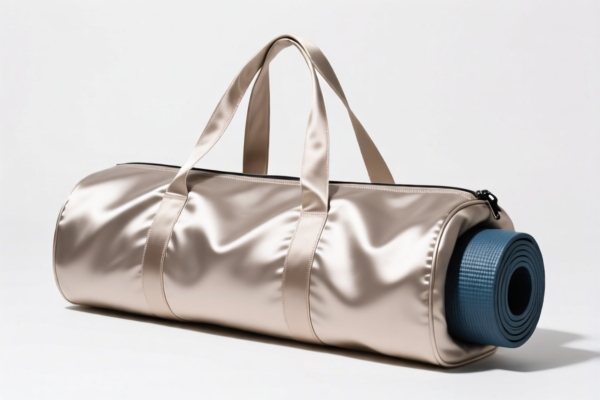
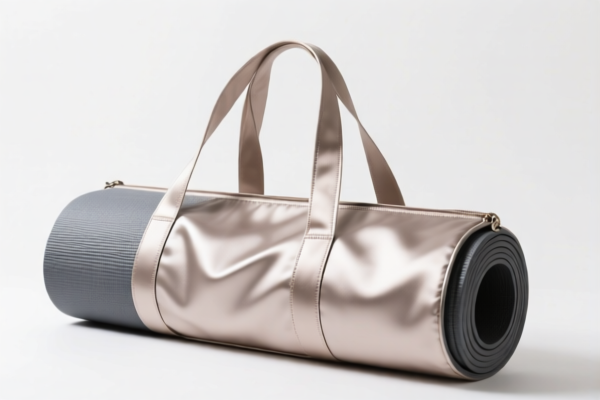
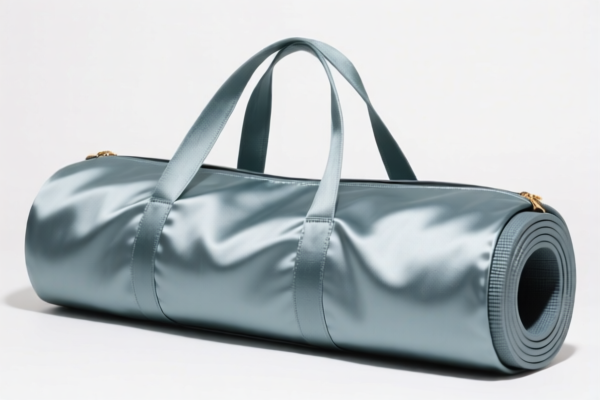
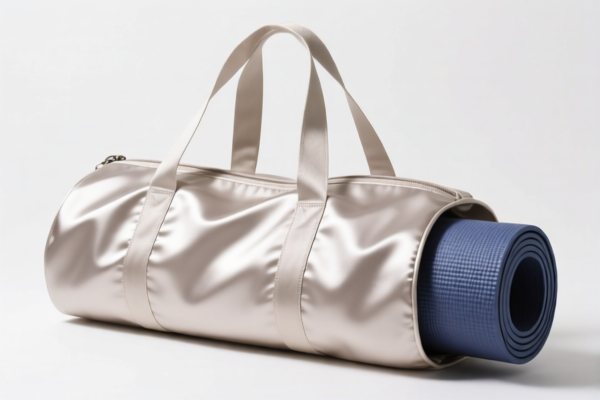
AI Analysis
🕌 Hand-Woven Silk Prayer Mat (Sajjada)
🌐 HS Code Reference & Customs Clearance Guide | 2026 Latest Tariff Analysis | Professional Clearance Strategy
📌 I. Product Definition & Classification: Do You Truly Understand "Silk Prayer Mats"?
A Hand-Woven Silk Prayer Mat (often referred to as a Sajjada or Musalla) is a specialized textile product used for religious devotion. In international trade, its classification is complex because it sits at the intersection of textile materials (silk), finished household goods (mats/pads), and religious articles.
The key to accurate classification lies in determining whether it is viewed primarily as a textile article for sleeping/hygiene/kitchen use (Chapter 63) or as a woven fabric (Chapter 50).
⚠️ Critical Distinction:
- If classified as a "pad/mat" under textile articles → Falls under HS 6302.99 (Lower Tax).
- If classified as "woven silk fabric" regardless of shape → Falls under HS 5007 (Highest Tax).
- If classified under "bedding/sleeping accessories" with high silk content → Falls under HS 9404 (Medium Tax).
📦 II. HS Code Classification Details (2026 Latest Tariff Authoritative Comparison)
Based on the provided data, there are 5 potential HS Codes for a Hand-Woven Silk Prayer Mat. The choice drastically impacts your customs duty burden.
| HS Code | Product Description | Applicability Scenario | Total Tax Rate | Key Characteristic |
|---|---|---|---|---|
6302.99.10.00 |
Silk Prayer Mat: Silk material, categorized under "bedding, hygiene, or kitchen textile products," specifically for mat use. | Standard prayer mats used in homes/places of worship; viewed as a specialized textile accessory. | 20.2% | ✅ Recommended: Lowest tax rate for textile mats. |
6302.99.20.00 |
Silk Prayer Mat: Silk material, form is "mat," categorized under "other textile materials." | Similar to above but falls into a different sub-category of "other textiles." | 25.9% | ⚠️ Slightly higher due to specific sub-heading nuances. |
9404.90.96.23 |
Silk Prayer Mat: Form is "mat," shell contains extremely high silk content, fits "made of other textile materials with 85%+ silk/waste silk." | Viewed as a bedding/sleeping accessory or "other article of bedding." | 17.3% | ✅ Best Option: Lowest overall tax, but requires strict proof of 85%+ silk content and "bedding/accessory" nature. |
5007.20.00.15 |
Silk Prayer Mat: Silk material, form is "mat," categorized as "woven fabric product." | Viewed primarily as a piece of fabric rather than a finished good. | 35.0% | ❌ Avoid: High tax due to classification as raw fabric. |
5007.90.30.90 |
Silk Prayer Mat: Silk material, meets 85%+ silk requirement, categorized as "fabric." | Similar to above, emphasizes silk content but classified as fabric. | 35.8% | ❌ Avoid: Highest tax burden. |
🔍 Key Insight:
- HS 6302 and HS 9404 classify the item as a finished good (mat/accessory).
- HS 5007 classifies the item as fabric. Customs authorities often scrutinize prayer mats to ensure they aren't disguised fabric imports.
- The Difference: A "mat" implies a finished product with edges, backing, or specific dimensions for use. "Fabric" implies a roll or unworked piece.
💰 III. 2026 Latest Tariff Rate Breakdown (Including Surtaxes & Policy Add-ons)
✅ Applicable Country: United States (US)
✅ Country of Origin: China (CN)
✅ Effective Date: November 10, 2025 (and subsequent imports)
🎯 1. 9404.90.96.23 —— Silk Prayer Mat (Bedding/Accessory Category)
🏆 BEST OPTION: Lowest Tax Liability
| Item | Detail |
|---|---|
| Base Duty Rate | 7.3% |
| Section 301 Surtax | 0.0% (Exempt from 25% tariff under this specific sub-heading) |
| IEEPA Add-on Tariff | 10.0% (Section 122 Tariff for China-origin goods) |
| Total Effective Rate | 17.3% |
| Tax Calculation | CIF Value × 17.3% |
| De Minimis Eligibility | ❌ Not Eligible (Deny De Minimis) |
| Legal Basis Path | IEEPA:122 → USITC:9404.90.96.23 |
📌 Explanation:
- This code benefits from 0% Section 301 tax, which is a huge advantage over textile fabric codes.
- Only the 10% Section 122 tariff applies on top of the base duty.
- Crucial Requirement: You must prove the item is used as a "mat/accessory" and contains ≥85% silk to fit this specific sub-heading.
🎯 2. 6302.99.10.00 —— Silk Prayer Mat (Textile Article for Hygiene/Bedding)
| Item | Detail |
|---|---|
| Base Duty Rate | 2.7% |
| Section 301 Surtax | 7.5% (Partial surtax) |
| IEEPA Add-on Tariff | 10.0% (Section 122 Tariff) |
| Total Effective Rate | 20.2% |
| Tax Calculation | CIF Value × 20.2% |
| De Minimis Eligibility | ❌ Not Eligible |
| Legal Basis Path | IEEPA:122 → USITC:6302.99.10.00 |
📌 Explanation:
- This is the standard classification for "textile mats" in household use.
- It avoids the heavy 25% Section 301 tax but still carries a 7.5% surtax.
- Advantage: Easier to justify as a "textile article" than the 9404 code.
🎯 3. 6302.99.20.00 —— Silk Prayer Mat (Other Textile Materials)
| Item | Detail |
|---|---|
| Base Duty Rate | 8.4% |
| Section 301 Surtax | 7.5% |
| IEEPA Add-on Tariff | 10.0% |
| Total Effective Rate | 25.9% |
| Tax Calculation | CIF Value × 25.9% |
| De Minimis Eligibility | ❌ Not Eligible |
| Legal Basis Path | IEEPA:122 → USITC:6302.99.20.00 |
📌 Explanation:
- Slightly higher base duty (8.4%) compared to 6302.99.10.00.
- Use this only if 6302.99.10.00 is rejected by customs due to specific material composition rules.
🎯 4. 5007.20.00.15 —— Silk Prayer Mat (Woven Fabric)
| Item | Detail |
|---|---|
| Base Duty Rate | 0.0% |
| Section 301 Surtax | 25.0% (Full 25% tariff applies) |
| IEEPA Add-on Tariff | 10.0% |
| Total Effective Rate | 35.0% |
| Tax Calculation | CIF Value × 35.0% |
| De Minimis Eligibility | ❌ Not Eligible |
| Legal Basis Path | IEEPA:122 → IEEPA:9903.01.25 → USITC:5007.20.00.15 |
📌 Explanation:
- High Risk: Classified as fabric.
- Suffers full 25% Section 301 tariff.
- Avoid unless you have no other option.
🎯 5. 5007.90.30.90 —— Silk Prayer Mat (Woven Fabric >85% Silk)
| Item | Detail |
|---|---|
| Base Duty Rate | 0.8% |
| Section 301 Surtax | 25.0% |
| IEEPA Add-on Tariff | 10.0% |
| Total Effective Rate | 35.8% |
| Tax Calculation | CIF Value × 35.8% |
| De Minimis Eligibility | ❌ Not Eligible |
| Legal Basis Path | IEEPA:122 → IEEPA:9903.01.25 → USITC:5007.90.30.90 |
📌 Explanation:
- Most Expensive: Highest total tax rate.
- Only use if explicitly required by customs for high-silk-content fabrics.
🛠️ IV. Customs Clearance Operational Advice (Pitfall Avoidance Guide)
✅ 1. Document Preparation Checklist (Non-Negotiable)
| Document | Required? | Explanation |
|---|---|---|
| ✅ Product Specifications | ✔️ | Must detail: Material composition (% Silk, % Polyester backing?), Dimensions, Weight, "Hand-Woven" process. |
| ✅ Composition Certificate | ✔️ | Critical: Must prove ≥85% Silk if claiming HS 9404.90.96.23. |
| ✅ Product Photos | ✔️ | Clear images showing the mat, edges, backing, and any religious symbols. Must look like a "finished mat," not a roll of fabric. |
| ✅ Commercial Invoice | ✔️ | Description: "Silk Prayer Mat, Hand-Woven, for Religious Use, Not for Sale as Fabric." |
| ✅ Packing List | ✔️ | Confirm units are packed individually, not in fabric rolls. |
| ✅ Origin Certificate | ✔️ | To confirm China origin (triggers Section 122 & 301 taxes). |
✅ 2. Declaration Strategy (Key Mantra)
🔥 “Finish the Mat, Not the Fabric; Prove the Silk, Not the Cloth!”
| Scenario | Correct Declaration | Error to Avoid |
|---|---|---|
| Finished Mat with Edges | Use HS 9404.90.96.23 or 6302.99.10.00 | Declaring as "Silk Fabric" → 35%+ tax |
| High Silk Content (≥85%) | Emphasize "85%+ Silk Content" in description | Under-declaring silk % → Misclassification |
| Religious Use | State "For Religious Devotion" | Stating "For Decoration Only" → May trigger different textile rules |
| Backed Mat | Describe "Silk Surface, Non-Slip Backing" | Describing as "Plain Silk Weave" → Risk of fabric classification |
✅ 3. Special Handling
| Situation | Advice |
|---|---|
| Customs Inquiry on "Mat" vs "Fabric" | Provide a diagram showing how the mat is cut, hemmed, and used. Emphasize it is not a roll of fabric. |
| Section 122 Tariff (10%) | This applies to all China-origin goods regardless of HS Code. Cannot be avoided. Plan for this cost. |
| Section 301 Exemption | HS 9404.90.96.23 is exempt from the 25% tariff. HS 5007 is not. Choose wisely. |
| De Minimis (Section 321) | Do NOT use De Minimis for this product. It is explicitly denied for China-origin silk/textile mats under current rules. |
🌍 V. Global Market Clearance Comparison (2026 Latest)
| Country/Region | Recommended HS Code | Tax Rate (China Origin) | Certification | Notes |
|---|---|---|---|---|
| 🇺🇸 USA | 9404.90.96.23 |
17.3% (Best) | None required for textile mats | Avoid 5007 (35%+ tax). |
| 🇺🇸 USA | 6302.99.10.00 |
20.2% | None required | Safe alternative if 9404 is rejected. |
| 🇪🇺 EU | 6307.90.98 |
~6.5% | CE/RoHS (if applicable) | Different classification system; generally lower tax. |
| 🇨🇳 China | 6307.90.90 |
0-5% | N/A | Domestic sales not applicable for export clearance. |
| 🇬🇧 UK | 6307.90.98 |
6.5% | UKCA | Post-Brexit rules similar to EU. |
📌 Conclusion:
- USA is the most critical market due to Section 301 and Section 122 tariffs.
- HS 9404.90.96.23 is the golden key for US importers of silk prayer mats.
- Never declare as fabric (5007) unless you have a very strong legal reason, as it doubles your tax burden.
📌 VI. Common Mistakes & Pitfalls (Blood & Tears Lessons)
❌ Mistake 1: Declaring as "Silk Fabric" to avoid textile quotas
👉 Consequence: Tax jumps from 17.3% to 35% + Risk of Penalties for Misclassification.
❌ Mistake 2: Failing to prove ≥85% Silk Content for HS 9404
👉 Consequence: Customs rejects HS 9404, forces reclassification to HS 6302 (20.2%) or HS 5007 (35%).
❌ Mistake 3: Using De Minimis (Section 321) for shipments < $800
👉 Consequence: Shipment Blocked. Silk prayer mats from China are explicitly excluded from De Minimis relief.
❌ Mistake 4: Vague Description: "Silk Mat"
👉 Consequence: Customs delays for inspection. Always specify: "Hand-Woven Silk Prayer Mat, 85% Silk, Non-Slip Backing, Religious Use."
✅ Correct Declaration Example:
"Silk Prayer Mat, Hand-Woven, 85% Silk Content, 2ft x 3ft, with Non-Slip Backing, for Religious Use, Model XYZ, Not Fabric"
🎯 VII. Conclusion: Professional Declaration, Cost Savings, Efficient Clearance!
🎯 Remember the Mantra:
🔹 "Mat, Not Fabric; 85% Silk; 17% Tax!"
🔹 "HS Code Defines Life, Tax Rate Saves Cash, Declaration Must Be Precise!"
📌 Pro Tip:
If your silk prayer mats are originating from Vietnam, Thailand, or Malaysia, you may qualify for zero Section 301 tariffs and potentially lower Section 122 applicability.
✅ Recommendation:
📞 Contact a professional Customs Broker + Provide Composition Certificate + Apply for HS Code Pre-Ruling with US CBP.
🚀 Let your Silk Prayer Mats clear smoothly, efficiently, and profitably!
✨ Professional Clearance Begins with Accurate Classification!
💼 Every Cent of Your Cost Deserves to Be Precisely Calculated!
Customer Reviews
About HS Code Classification
The Harmonized System (HS) is an internationally standardized nomenclature developed by the World Customs Organization (WCO) to classify traded products. Over 200 countries use the HS system as the basis for customs tariffs, trade statistics, and import/export regulations.
Each HS code follows a hierarchical structure:
- Chapter (2 digits) — Broad category of goods (e.g., Chapter 84: Machinery and Mechanical Appliances)
- Heading (4 digits) — More specific grouping within the chapter
- Subheading (6 digits) — Internationally standardized breakdown, used by all WCO member countries
- National subdivisions (8-10 digits) — Country-specific extensions for further classification, such as US HTSUS 10-digit codes
Correct HS code classification is essential for smooth customs clearance, accurate duty payment, and compliance with trade regulations. Misclassification can lead to customs delays, overpayment of duties, or penalties.
When importing from CN to US, the applicable tariff rates may include:
- Most-Favored-Nation (MFN) rate — The standard duty rate applied to WTO members
- General rate — Applied to countries without trade agreements
- Trade remedy duties — Additional tariffs such as Section 301 (anti-dumping), Section 232 (national security), or countervailing duties
The information provided on this page is for reference purposes only. For official classification, please consult with your local customs authority or a licensed customs broker.