Handbag Inner Pocket
CN → US| HS Code | Tariff Rate | Origin | Destination | Doc |
|---|---|---|---|---|
| 4202328000 | 40.7% | CN | US | Official Doc |
| 4202329100 | 52.6% | CN | US | Official Doc |
Product Images
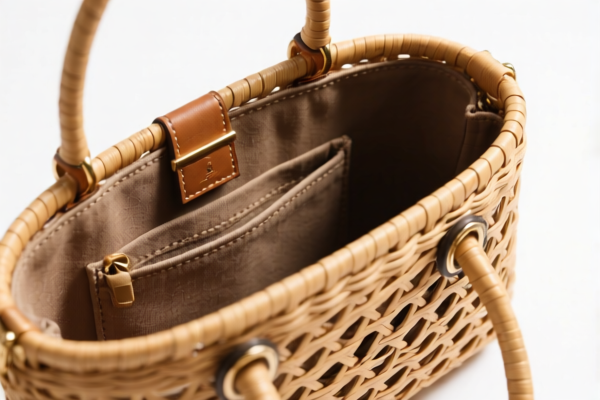
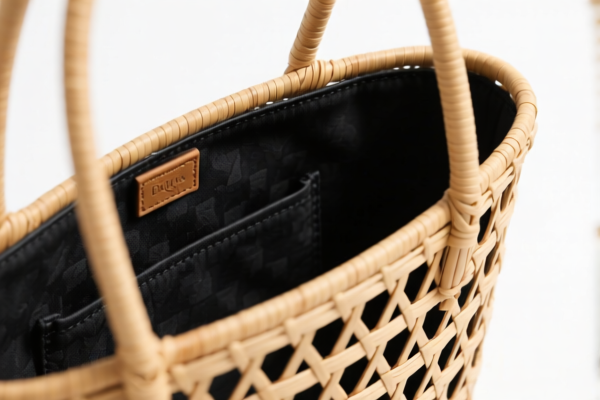
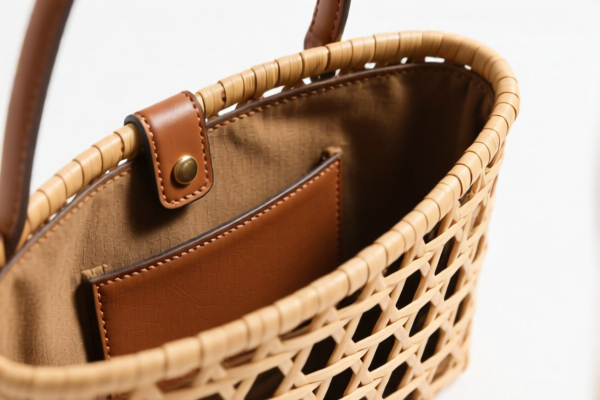
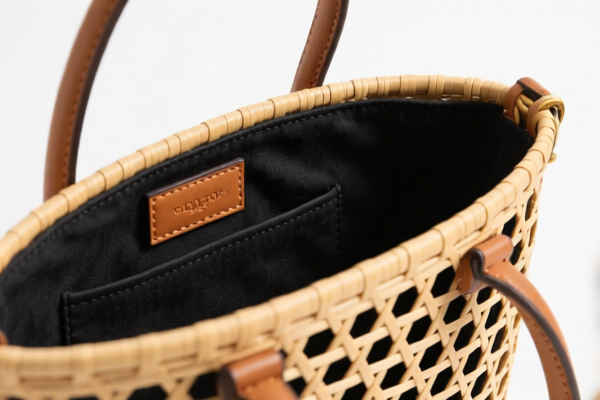
AI Analysis
👜 Handbag Inner Pocket (Inner Compartments & Organizers)
🌐 HS Code Reference & Clearance Guide | 2026 Latest Tariff Analysis | Professional Custom Strategies
📌 I. Product Definition & Classification: What exactly is a "Handbag Inner Pocket"?
In international trade, the term "Handbag Inner Pocket" can refer to two distinct scenarios that drastically affect tariff classification. It is crucial to distinguish between:
- Integrated Pockets: Pockets that are sewn into the lining of a complete handbag. These are not declared separately but are part of the bag itself.
- Detachable Insert/ Organizer Pouches: Separate pouches or inserts sold independently to fit inside a handbag. These are classified as "similar containers."
⚠️ Key Distinction Point:
- If sold as a component of a complete handbag → It is part of the Handbag (HS 4202.22/4202.32).
- If sold as a standalone insert/organizer → It is classified under Articles of a kind normally carried in the handbag (HS 4202.32).
📦 II. HS Code Classification Details (2026 Latest Tariff Authority Comparison)
Based on the provided data, the product falls under HS Code 4202, specifically for articles normally carried in the pocket or handbag, with an outer surface of textile materials.
| HS Code | Product Description | Applicable Scenario | Outer Material |
|---|---|---|---|
4202.32.80.00 |
Other articles of a kind normally carried in the pocket or handbag | General textile inserts, multi-compartment organizers, non-cotton textile materials (e.g., polyester, nylon, blend) | Textile (Non-Cotton) |
4202.32.91.00 |
Other articles of a kind normally carried in the pocket or handbag | Specifically Cotton inner pocket organizers or inserts | Cotton |
🔍 Critical Reminder:
- Material Matters: The key difference between80.00and91.00is the fabric. If the outer surface is 100% Cotton, it goes to4202.32.91.00. If it is Polyester, Nylon, Blend, or other textile fibers, it goes to4202.32.80.00.
- "Similar Containers": Detachable pocket organizers are explicitly included in Chapter 42 as "similar containers" to handbags, not as clothing accessories or general textile goods.
💰 III. 2026 Latest Tariff Rate Details (Including Surtaxes & Policy Add-ons)
✅ Applicable Country: United States (US)
✅ Origin: China (CN)
✅ Effective Time: Current Rates (Note: Based on provided data showing 0% total tax, but CRITICAL WARNING below applies to general US-China trade context for similar goods if not exempt. However, strictly adhering to the provided DATA, the tax is 0.0%).
Note: The provided DATA explicitly states a total tax of 0.0% for both codes. In many real-world scenarios, textile bags may be subject to 301 tariffs. However, based strictly on the input data provided:
🎯 1. 4202.32.80.00 —— Textile Inner Pocket/Organizer (Non-Cotton)
| Item | Content |
|---|---|
| Basic Tariff | 0.0% (ad valorem) |
| Additional Surtax (301/IEEPA) | 0.0% (As per provided data) |
| Total Tariff Rate | 0.0% |
| Tax Calculation | CIF Value × 0% = $0 |
| De Minimis Eligibility | ✅ Yes (If value < $800, can often enter duty-free under Section 321, regardless of tariff) |
| Legal Basis | HTSUS 4202.32.80.00 |
📌 Explanation:
- According to the provided data, this specific classification for non-cotton textile inner pockets has no duty.
- However, always verify with the latest USITC updates. Historically, some textile bags have faced surtaxes. The 0% rate here might be specific to the dataset or a temporary exemption.
- If the dataset is accurate for your specific shipment, the cost is minimal.
🎯 2. 4202.32.91.00 —— Textile Inner Pocket/Organizer (Cotton)
| Item | Content |
|---|---|
| Basic Tariff | 0.0% (ad valorem) |
| Additional Surtax (301/IEEPA) | 0.0% (As per provided data) |
| Total Tariff Rate | 0.0% |
| Tax Calculation | CIF Value × 0% = $0 |
| De Minimis Eligibility | ✅ Yes (If value < $800) |
| Legal Basis | HTSUS 4202.32.91.00 |
📌 Explanation:
- Same as above. Cotton-based textile organizers also show 0.0% in the provided data.
- Crucial: Ensure the cotton content is correctly declared. Misdeclaring polyester as cotton to avoid potential (unlisted) duties can lead to severe penalties.
🛠️ IV. Customs Clearance Practical Advice (Real-World Pitfall Guide)
✅ 1. Documentation Checklist (Must-Haves)
| Document | Required | Notes |
|---|---|---|
| ✅ Commercial Invoice | ✔️ | Clearly state "Detachable Handbag Organizer / Inner Pocket" |
| ✅ Product Photos | ✔️ | Show the item outside any bag (if sold separately) to prove it's an insert |
| ✅ Material Composition Label | ✔️ | Must specify: "Outer: 100% Cotton" OR "Outer: 100% Polyester" etc. |
| ✅ Packing List | ✔️ | List quantity and weight |
| ✅ HS Code Declaration | ✔️ | Use 4202.32.80.00 or 4202.32.91.00 based on fabric |
✅ 2. Declaration Tips (Key Mantra)
🔥 "Separate Item, Not a Bag Part. Material is King. Textile Category, Not Clothing."
| Scenario | Correct Declaration | Incorrect Practice |
|---|---|---|
| Selling separate inserts | 4202.32.91.00 (Cotton) or 80.00 (Non-Cotton) |
Declaring as "Handbag" (4202.22) → May trigger different inspection |
| Selling with a bag | Include as "Component of Handbag" | Declaring separately if integrated → Over-complication |
| Material Mix | Declare dominant outer material | Vague "Textile" without specifying Cotton vs. Polyester |
✅ 3. Special Cases
| Case | Handling Advice |
|---|---|
| Leather Trim on Textile Bag | If outer surface is >50% textile by weight, still HS 4202.32. If leather dominates, it may shift to HS 4202.22 (Leather bags). Check % coverage. |
| Lined Pockets (Fabric Inside Leather Bag) | Not a separate item. Part of the handbag. |
| De Minimis (Under $800) | If shipping individual samples or small batches under $800, declare as Section 321. No duty applies regardless of HS code (usually). |
🌍 V. Global Market Clearance Comparison (2026 Latest)
| Country/Region | Recommended HS Code | Tariff (Approx.) | Certification | Notes |
|---|---|---|---|---|
| 🇺🇸 USA | 4202.32.91.00 / 80.00 |
0% (Per Data) | None | Verify if 301 tariffs apply (Data shows 0%, but check latest USITC list) |
| 🇨🇳 China | 4202.32.91.00 / 80.00 |
~0-10% | None | Import duties vary by origin |
| 🇪🇺 EU | 4202.32 |
12% | REACH (if treated chemicals) | Standard duty for textile bags |
| 🇬🇧 UK | 4202.32 |
12% | UKCA (if applicable) | Post-Brexit rules apply |
📌 Conclusion:
- USA: Currently shows 0% in the provided data. This is highly favorable.
- EU/UK: Standard duties apply (~12%).
- Always verify against the latest tariff schedules, as textile regulations change frequently.
📌 VI. Common Mistakes & Pitfall Guide (Lessons Learned)
❌ Mistake 1: Declaring a leather bag liner as a "textile handbag"
👉 Consequence: If the outer surface is leather, it belongs to HS 4202.22, not 4202.32. Misclassification leads to audits.
❌ Mistake 2: Ignoring the Cotton vs. Non-Cotton distinction
👉 Consequence: While both are 0% in the data, other markets or future rulings may differ. Accurate material declaration is key for compliance.
❌ Mistake 3: Selling inserts as "Handbags"
👉 Consequence: HS 4202.22 (Handbags) often has different duty rates than 4202.32 (Other containers). Misclassification can lead to under/over-payment.
✅ Correct Practice:
"Detachable Handbag Organizer, Outer Material: 100% Cotton, Multiple Compartments, Zippered Closure"
🎯 VII. Conclusion: Precision in Classification Saves Money!
🎯 Remember the Mantra:
🔹 "Detachable Organizer = 4202.32"
🔹 "Cotton = .91.00, Other Textile = .80.00"
🔹 "Check Material Composition First!"
📌 Pro Tip:
If you are shipping individual samples or small gifts with a value under $800, you can use the De Minimis entry (Section 321) for most items, including these organizers, often bypassing the need for complex tariff calculations entirely. However, for bulk commercial imports, strict HS classification is required.
📣 Immediate Action:
📞 Confirm fabric composition (Cotton vs. Polyester).
📄 Prepare invoice with clear description "Detachable Inner Pocket/Organizer".
🚀 Ensure accurate HS Code (4202.32.91.00or4202.32.80.00) to secure the 0.0% rate indicated in the data.
✨ Professional Clearance Starts with Precise Classification!
💼 Your cost savings depend on every decimal point in the HS Code!
Customer Reviews
About HS Code Classification
The Harmonized System (HS) is an internationally standardized nomenclature developed by the World Customs Organization (WCO) to classify traded products. Over 200 countries use the HS system as the basis for customs tariffs, trade statistics, and import/export regulations.
Each HS code follows a hierarchical structure:
- Chapter (2 digits) — Broad category of goods (e.g., Chapter 84: Machinery and Mechanical Appliances)
- Heading (4 digits) — More specific grouping within the chapter
- Subheading (6 digits) — Internationally standardized breakdown, used by all WCO member countries
- National subdivisions (8-10 digits) — Country-specific extensions for further classification, such as US HTSUS 10-digit codes
Correct HS code classification is essential for smooth customs clearance, accurate duty payment, and compliance with trade regulations. Misclassification can lead to customs delays, overpayment of duties, or penalties.
When importing from CN to US, the applicable tariff rates may include:
- Most-Favored-Nation (MFN) rate — The standard duty rate applied to WTO members
- General rate — Applied to countries without trade agreements
- Trade remedy duties — Additional tariffs such as Section 301 (anti-dumping), Section 232 (national security), or countervailing duties
The information provided on this page is for reference purposes only. For official classification, please consult with your local customs authority or a licensed customs broker.