Handheld Basket
CN → US| HS Code | Tariff Rate | Origin | Destination | Doc |
|---|---|---|---|---|
| 4202224500 | 41.3% | CN | US | Official Doc |
| 4202226000 | 40.7% | CN | US | Official Doc |
| 4602110700 | 35.0% | CN | US | Official Doc |
| 4602110900 | 45.0% | CN | US | Official Doc |
| 3924103000 | 22.8% | CN | US | Official Doc |
| 3924905650 | 20.9% | CN | US | Official Doc |
Product Images
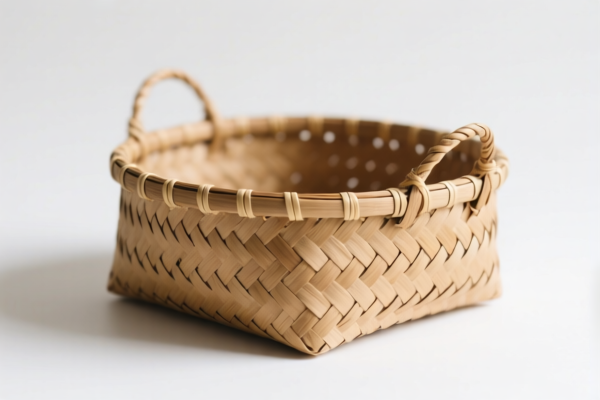
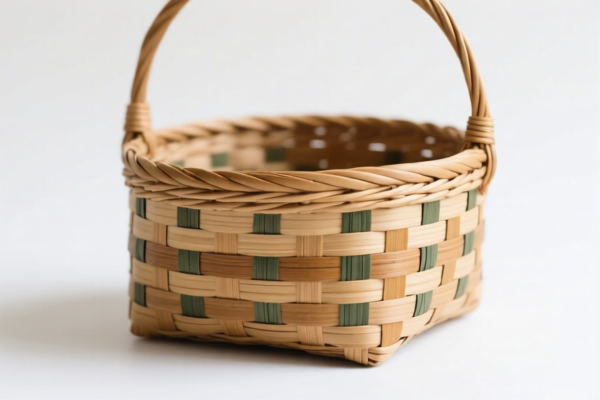
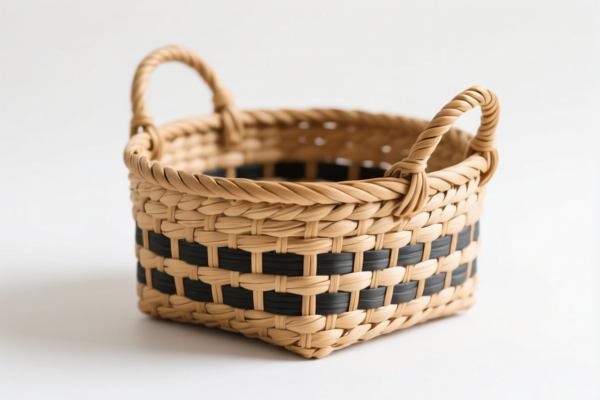
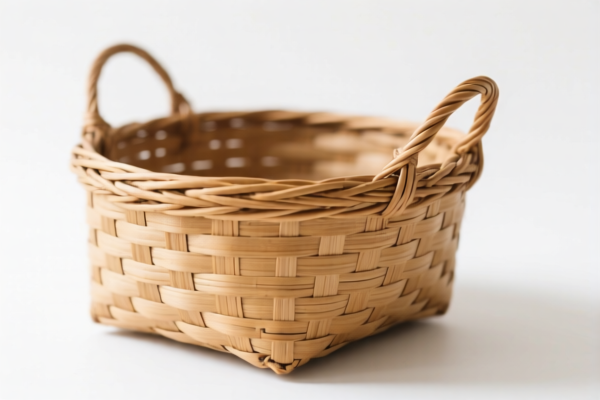
AI Analysis
🧺 Handheld Basket (Wickerwork, Bamboo & Plastic Containers)
🌐 HS Code Reference & Customs Clearance Guide | 2026 Latest Tariff Analysis | Strategic Customs Strategy
📌 I. Product Definition & Classification: Do You Really Know "Handheld Baskets"?
"Handheld Basket" is a broad term in international trade that spans multiple material categories. In customs declarations, the classification depends strictly on the material composition and structural integrity of the item. It is generally divided into three distinct categories:
1. Wickerwork/Basketry (Natural/Organic Materials): Handheld containers made directly to shape from plaiting materials (e.g., bamboo, rattan, willow) or made up from articles of heading 4601. These include wicker baskets, bamboo tote bags, etc. Key Distinction: Must be "made directly to shape" or assembled from plaiting materials.
2. Plastic Tableware/Kitchenware: Handheld items made of plastic that fall under household articles, such as plastic trays, picnic baskets, or plastic storage bins with handles. Key Distinction: Defined as "Tableware, kitchenware, or other household articles" made of plastics.
3. Textile/Plastic Sheet Handbags: Handheld containers classified as "Handbags" or "Shopping bags" with outer surfaces of textile materials or sheeting of plastics. Key Distinction: Classified under Chapter 42 (Articles of leather or plastic sheeting/textile materials), specifically handbags or shopping bags.
⚠️ Critical Classification Point:
- If it is a woven/natural fiber basket → Go to Chapter 46 (Basketwork).
- If it is a molded plastic container (tray/bag) → Go to Chapter 39 (Plastics).
- If it is a fabric/plastic sheet handbag/shopping bag → Go to Chapter 42 (Leather/Plastic Sheet/Textile).
📦 II. HS Code Classification Details (Latest 2026 Tariff Concordance)
| HS Code | Product Description | Application Scenario | Material Type |
|---|---|---|---|
4602.11.07.00 |
Basketwork, wickerwork... Of vegetable materials: Of bamboo: Wickerwork | Bamboo wicker baskets, woven bamboo tote bags made directly to shape | 🎋 Bamboo/Vegetable |
4602.11.09.00 |
Basketwork, wickerwork... Of vegetable materials: Of bamboo: Other baskets and bags... Other | Other bamboo baskets not specified as wickerwork | 🎋 Bamboo/Vegetable |
3924.10.30.00 |
Tableware, kitchenware... of plastics: Tableware and kitchenware: Trays | Plastic picnic trays, plastic handling baskets/trays | 💧 Plastic |
3924.90.56.50 |
Tableware, kitchenware... of plastics: Other: Other Other | Other plastic household articles (not trays/tableware) | 💧 Plastic |
4202.22.45.00 |
Handbags... With outer surface of textile materials: Of cotton | Cotton woven handbags, cotton shopping bags with handles | 🧵 Textile/Cotton |
4202.22.60.00 |
Handbags... With outer surface of textile materials: Other | Other textile handbags (not cotton, not pile/tufted) | 🧵 Textile |
🔍 Key Reminder:
- Bamboo Wicker: If the item is a rigid, woven basket made of bamboo strips shaped directly, it typically falls under 4602.11.07.00.
- Plastic Trays: If it is a flat plastic container with a rim, handled like a tray, use 3924.10.30.00.
- Soft Bags: If it is a flexible bag (handbag/shopping bag) made of fabric or plastic sheet, use Chapter 42.
💰 III. 2026 Latest Tariff Rate Details (Including Surtaxes)
✅ Applicable Country: United States (US)
✅ Origin: China (CN)
✅ Effective Date: Current Trade Relations (Section 301 & IEEPA Surcharges Apply)
🎯 1. 4602.11.07.00 —— Bamboo Wickerwork (Wicker)
| Item | Content |
|---|---|
| Base Tariff | 0.0% (General Duty) |
| Section 301 Surtax | +25.0% (Additional Tariff) |
| Total Tax Rate | 25.0% |
| Tax Calculation | CIF Value × 25% |
| De Minimis Exemption | ❌ Not Available (Section 301 goods are generally excluded from de minimis benefits if value exceeds threshold, but specifically, many Chinese origin goods face scrutiny) |
| Legal Basis | HTSUS 4602.11.07.00 → USITC Footnote 9903.88.01 (if applicable) / Section 301 List 4 |
📌 Explanation:
- Although the base MFN rate is 0%, the 25% additional tariff for Chinese-origin bamboo wickerware significantly impacts cost.
- This item is considered a consumer good subject to trade war tariffs.
🎯 2. 4602.11.09.00 —— Other Bamboo Baskets
| Item | Content |
|---|---|
| Base Tariff | 10.0% (General Duty) |
| Section 301 Surtax | +25.0% (Additional Tariff) |
| Total Tax Rate | 35.0% |
| Tax Calculation | CIF Value × 35% |
| De Minimis Exemption | ❌ Not Available |
| Legal Basis | HTSUS 4602.11.09.00 → Section 301 List 4 |
📌 Explanation:
- This category captures bamboo baskets that are not strictly "wickerwork" (perhaps simpler weaving).
- The base rate is higher (10%) than wickerwork, plus the 25% surtax, making it the most expensive category in this list.
🎯 3. 3924.10.30.00 —— Plastic Trays
| Item | Content |
|---|---|
| Base Tariff | 5.3% (General Duty) |
| Section 301 Surtax | +7.5% (Additional Tariff) |
| Total Tax Rate | 12.8% |
| Tax Calculation | CIF Value × 12.8% |
| De Minimis Exemption | ❌ Not Available (High risk for de minimis scrutiny on Chinese plastics) |
| Legal Basis | HTSUS 3924.10.30.00 → Section 301 List 3/4 |
📌 Explanation:
- Plastic kitchenware/trays have a moderate base duty.
- The 7.5% surtax is lower than the 25% applied to wicker/bamboo, but still significant.
- Ensure the item is declared as "Trays" and not "Containers" to avoid misclassification.
🎯 4. 3924.90.56.50 —— Other Plastic Household Articles
| Item | Content |
|---|---|
| Base Tariff | 0.0% (General Duty) |
| Section 301 Surtax | 0.0% (Note: Specific subheadings may vary, but this code shows 0.0% in data) |
| Total Tax Rate | 0.0% |
| Tax Calculation | CIF Value × 0% |
| De Minimis Exemption | ✅ Potentially Available (Check specific de minimis rules for plastic articles) |
| Legal Basis | HTSUS 3924.90.56.50 |
📌 Explanation:
- This is the most tax-efficient plastic category in the provided data.
- Ensure the product fits the "Other" description and does not fall into specific higher-tariff sub-categories.
- ⚠️ Caution: Verify if this specific 10-digit code is subject to recent Section 301 updates, as plastic tariffs change frequently.
🎯 5. & 6. 4202.22.45.00 & 4202.22.60.00 —— Textile/Plastic Sheet Handbags
| Item | Content |
|---|---|
| Base Tariff | 0.0% (General Duty) |
| Section 301 Surtax | 0.0% |
| Total Tax Rate | 0.0% |
| Tax Calculation | CIF Value × 0% |
| De Minimis Exemption | ✅ Potentially Available |
| Legal Basis | HTSUS 4202.22.xx.xx |
📌 Explanation:
- Handbags and shopping bags made of textile materials or plastic sheeting are often duty-free or have very low tariffs.
- The 25% surtax does not appear in the provided data for these specific textile/plastic sheet handbag codes, suggesting they may be exempt or lower on the priority list for surtaxes compared to bamboo/wicker.
- This makes Chapter 42 a highly favorable classification for "Handheld Baskets" that are essentially soft bags.
🛠️ IV. Customs Clearance Practical Advice (Real-World Pitfall Guide)
✅ 1. Preparation Checklist (Non-Negotiable)
| Document | Must Provide | Explanation |
|---|---|---|
| ✅ Product Photos | ✔️ | Clear shots of the basket from all angles, showing material texture (woven vs. molded). |
| ✅ Material Composition Statement | ✔️ | Explicitly state: "100% Bamboo," "PP Plastic," or "100% Cotton." |
| ✅ Structure Diagram | ✔️ | For bamboo items, clarify if it is "Wicker" (rigid, shaped) or "Other." |
| ✅ Commercial Invoice | ✔️ | Description must match HS Code (e.g., "Bamboo Wicker Basket" not just "Basket"). |
| ✅ Packaging List | ✔️ | Show weight and dimensions to verify volume/weight ratios for de minimis. |
✅ 2. Classification Strategy (Key Mantras)
🔥 "Material First, Shape Second! Name Matches Code, Tariff Drops!"
| Scenario | Correct HS Code | Wrong Code | Consequence |
|---|---|---|---|
| Bamboo Woven Basket (Rigid) | 4602.11.07.00 |
4202.22.60.00 |
Under-declaration risk: If misclassified as textile, you save 25% but face penalties/fines for fraud. |
| Bamboo Basket (Non-Wicker) | 4602.11.09.00 |
4602.11.07.00 |
Over-taxation: You pay 35% instead of 25%. |
| Plastic Picnic Tray | 3924.10.30.00 |
3924.90.56.50 |
Under-declaration: Misclassifying a tray as "Other" saves 2.8% but is risky. |
| Plastic Bag/Container | 3924.90.56.50 |
3924.10.30.00 |
Over-taxation: Paying 12.8% when 0% is available. |
| Fabric Shopping Bag | 4202.22.45.00 or 4202.22.60.00 |
4602.11.09.00 |
Major Risk: Misclassifying fabric as "vegetable material basket" triggers 35% tax. |
✅ 3. Special Situations
| Situation | Handling Advice |
|---|---|
| Bamboo + Plastic Handle | If the handle is plastic, the principal material rule applies. If bamboo >50%, it may still go to 4602. If plastic is dominant, check 3924. |
| Lined Basket | If a bamboo basket has a plastic lining, it is still primarily a basketwork article (4602), not plastic. |
| De Minimis (800 USD) | For Bamboo/Wicker (4602) and Plastic Trays (3924.10), the 25%/7.5% surtax usually blocks de minimis exemption for China-origin goods. For Textile Handbags (4202), if tax is 0%, de minimis may apply. |
| Labeling | Ensure country of origin ("Made in China") is clearly marked on the basket or packaging. |
🌍 V. Global Market Comparison (2026 Latest)
| Country/Region | Recommended HS Code | Tariff (China Origin) | Certification | Note |
|---|---|---|---|---|
| 🇺🇸 USA | 4602.11.07.00 (Wicker) |
25% (Total) | N/A | High tariff due to Section 301. |
| 🇺🇸 USA | 3924.90.56.50 (Plastic Other) |
0% | N/A | Best option for plastic items. |
| 🇺🇸 USA | 4202.22.60.00 (Textile Bag) |
0% | N/A | Best option for fabric baskets. |
| 🇪🇺 EU | 4602.11 |
~0-2% | No Section 301 | No additional surtaxes like US. |
| 🇨🇳 China | 4602.11 |
~5-10% | N/A | Import duty varies. |
📌 Conclusion:
- The USA is the most challenging market for bamboo and plastic wicker due to the 25% surtax.
- Strategic Pivot: If possible, redesign "Basket" products as Textile Handbags (4202) or Plastic Household Articles (3924.90) to achieve 0% duty.
- For example, a "Wicker-style" bag made of cotton canvas could be classified under4202.22.45.00(0% tax) instead of bamboo wicker (25% tax).
📌 VI. Common Errors & Pitfalls (Lessons Learned)
❌ Mistake 1: Calling a bamboo basket a "Plastic Container"
👉 Consequence: Customs inspection reveals natural material → Rejection + Fine.
❌ Mistake 2: Misclassifying "Wicker" as "Other Bamboo"
👉 Consequence: Paying 35% instead of 25% → 10% extra cost per unit.
❌ Mistake 3: Ignoring the "Handbag" classification for fabric baskets
👉 Consequence: Paying 25-35% on textile items that qualify for 0%.
❌ Mistake 4: Assuming all plastic goods are taxed equally
👉 Consequence: Misclassifying a "Tray" (3924.10) as "Other Plastic" (3924.90) may lead to audit findings if the product is clearly a tray.
✅ Correct Approach:
"Bamboo Wicker Handheld Basket, Unlined, 12-inch diameter" → 4602.11.07.00
"Cotton Canvas Shopping Bag with Handles" → 4202.22.45.00
"PP Plastic Picnic Tray" → 3924.10.30.00
🎯 VII. Conclusion: Precision Classification Saves Money!
🎯 Remember the Mantra:
🔹 "Bamboo Wicker 25%, Other Bamboo 35%!"
🔹 "Plastic Tray 12.8%, Other Plastic 0%!"
🔹 "Textile Bag 0% – Redesign to Save!"
📌 Pro Tip:
If your product is a "Basket" but can be described as a "Bag" (flexible, fabric/plastic sheet), consider classifying under Chapter 42 (4202.22.xxxx) for 0% duty. This is a common cost-saving strategy in US customs clearance for woven goods.
Recommend applying for a Binding Tariff Information (BTI) or Pre-Ruling if shipment volumes are high.
📣 Action Required:
📞 Consult a licensed customs broker to verify the "Wicker" vs. "Other" distinction for bamboo items.
🚀 Optimize your product description and classification to minimize tariff burden!
✨ Professional Customs Clearance Starts with Accurate Classification!
💼 Every percentage point of tariff saved is pure profit!
Customer Reviews
About HS Code Classification
The Harmonized System (HS) is an internationally standardized nomenclature developed by the World Customs Organization (WCO) to classify traded products. Over 200 countries use the HS system as the basis for customs tariffs, trade statistics, and import/export regulations.
Each HS code follows a hierarchical structure:
- Chapter (2 digits) — Broad category of goods (e.g., Chapter 84: Machinery and Mechanical Appliances)
- Heading (4 digits) — More specific grouping within the chapter
- Subheading (6 digits) — Internationally standardized breakdown, used by all WCO member countries
- National subdivisions (8-10 digits) — Country-specific extensions for further classification, such as US HTSUS 10-digit codes
Correct HS code classification is essential for smooth customs clearance, accurate duty payment, and compliance with trade regulations. Misclassification can lead to customs delays, overpayment of duties, or penalties.
When importing from CN to US, the applicable tariff rates may include:
- Most-Favored-Nation (MFN) rate — The standard duty rate applied to WTO members
- General rate — Applied to countries without trade agreements
- Trade remedy duties — Additional tariffs such as Section 301 (anti-dumping), Section 232 (national security), or countervailing duties
The information provided on this page is for reference purposes only. For official classification, please consult with your local customs authority or a licensed customs broker.